Deliver toUnited Arab Emirates
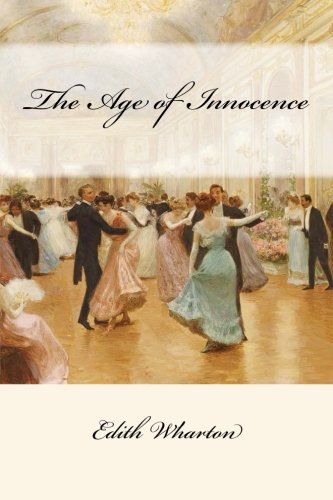
The Age of Innocence

Description:

The Age of Innocence is Edith Wharton's twelfth novel, initially serialized in four parts in the Pictorial Review magazine in 1920, and later released by D. Appleton and Company as a book in New York and in London. It won the 1921 Pulitzer Prize for Fiction, making Wharton the first woman to win the prize. Though the committee initially agreed to award the prize to Sinclair Lewis, the judges rejected his Main Street on political grounds and "established Wharton as the American 'First Lady of Letters'", the irony being that the committee had awarded The Age of Innocence the prize on grounds that negated Wharton's own blatant and subtle ironies, which constitute and make the book so worthy of attention. The story is set in upper-class New York City in the 1870s, during the Gilded Age. Wharton wrote the book in her 50s, after she had established herself as a strong author with publishers clamoring for her work.


Reviews:

5.0 out of 5 stars Wharton hater >>> Wharton devotee

L. · February 1, 2015

For a long time, I was puzzled that The Age of Innocence had won the Pulitzer for fiction in 1921, because Edith Wharton sucked.When I was an undergrad I had to read a different, more obscure Edith Wharton novel (I won't say which one), and it was horrid. I looooathed it. The plot was feeble and uninteresting, the female protagonist vapid, the male supporting characters even more repulsive. In fiction, I read primarily for human drama and interaction, and if I don't feel that the characters are well-developed and have verisimilitude, I don't feel like reading on. I don't have to like a character or want them as a neighbor, but they have to be interesting. Well, Ms. Wharton's characters in that other, weaker novel were neither likable nor interesting. I was required to finish that novel, but then I was done with Edith Wharton forever.Since then, otherwise literate people have suggested that I read The Age of Innocence. I always declined. Recently, though, a writer friend hounded me enough that I accepted the loaner copy she pushed into my hands and promised I would at least try it. Thirty pages or so, I promised.Less than ten pages in, I was hooked. Remember what I said up there about the character-driven novel? Here it is, in spades. If you aren't familiar with the story (no spoilers, I promise), it takes place in New York in the 1870s and centers on a young upper-class attorney, Newland Archer. Though narrated in third person, the reader is privy to Newland's thoughts, ideas, emotions, conflicts. He is engaged to a reputable young woman, but becomes infatuated with her cousin, who is not so reputable. This unfortunate triad (can you feel the tension?) exists in the social minefield of high society, scandal is avoided at all costs, appearances are everything and therefore hypocrisy is the norm. Newland detests his social matrix, but he also benefits from it and it's where he's generally comfortable, so he plays the game. May (his fiancée) and Ellen (her exotic cousin) each have a complicated relationship with society, as well. Their relationships, their choices (or failures to choose) and the consequences drive the action of the novel, and that was all well and good, but I kept reading because Newland and May and Ellen were so very, very real. They were complex, and the choices presented to them were not black and white (hey, just like real life). Newland's interior conflicts constitute the bulk of this luscious reading; however, without getting right into their heads, Wharton portrays both May and Ellen so sympathetically that we, the readers, pick up the cues that Newland misses in order to understand what they're experiencing, too.This novel is often cited as a masterful portrait of the high society of that time and place, most notably of its shortcomings. Yes, it is that, and yes, it's so well written that you feel yourself needing to step out for air because you're suffocating in that byzantine system of propriety. More than that, though, this novel is about human beings and how they behave when they have to make difficult choices. All the great novels are.

4.0 out of 5 stars Left an Impression

V. · August 17, 2015

Superficially it is a story about rich people and their rich people problems. I didn't get into as much as I had hoped. The only redeemable character I found was the Countess Olenska and it is mostly because she was too modern for her time. The writing was great, but the story did not interest me.Update: It's been a while since I read this book. And originally did not think too highly of it, but after months and months of thinking about it, I realized that it isn't just about "rich people and their rich people problems" (lol). First of all, I thought about this book long after I read it, which made me believe that it must have left some kind of impression on me. My interpretation has changed over time. I feel like it focuses on the way people act and think based off societal influences. I found that I liked the Countess Olenska so much not only because of her modern way of thinking, which was considered taboo for everyone else, but because she is so independent and caring for those around her. I don't really want to get into too much detail because of spoilers, but this story did leave me thinking about it long after I had finished it and moved on to other books. I actually think it's a bit of a sad story after seeing the characters struggle so much. I want to read it again to see what else I can interpret from it, but it's hard to get away from my own historical perspective to try to understand the characters more. It was a very interesting book.

5.0 out of 5 stars Dazzling, to say the least!!

D. · July 24, 2017

This is without a doubt dear Mrs. Wharton's masterpiece, a captivating tale about a man whose sense of duty and fear of challenging the status quo keeps him in a state of perpetual staleness and regret. While very little transpires through the course of the novel, it is for a good reason. Archer, the protagonist, is a stuffy New York lawyer, who is entranced by his mysterious wife's cousin Olenska, a married countess who has spent a great deal of her life in Europe. The story is about their relationship or what it could have been, had he been more willing to challenge the status quo and follow his real desires. He lives in a world surrounded by the moralistic and the prudish, a world which by the end of the novel vanishes into a distant memory, and all he is left with is his regret. In the sense, the story could be viewed as a tragedy, but not the same kind of tragedy as Ethan Frome, who had so much less in life to look forward to! Archer's world is essentially limitless and is only held back by his own failure to think outside the Victorian box.While little goes on in Archer's life, we are left to wonder about his true love Madame Olenska. Wharton leaves it to the reader to decide what they think about Olenska. She is not unattainable as Daisy Buchanan is in The Great Gatsby; she shares feelings for him and is eager to separate from her husband. Still, her relationship with Archer never comes to fruition, even after Archer's wife passes away. Her world is too rich and Archer, in his narrowness, can never wrap his head around it.There are also a host of interesting characters that surround them, from the first Mrs. Manson Mingott to the conniving Beaufort, and , however limited their roles, they lend a great deal of insight to the "age of innocence," which serves as the setting. It is an age of hypocrisy and narrow-mindedness, which is quickly superseded by the generation of Archer's son Dallas, who dispels all the mystique behind Archer's lack of action. Dallas represents the dream which Archer could not attain. By the end of the novel, it is too late for him and his only hope is for his son to live this dream for him.The novel is full of rich detail and is well worth reading, even though the plot is at times rather slow. Without doubt, it belongs in any list of the greatest novels of the 20th century!

Thought-provoking!! Relevant even today!

M. · January 3, 2020

The reading of Edith Wharton's 'The Age of Innocence' was long overdue for me. I admit I found the beginning a little tedious with the never-ending list of characters, the detailed description of New York City's elite society at the end of the century with all its traditions, rituals and judgemental morality. The story follows Newland Archer's, the POV character, struggle to live up to the expectations set up by his bourgeois family and marry the sweet, conventional, May Welland, while secretly longing to run off with Countess Ellen Olenska, a married woman who defies the status quo.Family and social expectations conflict with Newland's and Ellen's wish for a more passionate life away from the rigidity of high society. Newland must choose, his wife or his lover. His choice will determine the path his life will take.We meet up with him years later, widowed and father of three children. The memories of his emotional struggles are still with him. Is there regret, or the urge to start over where he left off?The ending is both thought-provoking and poignant. This wonderful story, written over 100 years ago, is still prevalent today. Life's demands have a tendency to erode the passions and struggles, which in our youth we were ready to die for. All that is left is the memory of a beating heart.

Bien

C. · January 12, 2018

Todo muy correcto y muy rápido. Tal y como pone en el anuncio. Volvería a comprar este artículo otra vez

Une jolie plume

C.A. · May 14, 2020

J'ai découvert la plume d'Edith Wharton avec ce roman.Une jolie lecture, la romance qui se tisse entre les deux personnages est intéressante et on a toujours envie d'en lire plus. Cependant, le rythme se tarit parfois et le récit souffre de quelques longueurs.Malgré tout, j'ai rapidement été emportée par l'histoire et par cette société New Yorkaise tentant tant bien que mal de se cacher derrière des convenances viellissantes.

Un grande classico, una grande storia d'amore.

A. · July 22, 2024

Consigliato a chiunque voglia immergersi nelle atmosfere tipiche dell'America della Ricostruzione. Un grande classico, una grande storia d'amore che non smette mai di esercitare il suo fascino.

説明通りでした

松. · January 15, 2015

同じ本を3冊注文しました。1冊がやや遅れましたので問い合わせたところきちんと対応して下さいました。

The Age of Innocence

Product ID: U1986331873
Condition: New

4.3

(5,834 ratings)

AED4816

Price includes VAT & Import Duties
Type: Paperback
Availability: In Stock

Quantity:

|

Order today to get by 7-14 business days

Delivery fee of AED 20. Free for orders above AED 200.

Returns & Warranty policies

Imported From: United States

At BOLO, we work hard to ensure the products you receive are new, genuine, and sourced from reputable suppliers.

BOLO is not an authorized or official retailer for most brands, nor are we affiliated with manufacturers unless specifically stated on a product page. Instead, we source verified sellers, authorized distributors or directly from the manufacturer.

Each product undergoes thorough inspection and verification at our consolidation and fulfilment centers to ensure it meets our strict authenticity and quality standards before being shipped and delivered to you.

If you ever have concerns regarding the authenticity of a product purchased from us, please contact Bolo Support. We will review your inquiry promptly and, if necessary, provide documentation verifying authenticity or offer a suitable resolution.

Your trust is our top priority, and we are committed to maintaining transparency and integrity in every transaction.

All product information, images, descriptions, and reviews originate from the manufacturer or from trusted sellers overseas. BOLO is not affiliated with, endorsed by, or an authorized retailer for most brands listed on our website unless stated otherwise.

While we strive to display accurate information, variations in packaging, labeling, instructions, or formulation may occasionally occur due to regional differences or supplier updates. For detailed or manufacturer-specific information, please contact the brand directly or reach out to BOLO Support for assistance.

Unless otherwise stated, all prices displayed on the product page include applicable taxes and import duties.

BOLO operates in accordance with the laws and regulations of United Arab Emirates. Any items found to be restricted or prohibited for sale within the UAE will be cancelled prior to shipment. We take proactive measures to ensure that only products permitted for sale in United Arab Emirates are listed on our website.

All items are shipped by air, and any products classified as “Dangerous Goods (DG)” under IATA regulations will be removed from the order and cancelled.

All orders are processed manually, and we make every effort to process them promptly once confirmed. Products cancelled due to the above reasons will be permanently removed from listings across the website.

Similar suggestions by Bolo

More from this brand

Similar items from “Classics”

The Age of Innocence

Product ID: U1986331873
Condition: New

4.3

(5,834 ratings)
The Age of Innocence-0
Type: Paperback

AED4816

Price includes VAT & Import Duties
Availability: In Stock

Quantity:

|

Order today to get by 7-14 business days

Delivery fee of AED 20. Free for orders above AED 200.

Returns & Warranty policies

Imported From: United States

At BOLO, we work hard to ensure the products you receive are new, genuine, and sourced from reputable suppliers.

BOLO is not an authorized or official retailer for most brands, nor are we affiliated with manufacturers unless specifically stated on a product page. Instead, we source verified sellers, authorized distributors or directly from the manufacturer.

Each product undergoes thorough inspection and verification at our consolidation and fulfilment centers to ensure it meets our strict authenticity and quality standards before being shipped and delivered to you.

If you ever have concerns regarding the authenticity of a product purchased from us, please contact Bolo Support. We will review your inquiry promptly and, if necessary, provide documentation verifying authenticity or offer a suitable resolution.

Your trust is our top priority, and we are committed to maintaining transparency and integrity in every transaction.

All product information, images, descriptions, and reviews originate from the manufacturer or from trusted sellers overseas. BOLO is not affiliated with, endorsed by, or an authorized retailer for most brands listed on our website unless stated otherwise.

While we strive to display accurate information, variations in packaging, labeling, instructions, or formulation may occasionally occur due to regional differences or supplier updates. For detailed or manufacturer-specific information, please contact the brand directly or reach out to BOLO Support for assistance.

Unless otherwise stated, all prices displayed on the product page include applicable taxes and import duties.

BOLO operates in accordance with the laws and regulations of United Arab Emirates. Any items found to be restricted or prohibited for sale within the UAE will be cancelled prior to shipment. We take proactive measures to ensure that only products permitted for sale in United Arab Emirates are listed on our website.

All items are shipped by air, and any products classified as “Dangerous Goods (DG)” under IATA regulations will be removed from the order and cancelled.

All orders are processed manually, and we make every effort to process them promptly once confirmed. Products cancelled due to the above reasons will be permanently removed from listings across the website.

Description:

The Age of Innocence is Edith Wharton's twelfth novel, initially serialized in four parts in the Pictorial Review magazine in 1920, and later released by D. Appleton and Company as a book in New York and in London. It won the 1921 Pulitzer Prize for Fiction, making Wharton the first woman to win the prize. Though the committee initially agreed to award the prize to Sinclair Lewis, the judges rejected his Main Street on political grounds and "established Wharton as the American 'First Lady of Letters'", the irony being that the committee had awarded The Age of Innocence the prize on grounds that negated Wharton's own blatant and subtle ironies, which constitute and make the book so worthy of attention. The story is set in upper-class New York City in the 1870s, during the Gilded Age. Wharton wrote the book in her 50s, after she had established herself as a strong author with publishers clamoring for her work.


Reviews:

5.0 out of 5 stars Wharton hater >>> Wharton devotee

L. · February 1, 2015

For a long time, I was puzzled that The Age of Innocence had won the Pulitzer for fiction in 1921, because Edith Wharton sucked.When I was an undergrad I had to read a different, more obscure Edith Wharton novel (I won't say which one), and it was horrid. I looooathed it. The plot was feeble and uninteresting, the female protagonist vapid, the male supporting characters even more repulsive. In fiction, I read primarily for human drama and interaction, and if I don't feel that the characters are well-developed and have verisimilitude, I don't feel like reading on. I don't have to like a character or want them as a neighbor, but they have to be interesting. Well, Ms. Wharton's characters in that other, weaker novel were neither likable nor interesting. I was required to finish that novel, but then I was done with Edith Wharton forever.Since then, otherwise literate people have suggested that I read The Age of Innocence. I always declined. Recently, though, a writer friend hounded me enough that I accepted the loaner copy she pushed into my hands and promised I would at least try it. Thirty pages or so, I promised.Less than ten pages in, I was hooked. Remember what I said up there about the character-driven novel? Here it is, in spades. If you aren't familiar with the story (no spoilers, I promise), it takes place in New York in the 1870s and centers on a young upper-class attorney, Newland Archer. Though narrated in third person, the reader is privy to Newland's thoughts, ideas, emotions, conflicts. He is engaged to a reputable young woman, but becomes infatuated with her cousin, who is not so reputable. This unfortunate triad (can you feel the tension?) exists in the social minefield of high society, scandal is avoided at all costs, appearances are everything and therefore hypocrisy is the norm. Newland detests his social matrix, but he also benefits from it and it's where he's generally comfortable, so he plays the game. May (his fiancée) and Ellen (her exotic cousin) each have a complicated relationship with society, as well. Their relationships, their choices (or failures to choose) and the consequences drive the action of the novel, and that was all well and good, but I kept reading because Newland and May and Ellen were so very, very real. They were complex, and the choices presented to them were not black and white (hey, just like real life). Newland's interior conflicts constitute the bulk of this luscious reading; however, without getting right into their heads, Wharton portrays both May and Ellen so sympathetically that we, the readers, pick up the cues that Newland misses in order to understand what they're experiencing, too.This novel is often cited as a masterful portrait of the high society of that time and place, most notably of its shortcomings. Yes, it is that, and yes, it's so well written that you feel yourself needing to step out for air because you're suffocating in that byzantine system of propriety. More than that, though, this novel is about human beings and how they behave when they have to make difficult choices. All the great novels are.

4.0 out of 5 stars Left an Impression

V. · August 17, 2015

Superficially it is a story about rich people and their rich people problems. I didn't get into as much as I had hoped. The only redeemable character I found was the Countess Olenska and it is mostly because she was too modern for her time. The writing was great, but the story did not interest me.Update: It's been a while since I read this book. And originally did not think too highly of it, but after months and months of thinking about it, I realized that it isn't just about "rich people and their rich people problems" (lol). First of all, I thought about this book long after I read it, which made me believe that it must have left some kind of impression on me. My interpretation has changed over time. I feel like it focuses on the way people act and think based off societal influences. I found that I liked the Countess Olenska so much not only because of her modern way of thinking, which was considered taboo for everyone else, but because she is so independent and caring for those around her. I don't really want to get into too much detail because of spoilers, but this story did leave me thinking about it long after I had finished it and moved on to other books. I actually think it's a bit of a sad story after seeing the characters struggle so much. I want to read it again to see what else I can interpret from it, but it's hard to get away from my own historical perspective to try to understand the characters more. It was a very interesting book.

5.0 out of 5 stars Dazzling, to say the least!!

D. · July 24, 2017

This is without a doubt dear Mrs. Wharton's masterpiece, a captivating tale about a man whose sense of duty and fear of challenging the status quo keeps him in a state of perpetual staleness and regret. While very little transpires through the course of the novel, it is for a good reason. Archer, the protagonist, is a stuffy New York lawyer, who is entranced by his mysterious wife's cousin Olenska, a married countess who has spent a great deal of her life in Europe. The story is about their relationship or what it could have been, had he been more willing to challenge the status quo and follow his real desires. He lives in a world surrounded by the moralistic and the prudish, a world which by the end of the novel vanishes into a distant memory, and all he is left with is his regret. In the sense, the story could be viewed as a tragedy, but not the same kind of tragedy as Ethan Frome, who had so much less in life to look forward to! Archer's world is essentially limitless and is only held back by his own failure to think outside the Victorian box.While little goes on in Archer's life, we are left to wonder about his true love Madame Olenska. Wharton leaves it to the reader to decide what they think about Olenska. She is not unattainable as Daisy Buchanan is in The Great Gatsby; she shares feelings for him and is eager to separate from her husband. Still, her relationship with Archer never comes to fruition, even after Archer's wife passes away. Her world is too rich and Archer, in his narrowness, can never wrap his head around it.There are also a host of interesting characters that surround them, from the first Mrs. Manson Mingott to the conniving Beaufort, and , however limited their roles, they lend a great deal of insight to the "age of innocence," which serves as the setting. It is an age of hypocrisy and narrow-mindedness, which is quickly superseded by the generation of Archer's son Dallas, who dispels all the mystique behind Archer's lack of action. Dallas represents the dream which Archer could not attain. By the end of the novel, it is too late for him and his only hope is for his son to live this dream for him.The novel is full of rich detail and is well worth reading, even though the plot is at times rather slow. Without doubt, it belongs in any list of the greatest novels of the 20th century!

Thought-provoking!! Relevant even today!

M. · January 3, 2020

The reading of Edith Wharton's 'The Age of Innocence' was long overdue for me. I admit I found the beginning a little tedious with the never-ending list of characters, the detailed description of New York City's elite society at the end of the century with all its traditions, rituals and judgemental morality. The story follows Newland Archer's, the POV character, struggle to live up to the expectations set up by his bourgeois family and marry the sweet, conventional, May Welland, while secretly longing to run off with Countess Ellen Olenska, a married woman who defies the status quo.Family and social expectations conflict with Newland's and Ellen's wish for a more passionate life away from the rigidity of high society. Newland must choose, his wife or his lover. His choice will determine the path his life will take.We meet up with him years later, widowed and father of three children. The memories of his emotional struggles are still with him. Is there regret, or the urge to start over where he left off?The ending is both thought-provoking and poignant. This wonderful story, written over 100 years ago, is still prevalent today. Life's demands have a tendency to erode the passions and struggles, which in our youth we were ready to die for. All that is left is the memory of a beating heart.

Bien

C. · January 12, 2018

Todo muy correcto y muy rápido. Tal y como pone en el anuncio. Volvería a comprar este artículo otra vez

Une jolie plume

C.A. · May 14, 2020

J'ai découvert la plume d'Edith Wharton avec ce roman.Une jolie lecture, la romance qui se tisse entre les deux personnages est intéressante et on a toujours envie d'en lire plus. Cependant, le rythme se tarit parfois et le récit souffre de quelques longueurs.Malgré tout, j'ai rapidement été emportée par l'histoire et par cette société New Yorkaise tentant tant bien que mal de se cacher derrière des convenances viellissantes.

Un grande classico, una grande storia d'amore.

A. · July 22, 2024

Consigliato a chiunque voglia immergersi nelle atmosfere tipiche dell'America della Ricostruzione. Un grande classico, una grande storia d'amore che non smette mai di esercitare il suo fascino.

説明通りでした

松. · January 15, 2015

同じ本を3冊注文しました。1冊がやや遅れましたので問い合わせたところきちんと対応して下さいました。

Similar suggestions by Bolo

More from this brand

Similar items from “Classics”