Deliver toUnited Arab Emirates
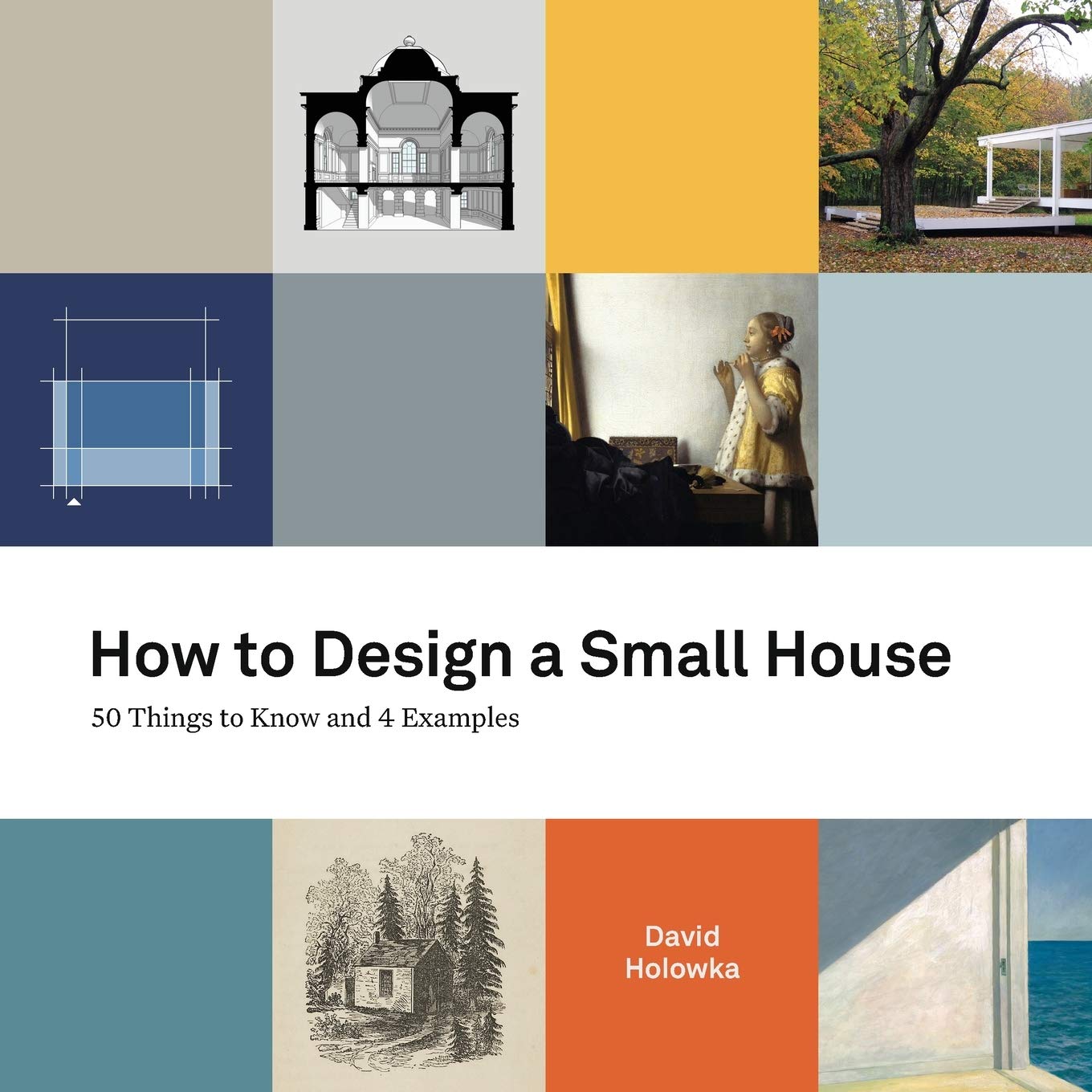
How to Design a Small House: 50 things to know and 4 examples

Description:

Why do the words "little house" go straight to the heart, as Sir John Summerson observed? Clearly, something beyond economy is at work. For centuries, the idea of a minimal dwelling has captivated thinkers who saw it as closer to nature, the world's and our own. Uniquely, a small house can possess human scale and presence, immerse us in nature, intensify a feeling of sanctuary, simplify life, and free up time for living. How to Design a Small House analyzes this potential and shows how to realize it in a more fulfilling home. It proposes not a tiny house, but one less than half the average size of today's new home, scaled to our time's smaller households. Drawing on literature, the visual arts, architectural history, and evolutionary psychology, its fifty short chapters weave a coherent design approach from considerations practical to subconscious. Richly illustrated, it includes vivid 3D renderings of iconic prototypes and four original house-design examples


Editorial Reviews

Review

"David Holowka's breezy but informative guide to designing a small house. . . . Holowka clearly explains in words and images . . . . The four [example] designs in the book are highly practical . . . . Clearly articulated arguments for building a small house and advice on how to do it well." A Daily Dose of Architecture Books

"David Holowka's excellent primer,
How to Design a Small House, plugs into ideas as old as the impulse toward the Primitive Hut and as current as clutter-phobe Marie Kondo. Small House, which contains not only invaluable commentary but also four elegant sample designs, addresses the fundamental psychological problem of the house: how to resolve our need for shelter with the contradictory human desire for space—to be outside in nature. In other words, how to recreate an evolutionary place where we still feel most at home." —Alex Beam, author of Broken Glass: Mies van der Rohe, Edith Farnsworth, and the Fight Over a Modernist Masterpiece
"I admire
How to Design a Small House for avoiding the usual escapist fantasy of a cabin in the wilderness and encouraging a more sustainable, practical, and achievable home that would fit on a small lot in a walkable (and, of course, bikeable) community—a house that maximizes openness to nature and the outdoors while maintaining privacy from nearby neighbors. This kind of escape, from the banal suburban world of car culture which 'steamrolls the magic, mystery, and romance out of life,' is just one compelling reason the book offers to build a small house. For all its practical content, this is at heart a guide to designing a home that preserves a sense of wonder." —Steven Fleming, architect, author of Cycle Space and Velotopia

About the Author

David Holowka is an architect with over 40 years of experience. He sees home design as architecture's most vital concern, addressing the timeless question of how to live. This view has taken him to great houses around the world in search of their lessons. The celebrated experimental architect Lebbeus Woods called him a serious critic. His writing on the iconic Farnsworth House is extensively quoted in Alex Beam's recent book, Broken Glass: Mies van der Rohe, Edith Farnsworth, and the Fight Over a Modernist Masterpiece.

Reviews:

5.0 out of 5 stars Remarkable insight into how we humans want to live

L.A. · November 11, 2020

Amazingly, I am entertaining the idea of building a home after reading Mr. Holowka’s book! We have looked at and lived in previously built houses over the years and always felt that designing a house for us was just too daunting and would likely lead to heartache. David’s book helped clarify some of my feelings of overwhelm.I was impressed with the breadth of his introductory chapters. From Huckleberry Finn’s “Cavern” to Palladio’s “Villa Rotunda”, I began to appreciate his treatise about how we want to live. He has put into words feelings I have had but not aware of how I could express them. His description of our desire to live outside and yet feel secure are aspects of my own life that I now see more clearly. His premise that we err on the side of security and gather material things fits me like a comfortable shirt.But managing all these material things and the large houses to contain these things most likely reduces our joy, he contends, and after reflection, I must agree.His short chapters describing the various facets to consider when designing a home are concise and clear. His drawings of the 4 model houses are detailed and illustrated from multiple perspectives to allow you to sense how the house would work internally and in various lighting and external environments.I especially enjoyed his discussion of Philip Johnson’s “Glass House” and Mies van der Rohe’s “Farnsworth House” sprinkled throughout his book to help illustrate aspects of the four model houses he describes in detail. Overall, I found this book of design to be refreshing and inspiring. It is time to contact an architect and get started!

5.0 out of 5 stars Brilliant, unique, and in the spirit of Thoreau

H. · September 28, 2020

This brilliant book isn’t about tiny houses or how to tweak a conventional tract house, and it’s not another escapist picture book of cabins in the woods. It proposes a practical but fully reconceived home; one timelessly based on our evolution in nature, which still determines our relationship to everything from light and space to happiness and contentment. The “small” house it promotes could comfortably accommodate most American households which, it points out, are now made up of just one or two people.The book aims to connect the average person with the architectural profession, arguing that the lower cost of a smaller house leaves money to hire an architect and collaborate on the design of a personalized home. It prepares the reader by accessibly sharing lessons from great architects and thinkers. This would make it useful to beginning architecture students as well. A wealth of quotations and beautiful illustrations clarify and demonstrate the book’s ideas. The many cutaway-perspective views, including some of iconic houses, are especially vivid. The text is lively, convincing, and wastes few words.For all its practical advice, this book isn’t just about how to design a small house, but why living in a thoughtful one can make us our most natural, relaxed, and best selves. I especially love the way Thoreau’s thoughts and words are a major theme. I’d forgotten how much he had to say about the homes we live in and their impact on our inner lives. I think he’d appreciate this book’s emphasis on quality of life and insightful consideration of the human nature it proposes to house.

3.0 out of 5 stars Well Done but who is the audience supposed to be?

J. · July 2, 2021

I really enjoyed it at first and each chapter felt like zen coffee break. But after a while the clever little “deep” sentences started bugging me. If they were Peppered throughout, it would’ve had more impactt than that being the bulk of a text I also didnt know who this book was suppose to be for. Not For those who want to build a small house since one would need many more details than that. It also didn’t feel like general education for those interested in small houses because it didn’t have the kind of comparisons one would need to really learn something. So for instance if he had the picture of say one of his examples side-by-side with one thats a poor design and Pointer out the differenceS between the two that made one goid and one bad that would be educational. I can tell the author has the expertise to do that but as a novice i cannot extract from what He said to do that myself Also it’s not for the buyer who is looking for an already made small house since it did not have information relevant for that for example it did not have things like iColonial houses will have The XY and Z tthat ive described while Cape Cods have will instead have such and such features that ive described. Ot avoid ranchers from the 70s if youre looking to avoid boxes in within boxes Or whatver. Finally, i would have liked a companion version on kindle to read at same time. Pics here were great but font was squished (up and down direction) and hard to read I got the sense author cared too much about only the Aesthetics of the book at the expense of getting the content across. Probably given how much of tbis Book was about the layout I suspect that he is horrified by Kindle’s ability to reflow his book on houses , as horrified as he would be If the house itself kept rearranging itself like in the Harry Potter books (Not to mention my dreams but that’s another issue)

Incredible and life changing.

S.F. · March 24, 2023

Honestly, after reading this, I want to retire in the country with a cheap shed for those belongings I don't regularly use, and a pristine David Holowka house for my shelter and soul. This book is convincing, generous with all that it shares, and for anyone with interest in architecture and design, thrilling and entertaining to read.

How to Design a Small House: 50 things to know and 4 examples

Product ID: U1734422319
Condition: New

4.6

AED9315

Price includes VAT & Import Duties
Type: Paperback
Availability: In Stock

Quantity:

|

Order today to get by 7-14 business days

Delivery fee of AED 20. Free for orders above AED 200.

Returns & Warranty policies

Imported From: United States

At BOLO, we work hard to ensure the products you receive are new, genuine, and sourced from reputable suppliers.

BOLO is not an authorized or official retailer for most brands, nor are we affiliated with manufacturers unless specifically stated on a product page. Instead, we source verified sellers, authorized distributors or directly from the manufacturer.

Each product undergoes thorough inspection and verification at our consolidation and fulfilment centers to ensure it meets our strict authenticity and quality standards before being shipped and delivered to you.

If you ever have concerns regarding the authenticity of a product purchased from us, please contact Bolo Support. We will review your inquiry promptly and, if necessary, provide documentation verifying authenticity or offer a suitable resolution.

Your trust is our top priority, and we are committed to maintaining transparency and integrity in every transaction.

All product information, images, descriptions, and reviews originate from the manufacturer or from trusted sellers overseas. BOLO is not affiliated with, endorsed by, or an authorized retailer for most brands listed on our website unless stated otherwise.

While we strive to display accurate information, variations in packaging, labeling, instructions, or formulation may occasionally occur due to regional differences or supplier updates. For detailed or manufacturer-specific information, please contact the brand directly or reach out to BOLO Support for assistance.

Unless otherwise stated, all prices displayed on the product page include applicable taxes and import duties.

BOLO operates in accordance with the laws and regulations of United Arab Emirates. Any items found to be restricted or prohibited for sale within the UAE will be cancelled prior to shipment. We take proactive measures to ensure that only products permitted for sale in United Arab Emirates are listed on our website.

All items are shipped by air, and any products classified as “Dangerous Goods (DG)” under IATA regulations will be removed from the order and cancelled.

All orders are processed manually, and we make every effort to process them promptly once confirmed. Products cancelled due to the above reasons will be permanently removed from listings across the website.

Similar suggestions by Bolo

More from this brand

Similar items from “Residential”

How to Design a Small House: 50 things to know and 4 examples

Product ID: U1734422319
Condition: New

4.6

How to Design a Small House: 50 things to know and 4 examples-0
Type: Paperback

AED9315

Price includes VAT & Import Duties
Availability: In Stock

Quantity:

|

Order today to get by 7-14 business days

Delivery fee of AED 20. Free for orders above AED 200.

Returns & Warranty policies

Imported From: United States

At BOLO, we work hard to ensure the products you receive are new, genuine, and sourced from reputable suppliers.

BOLO is not an authorized or official retailer for most brands, nor are we affiliated with manufacturers unless specifically stated on a product page. Instead, we source verified sellers, authorized distributors or directly from the manufacturer.

Each product undergoes thorough inspection and verification at our consolidation and fulfilment centers to ensure it meets our strict authenticity and quality standards before being shipped and delivered to you.

If you ever have concerns regarding the authenticity of a product purchased from us, please contact Bolo Support. We will review your inquiry promptly and, if necessary, provide documentation verifying authenticity or offer a suitable resolution.

Your trust is our top priority, and we are committed to maintaining transparency and integrity in every transaction.

All product information, images, descriptions, and reviews originate from the manufacturer or from trusted sellers overseas. BOLO is not affiliated with, endorsed by, or an authorized retailer for most brands listed on our website unless stated otherwise.

While we strive to display accurate information, variations in packaging, labeling, instructions, or formulation may occasionally occur due to regional differences or supplier updates. For detailed or manufacturer-specific information, please contact the brand directly or reach out to BOLO Support for assistance.

Unless otherwise stated, all prices displayed on the product page include applicable taxes and import duties.

BOLO operates in accordance with the laws and regulations of United Arab Emirates. Any items found to be restricted or prohibited for sale within the UAE will be cancelled prior to shipment. We take proactive measures to ensure that only products permitted for sale in United Arab Emirates are listed on our website.

All items are shipped by air, and any products classified as “Dangerous Goods (DG)” under IATA regulations will be removed from the order and cancelled.

All orders are processed manually, and we make every effort to process them promptly once confirmed. Products cancelled due to the above reasons will be permanently removed from listings across the website.

Description:

Why do the words "little house" go straight to the heart, as Sir John Summerson observed? Clearly, something beyond economy is at work. For centuries, the idea of a minimal dwelling has captivated thinkers who saw it as closer to nature, the world's and our own. Uniquely, a small house can possess human scale and presence, immerse us in nature, intensify a feeling of sanctuary, simplify life, and free up time for living. How to Design a Small House analyzes this potential and shows how to realize it in a more fulfilling home. It proposes not a tiny house, but one less than half the average size of today's new home, scaled to our time's smaller households. Drawing on literature, the visual arts, architectural history, and evolutionary psychology, its fifty short chapters weave a coherent design approach from considerations practical to subconscious. Richly illustrated, it includes vivid 3D renderings of iconic prototypes and four original house-design examples


Editorial Reviews

Review

"David Holowka's breezy but informative guide to designing a small house. . . . Holowka clearly explains in words and images . . . . The four [example] designs in the book are highly practical . . . . Clearly articulated arguments for building a small house and advice on how to do it well." A Daily Dose of Architecture Books

"David Holowka's excellent primer,
How to Design a Small House, plugs into ideas as old as the impulse toward the Primitive Hut and as current as clutter-phobe Marie Kondo. Small House, which contains not only invaluable commentary but also four elegant sample designs, addresses the fundamental psychological problem of the house: how to resolve our need for shelter with the contradictory human desire for space—to be outside in nature. In other words, how to recreate an evolutionary place where we still feel most at home." —Alex Beam, author of Broken Glass: Mies van der Rohe, Edith Farnsworth, and the Fight Over a Modernist Masterpiece
"I admire
How to Design a Small House for avoiding the usual escapist fantasy of a cabin in the wilderness and encouraging a more sustainable, practical, and achievable home that would fit on a small lot in a walkable (and, of course, bikeable) community—a house that maximizes openness to nature and the outdoors while maintaining privacy from nearby neighbors. This kind of escape, from the banal suburban world of car culture which 'steamrolls the magic, mystery, and romance out of life,' is just one compelling reason the book offers to build a small house. For all its practical content, this is at heart a guide to designing a home that preserves a sense of wonder." —Steven Fleming, architect, author of Cycle Space and Velotopia

About the Author

David Holowka is an architect with over 40 years of experience. He sees home design as architecture's most vital concern, addressing the timeless question of how to live. This view has taken him to great houses around the world in search of their lessons. The celebrated experimental architect Lebbeus Woods called him a serious critic. His writing on the iconic Farnsworth House is extensively quoted in Alex Beam's recent book, Broken Glass: Mies van der Rohe, Edith Farnsworth, and the Fight Over a Modernist Masterpiece.

Reviews:

5.0 out of 5 stars Remarkable insight into how we humans want to live

L.A. · November 11, 2020

Amazingly, I am entertaining the idea of building a home after reading Mr. Holowka’s book! We have looked at and lived in previously built houses over the years and always felt that designing a house for us was just too daunting and would likely lead to heartache. David’s book helped clarify some of my feelings of overwhelm.I was impressed with the breadth of his introductory chapters. From Huckleberry Finn’s “Cavern” to Palladio’s “Villa Rotunda”, I began to appreciate his treatise about how we want to live. He has put into words feelings I have had but not aware of how I could express them. His description of our desire to live outside and yet feel secure are aspects of my own life that I now see more clearly. His premise that we err on the side of security and gather material things fits me like a comfortable shirt.But managing all these material things and the large houses to contain these things most likely reduces our joy, he contends, and after reflection, I must agree.His short chapters describing the various facets to consider when designing a home are concise and clear. His drawings of the 4 model houses are detailed and illustrated from multiple perspectives to allow you to sense how the house would work internally and in various lighting and external environments.I especially enjoyed his discussion of Philip Johnson’s “Glass House” and Mies van der Rohe’s “Farnsworth House” sprinkled throughout his book to help illustrate aspects of the four model houses he describes in detail. Overall, I found this book of design to be refreshing and inspiring. It is time to contact an architect and get started!

5.0 out of 5 stars Brilliant, unique, and in the spirit of Thoreau

H. · September 28, 2020

This brilliant book isn’t about tiny houses or how to tweak a conventional tract house, and it’s not another escapist picture book of cabins in the woods. It proposes a practical but fully reconceived home; one timelessly based on our evolution in nature, which still determines our relationship to everything from light and space to happiness and contentment. The “small” house it promotes could comfortably accommodate most American households which, it points out, are now made up of just one or two people.The book aims to connect the average person with the architectural profession, arguing that the lower cost of a smaller house leaves money to hire an architect and collaborate on the design of a personalized home. It prepares the reader by accessibly sharing lessons from great architects and thinkers. This would make it useful to beginning architecture students as well. A wealth of quotations and beautiful illustrations clarify and demonstrate the book’s ideas. The many cutaway-perspective views, including some of iconic houses, are especially vivid. The text is lively, convincing, and wastes few words.For all its practical advice, this book isn’t just about how to design a small house, but why living in a thoughtful one can make us our most natural, relaxed, and best selves. I especially love the way Thoreau’s thoughts and words are a major theme. I’d forgotten how much he had to say about the homes we live in and their impact on our inner lives. I think he’d appreciate this book’s emphasis on quality of life and insightful consideration of the human nature it proposes to house.

3.0 out of 5 stars Well Done but who is the audience supposed to be?

J. · July 2, 2021

I really enjoyed it at first and each chapter felt like zen coffee break. But after a while the clever little “deep” sentences started bugging me. If they were Peppered throughout, it would’ve had more impactt than that being the bulk of a text I also didnt know who this book was suppose to be for. Not For those who want to build a small house since one would need many more details than that. It also didn’t feel like general education for those interested in small houses because it didn’t have the kind of comparisons one would need to really learn something. So for instance if he had the picture of say one of his examples side-by-side with one thats a poor design and Pointer out the differenceS between the two that made one goid and one bad that would be educational. I can tell the author has the expertise to do that but as a novice i cannot extract from what He said to do that myself Also it’s not for the buyer who is looking for an already made small house since it did not have information relevant for that for example it did not have things like iColonial houses will have The XY and Z tthat ive described while Cape Cods have will instead have such and such features that ive described. Ot avoid ranchers from the 70s if youre looking to avoid boxes in within boxes Or whatver. Finally, i would have liked a companion version on kindle to read at same time. Pics here were great but font was squished (up and down direction) and hard to read I got the sense author cared too much about only the Aesthetics of the book at the expense of getting the content across. Probably given how much of tbis Book was about the layout I suspect that he is horrified by Kindle’s ability to reflow his book on houses , as horrified as he would be If the house itself kept rearranging itself like in the Harry Potter books (Not to mention my dreams but that’s another issue)

Incredible and life changing.

S.F. · March 24, 2023

Honestly, after reading this, I want to retire in the country with a cheap shed for those belongings I don't regularly use, and a pristine David Holowka house for my shelter and soul. This book is convincing, generous with all that it shares, and for anyone with interest in architecture and design, thrilling and entertaining to read.

Similar suggestions by Bolo

More from this brand

Similar items from “Residential”