Deliver toUnited Arab Emirates
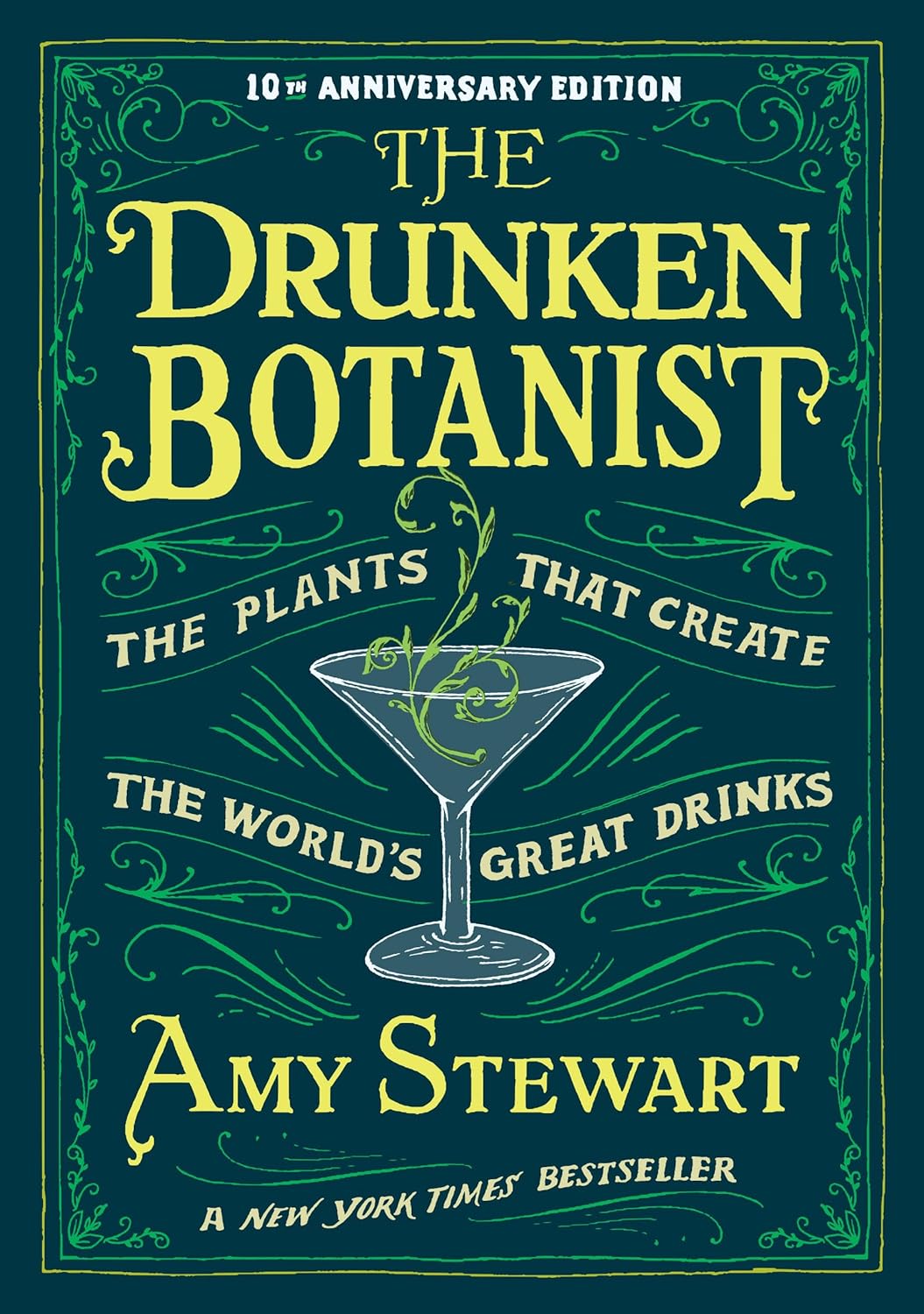
The Drunken Botanist: The Plants that Create the World’s Great Drinks: 10th Anniversary Edition

Description:

The New York Times-bestselling guide to botany and booze celebrates its 10th anniversary with an updated editionnow including a guide to planting your very own cocktail garden to go with more than fifty drink recipes. This fascinating, go-to text about the plants that make our drinks is the ideal gift book for every cocktail aficionado, the perfect drinks book for every plant-lover.

Sake began with a grain of rice. Scotch emerged from barley, tequila from agave, rum from sugarcane, bourbon from corn. Thirsty yet?  In
The Drunken Botanist, Amy Stewart explores the dizzying array of herbs, flowers, trees, fruits, and fungi that humans have, through ingenuity, inspiration, and sheer desperation, contrived to transform into alcohol over the centuries.

Of all the extraordinary and obscure plants that have been fermented and distilled, a few are dangerous, some are downright bizarre, and one is as ancient as dinosaurs—but each represents a unique cultural contribution to our global drinking traditions and our history.

This charming concoction of biology, chemistry, history, etymology, and mixology—with delightful drawings, tasty cocktail recipes, and fun factoids throughout—will make you the most popular guest at any cocktail party. 

“A book that makes familiar drinks seem new again . . . Through this horticultural lens, a mixed drink becomes a cornucopia of plants.”—NPR's Morning Edition

“Amy Stewart has a way of making gardening seem exciting, even a little dangerous.” —
The New York Times


Editorial Reviews

Amazon.com Review

An Amazon Best Book of the Month, March 2013: Peppered with fascinating facts and well-chosen anecdotes, Amy Stewart’s brisk tour of the origin of spirits acquaints the curious cocktail fan with every conceivable ingredient. Starting with the classics (from agave to wheat), she touches on obscure sources--including a tree that dates to the dinosaur age--before delving into the herbs, spices, flowers, trees, fruits, and nuts that give the world’s greatest drinks distinctive flavors. Along the way, you’ll enjoy sidebars on bugs in booze and inspired drink recipes with backstories that make lively cocktail party conversation. Like Wicked Plants, this delightfully informative, handsome volume isn’t intended as a complete reference or DIY guide, but it will demystify and heighten your appreciation of every intoxicating plant you imbibe. --Mari Malcolm

Review

"Amy Stewart has a way of making gardening seem exciting, even a little dangerous."―The New York Times

"Many boozy books have been published over the years, spilling over with fun facts about absinthe, grog and bathtub gin. What makes Stewart's book different is her infectious enthusiasm for the plants, their uses, their history, and the botanists who roamed the earth finding them. The result is intoxicating but in a fresh, happy, healthy way."―
USA Today

"The Drunken Botanist is a sipping book, not a quaffing book, best enjoyed in moderation...Part Ripley’s Believe It or Not, part compendium on the order of 'Schott’s Original Miscellany' and part botanical garden tour, albeit with a curated cocktail party at the end . . . a companionable reference and whimsical recitation of historical-botanical trivia, with a little tart debunking."―
The Washington Post

"Sipping an evening cocktail while flipping through this fine volume, I discovered that Ms. Stewart knew how to change a run-of-the-mill cocktail into an intriguing one."―
The Wall Street Journal

"A book that makes familiar drinks seem new again…Through this horticultural lens, a mixed drink becomes a cornucopia of plants."―
NPR's Morning Edition

"Fascinating, well researched and instructive — with appealing recipes too."―
Rosie Schaap, The New York Times

"Gardening can be an intoxicating hobby, especially if the botany is booze-related."―
The Associated Press

Reviews:

5.0 out of 5 stars Intelligent Writing with a dry wit!

D. · March 22, 2013

This book turned out to be an excellent reference on plants and their many uses by humans. The author discussed many plant uses beside fermenting plant starches into sugars by the addition of yeasts. One could tell the author loved discussing plants with the occasional witty remark and her extensive knowledge of each of the various species. If one could find a fault with the book, it might be the inclusion of many species of which all but those engaged in botanical research would be familiar. But that aside the book was a fun and informative read. The author chose to list all the various plants by their common names rather than list them by their Latin nomenclature, as is more typical in many botanical references, and this point was greatly appreciated.Although there were hundreds of interesting facts regarding the various plant species, I would like to list just a few to give the readers an idea that the book was interesting and did not just discuss making booze.1. We learn the Barley is the most prolific grain at converting its starches into sugar to make alcohol because it has a high level of enzymes and that it is an easy plant to grow not being much affected by cold, drought, or poor soil conditions.2. Peat is what gives Scotch its particular taste.3. Kentucky produces 90% of all the bourbon in the world. [p47]4. Cork comes from the Portuguese Oak [Quercus Suber. It is stripped annually with each tree yielding about 4k corks, primarily used in wine bottling, yet the trees regenerate new bark each year and live for about 2 centuries before finally dying.5. The real difference between American and Canadian whiskeys is that each batch of American whiskey reguires a new oak barrel, while Canadians can use barrels previously used for making wine or whiskey before. This gives it more flavor than American bourbon, but each batch may taste slightly different depending on what the barrels had previously held.6. Absinthe doesn't make you drunk [crazy] because of the wormwood being fermented but the fact that it was originally bottles at 70% ABV as opposed to Brandy commonly bottled at 40% ABV. Since it was 75% stronger you got drunk and started acting crazy much sooner than had you been drinking Brandy which was very commonly drunk when people favored absinthe. In this regard think of Henry Miller and Anais Nin.7. Vodka became popular in America only after WWII because distillers couldn't get enough grain to use, so begged potato growers to send them all the small and misshapen potatoes they had, since appearance wouldn't matter. Distillers sold 1M gallons of Vodka in 1946 and 30M by 1965. BTW, Vodka uses rye, wheat, and other grains in its manufacture, but most Americans think of it as only made from Potatoes. There is also a big controversy over where Vodka originated, whether Poland or Russia. [p70]8. We also learn that that the agave plant used to make Tequila is not a cactus but a member of the asparagus family, and that each plant yields enough sap to make about 250 gallons of maguay beer, which was drunk some 2K years ago. How do we know that; well it is because some scientist analyzed some 2k year old coprofites. :-09. Although humans have about 25k different genes, an apple tree has 57k.There was also a nice and lengthy section on herbs made from the green or fleshy part of plants and spices made from the bark, root, stem, or seed of plants.As you can see there was a lot more to the book than the simple making of booze. Highly recommended.

5.0 out of 5 stars Great Fun to Read - I Love Amy Stewart's "Spirited" Books!

H.R. · March 21, 2013

Just last night, I went to a booksigning with Amy Stewart for "The Drunken Botanist", the first time I'd heard Stewart speak. Her talk was as infectiously good-spirited (heh heh) as her writing. And, as in her book, there's tons of humor. I laughed when Amy said that when she was researching her previous book, "Wicked Bugs", she had no volunteers to help her. But when she started researching booze for "The Drunken Botanist", "everyone wanted to carry my suitcase".There are all kinds of books out now covering mixology and the new cocktails, etc. What sets Amy's book apart is that she is a horticulturist, and she tells you about the fabulous plants that make or go into all the different kinds of fermented beverages man has come up with.The book is divided into three parts:1. Plants that are fermented to make the alcohol (wheat, potatoes, grapes, etc.)2. Plants that are added to the alcohol (hops, gentian, aloe, etc.)3. Plants that make up mixers and garnishes (spearmint, pomegranate, pepper, etc.)Throughout the book, in the appropriate chapters, are recipes for 50 cocktails, and 13 syrups, infusions and garnishes, such as limoncello and "Brine your own olives".This isn't a staid recitation of facts, but engaging, encompassing and trivia-filled reading. For example, the chapter on sugar cane (in part 1), tells you:- the first and current places sugarcane is cultivated and how it is cultivated- the botany of sugarcane- how to make rum- spirits made from sugar cane- how rum became linked to British sailors- drink recipesDid you know that the British navy had rum rations for it's sailors until 1970! Do you know how to tell "real" tonic water from the cheap imitation? How about why a splash of water actually heightens the flavor of a spirit instead of diluting it?There's a member of the iris family called Orris (part 2) which is used in almost every gin made. Yet is is cultivated on only 173 acres worldwide. Stewart writes, "Its popularity in perfume is due to the fact that it not only holds the fragrance in place but clings to the skin as well. It also happens to be a very common allergen, which explains why allergy sufferers might be sensitive to cosmetics and other fragrances - as well as gin."I could write pages more about the great stories and tidbits of information contained in this book. I really had a fun time reading it.The illustrations in "The Drunken Botanist" are fine, but they're stock illustrations. I miss Briony Morrow-Cribbs' and Jonathan Rosen's incredible drawings and engravings that were such enchanting - and vigorous - enhancements to Stewart's previous books, Wicked Bugs: The Louse That Conquered Napoleon's Army & Other Diabolical Insects and Wicked Plants: The Weed That Killed Lincoln's Mother and Other Botanical Atrocities.Visit Stewart's website,drunkenbotanist comfor links to plant and liquor sources. There are some heritage plants that can only be found in a couple places. and check out Redventure, a type of very slender red celery that is perfect for use as a swizzle stick!Happy Reader

Maravilhoso

L.S. · June 2, 2022

Comprei pra dar de presente de dia nos namorados e achei muito bomm, capa linda e bem ilustrado. É um compilado de informações únicas, dá pra ver que teve muita pesquisa envolvida. Além de tudo tem receitas. Amei e tenho certeza que a pessoa amada vai amar também!

世界の素晴らしい飲み物を作る植物:10周年記念版

R. · October 29, 2024

飲み物はたくさんありますが、より人生を充実したものにする一杯はいかがしょうか、そんな問いを投げかけてくる一冊です

Ottimo libro

A.M. · October 13, 2015

personalmente ho ritenuto questo libro motlo bello ed interessante. Un ottima lettura se volete aumentare le vostre conoscenze riguardanti la produzione dei vari alcolici

Great book

C.A. · August 12, 2025

One of the most useful books in my shelf. Is a must to for a passionate bartender. Delivered really fast. Hard cover, love it

A great bartending book

R. · April 22, 2020

If you are working in the bar universe and want to learn some really useful stuff for your personal knowledge and to improve your story telling/selling skills, this book will really help any beginners-intermediate to better understand the alcohol world! The cover is beautiful and hard, it is well written and there is a lot of research and passion put into that book, as well as some recipes! Recommend it a lot!

The Drunken Botanist: The Plants that Create the World’s Great Drinks: 10th Anniversary Edition

Product ID: U1616200464
Condition: New

4.7

AED9921

Price includes VAT & Import Duties
Type: Hardcover
Availability: In Stock

Quantity:

|

Order today to get by 7-14 business days

Delivery fee of AED 20. Free for orders above AED 200.

Returns & Warranty policies

Imported From: United States

At BOLO, we work hard to ensure the products you receive are new, genuine, and sourced from reputable suppliers.

BOLO is not an authorized or official retailer for most brands, nor are we affiliated with manufacturers unless specifically stated on a product page. Instead, we source verified sellers, authorized distributors or directly from the manufacturer.

Each product undergoes thorough inspection and verification at our consolidation and fulfilment centers to ensure it meets our strict authenticity and quality standards before being shipped and delivered to you.

If you ever have concerns regarding the authenticity of a product purchased from us, please contact Bolo Support. We will review your inquiry promptly and, if necessary, provide documentation verifying authenticity or offer a suitable resolution.

Your trust is our top priority, and we are committed to maintaining transparency and integrity in every transaction.

All product information, images, descriptions, and reviews originate from the manufacturer or from trusted sellers overseas. BOLO is not affiliated with, endorsed by, or an authorized retailer for most brands listed on our website unless stated otherwise.

While we strive to display accurate information, variations in packaging, labeling, instructions, or formulation may occasionally occur due to regional differences or supplier updates. For detailed or manufacturer-specific information, please contact the brand directly or reach out to BOLO Support for assistance.

Unless otherwise stated, all prices displayed on the product page include applicable taxes and import duties.

BOLO operates in accordance with the laws and regulations of United Arab Emirates. Any items found to be restricted or prohibited for sale within the UAE will be cancelled prior to shipment. We take proactive measures to ensure that only products permitted for sale in United Arab Emirates are listed on our website.

All items are shipped by air, and any products classified as “Dangerous Goods (DG)” under IATA regulations will be removed from the order and cancelled.

All orders are processed manually, and we make every effort to process them promptly once confirmed. Products cancelled due to the above reasons will be permanently removed from listings across the website.

Similar suggestions by Bolo

More from this brand

Similar items from “Spirits”

The Drunken Botanist: The Plants that Create the World’s Great Drinks: 10th Anniversary Edition

Product ID: U1616200464
Condition: New

4.7

The Drunken Botanist: The Plants that Create the World’s Great Drinks: 10th Anniversary Edition-0
Type: Hardcover

AED9921

Price includes VAT & Import Duties
Availability: In Stock

Quantity:

|

Order today to get by 7-14 business days

Delivery fee of AED 20. Free for orders above AED 200.

Returns & Warranty policies

Imported From: United States

At BOLO, we work hard to ensure the products you receive are new, genuine, and sourced from reputable suppliers.

BOLO is not an authorized or official retailer for most brands, nor are we affiliated with manufacturers unless specifically stated on a product page. Instead, we source verified sellers, authorized distributors or directly from the manufacturer.

Each product undergoes thorough inspection and verification at our consolidation and fulfilment centers to ensure it meets our strict authenticity and quality standards before being shipped and delivered to you.

If you ever have concerns regarding the authenticity of a product purchased from us, please contact Bolo Support. We will review your inquiry promptly and, if necessary, provide documentation verifying authenticity or offer a suitable resolution.

Your trust is our top priority, and we are committed to maintaining transparency and integrity in every transaction.

All product information, images, descriptions, and reviews originate from the manufacturer or from trusted sellers overseas. BOLO is not affiliated with, endorsed by, or an authorized retailer for most brands listed on our website unless stated otherwise.

While we strive to display accurate information, variations in packaging, labeling, instructions, or formulation may occasionally occur due to regional differences or supplier updates. For detailed or manufacturer-specific information, please contact the brand directly or reach out to BOLO Support for assistance.

Unless otherwise stated, all prices displayed on the product page include applicable taxes and import duties.

BOLO operates in accordance with the laws and regulations of United Arab Emirates. Any items found to be restricted or prohibited for sale within the UAE will be cancelled prior to shipment. We take proactive measures to ensure that only products permitted for sale in United Arab Emirates are listed on our website.

All items are shipped by air, and any products classified as “Dangerous Goods (DG)” under IATA regulations will be removed from the order and cancelled.

All orders are processed manually, and we make every effort to process them promptly once confirmed. Products cancelled due to the above reasons will be permanently removed from listings across the website.

Description:

The New York Times-bestselling guide to botany and booze celebrates its 10th anniversary with an updated editionnow including a guide to planting your very own cocktail garden to go with more than fifty drink recipes. This fascinating, go-to text about the plants that make our drinks is the ideal gift book for every cocktail aficionado, the perfect drinks book for every plant-lover.

Sake began with a grain of rice. Scotch emerged from barley, tequila from agave, rum from sugarcane, bourbon from corn. Thirsty yet?  In
The Drunken Botanist, Amy Stewart explores the dizzying array of herbs, flowers, trees, fruits, and fungi that humans have, through ingenuity, inspiration, and sheer desperation, contrived to transform into alcohol over the centuries.

Of all the extraordinary and obscure plants that have been fermented and distilled, a few are dangerous, some are downright bizarre, and one is as ancient as dinosaurs—but each represents a unique cultural contribution to our global drinking traditions and our history.

This charming concoction of biology, chemistry, history, etymology, and mixology—with delightful drawings, tasty cocktail recipes, and fun factoids throughout—will make you the most popular guest at any cocktail party. 

“A book that makes familiar drinks seem new again . . . Through this horticultural lens, a mixed drink becomes a cornucopia of plants.”—NPR's Morning Edition

“Amy Stewart has a way of making gardening seem exciting, even a little dangerous.” —
The New York Times


Editorial Reviews

Amazon.com Review

An Amazon Best Book of the Month, March 2013: Peppered with fascinating facts and well-chosen anecdotes, Amy Stewart’s brisk tour of the origin of spirits acquaints the curious cocktail fan with every conceivable ingredient. Starting with the classics (from agave to wheat), she touches on obscure sources--including a tree that dates to the dinosaur age--before delving into the herbs, spices, flowers, trees, fruits, and nuts that give the world’s greatest drinks distinctive flavors. Along the way, you’ll enjoy sidebars on bugs in booze and inspired drink recipes with backstories that make lively cocktail party conversation. Like Wicked Plants, this delightfully informative, handsome volume isn’t intended as a complete reference or DIY guide, but it will demystify and heighten your appreciation of every intoxicating plant you imbibe. --Mari Malcolm

Review

"Amy Stewart has a way of making gardening seem exciting, even a little dangerous."―The New York Times

"Many boozy books have been published over the years, spilling over with fun facts about absinthe, grog and bathtub gin. What makes Stewart's book different is her infectious enthusiasm for the plants, their uses, their history, and the botanists who roamed the earth finding them. The result is intoxicating but in a fresh, happy, healthy way."―
USA Today

"The Drunken Botanist is a sipping book, not a quaffing book, best enjoyed in moderation...Part Ripley’s Believe It or Not, part compendium on the order of 'Schott’s Original Miscellany' and part botanical garden tour, albeit with a curated cocktail party at the end . . . a companionable reference and whimsical recitation of historical-botanical trivia, with a little tart debunking."―
The Washington Post

"Sipping an evening cocktail while flipping through this fine volume, I discovered that Ms. Stewart knew how to change a run-of-the-mill cocktail into an intriguing one."―
The Wall Street Journal

"A book that makes familiar drinks seem new again…Through this horticultural lens, a mixed drink becomes a cornucopia of plants."―
NPR's Morning Edition

"Fascinating, well researched and instructive — with appealing recipes too."―
Rosie Schaap, The New York Times

"Gardening can be an intoxicating hobby, especially if the botany is booze-related."―
The Associated Press

Reviews:

5.0 out of 5 stars Intelligent Writing with a dry wit!

D. · March 22, 2013

This book turned out to be an excellent reference on plants and their many uses by humans. The author discussed many plant uses beside fermenting plant starches into sugars by the addition of yeasts. One could tell the author loved discussing plants with the occasional witty remark and her extensive knowledge of each of the various species. If one could find a fault with the book, it might be the inclusion of many species of which all but those engaged in botanical research would be familiar. But that aside the book was a fun and informative read. The author chose to list all the various plants by their common names rather than list them by their Latin nomenclature, as is more typical in many botanical references, and this point was greatly appreciated.Although there were hundreds of interesting facts regarding the various plant species, I would like to list just a few to give the readers an idea that the book was interesting and did not just discuss making booze.1. We learn the Barley is the most prolific grain at converting its starches into sugar to make alcohol because it has a high level of enzymes and that it is an easy plant to grow not being much affected by cold, drought, or poor soil conditions.2. Peat is what gives Scotch its particular taste.3. Kentucky produces 90% of all the bourbon in the world. [p47]4. Cork comes from the Portuguese Oak [Quercus Suber. It is stripped annually with each tree yielding about 4k corks, primarily used in wine bottling, yet the trees regenerate new bark each year and live for about 2 centuries before finally dying.5. The real difference between American and Canadian whiskeys is that each batch of American whiskey reguires a new oak barrel, while Canadians can use barrels previously used for making wine or whiskey before. This gives it more flavor than American bourbon, but each batch may taste slightly different depending on what the barrels had previously held.6. Absinthe doesn't make you drunk [crazy] because of the wormwood being fermented but the fact that it was originally bottles at 70% ABV as opposed to Brandy commonly bottled at 40% ABV. Since it was 75% stronger you got drunk and started acting crazy much sooner than had you been drinking Brandy which was very commonly drunk when people favored absinthe. In this regard think of Henry Miller and Anais Nin.7. Vodka became popular in America only after WWII because distillers couldn't get enough grain to use, so begged potato growers to send them all the small and misshapen potatoes they had, since appearance wouldn't matter. Distillers sold 1M gallons of Vodka in 1946 and 30M by 1965. BTW, Vodka uses rye, wheat, and other grains in its manufacture, but most Americans think of it as only made from Potatoes. There is also a big controversy over where Vodka originated, whether Poland or Russia. [p70]8. We also learn that that the agave plant used to make Tequila is not a cactus but a member of the asparagus family, and that each plant yields enough sap to make about 250 gallons of maguay beer, which was drunk some 2K years ago. How do we know that; well it is because some scientist analyzed some 2k year old coprofites. :-09. Although humans have about 25k different genes, an apple tree has 57k.There was also a nice and lengthy section on herbs made from the green or fleshy part of plants and spices made from the bark, root, stem, or seed of plants.As you can see there was a lot more to the book than the simple making of booze. Highly recommended.

5.0 out of 5 stars Great Fun to Read - I Love Amy Stewart's "Spirited" Books!

H.R. · March 21, 2013

Just last night, I went to a booksigning with Amy Stewart for "The Drunken Botanist", the first time I'd heard Stewart speak. Her talk was as infectiously good-spirited (heh heh) as her writing. And, as in her book, there's tons of humor. I laughed when Amy said that when she was researching her previous book, "Wicked Bugs", she had no volunteers to help her. But when she started researching booze for "The Drunken Botanist", "everyone wanted to carry my suitcase".There are all kinds of books out now covering mixology and the new cocktails, etc. What sets Amy's book apart is that she is a horticulturist, and she tells you about the fabulous plants that make or go into all the different kinds of fermented beverages man has come up with.The book is divided into three parts:1. Plants that are fermented to make the alcohol (wheat, potatoes, grapes, etc.)2. Plants that are added to the alcohol (hops, gentian, aloe, etc.)3. Plants that make up mixers and garnishes (spearmint, pomegranate, pepper, etc.)Throughout the book, in the appropriate chapters, are recipes for 50 cocktails, and 13 syrups, infusions and garnishes, such as limoncello and "Brine your own olives".This isn't a staid recitation of facts, but engaging, encompassing and trivia-filled reading. For example, the chapter on sugar cane (in part 1), tells you:- the first and current places sugarcane is cultivated and how it is cultivated- the botany of sugarcane- how to make rum- spirits made from sugar cane- how rum became linked to British sailors- drink recipesDid you know that the British navy had rum rations for it's sailors until 1970! Do you know how to tell "real" tonic water from the cheap imitation? How about why a splash of water actually heightens the flavor of a spirit instead of diluting it?There's a member of the iris family called Orris (part 2) which is used in almost every gin made. Yet is is cultivated on only 173 acres worldwide. Stewart writes, "Its popularity in perfume is due to the fact that it not only holds the fragrance in place but clings to the skin as well. It also happens to be a very common allergen, which explains why allergy sufferers might be sensitive to cosmetics and other fragrances - as well as gin."I could write pages more about the great stories and tidbits of information contained in this book. I really had a fun time reading it.The illustrations in "The Drunken Botanist" are fine, but they're stock illustrations. I miss Briony Morrow-Cribbs' and Jonathan Rosen's incredible drawings and engravings that were such enchanting - and vigorous - enhancements to Stewart's previous books, Wicked Bugs: The Louse That Conquered Napoleon's Army & Other Diabolical Insects and Wicked Plants: The Weed That Killed Lincoln's Mother and Other Botanical Atrocities.Visit Stewart's website,drunkenbotanist comfor links to plant and liquor sources. There are some heritage plants that can only be found in a couple places. and check out Redventure, a type of very slender red celery that is perfect for use as a swizzle stick!Happy Reader

Maravilhoso

L.S. · June 2, 2022

Comprei pra dar de presente de dia nos namorados e achei muito bomm, capa linda e bem ilustrado. É um compilado de informações únicas, dá pra ver que teve muita pesquisa envolvida. Além de tudo tem receitas. Amei e tenho certeza que a pessoa amada vai amar também!

世界の素晴らしい飲み物を作る植物:10周年記念版

R. · October 29, 2024

飲み物はたくさんありますが、より人生を充実したものにする一杯はいかがしょうか、そんな問いを投げかけてくる一冊です

Ottimo libro

A.M. · October 13, 2015

personalmente ho ritenuto questo libro motlo bello ed interessante. Un ottima lettura se volete aumentare le vostre conoscenze riguardanti la produzione dei vari alcolici

Great book

C.A. · August 12, 2025

One of the most useful books in my shelf. Is a must to for a passionate bartender. Delivered really fast. Hard cover, love it

A great bartending book

R. · April 22, 2020

If you are working in the bar universe and want to learn some really useful stuff for your personal knowledge and to improve your story telling/selling skills, this book will really help any beginners-intermediate to better understand the alcohol world! The cover is beautiful and hard, it is well written and there is a lot of research and passion put into that book, as well as some recipes! Recommend it a lot!

Similar suggestions by Bolo

More from this brand

Similar items from “Spirits”