Description:
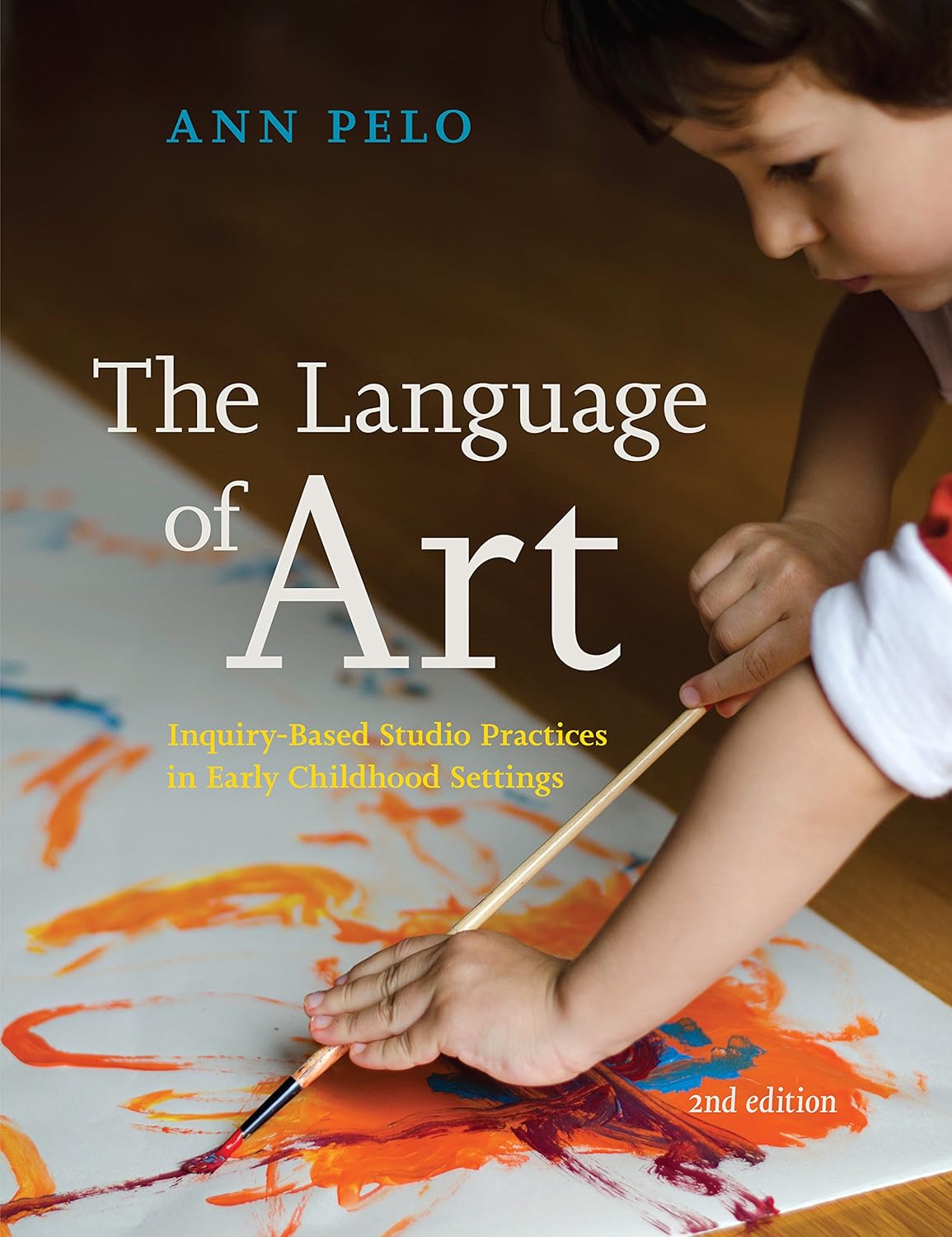
Typical art resources for teachers offer discrete art activities, but these don't carry children or teachers into the practice of using the languages of art. This resource offers guidance for teachers to create space, time, and intentional processes for children's exploration and learning to use art for asking questions, offering insights, exploring hypotheses, and examining experiences from unfamiliar perspectives.
Inspired by an approach to teaching and learning born in Reggio Emilia, Italy, The Language of Art, Second Edition, includes:
- A new art exploration for teachers to gain experience before implementing the practice with children
- Advice on setting up a studio space for art and inquiry
- Suggestions on documenting children's developing fluency with art media and its use in inquiry
- Inspiring photographs and ideas to show you how inquiry-based practices can work in any early childhood setting
Ann Pelo is a teacher educator, program consultant, and author whose primary work focuses on reflective pedagogical practice, social justice and ecological teaching and learning and the art of mentoring. Currently, Pelo consults early childhood educators and administrators in North America, Australia, and New Zealand on inquiry-based teaching and learning, pedagogical leadership, and the necessary place of ecological identity in children'sand adults'lives. She is the author of several books including the first edition of The Language of Art and co-author of Rethinking Early Childhood Education.
Review
I often wonder whether new editions are worth reading, especially when the first one is a winner. YES, YES! This is a must have second edition of an invaluable book.
While this new edition continues to offer teachers a wealth of examples for using art media as tools for inquiry, you’ll find deeper understandings of how the language of art expands children’s ability to pay attention to details, communicate, participate in conversations about ideas, question, collaborate, and take new perspectives. And, you’ll have further help thinking through the teacher’s role in this process, with suggestions to guide your experimentation, your documentation, and reflections on what you are learning.
And, while the language of art indeed cultivates 21st Century Skills, we must heed Pelo’s important reminder that in this prescriptive and assessment driven era, “Art has many purposes, but serving as a conduit for assessment is not one…We can take up art as an expression of our participation in life.”
―Margie Carter, co-founder, Harvest Resources Associates, co-author best selling Redleaf books, The Visionary Director, Designs for Living and Learning, The Art of Awareness, and Learning Together with Young Children
This splendid book contains a wide range of suggestions for introducing young children to paint, drawing materials, clay, loose parts, and wire as resources for aesthetic discovery. It is structured in a useful way for each material―going from getting launched, setting up, exploring and creating, cleaning up, and finally documentation and display. My favorite aspect was the discussion of the teacher’s role as partner and guide, with suggested words the teacher might easily use. These modeled an open, sparkling, respectful, complex, and multifaceted way of interacting with children.
―Carolyn Pope Edwards, EdD, Cather Professor Emeritus, University of Nebraska–Lincoln
"Ann Pelo's The Language of Art: Inquiry-Based Studio Practices in Early Childhood Settings appears in its updated second edition to provide a set of Reggio-based principles and practices for teachers in the arts. Pair a powerful theoretical framework with a curriculum approach that uses the studio arts environment to explore texture, color, shapes, and different perspectives and you have an early education title that shows how studios can be created to encourage young artists to absorb some art basics."
—California Bookwatch, The Education Shelf
About the Author
Details:
Visit the Redleaf Press Store
The Language of Art: Inquiry-Based Studio Practices in Early Childhood Settings
AED27511
Quantity:
Order today to get by 7-14 business days
This item qualifies for free delivery
 Imported From: United States
At BOLO, we work hard to ensure the products you receive are new, genuine, and sourced from reputable suppliers.
Every product in the BOLO catalogue is sourced through our Verified Global Supply Network of verified sellers, authorized distributors or directly from the manufacturer.
Each product undergoes thorough inspection and verification at our consolidation and fulfilment centers to ensure it meets our strict authenticity and quality standards before being shipped and delivered to you.
If you ever have concerns regarding the authenticity of a product purchased from us, please contact Bolo Support. We will review your inquiry promptly and, if necessary, provide documentation verifying authenticity or offer a suitable resolution.
Your trust is our top priority, and we are committed to maintaining transparency and integrity in every transaction.
While we strive to display accurate information, variations in packaging, labeling, instructions, or formulation may occasionally occur due to regional differences or supplier updates. For detailed or manufacturer-specific information, please contact the brand directly or reach out to BOLO Support for assistance.
Unless otherwise stated, all prices displayed on the product page include applicable taxes and import duties.
BOLO operates in accordance with the laws and regulations of United Arab Emirates. Any items found to be restricted or prohibited for sale within the United Arab Emirates will be cancelled prior to shipment. We take proactive measures to ensure that only products permitted for sale in United Arab Emirates are listed on our website.
All items are shipped by air, and any products classified as “Dangerous Goods (DG)” under IATA regulations will be removed from the order and cancelled.
All orders are processed manually, and we make every effort to process them promptly once confirmed. Products cancelled due to the above reasons will be permanently removed from listings across the website.
More from this brand
Similar items from “Arts & Humanities”
Share with
Or share with link
https://www.bolo.ae/products/U1605544574
Visit the Redleaf Press Store
The Language of Art: Inquiry-Based Studio Practices in Early Childhood Settings
AED27511
Quantity:
Order today to get by 7-14 business days
This item qualifies for free delivery
Imported From: United States
At BOLO, we work hard to ensure the products you receive are new, genuine, and sourced from reputable suppliers.
Every product in the BOLO catalogue is sourced through our Verified Global Supply Network of verified sellers, authorized distributors or directly from the manufacturer.
Each product undergoes thorough inspection and verification at our consolidation and fulfilment centers to ensure it meets our strict authenticity and quality standards before being shipped and delivered to you.
If you ever have concerns regarding the authenticity of a product purchased from us, please contact Bolo Support. We will review your inquiry promptly and, if necessary, provide documentation verifying authenticity or offer a suitable resolution.
Your trust is our top priority, and we are committed to maintaining transparency and integrity in every transaction.
While we strive to display accurate information, variations in packaging, labeling, instructions, or formulation may occasionally occur due to regional differences or supplier updates. For detailed or manufacturer-specific information, please contact the brand directly or reach out to BOLO Support for assistance.
Unless otherwise stated, all prices displayed on the product page include applicable taxes and import duties.
BOLO operates in accordance with the laws and regulations of United Arab Emirates. Any items found to be restricted or prohibited for sale within the United Arab Emirates will be cancelled prior to shipment. We take proactive measures to ensure that only products permitted for sale in United Arab Emirates are listed on our website.
All items are shipped by air, and any products classified as “Dangerous Goods (DG)” under IATA regulations will be removed from the order and cancelled.
All orders are processed manually, and we make every effort to process them promptly once confirmed. Products cancelled due to the above reasons will be permanently removed from listings across the website.
Description:
Typical art resources for teachers offer discrete art activities, but these don't carry children or teachers into the practice of using the languages of art. This resource offers guidance for teachers to create space, time, and intentional processes for children's exploration and learning to use art for asking questions, offering insights, exploring hypotheses, and examining experiences from unfamiliar perspectives.
Inspired by an approach to teaching and learning born in Reggio Emilia, Italy, The Language of Art, Second Edition, includes:
- A new art exploration for teachers to gain experience before implementing the practice with children
- Advice on setting up a studio space for art and inquiry
- Suggestions on documenting children's developing fluency with art media and its use in inquiry
- Inspiring photographs and ideas to show you how inquiry-based practices can work in any early childhood setting
Ann Pelo is a teacher educator, program consultant, and author whose primary work focuses on reflective pedagogical practice, social justice and ecological teaching and learning and the art of mentoring. Currently, Pelo consults early childhood educators and administrators in North America, Australia, and New Zealand on inquiry-based teaching and learning, pedagogical leadership, and the necessary place of ecological identity in children'sand adults'lives. She is the author of several books including the first edition of The Language of Art and co-author of Rethinking Early Childhood Education.
Review
I often wonder whether new editions are worth reading, especially when the first one is a winner. YES, YES! This is a must have second edition of an invaluable book.
While this new edition continues to offer teachers a wealth of examples for using art media as tools for inquiry, you’ll find deeper understandings of how the language of art expands children’s ability to pay attention to details, communicate, participate in conversations about ideas, question, collaborate, and take new perspectives. And, you’ll have further help thinking through the teacher’s role in this process, with suggestions to guide your experimentation, your documentation, and reflections on what you are learning.
And, while the language of art indeed cultivates 21st Century Skills, we must heed Pelo’s important reminder that in this prescriptive and assessment driven era, “Art has many purposes, but serving as a conduit for assessment is not one…We can take up art as an expression of our participation in life.”
―Margie Carter, co-founder, Harvest Resources Associates, co-author best selling Redleaf books, The Visionary Director, Designs for Living and Learning, The Art of Awareness, and Learning Together with Young Children
This splendid book contains a wide range of suggestions for introducing young children to paint, drawing materials, clay, loose parts, and wire as resources for aesthetic discovery. It is structured in a useful way for each material―going from getting launched, setting up, exploring and creating, cleaning up, and finally documentation and display. My favorite aspect was the discussion of the teacher’s role as partner and guide, with suggested words the teacher might easily use. These modeled an open, sparkling, respectful, complex, and multifaceted way of interacting with children.
―Carolyn Pope Edwards, EdD, Cather Professor Emeritus, University of Nebraska–Lincoln
"Ann Pelo's The Language of Art: Inquiry-Based Studio Practices in Early Childhood Settings appears in its updated second edition to provide a set of Reggio-based principles and practices for teachers in the arts. Pair a powerful theoretical framework with a curriculum approach that uses the studio arts environment to explore texture, color, shapes, and different perspectives and you have an early education title that shows how studios can be created to encourage young artists to absorb some art basics."
—California Bookwatch, The Education Shelf
About the Author
Details:
More from this brand
Similar items from “Arts & Humanities”
Share with
Or share with link
https://www.bolo.ae/products/U1605544574