Deliver toUnited Arab Emirates
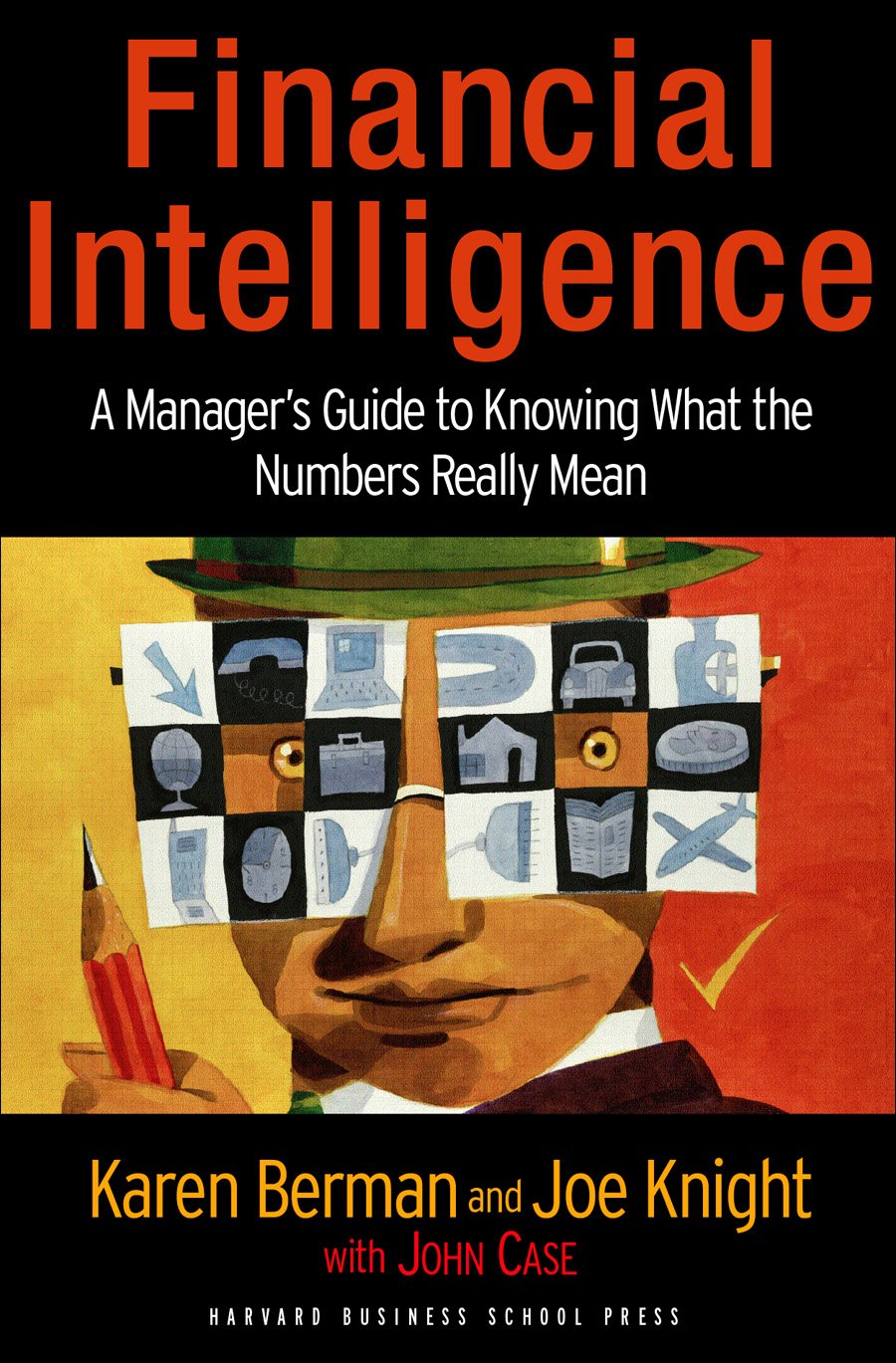
Financial Intelligence: A Manager's Guide to Knowing What the Numbers Really Mean

Description:

Companies expect managers to use financial data to allocate resources and run their departments. But many managers can't read a balance sheet, wouldn't recognize a liquidity ratio, and don't know how to calculate return on investment. Worse, they don't have any idea where the numbers come from or how reliable they really are. In Financial Intelligence, Karen Berman and Joe Knight teach the basics of finance--but with a twist. Financial reporting, they argue, is as much art as science. Because nobody can quantify everything, accountants always rely on estimates, assumptions, and judgment calls. Savvy managers need to know how those sources of possible bias can affect the financials and that sometimes the numbers can be challenged. While providing the foundation for a deep understanding of the financial side of business, the book also arms managers with practical strategies for improving their companies' performance--strategies, such as "managing the balance sheet," that are well understood by financial professionals but rarely shared with their nonfinancial colleagues. Accessible, jargon-free, and filled with entertaining stories of real companies, Financial Intelligence gives nonfinancial managers the financial knowledge and confidence for their everyday work. Karen Berman and Joe Knight are the owners of the Los Angeles-based Business Literacy Institute and have trained tens of thousands of managers at many leading organizations. Co-author John Case has written several popular books on management.


Editorial Reviews

Review

“the best, clearest guides to the numbers that I know of.” – Inc. Magazine

About the Author

Karen Berman and Joseph Knight are the founders of the Los Angeles-based Business Literacy Institute. They train managers at organizations such as American Express, P&G, Pacific Life, GM and Tyco International. They have been interviewed in a wide range of print media including BusinessWeek, USA Today and the LA Times.

John Case has written several successful books including Open-Book Management (HarperBusiness, 1995) and The Open-Book Experience (Addison Wesley,1998). He is a contributing writer for Inc. magazine and has written for HBR and a variety of other business publications.

Reviews:

5.0 out of 5 stars Very good overview

m. · November 8, 2008

I bought this book in order to better understand financial statements and financial ratios for investing, even though the authors wrote it more for managers and not investors. Other books I have purchased for this purpose usually fell into one of three categories: the book defined only the very basics and took such a simple approach with regards to interpreting statements it was a waste of time, the book was for professionals and so far advanced that it didn't bother to have a helpful introduction, or the book started slowly and did a good job at the beginning but then went into overdrive with few explanations after a good introduction and I ended up getting lost."Financial Intelligence" is by far the best book from start to finish on interpreting financial statements, what they mean, and how they apply to business that I have read. In the first part of the book, the authors take the reader slowly through each type of statement (income, balance sheet, and cash flow), what the different categories mean on each sheet, and give examples of what these numbers actually mean. Sunbeam, Enron, and Worlcom are used throughout the book as examples where numbers can be fudged or hints of abuse could have been detected ahead of time. The authors continue this dissection further by showing the different financial ratios derived from the statements, what they mean, and how they can be used as indicators of how a business is doing. The last part of the book then deals with how a business actually functions and its realtion to the statments; it shows how a company can show a profit but still go broke, how cash flows are "king", and what working capital is and the cycle it goes through. Again, very good examples are given durng each topic so that the reader can get a good handle on the subject. The only section that seemed out of place was how managers can discount cash flows to try and determine the return on projects; this subject would have been better in a true corporate finance book.Overall, this is by far the best, simplest book I have read on financial statements and how to interpret them. The things that sets it apart from the others is the straightforward, easy writing style and the great examples given to demonstrate each accounting concept. The best thing is not only did I finally understand the statements and how they are interconnected, but I gained a better understanding of what makes a good company with respect to generating cash and managing inventories. This is a great book for beginners; if you do have trouble with it, try working the Schaum books on financial statements first and then come back.

5.0 out of 5 stars This book is GREAT! The text is understandable

D.R. · October 23, 2017

This book is GREAT! The text is understandable, yet informative for people with accounting level at all knowledge. I read this book at a libary and then bought one for me and my gf. I just wish, the authors would contine such as writting a similar book about management accounting for exampleP.S. sorry for my english

4.0 out of 5 stars Financial Reporting Made Understandable and Even A Little Interesting

E.A.S. · July 29, 2013

This book clearly describes how to read the main financial documents which a public company publishes about itself. In so this, it provides a great introduction to us non-accountant types about what the finance department of a company actually does.The book's descriptions were clear, and the authors took the time to describe the 'why' behind various types of financial reports.What I found really nice about this book was that the authors were able to use recent cases of corporate malfeasance (i.e. cooking the books) to highlight many of the topics they cover. This not only brings the lessons home but also makes a potential dry topic more interesting.

5.0 out of 5 stars YOU need to read this book!!!

C.E. · June 23, 2011

I strongly recommend this book for anyone who does not come from a financial or business background -- and must understand the financial health of their employer, even if that employer is themselves. I think local SCORE chapters & SBDCs should make this book required reading for their clients. (Maybe they do - it's been a while since I was a client.)In my case, I basically understood that there were P&L statements and statements of cash flow, and I had some grasp of how to read them (and balance sheets.) But this book is helping me REALLY understand how the numbers come together. One of the best aspects of it is the inclusion of real world companies that made headlines when they crashed. This book explains what was going on related to their income statements/balance sheets/cash flow.This book also takes time to explain to you that there's Finance, and "The Art of Finance." The latter is where human beings enter the equation, so to speak, and have room to fuzz up the numbers. Depreciation, for example.And if you seize up at the thought of reading about depreciation, it's not like that. It is like sitting across the kitchen table having a favorite relative explain to you how it works, in terms you can understand.In this era of layoffs, if you are an ex-employee thinking about starting your own business, you need to read this book. (among others.) And if you are up to your eyeballs in alligators running your own business, you need to read this book.

5.0 out of 5 stars This book really helped me. Easy to read.

b. · April 13, 2015

This book really helped me. It's been years since I read it, but I still use the info that I learnt from it. It gives you a very practical overview of how to look at balance sheets, income statements, etc. I really liked it and I find it useful in doing simple analysis of companies across industries. This book was easy to read as well

5.0 out of 5 stars Great Book

*. · December 13, 2012

The book came just as described. It was used but looked brand knew. This is actually fantastically written book on the subject. One of the best accounting books I've ever read. Very clear explanations. The writers assume you don't know much about accounting but don't write like you're an idiot. If you want to know more about organizational accounting, I would HIGHLY recommend it.

Lays out accounting in a very easy and understandable manner for the average person

A.D. · December 10, 2014

I need this book for my intro to accounting class at University. Lays out accounting in a very easy and understandable manner for the average person.

One Star

N.B.D. · November 11, 2014

The book in hard cover was delivered without the printed cover paper

L'un des meilleur ouvrage que j'ai acheté de ma vie

A. · January 9, 2020

Ouvrage indispensable pour tout étudiant, il permet de se construire les bases indispensables en finance d'entreprise tout en aiguisant son anglais technique dans le domaine.

Excellent

R. · June 19, 2012

Excellent book on explaining what the numbers actually mean in the financial statements.It is done in layman terms so that anyone can follow and understand.R.K

Condition was good, but perhaps a little more worn than expected ...

S.S. · September 24, 2016

Fast delivery. Condition was good, but perhaps a little more worn than expected based on th description. No issues with the pages, which is the important part. Would recommend.

Financial Intelligence: A Manager's Guide to Knowing What the Numbers Really Mean

Product ID: U1591397642
Condition: New

4.6

AED24093

Price includes VAT & Import Duties
Type: Hardcover
Availability: In Stock

Quantity:

|

Order today to get by 7-14 business days

This item qualifies for free delivery

Returns & Warranty policies

Imported From: United States

At BOLO, we work hard to ensure the products you receive are new, genuine, and sourced from reputable suppliers.

BOLO is not an authorized or official retailer for most brands, nor are we affiliated with manufacturers unless specifically stated on a product page. Instead, we source verified sellers, authorized distributors or directly from the manufacturer.

Each product undergoes thorough inspection and verification at our consolidation and fulfilment centers to ensure it meets our strict authenticity and quality standards before being shipped and delivered to you.

If you ever have concerns regarding the authenticity of a product purchased from us, please contact Bolo Support. We will review your inquiry promptly and, if necessary, provide documentation verifying authenticity or offer a suitable resolution.

Your trust is our top priority, and we are committed to maintaining transparency and integrity in every transaction.

All product information, images, descriptions, and reviews originate from the manufacturer or from trusted sellers overseas. BOLO is not affiliated with, endorsed by, or an authorized retailer for most brands listed on our website unless stated otherwise.

While we strive to display accurate information, variations in packaging, labeling, instructions, or formulation may occasionally occur due to regional differences or supplier updates. For detailed or manufacturer-specific information, please contact the brand directly or reach out to BOLO Support for assistance.

Unless otherwise stated, all prices displayed on the product page include applicable taxes and import duties.

BOLO operates in accordance with the laws and regulations of United Arab Emirates. Any items found to be restricted or prohibited for sale within the UAE will be cancelled prior to shipment. We take proactive measures to ensure that only products permitted for sale in United Arab Emirates are listed on our website.

All items are shipped by air, and any products classified as “Dangerous Goods (DG)” under IATA regulations will be removed from the order and cancelled.

All orders are processed manually, and we make every effort to process them promptly once confirmed. Products cancelled due to the above reasons will be permanently removed from listings across the website.

More from this brand

Similar items from “Corporate Finance”

Financial Intelligence: A Manager's Guide to Knowing What the Numbers Really Mean

Product ID: U1591397642
Condition: New

4.6

Financial Intelligence: A Manager's Guide to Knowing What the Numbers Really Mean-0
Type: Hardcover

AED24093

Price includes VAT & Import Duties
Availability: In Stock

Quantity:

|

Order today to get by 7-14 business days

This item qualifies for free delivery

Returns & Warranty policies

Imported From: United States

At BOLO, we work hard to ensure the products you receive are new, genuine, and sourced from reputable suppliers.

BOLO is not an authorized or official retailer for most brands, nor are we affiliated with manufacturers unless specifically stated on a product page. Instead, we source verified sellers, authorized distributors or directly from the manufacturer.

Each product undergoes thorough inspection and verification at our consolidation and fulfilment centers to ensure it meets our strict authenticity and quality standards before being shipped and delivered to you.

If you ever have concerns regarding the authenticity of a product purchased from us, please contact Bolo Support. We will review your inquiry promptly and, if necessary, provide documentation verifying authenticity or offer a suitable resolution.

Your trust is our top priority, and we are committed to maintaining transparency and integrity in every transaction.

All product information, images, descriptions, and reviews originate from the manufacturer or from trusted sellers overseas. BOLO is not affiliated with, endorsed by, or an authorized retailer for most brands listed on our website unless stated otherwise.

While we strive to display accurate information, variations in packaging, labeling, instructions, or formulation may occasionally occur due to regional differences or supplier updates. For detailed or manufacturer-specific information, please contact the brand directly or reach out to BOLO Support for assistance.

Unless otherwise stated, all prices displayed on the product page include applicable taxes and import duties.

BOLO operates in accordance with the laws and regulations of United Arab Emirates. Any items found to be restricted or prohibited for sale within the UAE will be cancelled prior to shipment. We take proactive measures to ensure that only products permitted for sale in United Arab Emirates are listed on our website.

All items are shipped by air, and any products classified as “Dangerous Goods (DG)” under IATA regulations will be removed from the order and cancelled.

All orders are processed manually, and we make every effort to process them promptly once confirmed. Products cancelled due to the above reasons will be permanently removed from listings across the website.

Description:

Companies expect managers to use financial data to allocate resources and run their departments. But many managers can't read a balance sheet, wouldn't recognize a liquidity ratio, and don't know how to calculate return on investment. Worse, they don't have any idea where the numbers come from or how reliable they really are. In Financial Intelligence, Karen Berman and Joe Knight teach the basics of finance--but with a twist. Financial reporting, they argue, is as much art as science. Because nobody can quantify everything, accountants always rely on estimates, assumptions, and judgment calls. Savvy managers need to know how those sources of possible bias can affect the financials and that sometimes the numbers can be challenged. While providing the foundation for a deep understanding of the financial side of business, the book also arms managers with practical strategies for improving their companies' performance--strategies, such as "managing the balance sheet," that are well understood by financial professionals but rarely shared with their nonfinancial colleagues. Accessible, jargon-free, and filled with entertaining stories of real companies, Financial Intelligence gives nonfinancial managers the financial knowledge and confidence for their everyday work. Karen Berman and Joe Knight are the owners of the Los Angeles-based Business Literacy Institute and have trained tens of thousands of managers at many leading organizations. Co-author John Case has written several popular books on management.


Editorial Reviews

Review

“the best, clearest guides to the numbers that I know of.” – Inc. Magazine

About the Author

Karen Berman and Joseph Knight are the founders of the Los Angeles-based Business Literacy Institute. They train managers at organizations such as American Express, P&G, Pacific Life, GM and Tyco International. They have been interviewed in a wide range of print media including BusinessWeek, USA Today and the LA Times.

John Case has written several successful books including Open-Book Management (HarperBusiness, 1995) and The Open-Book Experience (Addison Wesley,1998). He is a contributing writer for Inc. magazine and has written for HBR and a variety of other business publications.

Reviews:

5.0 out of 5 stars Very good overview

m. · November 8, 2008

I bought this book in order to better understand financial statements and financial ratios for investing, even though the authors wrote it more for managers and not investors. Other books I have purchased for this purpose usually fell into one of three categories: the book defined only the very basics and took such a simple approach with regards to interpreting statements it was a waste of time, the book was for professionals and so far advanced that it didn't bother to have a helpful introduction, or the book started slowly and did a good job at the beginning but then went into overdrive with few explanations after a good introduction and I ended up getting lost."Financial Intelligence" is by far the best book from start to finish on interpreting financial statements, what they mean, and how they apply to business that I have read. In the first part of the book, the authors take the reader slowly through each type of statement (income, balance sheet, and cash flow), what the different categories mean on each sheet, and give examples of what these numbers actually mean. Sunbeam, Enron, and Worlcom are used throughout the book as examples where numbers can be fudged or hints of abuse could have been detected ahead of time. The authors continue this dissection further by showing the different financial ratios derived from the statements, what they mean, and how they can be used as indicators of how a business is doing. The last part of the book then deals with how a business actually functions and its realtion to the statments; it shows how a company can show a profit but still go broke, how cash flows are "king", and what working capital is and the cycle it goes through. Again, very good examples are given durng each topic so that the reader can get a good handle on the subject. The only section that seemed out of place was how managers can discount cash flows to try and determine the return on projects; this subject would have been better in a true corporate finance book.Overall, this is by far the best, simplest book I have read on financial statements and how to interpret them. The things that sets it apart from the others is the straightforward, easy writing style and the great examples given to demonstrate each accounting concept. The best thing is not only did I finally understand the statements and how they are interconnected, but I gained a better understanding of what makes a good company with respect to generating cash and managing inventories. This is a great book for beginners; if you do have trouble with it, try working the Schaum books on financial statements first and then come back.

5.0 out of 5 stars This book is GREAT! The text is understandable

D.R. · October 23, 2017

This book is GREAT! The text is understandable, yet informative for people with accounting level at all knowledge. I read this book at a libary and then bought one for me and my gf. I just wish, the authors would contine such as writting a similar book about management accounting for exampleP.S. sorry for my english

4.0 out of 5 stars Financial Reporting Made Understandable and Even A Little Interesting

E.A.S. · July 29, 2013

This book clearly describes how to read the main financial documents which a public company publishes about itself. In so this, it provides a great introduction to us non-accountant types about what the finance department of a company actually does.The book's descriptions were clear, and the authors took the time to describe the 'why' behind various types of financial reports.What I found really nice about this book was that the authors were able to use recent cases of corporate malfeasance (i.e. cooking the books) to highlight many of the topics they cover. This not only brings the lessons home but also makes a potential dry topic more interesting.

5.0 out of 5 stars YOU need to read this book!!!

C.E. · June 23, 2011

I strongly recommend this book for anyone who does not come from a financial or business background -- and must understand the financial health of their employer, even if that employer is themselves. I think local SCORE chapters & SBDCs should make this book required reading for their clients. (Maybe they do - it's been a while since I was a client.)In my case, I basically understood that there were P&L statements and statements of cash flow, and I had some grasp of how to read them (and balance sheets.) But this book is helping me REALLY understand how the numbers come together. One of the best aspects of it is the inclusion of real world companies that made headlines when they crashed. This book explains what was going on related to their income statements/balance sheets/cash flow.This book also takes time to explain to you that there's Finance, and "The Art of Finance." The latter is where human beings enter the equation, so to speak, and have room to fuzz up the numbers. Depreciation, for example.And if you seize up at the thought of reading about depreciation, it's not like that. It is like sitting across the kitchen table having a favorite relative explain to you how it works, in terms you can understand.In this era of layoffs, if you are an ex-employee thinking about starting your own business, you need to read this book. (among others.) And if you are up to your eyeballs in alligators running your own business, you need to read this book.

5.0 out of 5 stars This book really helped me. Easy to read.

b. · April 13, 2015

This book really helped me. It's been years since I read it, but I still use the info that I learnt from it. It gives you a very practical overview of how to look at balance sheets, income statements, etc. I really liked it and I find it useful in doing simple analysis of companies across industries. This book was easy to read as well

5.0 out of 5 stars Great Book

*. · December 13, 2012

The book came just as described. It was used but looked brand knew. This is actually fantastically written book on the subject. One of the best accounting books I've ever read. Very clear explanations. The writers assume you don't know much about accounting but don't write like you're an idiot. If you want to know more about organizational accounting, I would HIGHLY recommend it.

Lays out accounting in a very easy and understandable manner for the average person

A.D. · December 10, 2014

I need this book for my intro to accounting class at University. Lays out accounting in a very easy and understandable manner for the average person.

One Star

N.B.D. · November 11, 2014

The book in hard cover was delivered without the printed cover paper

L'un des meilleur ouvrage que j'ai acheté de ma vie

A. · January 9, 2020

Ouvrage indispensable pour tout étudiant, il permet de se construire les bases indispensables en finance d'entreprise tout en aiguisant son anglais technique dans le domaine.

Excellent

R. · June 19, 2012

Excellent book on explaining what the numbers actually mean in the financial statements.It is done in layman terms so that anyone can follow and understand.R.K

Condition was good, but perhaps a little more worn than expected ...

S.S. · September 24, 2016

Fast delivery. Condition was good, but perhaps a little more worn than expected based on th description. No issues with the pages, which is the important part. Would recommend.

More from this brand

Similar items from “Corporate Finance”