Deliver toUnited Arab Emirates
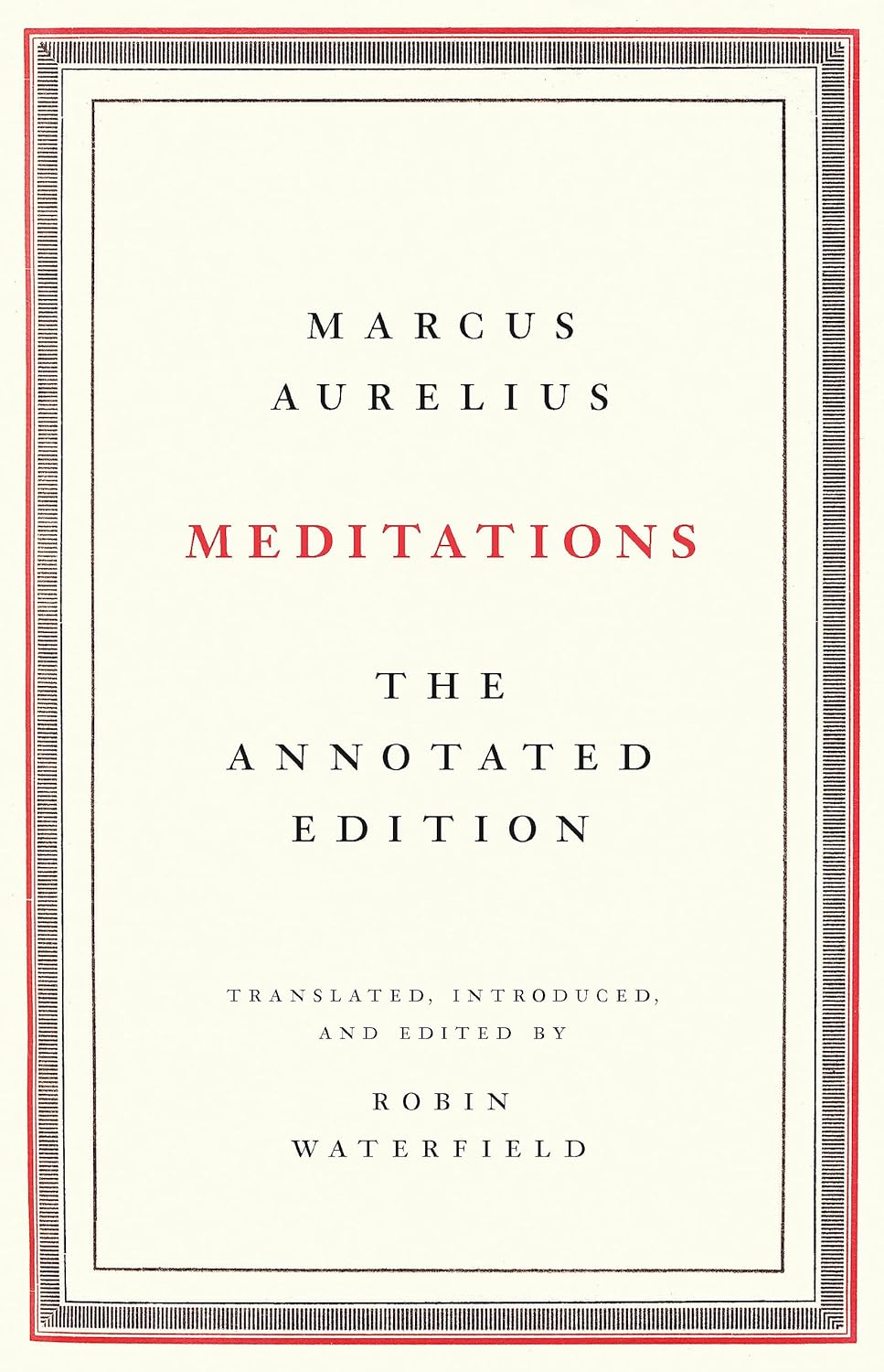
Meditations: The Annotated Edition

Description:

A handsome hardcover edition of Robin Waterfield’s definitive translation, with rich annotations providing everything readers need to understand this timeless masterpiece of practical philosophy.

“A treat (and an eye-opening experience) … If you haven’t read Marcus Aurelius or if you have…you should read this book and then read it again.”
―Ryan Holiday, bestselling author of The Daily Stoic

An inexhaustible source of wisdom,
Meditations is one of the greatest works of popular philosophy ever written. As Roman emperor, Marcus Aurelius was the most powerful man in the world, yet he was also an intensely private person with a rich interior life and one of the wisest minds of his generation. He collected his thoughts in notebooks, the entries ranging from one-line aphorisms to essays, from profundity to bitterness, but always with an eye to how one can live with dignity and thrive in an adverse world. A beautiful object on your bookcase or in your hand, this hardcover edition offers the definitive translation of this much beloved text. Copious notes from world-renowned classics expert Robin Waterfield enrich the understanding of even the most devoted Stoic, while guiding those new to the text through Marcus Aurelius’ world and the timeless insights he offers.


Editorial Reviews

Review

“[This translation] is wonderfully sober and taut, the choices felicitous….The volume’s stand-out feature is its wide-ranging set of footnotes, offering assistance to novice readers, insights that will intrigue specialists, and reformulations that clarify Marcus’ thoughts.”―Wall Street Journal

"The full and accessible notes make this volume particularly useful for those reading the work as life-guidance, as well as for other readers.”―
Chris Gill, Classical Review

“A splendid translation… The notes and introduction are detailed but clear, authoritative both historically and philosophically, telling modern readers what they need to know. This is the best translation of the Meditations available today.”―
Brad Inwood, William Lampson Professor of Philosophy and Classics, Yale University

"This new edition of the
Meditations really is superb. Robin Waterfield is one of the most accomplished translators of ancient Greek out there. His [translation is] lucid and precise…and the extensive notes take into account the latest scholarship while remaining accessible. This must surely become the first choice English edition of the Meditations for decades to come." ―John Sellars, author of Lessons in Stoicism

“This is a valuable addition to our stock of modern translations of the 
Meditations. The translation is accurate but also accessible and powerful. The full and informative introduction and the notes, helpfully placed at the foot of each page, make this a book that offers much to a wide variety of readers.”―Christopher Gill, emeritus professor of ancient Thought, University of Exeter, and author of Greek Thought

“Do we need another translation of Marcus Aurelius’s
Meditations? Yes, especially when it is so thoroughly and informatively annotated as Waterfield's. The introduction alone is worth the price of admission.”―Massimo Pigliucci, author of How to Be A Stoic

“A dazzling new translation… Readers: Do not skip the introduction. In hard-hitting and eloquent prose, Waterfield explains the personal and private meditations of an emperor who turns to Stoicism for exercises in becoming a better person and a better world leader.”―
Nancy Sherman, professor of philosophy, Georgetown University

“The best of both worlds: a lively, readable, and engaging translation, supplemented by extensive notes drawn from up-to-date scholarship. Marcus emerges from the mists of time with a clear voice and a compelling vision.”―
Tad Brennan, professor of philosophy and classics, Cornell University

About the Author

Robin Waterfield is a British classical scholar, translator, and editor, specializing in ancient Greek philosophy and history. Among others, his translations include Plato’s Republic, Herodotus’s The Histories, and Aesop’s Fables. He lives in Greece. 

Reviews:

5.0 out of 5 stars Belongs in your library

B.T. · October 20, 2025

This is great to have alongside the Gregory Hays translation. Both good but the annotated book is a needed resourse.

5.0 out of 5 stars Wisdom in hardcover

F. · May 9, 2024

MEDITATIONS: The Annotated Edition | Marcus Aurelius, truanted by Robin Waterfield, Basic Books, (2016) 384p.Marcus Aurelius, a prominent figure in Western philosophy, wrote "Meditations," a collection of personal reflections and philosophical musings, during his reign as the Roman Emperor from 161 to 180 AD. This work has profoundly impacted Western thought and continues to be studied and revered today. In this essay, we will delve into the life of Marcus Aurelius, the significance of "Meditations" in Western civilization, and the arguments and messages advanced in the book.Marcus Aurelius Antoninus Augustus, born on April 26, 121 AD, was a member of the Nerva-Antonine dynasty, which ruled the Roman Empire during the 2nd century AD. His father, Marcus Annius Verus, was a wealthy equestrian, while his mother, Domitia Lucilla, came from an aristocratic family. Marcus Aurelius was educated in Greek and Latin literature, philosophy, and politics, which prepared him for his eventual ascension to the throne. He succeeded his adoptive father, Antoninus Pius, as emperor in 161 AD and ruled until he died in 180 AD.Marcus Aurelius is remembered for his military campaigns, administrative reforms, intellectual pursuits, and philosophical writings. He was deeply influenced by Stoicism, a school of thought that emphasized reason, self-control, and inner strength. His journals, later compiled and published as "Meditations," reflect his deep commitment to Stoic principles and offer insight into his introspective nature and leadership philosophy.Significance of "Meditations" in Western Civilization"Meditations" holds a unique position in Western literature and philosophy. It is considered one of the most important works of Stoic philosophy, offering practical advice on how to live a virtuous life amidst the turmoils of political power struggles and personal conflicts. The book has been studied by scholars, philosophers, politicians, and laypeople alike, providing timeless wisdom on topics such as ethics, morality, and human nature.The work has had a lasting impact on Western thought, influencing notable figures like René Descartes, Immanuel Kant, and Jean-Jacques Rousseau. It has been translated into numerous languages and has inspired literary masterpieces, artworks, and musical compositions. "Meditations" serves as a testament to the enduring appeal of Stoicism, reminding readers of the importance of cultivating inner strength, humility, and resilience in the face of life's challenges.Arguments and Messages Advanced in "Meditations"In "Meditations," Marcus Aurelius offers a series of philosophical meditations, often addressed to himself, on various aspects of life, ethics, and leadership. Some central themes and arguments include:1. The Importance of Reason and Self-Reflection: Marcus Aurelius emphasizes the need for rational thinking, self-awareness, and introspection. He encourages individuals to question their beliefs, values, and actions, fostering personal growth and self-improvement.2. Virtue Ethics: The book focuses on developing virtue and moral character. Marcus Aurelius argues that a virtuous life requires discipline, responsibility, and adherence to principles rather than mere external appearances or material possessions.3. Cosmic Determinism: Marcus Aurelius subscribes to a form of determinism, believing that everything in the universe is interconnected and predetermined. He encourages acceptance of fate and advocates for living by universal principles rather than struggling against them.4. Inner Strength and Resilience: Marcus Aurelius stresses the importance of developing inner fortitude and perseverance throughout the book. He advises individuals to cultivate a strong sense of self, unwavering resolve, and courage in adversity.5. Leadership Philosophy: As a ruler, Marcus Aurelius offers insights into effective leadership, emphasizing the importance of justice, fairness, and compassion. He underscores the leader's duty to serve others and promote the common good.6. Nature and Human Nature: The book explores the natural world and humanity's place within it. Marcus Aurelius contemplates the fleeting nature of existence.7. The Fleeting Nature of Existence: Marcus Aurelius frequently reflects on the transience of life, urging individuals to cherish each moment and live in the present. He reminds us that our time on earth is limited and that we should strive to make the most of it.8. Gratitude and Appreciation: The book expresses gratitude for the simple pleasures in life, such as health, family, friends, and the beauty of nature. Marcus Aurelius encourages individuals to cultivate a mindset of appreciation, recognizing the value of everyday experiences and relationships.9. Mindfulness and Living in the Present: In relation to the fleeting nature of existence, Marcus Aurelius promotes mindfulness and living in the present moment. He suggests focusing on the current instant without worrying about the future or dwelling on the past.10. Non-attachment: Another essential idea in "Meditations" is non-attachment. Marcus Aurelius advises individuals to avoid attachment to material possessions, status, thoughts, and emotions. This philosophy helps individuals develop inner peace and maintain equanimity amidst life's challenges.11. Overcoming Negative Emotions: The book addresses various negative emotions, such as anger, fear, and envy, offering strategies for managing and overcoming them. Marcus Aurelius suggests recognizing the irrational nature of these emotions and replacing them with more constructive thoughts and behaviors.12. Personal Growth and Development: Throughout "Meditations," Marcus Aurelius highlights the importance of continuous personal growth and self-improvement. He encourages individuals to challenge themselves, learn from mistakes, and cultivate new skills and perspectives.13. Practicing Stoicism: While "Meditations" is not explicitly a treatise on Stoicism, the book does convey many core Stoic principles. These include the pursuit of virtue, indifference to external events, and the belief in a universal reason governing the cosmos. By practicing Stoicism, Marcus Aurelius illustrates how individuals can cultivate inner strength, wisdom, and contentment.14. Recognizing Interdependence: The book acknowledges the interconnectedness of all things, emphasizing our reliance on one another and the natural world. This recognition encourages cooperation, empathy, mutual respect among people, and a deep appreciation for the intricate web of life.15. Seeking Guidance from History: Marcus Aurelius often looks to history for inspiration and guidance. He cites examples of exemplary individuals, both historical and mythological, who embodied virtues such as courage, wisdom, and self-discipline. By studying the past, he encourages readers to draw lessons and apply them to their lives.16. The Role of Chance and Fate: While emphasizing personal responsibility, Marcus Aurelius also acknowledges the role of chance and fate in shaping our lives. He suggests that individuals should adapt to changing circumstances and accept what lies outside their control while still striving to act virtuously and make wise decisions.17. Universal Principles and Cosmic Order: Underlying many themes in "Meditations" is a belief in universal principles and a coherent cosmic order. Marcus Aurelius posits that the universe operates according to reason and that individuals should strive to align themselves with this higher purpose. This perspective fosters a sense of harmony between humans, nature, and the broader cosmos.18. Virtue as the Supreme Good: For Marcus Aurelius, virtue represents the supreme good, eclipsing other perceived benefits like wealth, power, or pleasure. He argues that a virtuous life brings happiness, fulfillment, and lasting value.19. Warnings Against Luxury and Complacency: Throughout the book, the author cautions against excessive luxury and complacency, which can lead to softness, indulgence, and a decline in personal character. He advocates for simplicity, frugality, and moderation instead.20. Embracing Mortality: Finally, "Meditations" confronts the reality of mortality, accepting it as an inherent aspect of life. Marcus Aurelius encourages individuals to embrace their finite existence, using it as motivation to live meaningfully and make the most of their brief time on earth.21. The Importance of Reason: Marcus Aurelius frequently emphasizes the significance of reason in understanding the world and navigating life's challenges. He sees reason as a source of wisdom, guidance, and inner strength.22. The Nature of the Universe: The book touches on the nature of the universe, describing it as an interconnected whole governed by reason and natural laws. This perspective encourages a sense of awe, wonder, and respect for the natural world.23. The Role of Imagination: Marcus Aurelius discusses the power of imagination in shaping our perceptions and experiences. He suggests that we use imagination to visualize and prepare ourselves for various challenges and cultivate mental images that promote inner strength and resilience.24. Dealing with Adversity: The book offers insights into coping with adversity, emphasizing the importance of resilience, patience, and acceptance in the face of hardships. Marcus Aurelius encourages individuals to embrace difficulties as opportunities for growth and self-improvement.25. Cultivating Inner Strength: Throughout "Meditations," Marcus Aurelius stresses the need to develop inner strength and resilience. He believes true strength lies in managing one’s thoughts, emotions, and desires rather than physical prowess or external power.26. The Value of Solitude: The author praises the benefits of solitude, recommending periods of quiet contemplation to reflect, introspect, and recharge. Solitude allows individuals to connect with their inner selves, gain clarity, and cultivate wisdom.27. The Fleeting Nature of Human Life: Marcus Aurelius regularly reminds himself—and readers—of the transient nature of human existence. This awareness encourages a focus on the present moment and a desire to make the most of the time available for personal growth and positive impact.28. The Importance of Friendship: The book celebrates the value of genuine friendships, emphasizing the significance of shared values, trust, and support. True friendship provides comfort, advice, and inspiration for personal development.29. Coping with Change and Uncertainty: "Meditations" addresses the inevitability of change and uncertainty in life. Marcus Aurelius encourages individuals to embrace flexibility, adapt to new situations, and find ways to thrive despite unpredictable circumstances.30. Maintaining Perspective: The author urges readers to support a broad perspective, considering the larger context of the universe and the minute scale of individual existence. This balanced view helps individuals remain humble, grounded, and grateful for their place in the world.31. The Power of Letting Go: Marcus Aurelius advocates for letting go of attachments to outcomes, expectations, and negative emotions. Individuals can attain greater freedom, peace, and inner harmony by releasing these burdens.32. Embracing Impermanence: The book explores the concept of impermanence, acknowledging that everything in life is subject to change and decay. Instead of resisting this natural process, Marcus Aurelius suggests embracing it to cultivate detachment, acceptance, and a deeper appreciation for life’s fleeting moments instead of fighting it.33. Self-Reflection and Introspection: Throughout "Meditations," the author engages in self-reflection and introspection, examining his thoughts, emotions, and actions. He encourages readers to do the same, seeking self-awareness, personal growth, and spiritual evolution.34. The Benefits of Physical Exercise: Marcus Aurelius extols the virtues of physical exercise, seeing it as a way to discipline the body, improve mental focus, and enhance overall well-being. He encourages regular activity, moderation, and self-care.35. The Pursuit of Wisdom: The book concludes with reflections on the ultimate goal of life: the pursuit of wisdom. For Marcus Aurelius, wisdom encompasses a deep understanding of the universe, oneself, and the interconnectedness of all things. It guides individuals toward virtuous living, inner peace, and a fulfilling existence.36. In “Meditations” by Marcus Aurelius, these thirty-five themes and ideas offer valuable insights into Stoic philosophy, personal development, and meaningful life. They provideIn conclusion, "Meditations" by Marcus Aurelius is a profound and timeless philosophical work that offers practical wisdom for living a virtuous and fulfilling life. The book is a collection of personal reflections and musings, touching on themes such as stoicism, self-control, inner strength, and the pursuit of wisdom.Throughout the book, Marcus Aurelius emphasizes the importance of cultivating inner strength, managing thoughts and emotions, and living by reason and virtue. He also stresses embracing challenges and difficulties as opportunities for growth and self-improvement.The book is characterized by its accessibility and relevance, making it a valuable resource for anyone seeking practical advice on navigating life’s complexities and living a meaningful existence. Its themes and ideas resonate with readers today, offering enduring insight into the human experience and the quest for a fulfilling life.In summary, "Meditations" is a rich and thought-provoking work that invites readers to reflect on their beliefs, values, and aspirations. It encourages individuals to strive for personal growth, inner strength, and wisdom, serving as a guidebook for those seeking to live virtuous and purposeful lives.

5.0 out of 5 stars loaded with life changing perspectives on things you wouldn't otherwise think about.

L. · December 9, 2024

There is so many explanations of this book that will change how you see things. Highly recommend. My only complaint is that the layout is kind of strange but after reading for alittle you will realize that is the ideal way of it being set up. It helps you understand what marcus is trying to say as with some parts it can be slightly difficult to comprehend. Overall highly recommend this book however I would say read it in small parts so you can really understand the information and apply it to your life. Otherwise you will just have too much to think about and will not remember all of it, whereas if you read it in small parts you can truly digest what he is saying.

5.0 out of 5 stars Worth it for the footnotes and intro alone

o. · August 26, 2021

The best modern translation with a solid introduction and well-researched footnotes, by far.For me, Waterfield’s footnotes are the star attraction as they shed light on Marcus’ thinking and provide a convenient explanation of source material that Marcus may have been alluding to. The footnotes also contain explanations of stoic terms, cosmology, short explanations of people Marcus mentions and possibly why he made them, along with other cultural references from the Roman Empire that the modern reader may not be familiar with.My recommendation is to buy the hardback book in order to read the footnotes fluidly. The footnotes can sometimes take up half of a page. The kindle version makes it difficult to read as fluidly and as elegantly as the hardback.

5.0 out of 5 stars Truth will set us free

T.I. · September 24, 2025

Great classic…should be in all our libraries

4.0 out of 5 stars Great read

K. · April 20, 2025

Bolo has a tendency to leave black marks over the book covers. Anyways... the book is pretty good though it essentially is a journal of an roman emporer trying to do shadow work (stoicism) and the author does a great job throwing in context/history.

5.0 out of 5 stars The lion seeks his prey after dark, says the psalmist.

A.f.o.H. · August 4, 2025

I purchased this book for my cousin, an erstwhile student of philosophy, to follow his calling. Then I realized that Seneca would be better for him. Who does not love those who lead us to Christ. Thanks be to God that Jesus keeps coming.

5.0 out of 5 stars Good read and learning tool

A.C. · May 27, 2024

I appreciate the introduction, references, and annotations. I especially like the way he lays down the groundwork for a understanding of Stoicism, and thus the mindset of Marcus Aurelius. I feel that the author tried to be as true to the original as possible, approaching it like the professor he is, and not a guru trying to rewrite someone’s mind to reflect the current agenda. I would recommend this book, and have bought it as a gift for others.

Interesting

A. · September 8, 2023

A book for the scholar in you. Looks good in any library.

Beautiful

t. · August 29, 2025

Really beautiful edition. If you are into philosophy this book is an absolute essential for a book shelf or desk

So important to read

I. · August 6, 2025

Meditations comprises the surviving journals written by Marcus Aurelius, the Roman emperor. It deals with essential thoughts about life, living life as a virtuous human, and becoming a good person in Stoic terms.Marcus Aurelius was not perfect during his lifetime: the lessons he mentioned in his journals were directed to himself, he often struggled with his contemporaries' behaviours and drifted into cynical comments about them. Instead of lecturing others, his words were meant for his own benefit. This is why some entries can not be assigned to a person or an event in particular, but refer to something or someone only he knew of in his lifetime. Marcus did not explain his words to make them easier for posterity to understand, as they were not meant for publication.Nevertheless, it's helpful to read this book. To make reading easier, footnotes explain some passages. It is one of those books you can read more than once in your life, as its content is still valid today, even after all these years since his life ended. Especially Notebook 8 contains many helpful hints that are still relevant today. I recommend reading the book.

Me gusta la traducción y las notas.

F.H. · June 7, 2023

A falta de una traducción en español que me convenza, esta es la que más me ha gustado en inglés, y las anotaciones me han resultado muy útiles; es mi nueva edición y traducción favorita.

Helpful and insightful. I'm grateful for this and believe it's both worth reading and purchasing.

J. · April 8, 2021

I read it yesterday quickly - to me it's unpretentious, has a deal of humour and makes no claim to unique discovery - however I discovered a lot (maybe that's just me). We've all read many versions by now and often repeatedly - I like this one a lot, the style is deliberately accessible - it acknowledges it's debts to and improvements suggested by some current luminaries in the field and states clearly the paradox of the intention of the author to write a book on the historical Meditations and not primarily for the new Stoics, but posits that it's probably a book which will serve them well. I occasionally think I'm one, and, if that's the case, then I agree.In a nutshell - refreshing - he enjoyed writing it I believe - he wrote it for the annotations and the introduction principally. I haven't questioned his translation, but it reads very well. He has achieved much.

Meditations: The Annotated Edition

Product ID: U1541673859
Condition: New

4.8

AED12954

Price includes VAT & Import Duties
Type: Hardcover
Availability: In Stock

Quantity:

|

Order today to get by 7-14 business days

Delivery fee of AED 20. Free for orders above AED 200.

Returns & Warranty policies

Imported From: United States

At BOLO, we work hard to ensure the products you receive are new, genuine, and sourced from reputable suppliers.

BOLO is not an authorized or official retailer for most brands, nor are we affiliated with manufacturers unless specifically stated on a product page. Instead, we source verified sellers, authorized distributors or directly from the manufacturer.

Each product undergoes thorough inspection and verification at our consolidation and fulfilment centers to ensure it meets our strict authenticity and quality standards before being shipped and delivered to you.

If you ever have concerns regarding the authenticity of a product purchased from us, please contact Bolo Support. We will review your inquiry promptly and, if necessary, provide documentation verifying authenticity or offer a suitable resolution.

Your trust is our top priority, and we are committed to maintaining transparency and integrity in every transaction.

All product information, images, descriptions, and reviews originate from the manufacturer or from trusted sellers overseas. BOLO is not affiliated with, endorsed by, or an authorized retailer for most brands listed on our website unless stated otherwise.

While we strive to display accurate information, variations in packaging, labeling, instructions, or formulation may occasionally occur due to regional differences or supplier updates. For detailed or manufacturer-specific information, please contact the brand directly or reach out to BOLO Support for assistance.

Unless otherwise stated, all prices displayed on the product page include applicable taxes and import duties.

BOLO operates in accordance with the laws and regulations of United Arab Emirates. Any items found to be restricted or prohibited for sale within the UAE will be cancelled prior to shipment. We take proactive measures to ensure that only products permitted for sale in United Arab Emirates are listed on our website.

All items are shipped by air, and any products classified as “Dangerous Goods (DG)” under IATA regulations will be removed from the order and cancelled.

All orders are processed manually, and we make every effort to process them promptly once confirmed. Products cancelled due to the above reasons will be permanently removed from listings across the website.

Similar suggestions by Bolo

More from this brand

Similar items from “Ancient Greek & Roman”

Meditations: The Annotated Edition

Product ID: U1541673859
Condition: New

4.8

Meditations: The Annotated Edition-0
Type: Hardcover

AED12954

Price includes VAT & Import Duties
Availability: In Stock

Quantity:

|

Order today to get by 7-14 business days

Delivery fee of AED 20. Free for orders above AED 200.

Returns & Warranty policies

Imported From: United States

At BOLO, we work hard to ensure the products you receive are new, genuine, and sourced from reputable suppliers.

BOLO is not an authorized or official retailer for most brands, nor are we affiliated with manufacturers unless specifically stated on a product page. Instead, we source verified sellers, authorized distributors or directly from the manufacturer.

Each product undergoes thorough inspection and verification at our consolidation and fulfilment centers to ensure it meets our strict authenticity and quality standards before being shipped and delivered to you.

If you ever have concerns regarding the authenticity of a product purchased from us, please contact Bolo Support. We will review your inquiry promptly and, if necessary, provide documentation verifying authenticity or offer a suitable resolution.

Your trust is our top priority, and we are committed to maintaining transparency and integrity in every transaction.

All product information, images, descriptions, and reviews originate from the manufacturer or from trusted sellers overseas. BOLO is not affiliated with, endorsed by, or an authorized retailer for most brands listed on our website unless stated otherwise.

While we strive to display accurate information, variations in packaging, labeling, instructions, or formulation may occasionally occur due to regional differences or supplier updates. For detailed or manufacturer-specific information, please contact the brand directly or reach out to BOLO Support for assistance.

Unless otherwise stated, all prices displayed on the product page include applicable taxes and import duties.

BOLO operates in accordance with the laws and regulations of United Arab Emirates. Any items found to be restricted or prohibited for sale within the UAE will be cancelled prior to shipment. We take proactive measures to ensure that only products permitted for sale in United Arab Emirates are listed on our website.

All items are shipped by air, and any products classified as “Dangerous Goods (DG)” under IATA regulations will be removed from the order and cancelled.

All orders are processed manually, and we make every effort to process them promptly once confirmed. Products cancelled due to the above reasons will be permanently removed from listings across the website.

Description:

A handsome hardcover edition of Robin Waterfield’s definitive translation, with rich annotations providing everything readers need to understand this timeless masterpiece of practical philosophy.

“A treat (and an eye-opening experience) … If you haven’t read Marcus Aurelius or if you have…you should read this book and then read it again.”
―Ryan Holiday, bestselling author of The Daily Stoic

An inexhaustible source of wisdom,
Meditations is one of the greatest works of popular philosophy ever written. As Roman emperor, Marcus Aurelius was the most powerful man in the world, yet he was also an intensely private person with a rich interior life and one of the wisest minds of his generation. He collected his thoughts in notebooks, the entries ranging from one-line aphorisms to essays, from profundity to bitterness, but always with an eye to how one can live with dignity and thrive in an adverse world. A beautiful object on your bookcase or in your hand, this hardcover edition offers the definitive translation of this much beloved text. Copious notes from world-renowned classics expert Robin Waterfield enrich the understanding of even the most devoted Stoic, while guiding those new to the text through Marcus Aurelius’ world and the timeless insights he offers.


Editorial Reviews

Review

“[This translation] is wonderfully sober and taut, the choices felicitous….The volume’s stand-out feature is its wide-ranging set of footnotes, offering assistance to novice readers, insights that will intrigue specialists, and reformulations that clarify Marcus’ thoughts.”―Wall Street Journal

"The full and accessible notes make this volume particularly useful for those reading the work as life-guidance, as well as for other readers.”―
Chris Gill, Classical Review

“A splendid translation… The notes and introduction are detailed but clear, authoritative both historically and philosophically, telling modern readers what they need to know. This is the best translation of the Meditations available today.”―
Brad Inwood, William Lampson Professor of Philosophy and Classics, Yale University

"This new edition of the
Meditations really is superb. Robin Waterfield is one of the most accomplished translators of ancient Greek out there. His [translation is] lucid and precise…and the extensive notes take into account the latest scholarship while remaining accessible. This must surely become the first choice English edition of the Meditations for decades to come." ―John Sellars, author of Lessons in Stoicism

“This is a valuable addition to our stock of modern translations of the 
Meditations. The translation is accurate but also accessible and powerful. The full and informative introduction and the notes, helpfully placed at the foot of each page, make this a book that offers much to a wide variety of readers.”―Christopher Gill, emeritus professor of ancient Thought, University of Exeter, and author of Greek Thought

“Do we need another translation of Marcus Aurelius’s
Meditations? Yes, especially when it is so thoroughly and informatively annotated as Waterfield's. The introduction alone is worth the price of admission.”―Massimo Pigliucci, author of How to Be A Stoic

“A dazzling new translation… Readers: Do not skip the introduction. In hard-hitting and eloquent prose, Waterfield explains the personal and private meditations of an emperor who turns to Stoicism for exercises in becoming a better person and a better world leader.”―
Nancy Sherman, professor of philosophy, Georgetown University

“The best of both worlds: a lively, readable, and engaging translation, supplemented by extensive notes drawn from up-to-date scholarship. Marcus emerges from the mists of time with a clear voice and a compelling vision.”―
Tad Brennan, professor of philosophy and classics, Cornell University

About the Author

Robin Waterfield is a British classical scholar, translator, and editor, specializing in ancient Greek philosophy and history. Among others, his translations include Plato’s Republic, Herodotus’s The Histories, and Aesop’s Fables. He lives in Greece. 

Reviews:

5.0 out of 5 stars Belongs in your library

B.T. · October 20, 2025

This is great to have alongside the Gregory Hays translation. Both good but the annotated book is a needed resourse.

5.0 out of 5 stars Wisdom in hardcover

F. · May 9, 2024

MEDITATIONS: The Annotated Edition | Marcus Aurelius, truanted by Robin Waterfield, Basic Books, (2016) 384p.Marcus Aurelius, a prominent figure in Western philosophy, wrote "Meditations," a collection of personal reflections and philosophical musings, during his reign as the Roman Emperor from 161 to 180 AD. This work has profoundly impacted Western thought and continues to be studied and revered today. In this essay, we will delve into the life of Marcus Aurelius, the significance of "Meditations" in Western civilization, and the arguments and messages advanced in the book.Marcus Aurelius Antoninus Augustus, born on April 26, 121 AD, was a member of the Nerva-Antonine dynasty, which ruled the Roman Empire during the 2nd century AD. His father, Marcus Annius Verus, was a wealthy equestrian, while his mother, Domitia Lucilla, came from an aristocratic family. Marcus Aurelius was educated in Greek and Latin literature, philosophy, and politics, which prepared him for his eventual ascension to the throne. He succeeded his adoptive father, Antoninus Pius, as emperor in 161 AD and ruled until he died in 180 AD.Marcus Aurelius is remembered for his military campaigns, administrative reforms, intellectual pursuits, and philosophical writings. He was deeply influenced by Stoicism, a school of thought that emphasized reason, self-control, and inner strength. His journals, later compiled and published as "Meditations," reflect his deep commitment to Stoic principles and offer insight into his introspective nature and leadership philosophy.Significance of "Meditations" in Western Civilization"Meditations" holds a unique position in Western literature and philosophy. It is considered one of the most important works of Stoic philosophy, offering practical advice on how to live a virtuous life amidst the turmoils of political power struggles and personal conflicts. The book has been studied by scholars, philosophers, politicians, and laypeople alike, providing timeless wisdom on topics such as ethics, morality, and human nature.The work has had a lasting impact on Western thought, influencing notable figures like René Descartes, Immanuel Kant, and Jean-Jacques Rousseau. It has been translated into numerous languages and has inspired literary masterpieces, artworks, and musical compositions. "Meditations" serves as a testament to the enduring appeal of Stoicism, reminding readers of the importance of cultivating inner strength, humility, and resilience in the face of life's challenges.Arguments and Messages Advanced in "Meditations"In "Meditations," Marcus Aurelius offers a series of philosophical meditations, often addressed to himself, on various aspects of life, ethics, and leadership. Some central themes and arguments include:1. The Importance of Reason and Self-Reflection: Marcus Aurelius emphasizes the need for rational thinking, self-awareness, and introspection. He encourages individuals to question their beliefs, values, and actions, fostering personal growth and self-improvement.2. Virtue Ethics: The book focuses on developing virtue and moral character. Marcus Aurelius argues that a virtuous life requires discipline, responsibility, and adherence to principles rather than mere external appearances or material possessions.3. Cosmic Determinism: Marcus Aurelius subscribes to a form of determinism, believing that everything in the universe is interconnected and predetermined. He encourages acceptance of fate and advocates for living by universal principles rather than struggling against them.4. Inner Strength and Resilience: Marcus Aurelius stresses the importance of developing inner fortitude and perseverance throughout the book. He advises individuals to cultivate a strong sense of self, unwavering resolve, and courage in adversity.5. Leadership Philosophy: As a ruler, Marcus Aurelius offers insights into effective leadership, emphasizing the importance of justice, fairness, and compassion. He underscores the leader's duty to serve others and promote the common good.6. Nature and Human Nature: The book explores the natural world and humanity's place within it. Marcus Aurelius contemplates the fleeting nature of existence.7. The Fleeting Nature of Existence: Marcus Aurelius frequently reflects on the transience of life, urging individuals to cherish each moment and live in the present. He reminds us that our time on earth is limited and that we should strive to make the most of it.8. Gratitude and Appreciation: The book expresses gratitude for the simple pleasures in life, such as health, family, friends, and the beauty of nature. Marcus Aurelius encourages individuals to cultivate a mindset of appreciation, recognizing the value of everyday experiences and relationships.9. Mindfulness and Living in the Present: In relation to the fleeting nature of existence, Marcus Aurelius promotes mindfulness and living in the present moment. He suggests focusing on the current instant without worrying about the future or dwelling on the past.10. Non-attachment: Another essential idea in "Meditations" is non-attachment. Marcus Aurelius advises individuals to avoid attachment to material possessions, status, thoughts, and emotions. This philosophy helps individuals develop inner peace and maintain equanimity amidst life's challenges.11. Overcoming Negative Emotions: The book addresses various negative emotions, such as anger, fear, and envy, offering strategies for managing and overcoming them. Marcus Aurelius suggests recognizing the irrational nature of these emotions and replacing them with more constructive thoughts and behaviors.12. Personal Growth and Development: Throughout "Meditations," Marcus Aurelius highlights the importance of continuous personal growth and self-improvement. He encourages individuals to challenge themselves, learn from mistakes, and cultivate new skills and perspectives.13. Practicing Stoicism: While "Meditations" is not explicitly a treatise on Stoicism, the book does convey many core Stoic principles. These include the pursuit of virtue, indifference to external events, and the belief in a universal reason governing the cosmos. By practicing Stoicism, Marcus Aurelius illustrates how individuals can cultivate inner strength, wisdom, and contentment.14. Recognizing Interdependence: The book acknowledges the interconnectedness of all things, emphasizing our reliance on one another and the natural world. This recognition encourages cooperation, empathy, mutual respect among people, and a deep appreciation for the intricate web of life.15. Seeking Guidance from History: Marcus Aurelius often looks to history for inspiration and guidance. He cites examples of exemplary individuals, both historical and mythological, who embodied virtues such as courage, wisdom, and self-discipline. By studying the past, he encourages readers to draw lessons and apply them to their lives.16. The Role of Chance and Fate: While emphasizing personal responsibility, Marcus Aurelius also acknowledges the role of chance and fate in shaping our lives. He suggests that individuals should adapt to changing circumstances and accept what lies outside their control while still striving to act virtuously and make wise decisions.17. Universal Principles and Cosmic Order: Underlying many themes in "Meditations" is a belief in universal principles and a coherent cosmic order. Marcus Aurelius posits that the universe operates according to reason and that individuals should strive to align themselves with this higher purpose. This perspective fosters a sense of harmony between humans, nature, and the broader cosmos.18. Virtue as the Supreme Good: For Marcus Aurelius, virtue represents the supreme good, eclipsing other perceived benefits like wealth, power, or pleasure. He argues that a virtuous life brings happiness, fulfillment, and lasting value.19. Warnings Against Luxury and Complacency: Throughout the book, the author cautions against excessive luxury and complacency, which can lead to softness, indulgence, and a decline in personal character. He advocates for simplicity, frugality, and moderation instead.20. Embracing Mortality: Finally, "Meditations" confronts the reality of mortality, accepting it as an inherent aspect of life. Marcus Aurelius encourages individuals to embrace their finite existence, using it as motivation to live meaningfully and make the most of their brief time on earth.21. The Importance of Reason: Marcus Aurelius frequently emphasizes the significance of reason in understanding the world and navigating life's challenges. He sees reason as a source of wisdom, guidance, and inner strength.22. The Nature of the Universe: The book touches on the nature of the universe, describing it as an interconnected whole governed by reason and natural laws. This perspective encourages a sense of awe, wonder, and respect for the natural world.23. The Role of Imagination: Marcus Aurelius discusses the power of imagination in shaping our perceptions and experiences. He suggests that we use imagination to visualize and prepare ourselves for various challenges and cultivate mental images that promote inner strength and resilience.24. Dealing with Adversity: The book offers insights into coping with adversity, emphasizing the importance of resilience, patience, and acceptance in the face of hardships. Marcus Aurelius encourages individuals to embrace difficulties as opportunities for growth and self-improvement.25. Cultivating Inner Strength: Throughout "Meditations," Marcus Aurelius stresses the need to develop inner strength and resilience. He believes true strength lies in managing one’s thoughts, emotions, and desires rather than physical prowess or external power.26. The Value of Solitude: The author praises the benefits of solitude, recommending periods of quiet contemplation to reflect, introspect, and recharge. Solitude allows individuals to connect with their inner selves, gain clarity, and cultivate wisdom.27. The Fleeting Nature of Human Life: Marcus Aurelius regularly reminds himself—and readers—of the transient nature of human existence. This awareness encourages a focus on the present moment and a desire to make the most of the time available for personal growth and positive impact.28. The Importance of Friendship: The book celebrates the value of genuine friendships, emphasizing the significance of shared values, trust, and support. True friendship provides comfort, advice, and inspiration for personal development.29. Coping with Change and Uncertainty: "Meditations" addresses the inevitability of change and uncertainty in life. Marcus Aurelius encourages individuals to embrace flexibility, adapt to new situations, and find ways to thrive despite unpredictable circumstances.30. Maintaining Perspective: The author urges readers to support a broad perspective, considering the larger context of the universe and the minute scale of individual existence. This balanced view helps individuals remain humble, grounded, and grateful for their place in the world.31. The Power of Letting Go: Marcus Aurelius advocates for letting go of attachments to outcomes, expectations, and negative emotions. Individuals can attain greater freedom, peace, and inner harmony by releasing these burdens.32. Embracing Impermanence: The book explores the concept of impermanence, acknowledging that everything in life is subject to change and decay. Instead of resisting this natural process, Marcus Aurelius suggests embracing it to cultivate detachment, acceptance, and a deeper appreciation for life’s fleeting moments instead of fighting it.33. Self-Reflection and Introspection: Throughout "Meditations," the author engages in self-reflection and introspection, examining his thoughts, emotions, and actions. He encourages readers to do the same, seeking self-awareness, personal growth, and spiritual evolution.34. The Benefits of Physical Exercise: Marcus Aurelius extols the virtues of physical exercise, seeing it as a way to discipline the body, improve mental focus, and enhance overall well-being. He encourages regular activity, moderation, and self-care.35. The Pursuit of Wisdom: The book concludes with reflections on the ultimate goal of life: the pursuit of wisdom. For Marcus Aurelius, wisdom encompasses a deep understanding of the universe, oneself, and the interconnectedness of all things. It guides individuals toward virtuous living, inner peace, and a fulfilling existence.36. In “Meditations” by Marcus Aurelius, these thirty-five themes and ideas offer valuable insights into Stoic philosophy, personal development, and meaningful life. They provideIn conclusion, "Meditations" by Marcus Aurelius is a profound and timeless philosophical work that offers practical wisdom for living a virtuous and fulfilling life. The book is a collection of personal reflections and musings, touching on themes such as stoicism, self-control, inner strength, and the pursuit of wisdom.Throughout the book, Marcus Aurelius emphasizes the importance of cultivating inner strength, managing thoughts and emotions, and living by reason and virtue. He also stresses embracing challenges and difficulties as opportunities for growth and self-improvement.The book is characterized by its accessibility and relevance, making it a valuable resource for anyone seeking practical advice on navigating life’s complexities and living a meaningful existence. Its themes and ideas resonate with readers today, offering enduring insight into the human experience and the quest for a fulfilling life.In summary, "Meditations" is a rich and thought-provoking work that invites readers to reflect on their beliefs, values, and aspirations. It encourages individuals to strive for personal growth, inner strength, and wisdom, serving as a guidebook for those seeking to live virtuous and purposeful lives.

5.0 out of 5 stars loaded with life changing perspectives on things you wouldn't otherwise think about.

L. · December 9, 2024

There is so many explanations of this book that will change how you see things. Highly recommend. My only complaint is that the layout is kind of strange but after reading for alittle you will realize that is the ideal way of it being set up. It helps you understand what marcus is trying to say as with some parts it can be slightly difficult to comprehend. Overall highly recommend this book however I would say read it in small parts so you can really understand the information and apply it to your life. Otherwise you will just have too much to think about and will not remember all of it, whereas if you read it in small parts you can truly digest what he is saying.

5.0 out of 5 stars Worth it for the footnotes and intro alone

o. · August 26, 2021

The best modern translation with a solid introduction and well-researched footnotes, by far.For me, Waterfield’s footnotes are the star attraction as they shed light on Marcus’ thinking and provide a convenient explanation of source material that Marcus may have been alluding to. The footnotes also contain explanations of stoic terms, cosmology, short explanations of people Marcus mentions and possibly why he made them, along with other cultural references from the Roman Empire that the modern reader may not be familiar with.My recommendation is to buy the hardback book in order to read the footnotes fluidly. The footnotes can sometimes take up half of a page. The kindle version makes it difficult to read as fluidly and as elegantly as the hardback.

5.0 out of 5 stars Truth will set us free

T.I. · September 24, 2025

Great classic…should be in all our libraries

4.0 out of 5 stars Great read

K. · April 20, 2025

Bolo has a tendency to leave black marks over the book covers. Anyways... the book is pretty good though it essentially is a journal of an roman emporer trying to do shadow work (stoicism) and the author does a great job throwing in context/history.

5.0 out of 5 stars The lion seeks his prey after dark, says the psalmist.

A.f.o.H. · August 4, 2025

I purchased this book for my cousin, an erstwhile student of philosophy, to follow his calling. Then I realized that Seneca would be better for him. Who does not love those who lead us to Christ. Thanks be to God that Jesus keeps coming.

5.0 out of 5 stars Good read and learning tool

A.C. · May 27, 2024

I appreciate the introduction, references, and annotations. I especially like the way he lays down the groundwork for a understanding of Stoicism, and thus the mindset of Marcus Aurelius. I feel that the author tried to be as true to the original as possible, approaching it like the professor he is, and not a guru trying to rewrite someone’s mind to reflect the current agenda. I would recommend this book, and have bought it as a gift for others.

Interesting

A. · September 8, 2023

A book for the scholar in you. Looks good in any library.

Beautiful

t. · August 29, 2025

Really beautiful edition. If you are into philosophy this book is an absolute essential for a book shelf or desk

So important to read

I. · August 6, 2025

Meditations comprises the surviving journals written by Marcus Aurelius, the Roman emperor. It deals with essential thoughts about life, living life as a virtuous human, and becoming a good person in Stoic terms.Marcus Aurelius was not perfect during his lifetime: the lessons he mentioned in his journals were directed to himself, he often struggled with his contemporaries' behaviours and drifted into cynical comments about them. Instead of lecturing others, his words were meant for his own benefit. This is why some entries can not be assigned to a person or an event in particular, but refer to something or someone only he knew of in his lifetime. Marcus did not explain his words to make them easier for posterity to understand, as they were not meant for publication.Nevertheless, it's helpful to read this book. To make reading easier, footnotes explain some passages. It is one of those books you can read more than once in your life, as its content is still valid today, even after all these years since his life ended. Especially Notebook 8 contains many helpful hints that are still relevant today. I recommend reading the book.

Me gusta la traducción y las notas.

F.H. · June 7, 2023

A falta de una traducción en español que me convenza, esta es la que más me ha gustado en inglés, y las anotaciones me han resultado muy útiles; es mi nueva edición y traducción favorita.

Helpful and insightful. I'm grateful for this and believe it's both worth reading and purchasing.

J. · April 8, 2021

I read it yesterday quickly - to me it's unpretentious, has a deal of humour and makes no claim to unique discovery - however I discovered a lot (maybe that's just me). We've all read many versions by now and often repeatedly - I like this one a lot, the style is deliberately accessible - it acknowledges it's debts to and improvements suggested by some current luminaries in the field and states clearly the paradox of the intention of the author to write a book on the historical Meditations and not primarily for the new Stoics, but posits that it's probably a book which will serve them well. I occasionally think I'm one, and, if that's the case, then I agree.In a nutshell - refreshing - he enjoyed writing it I believe - he wrote it for the annotations and the introduction principally. I haven't questioned his translation, but it reads very well. He has achieved much.

Similar suggestions by Bolo

More from this brand

Similar items from “Ancient Greek & Roman”