Description:
WINNER OF THE TOM WATSON BROWN BOOK AWARD • WINNER OF THE NAU BOOK PRIZE • FINALIST FOR THE GILDER LEHRMAN LINCOLN PRIZE • A NEW YORKER BEST BOOK OF 2025
"Eye-opening, disturbing, moving and at times jaw-dropping . . . Once in a great while a book arrives that allows us to rediscover the strange inexhaustibility of the Civil War. Lincoln's Peace is such a book.” —Tony Kushner
“Lincoln’s Peace does something remarkable: It makes us think about familiar questions in an entirely new and engaging way. A marvelous achievement.” —Jon Meacham
"Helps us understand what the war was all about and whether in some ways it is still being fought." —Eric Foner
We set out on the James River, March 25, 1865, aboard the paddle steamboat River Queen. President Lincoln is on his way to General Grant’s headquarters at City Point, Virginia, and he’s decided he won’t return to Washington until he’s witnessed, or perhaps even orchestrated, the end of the Civil War. Now, it turns out, more than a century and a half later, historians are still searching for that end.
Was it April 9, at Appomattox, as conventional wisdom holds, where Lee surrendered to Grant in Wilmer McLean’s parlor? Or was it ten weeks afterward, in Galveston, where a federal commander proclaimed Juneteenth the end of slavery? Or perhaps in August of 1866, when President Andrew Johnson simply declared “the insurrection is at an end”? That the answer was elusive was baffling even to a historian of the stature of Michael Vorenberg, whose work served as a key source of Steven Spielberg’s Lincoln. Vorenberg was inspired to write this groundbreaking book, finding its title in the peace Lincoln hoped for but could not make before his assassination. A peace that required not one but many endings, as Vorenberg reveals in these pages, the most important of which came well more than a year after Lincoln’s untimely death.
To say how a war ends is to suggest how it should be remembered, and Vorenberg’s search is not just for the Civil War’s endpoint but for its true nature and legacy, so essential to the American identity. It’s also a quest, in our age of “forever wars,” to understand whether the United States's interminable conflicts of the current era have a precedent in the Civil War—and whether, in a sense, wars ever end at all, or merely wax and wane.
Review
“Fascinating . . . Potent . . . Reminds us of the cost in lives in failing to resolve—peacefully and diplomatically—arguments with deep social and moral implications.” —Jeff Rowe, Associated Press
“As he demonstrated with his magnificent Final Freedom: The Civil War, The Abolition of Slavery and The Thirteenth Amendment, Michael Vorenberg has a gift for illuminating vast historical terrain by posing a central yet unasked question and answering it with scholarly exactitude, penetrating insight and a brilliant narrative style. In Lincoln's Peace, he offers an account, eye-opening, disturbing, moving and at times jaw-dropping, of the myriad ways in which the forces that ignited the American Civil War retained implacable vitality and destructive energy long after Appomattox, resisting and ultimately thwarting the dream of a just and lasting peace. Once in a great while a book arrives that allows us to rediscover the strange inexhaustibility of the Civil War—its meanings, its implications, its ongoing relevance to the fate and future of the American democratic project. Lincoln's Peace is such a book.” —Tony Kushner, Pulitzer Prize–winning playwright and screenwriter
“Original, absorbing, and illuminating, Michael Vorenberg’s Lincoln’s Peace does something remarkable: It makes us think about familiar questions in an entirely new and engaging way. A marvelous achievement.” —Jon Meacham, author of And There Was Light: Abraham Lincoln and the American Struggle
"Everyone knows the Civil War ended with Robert E. Lee’s surrender at Appomattox. But as Michael Vorenberg shows in this fascinating and original narrative, the situation was actually much more complicated, and a full account of the war’s end has all sorts of ramifications, legal, military, and racial. Vorenberg’s account helps us understand what the war was all about and whether in some ways it is still being fought." —Eric Foner, author of The Second Founding: How the Civil War and Reconstruction Remade the Constitution
“A brilliant work and a vital contribution to the canon . . . Vorenberg exhibits scholarship of the first order. The history is vividly written and thoroughly researched. His reasoned questioning, skepticism, and analysis of accepted tropes and conclusions about the Civil War will prove meaningful to those who study the philosophy and psychology of war, peace, and American culture and identity." —Kirkus Reviews (starred review)
"It matters how wars end, and even if they end when we mythologically assume they do. Michael Vorenberg dives deeply into the question of just when and how the Civil War 'ended.' Lincoln looms large in this story, and Vorenberg is a superb Lincoln scholar. But the great insight of this book is that America's Armageddon—ideologically—may never have quite ended, and how we say it ended in competing stories has profoundly influenced the event's memory. Only such a skillful historian as Vorenberg could achieve this brilliant, original, even beguilingly unorthodox, interpretation of the most important turning points in American history." —David W. Blight, Yale University, and author of the Pulitzer prize-winning, Frederick Douglass: Prophet of Freedom.
"In this powerful and provocative book, Michael Vorenberg vividly dramatizes how America was 'caught between a state of war and a state of peace' after Appomattox. With careful attention to legal and political debates, and to the themes of insurgency, occupation, conquest, and freedom, Vorenberg traces the prolonged national struggle to end the Civil War—and asks us to contemplate why our myths of a definitive peace persist." —Elizabeth R. Varon, University of Virginia, author of Longstreet: The Confederate General Who Defied the South
"In a bracing challenge to the received wisdom that America’s Civil War ended with Lee’s surrender at Appomattox, Lincoln’s Peace sheds a brilliant light on the liminal space between what was no longer outright war nor yet a realized peace. Vorenberg’s sparkling narrative tells of ongoing conflict, violence, legal disputation, international imbroglios, and—above all—contested freedom. In sum, a masterly and original work." —Richard Carwardine, author of Righteous Strife: How Warring Religious Nationalists Forged Lincoln's Union
"A provocative and disquieting counter-narrative to the long-held and widespread assumption that the Civil War ended with the Appomattox Surrender. Rather, the author argues, the often-bloody aftermath known as ‘Reconstruction’ was a continuation of violent conflict, and thus war, albeit of a different kind. It was waged not only in states of the former Confederacy but also across the West. Drawing on an impressive range of sources and interweaving military, racial, legal, and political dynamics, Vorenberg’s arresting narrative will provide readers with much food for thought." —Joan Waugh, author of U.S. Grant: American Hero, American Myth
"Vorenberg leads us on an often surprising journey through the twilight time between Lee's surrender at Appomattox Court House and the elusive end of hostilities between North and South, long after the Civil War was traditionally thought to have ended. In this fast-unfolding account, he presents the nation's leaders in compelling close focus as they struggle to find their way through a labyrinth of political, legal, and military ambiguities, while hopes for a clear-cut peace evaporate and the shape of a new postwar America comes painfully into being." —Fergus M. Bordewich, author of Klan War
"Lincoln’s Peace is the finest account of how the Civil War ended—yet didn’t really end—that I have ever read. In a compelling, wide-ranging, fast-flowing, narrative Michael Vorenberg first takes the reader to the supposedly final battles, negotiations, surrenders and skirmishes that ought to have concluded the most violent war of insurrection in American history; he then describes the sad mess that followed—assassination, pardons, dropped treason trials, escapes from justice and disputed versions of guilt and responsibility that make the work a must-read for all of us today."—Nigel Hamilton, author of Lincoln vs Davis: The War of the Presidents
"In Lincoln's Peace, Michael Vorenberg untangles the seemingly simple question of when did the Civil War end to re-examine what the Civil War was, what it meant, where it actually happened, and why it still affects our lives and politics today. Through beautifully told vignettes, carefully reasoned analysis of legal arguments, and sensitive readings of cultural struggles over the Civil War, Vorenberg writes of a Civil War as big as the country and as meaningful today as it was then. In the process he also leads us to re-examine what we know—or think we know—about wars, about endings, and about the resonance of the Civil War today. A signal and eloquent achievement and a terrific read." —Gregory P. Downs, author of After Appomattox
"Lincoln’s Peace is the book we’ve been waiting for: a probing, twisting exploration of that least understood element of the Civil War—its ending. Vorenberg achieves the highest goal of a historian, convincing readers to rethink history they thought they knew, with the page-turning prose of a good story and the incisive queries of a great study. Parsing the hazy boundaries between war and peace, slavery and freedom, Lincoln’s Peace offers readers a new way to see the past and the present." —Jon Grinspan, Curator of Political History at the Smithsonian’s National Museum of American History
“Long after Robert E. Lee surrendered to Ulysses S. Grant in April 1865, Americans continued to ask themselves whether the Civil War was truly over. In this thoroughly surprising and beautifully written narrative, Michael Vorenberg takes us on a journey through multiple surrenders and declarations of peace, ongoing guerilla warfare, and the unceasing fight for Black freedom. In an age of ‘forever wars,’ Lincoln’s Peace tells a story as timely as it is thought-provoking.” —Martha Hodes, author of Mourning Lincoln
“This book was hard to put down. The writing is graceful and the characters are riveting. But there is more. Lincoln’s Peace upends our understanding of the Civil War by asking a deceptively straight-forward question: Did the Civil War end? That framing shifts the focus from war to peace and provides fresh insights into one of the most well-covered topics in the historical literature. The implications are profound, not just for our understanding of the Civil War, but also for a host of issues today.” —Laura F. Edwards, Class of 1921 Bicentennial Professor in the History of American Law and Liberty in the History Department, Princeton University
"Michael Vorenberg's Lincoln's Peace fundamentally changes the way we think about the Civil War's chronology, geography, and meaning. Through clear vision and beautiful prose, Vorenberg suggests that the conflict had no neat ending, that it lingered long past Robert E. Lee's formal surrender at Appomattox Courthouse on April 9, 1865, that it raged in the trans-Mississippi West for years afterward, and that it continues to shape the American experience today. This is an essential book by one of our greatest historians." —Ari Kelman, author of A Misplaced Massacre: Struggling Over the Memory of Sand Creek
“From the pen of one of the era’s foremost historians comes a rich and nuanced exploration of the days, weeks, months, and even years that brought the American Civil War to a close. Peeling back the gauzy veils of memory and mythmaking, Vorenberg takes the reader on a captivating journey to find the war’s end—a journey as unexpected for those who lived it as for the reader.” —Caroline E. Janney, author of Ends of War: The Unfinished Fight of Lee’s Army after Appomattox
"Vorenberg tells this story deftly, managing a number of related narratives involving dozens of people in the years when the Lost Cause myth had not yet become the dominant Civil War and Reconstruction story. This fine book ably challenges many untested assumptions about the Civil War." —Booklist
"[Vorenberg] astutely interrogates the notion that modern America is uniquely mired in 'forever wars,' suggesting instead that today’s political scientists are likely idealizing the past. Expert analysis and eloquent prose make this a must-read for U.S. history buffs." —Publisher's Weekly (starred review)
“Throughout Lincoln’s Peace, readers are provided a fascinating analysis of historical events that generally have been either overlooked or disconnected from one another . . . Written with a combination of thorough research and a deftness for narrative history, Vorenberg’s book is one that will challenge commonly held beliefs . . . most historians, or general readers, should come away from this skillfully written book with new perspectives about facts they thought were settled truths but actually never happened.” —Greg M. Romaneck, Emerging Civil War
About the Author
Excerpt. © Reprinted by permission. All rights reserved.
The Peacemaker
The James River begins as a creek in the hills of northwest Virginia and winds its way to the south and east, picking up speed and breadth until it reaches Richmond, where it slows to still water, bending one way then another. Just below the city, the James enters the Virginia Tidewater. It crests the fall line and drops into boiling rapids. Once at the coastal plain, the river’s waters are brackish and gripped by ocean tides. It flows now more than a hundred miles, meandering through oxbow after oxbow, sending off rivulets, sometimes becoming marshland, and finally reaching a small peninsula located only thirty miles south of Richmond by land: City Point. Here the James meets the Appomattox River, which enters from the west. From City Point, the James, now swollen with the waters of the Appomattox, becomes a wide, slow-moving thoroughfare to the Chesapeake Bay. At the meeting of the James and the Chesapeake, the water is still and shallow, forming a delta with the city of Norfolk on the south side and the region known as Hampton Roads on the north. It is impossible to tell the exact point at which one body of water becomes the other.
President Abraham Lincoln arrived at City Point on March 25, 1865. He made the trip aboard the River Queen, a comfortable side-wheel-propelled steamboat that had been built the year before. Its original owners had intended it to run excursions for the well-heeled between Providence and Newport, Rhode Island. The U.S. Army had leased it for use by dignitaries and top officers. Lincoln knew the ship well. He was also familiar with City Point, Grant’s headquarters. This was not his first visit. But this trip was different. Within days of his arrival, he decided that he would not return to Washington until he had witnessed, or perhaps even orchestrated, the end of the Civil War.
The once-pastoral peninsula of City Point was now a sprawling U.S. Army encampment, the headquarters of Lincoln’s top general, Ulysses S. Grant. For nearly four years, U.S. forces had been waging a devastating war with the Confederate States of America. Grant now believed the end was in sight. For weeks the general had been sending messages to Washington suggesting that Lincoln visit City Point, but until now Lincoln had always politely declined.
He had been slow to open his heart to the possibility that the war might soon end. There had been no sign of a weakening of the enemy’s resolve—certainly not from the Confederate leadership. Back on February 2, Lincoln had met with three emissaries sent by Jefferson Davis, president of the Confederacy. Any wisp of hope for peace that the president may have clung to dissolved as soon the discussion began.
The meeting had been held at Hampton Roads. Lincoln was accompanied by his secretary of state, William Henry Seward. The five men had their discussion on board the River Queen, the same ship that would take Lincoln to City Point seven weeks later. At Hampton Roads on February 2, the Confederates never mentioned a possible surrender. They instead floated the possibility of an alliance between their country and the United States in order to pursue a war against Mexico. Lincoln said that any plan had to involve the southerners’ surrender and their return to “our one common country.” That was not going to happen, the Confederates explained. Lincoln played his one card. The constitutional amendment abolishing slavery had just passed Congress and been sent to the states for ratification. Slavery was certain to end. But if the rebels surrendered and the southern states returned to the Union, the South might get a say in how slavery ended. Maybe gradual instead of immediate emancipation was a possibility in some places. Maybe some former slaveholders could get compensation from the U.S. government for the loss of their human property. But if the rebellion continued, southern whites would have no say in emancipation. The emissaries, all of them slaveholders, were shaken by the news of the amendment, but they stuck to the script that Jefferson Davis had written for them: an independent Confederate nation was a nonnegotiable precondition to peace. They headed back to Richmond. Lincoln steeled himself for more war.
Not just mere weeks or months of war lay ahead, Lincoln thought. The war could go on for years, maybe ages. Late in February, a few weeks after the Hampton Roads meeting, Lincoln brushed off an army supplier angry that he had not yet been paid by telling him that things might be different “if we were nearer the end of the war.” On March 2 Grant reported that Robert E. Lee, Grant’s counterpart in the Confederacy, wanted to meet the general to discuss a “military convention” that might end hostilities. Lincoln kept hope at bay. He suspected—correctly—that Lee was looking for a ceasefire or some other sort of delaying tactic to allow him to join forces with Confederate general Joseph E. Johnston’s army in North Carolina. He had Grant tell Lee that the two generals could meet only if it was about the “capitulation” of Lee’s army. Once Lee heard that, he begged off, just as Lincoln knew he would.
Two days later, and about three weeks before his trip down the James, Lincoln delivered his Second Inaugural. The speech contained the most chilling prediction possible of how long the war might last. Slavery, which was “somehow the cause of the war,” was the nation’s sin. God—or at least justice—might well demand that the country suffer war for as long as Blacks had suffered slavery. The war could continue, perhaps should continue, “until every drop of blood drawn with the lash, shall be paid by another drawn with the sword.” These were not the words of a president with optimism—or an exit strategy.
Yet, to keep up his listeners’ morale, and perhaps his own, he held out hope of an end that would come soon, and with kindness all around. “With malice toward none,” Lincoln urged, the people must “strive on to finish the work we are in” in order to “achieve and cherish a just and lasting peace among ourselves and with all nations.” A peace that was “lasting”—the meaning of that was clear enough. A simple ceasefire would not do. But what was a “just” peace? The word allowed for many meanings. “Just” could mean fairness, as opposed to vengeance, toward one’s former enemies. That meaning was suggested by the “malice toward none” phrase. But “just” could also mean the opposite: retribution in proper measure against those responsible for the war. “Just” also meant moral, and the moral issue at the heart of the Inaugural was slavery or, more precisely, its abolition. No peace could be just or lasting, Lincoln believed, unless it included the end of slavery.
Within two weeks of the Inaugural, Lincoln was regularly making passing predictions of the coming end of the war. On March 17, he said that the recent decision by the Confederacy to allow states to form regiments of enslaved people was a sign that the South was “near the bottom” and the “end is near.” To a Union general in Missouri, on March 19, Lincoln suggested a hands-off approach so that the war might “wind down” there. The next day, he told a Russian diplomat that he expected the war to be over by the end of the year. His secretary of state shared Lincoln’s cautious optimism. Seward dropped the phrase “as the war begins to end” into a letter written to his wife.
Like those around him, Lincoln by late March had become hopeful that the end was quite near, probably because reports from Grant had become increasingly optimistic. When Lincoln left for Grant’s headquarters at City Point on the River Queen, he expected to see the end of the war. “He intended to propose the terms of surrender himself,” one of his companions wrote. “He had made up his mind that this fraternal strife should cease in one way or another.” So high was Lincoln’s confidence that he brought along his wife, Mary, and his young son Tad, no doubt hoping to have them at his side when he toured battlefields and liberated cities. He did not expect to return to Washington until the war was over.
The steamship journey to City Point was rough—a virus or perhaps bad drinking water on the boat made Lincoln feverish and lethargic—but within a day of docking Lincoln was receiving visitors. There was a shine in his eye now, observers remarked, a clear contrast to the melancholy that had deepened the crags of his gaunt face in recent months. He told one of the naval officers that he had “the greatest confidence that the war was drawing to an end.” He was eager to steam up the James toward Richmond, the Confederate capital, or down the Appomattox toward Petersburg, the Confederacy’s main railroad hub and supply depot. Rear Admiral David Dixon Porter, who was at City Point at the time, offered to be his guide. Porter was the most esteemed Union naval commander next to Vice Admiral David Farragut, Porter’s adopted brother, who was currently commanding U.S. naval forces in the Gulf of Mexico. Porter knew that it might be some time before Lincoln could see Richmond or Petersburg. U.S. troops had been laying siege to Petersburg for months and seemed no closer to a breakthrough. Richmond was well defended by Lee’s Army of Northern Virginia. Jefferson Davis, the president of the Confederacy (or “so-called president,” as Lincoln called him), still resided in the city, only thirty miles away from City Point. He had no plans to leave.
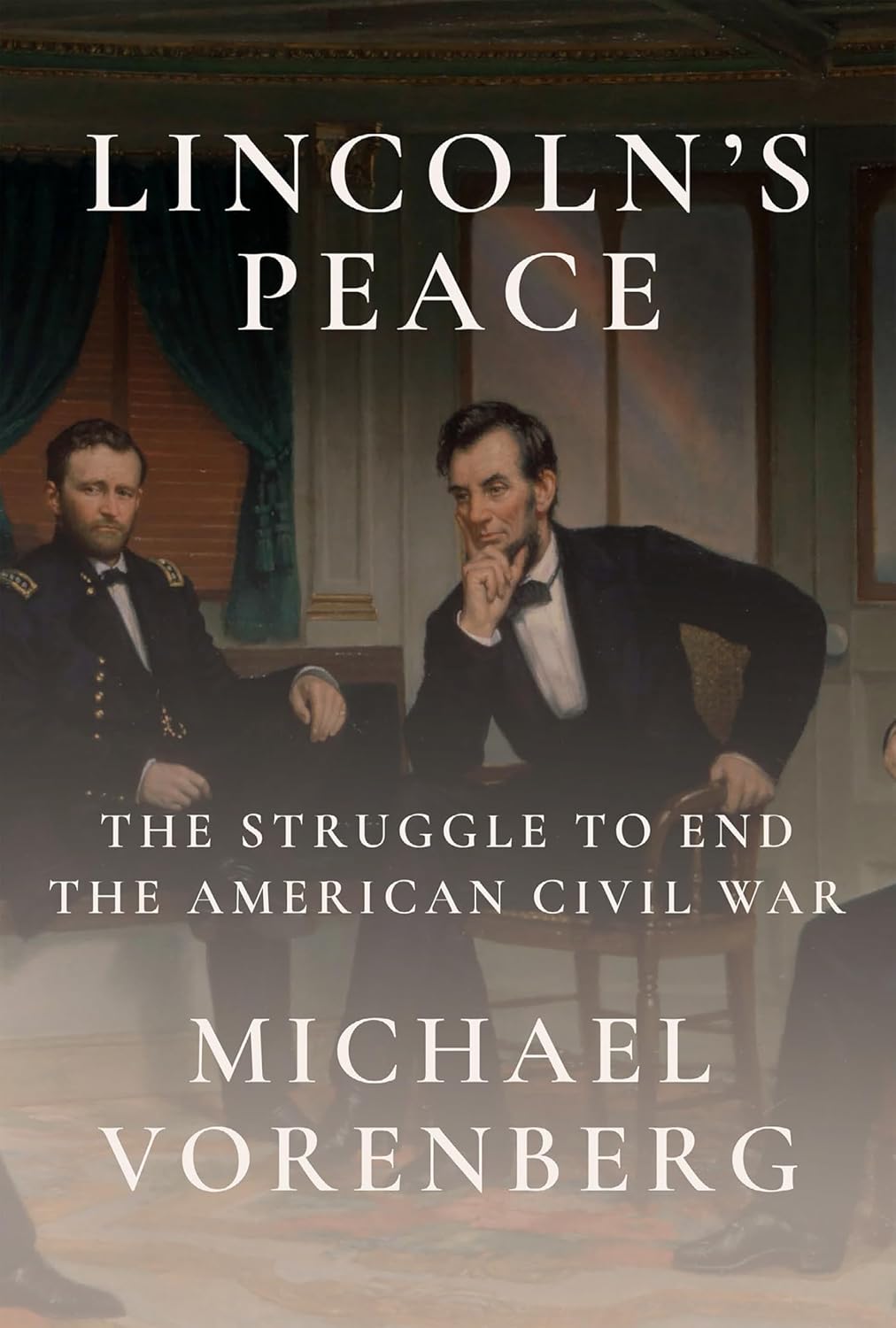
With General Grant assuring him that Petersburg and Richmond would soon fall, Lincoln began planning for the end of the war. On March 28, he held an impromptu meeting on board the River Queen with Grant, Porter, and Major General William T. Sherman. Sherman’s presence at City Point was unexpected. Neither he nor Lincoln knew that the other would be there. Sherman had come from North Carolina, where the army he was commanding was stalking the force under the command of Joseph E. Johnston. He had planned to talk with Grant about coordinating their efforts and keeping Lee and Johnston from joining forces. Sherman and Lincoln had met only once before—a brief encounter four years earlier. They had not been impressed with each other. There was still some distrust there, despite all that each had done to bring the Confederates to heel. When Lincoln first saw Sherman at City Point, he asked in dismay why the general had abandoned his army in North Carolina. It took some soothing from Grant to relieve Lincoln’s anxieties. Sherman’s men were as firm for a fight as ever. They could make do without their commander for a few days.
The March 28 meeting on board the River Queen was the first and only time that Lincoln told his top generals how he wanted the war to end. The one point that he stressed above all was lenience toward the Confederates. He worried that vengeful U.S. commanders would “exact severe terms,” as he had recently told his cabinet. In the spirit of “malice toward none,” the concluding message of his Second Inaugural, Lincoln told the officers aboard the River Queen that he wanted “submission” but “no more bloodshed.” The enemy were to be treated “liberally all round.” “Get the deluded men of the rebel armies disarmed and back to their homes,” Lincoln predicted, and “they won’t take up arms again.” “We must ‘let ’em up easy.’ ”
The metaphor came from wrestling, a sport Lincoln had mastered as a young man on the frontier. His physical prowess had given him an advantage, but his skill came just as much from knowing when not to fight. At twenty-two, he grudgingly accepted the challenge of husky Jack Armstrong, the head of the “Cleary Grove boys” of New Salem, Illinois. People argued for years about who had won the match, but all agreed on how it had ended. One of the men simply let the other “up easy.” From that point on, Lincoln, a new arrival to New Salem, was fast friends with Armstrong and his “boys.” Like a worn-out wrestler, the Confederacy would soon concede the match. Lincoln would let ’em up with honor. A friendly, lasting peace would ensue.
The commanders understood what Lincoln was asking of them. But were even the leaders of the rebellion to be spared? they wondered. It was one thing to go easy on the ordinary Confederate soldiers, whom Lincoln called the “deluded men,” but were they really supposed to be so kind to those who had done the deluding? Was even Jefferson Davis to get a free pass?
What to do with Jeff Davis? That could be tricky, Lincoln conceded. He knew that many in the Union wanted Davis hanged. But executing Davis would only keep animosities aflame and prolong the war, Lincoln worried. The answer was to let Davis escape the country. Eventually, peace would calm tempers, and people would forget about the Confederate leader. Yet Lincoln could not explicitly order his commanders to let Davis go. So he dropped a large hint, in the form of one of his stories. There was a fellow who had taken the pledge against liquor, Lincoln began. When a friend offered him a drink, he asked for lemonade. His host pointed to a brandy bottle and offered to add some to the lemonade to make it more “palatable.” The man would not object, he said, so long as the friend could add it “unbeknown” to him. The story was uncharacteristically unfunny for Lincoln. But the message was clear: if possible, the military men should let Davis slip out of the country “unbeknown.” Lincoln’s story concluded the meeting aboard the River Queen.
The president knew that other delicate decisions beside the handling of Davis lay ahead. He preferred to handle them as they came rather than get bogged down in discussions of the “what ifs.” This pragmatic side of Lincoln had served him well, but if he really meant to end the war, he had to start tackling some of the thornier problems now. Or so he was told by Secretary of State Seward, who arrived at City Point on March 30, two days after Lincoln’s meeting with the military commanders.
No one had invited Seward. He, like Lincoln, was hoping to be part of any end-of-war negotiations that might take place. Also, like Lincoln, he saw the trip to City Point as a bit of adventure. He, too, brought his wife and some family members. But his main reason for coming was to advise Lincoln, even if Lincoln had not asked for any advice. Seward regarded himself as Lincoln’s most learned and trusted advisor. Maybe he was. Seward was both an expert in international affairs and a savvy politician. He and Lincoln had gotten off to a rocky start. The onetime New York governor and U.S. senator believed that he, not the inexperienced one-term congressman from Illinois, should have received the Republican presidential nomination in 1860. He took the position as secretary of state assuming that he would do most of the governing of the nation; Lincoln would be the figurehead. The president quickly disabused him of that notion, slapping him down in early April 1861 when he pushed for a solution to the secession crisis that might have entangled the United States in a war with France and Spain. Eventually, the two men came to respect each other; then they became very close friends. Only Seward had been with Lincoln when the president met with the southern envoys at Hampton Roads back in February 1865. It was natural that he would assume that he was needed at City Point in case there were to be more such meetings. Also, if Lincoln really was going to try to make some kind of peace, he needed to be briefed about relevant matters of international law.
On March 31, Seward met with Lincoln on the River Queen. There is no record of what the two men discussed. Almost certainly, though, international law was part of the conversation. Seward had appointed himself Lincoln’s tutor on the reigning theories of war-ending found in dusty tomes by Enlightenment-era European philosophers like Hugo Grotius, Emmerich de Vattel, and Samuel Pufendorf. Lincoln was less than eager for a lecture from Seward. Ever the pragmatist, he had no use for archaic theories about how to end a war. He wanted to settle a peace in whatever way that circumstances of the moment allowed. He had joked with Admiral Porter before Seward’s visit that he knew Seward would “talk to me all day about Vattel and Puffendorf [sic] . . . , and I don’t want to hear any more of that.” Lincoln had been right. Seward knew that Lincoln might soon be meeting with Jefferson Davis. If that happened, Seward believed, the president did indeed have to follow the established rules of war-ending. Technicalities mattered—at least to Seward. For example, the president could demand certain military conventions, like disarmament and prisoner release, but he must not arrange anything that suggested an agreement between nations, as that would add legitimacy to Davis’s claim—so far rejected by the Lincoln administration—that the Confederacy was a nation. Seward had been over this ground with Lincoln before, most recently in preparation for the meeting with Confederate emissaries at Hampton Roads two months earlier. But now the prospects of a meaningful settlement were much brighter, and Seward might not be there to help with the finer points. Lincoln would have listened courteously but impatiently. The end of war need not be a pas de deux, he thought; it could be a manly handshake. The meeting did not last long. Seward then returned to Washington.
Lincoln was thinking of heading back, too. By April 1, he had been away from the capital for a week—his longest presidential sojourn to date. Mary was returning that day, though she was leaving Tad behind. She had had enough of the mud and of Grant’s wife, Julia, whose efforts at charm and kindness she found pitiful. Mary’s decision to go may have clinched Lincoln’s decision to stay. There had been a particularly embarrassing incident during an excursion on horseback a few days earlier when Mary upbraided a general’s wife for presumptuously riding beside Lincoln for a few paces. The president welcomed the chance at a separation. He also was still hoping to be in Virginia for the close of the war. He had written to Secretary of War Edwin Stanton, “I begin to feel that I ought to be at home, and yet I dislike to leave without seeing nearer to the end of General Grant’s present movement.”
At four-thirty in the morning on April 3, Lincoln was awakened by the sounds of far-off explosions coming from up the James. It was the Confederates, someone told him. They were blowing up their own “ironclads,” the vessels used for river warfare, to keep them from being seized by U.S. forces. Petersburg had finally fallen, and Lee’s army was abandoning Richmond. The moment Lincoln had hoped for had come. “Thank God that I have lived to see this!” Lincoln exclaimed.17 He believed that the “end of the war was now in sight.”
Details:
Visit the Knopf Store
Lincoln's Peace: The Struggle to End the American Civil War
AED18570
Quantity:
Order today to get by 7-14 business days
Delivery fee of AED 20. Free for orders above AED 200.
 Imported From: United States
At BOLO, we work hard to ensure the products you receive are new, genuine, and sourced from reputable suppliers.
Every product in the BOLO catalogue is sourced through our Verified Global Supply Network of verified sellers, authorized distributors or directly from the manufacturer.
Each product undergoes thorough inspection and verification at our consolidation and fulfilment centers to ensure it meets our strict authenticity and quality standards before being shipped and delivered to you.
If you ever have concerns regarding the authenticity of a product purchased from us, please contact Bolo Support. We will review your inquiry promptly and, if necessary, provide documentation verifying authenticity or offer a suitable resolution.
Your trust is our top priority, and we are committed to maintaining transparency and integrity in every transaction.
While we strive to display accurate information, variations in packaging, labeling, instructions, or formulation may occasionally occur due to regional differences or supplier updates. For detailed or manufacturer-specific information, please contact the brand directly or reach out to BOLO Support for assistance.
Unless otherwise stated, all prices displayed on the product page include applicable taxes and import duties.
BOLO operates in accordance with the laws and regulations of United Arab Emirates. Any items found to be restricted or prohibited for sale within the United Arab Emirates will be cancelled prior to shipment. We take proactive measures to ensure that only products permitted for sale in United Arab Emirates are listed on our website.
All items are shipped by air, and any products classified as “Dangerous Goods (DG)” under IATA regulations will be removed from the order and cancelled.
All orders are processed manually, and we make every effort to process them promptly once confirmed. Products cancelled due to the above reasons will be permanently removed from listings across the website.


Similar suggestions by Bolo
More from this brand
Similar items from “Civil War”
Share with
Or share with link
https://www.bolo.ae/products/U1524733172
Visit the Knopf Store
Lincoln's Peace: The Struggle to End the American Civil War
AED18570
Quantity:
Order today to get by 7-14 business days
Delivery fee of AED 20. Free for orders above AED 200.
Imported From: United States
At BOLO, we work hard to ensure the products you receive are new, genuine, and sourced from reputable suppliers.
Every product in the BOLO catalogue is sourced through our Verified Global Supply Network of verified sellers, authorized distributors or directly from the manufacturer.
Each product undergoes thorough inspection and verification at our consolidation and fulfilment centers to ensure it meets our strict authenticity and quality standards before being shipped and delivered to you.
If you ever have concerns regarding the authenticity of a product purchased from us, please contact Bolo Support. We will review your inquiry promptly and, if necessary, provide documentation verifying authenticity or offer a suitable resolution.
Your trust is our top priority, and we are committed to maintaining transparency and integrity in every transaction.
While we strive to display accurate information, variations in packaging, labeling, instructions, or formulation may occasionally occur due to regional differences or supplier updates. For detailed or manufacturer-specific information, please contact the brand directly or reach out to BOLO Support for assistance.
Unless otherwise stated, all prices displayed on the product page include applicable taxes and import duties.
BOLO operates in accordance with the laws and regulations of United Arab Emirates. Any items found to be restricted or prohibited for sale within the United Arab Emirates will be cancelled prior to shipment. We take proactive measures to ensure that only products permitted for sale in United Arab Emirates are listed on our website.
All items are shipped by air, and any products classified as “Dangerous Goods (DG)” under IATA regulations will be removed from the order and cancelled.
All orders are processed manually, and we make every effort to process them promptly once confirmed. Products cancelled due to the above reasons will be permanently removed from listings across the website.
Description:
WINNER OF THE TOM WATSON BROWN BOOK AWARD • WINNER OF THE NAU BOOK PRIZE • FINALIST FOR THE GILDER LEHRMAN LINCOLN PRIZE • A NEW YORKER BEST BOOK OF 2025
"Eye-opening, disturbing, moving and at times jaw-dropping . . . Once in a great while a book arrives that allows us to rediscover the strange inexhaustibility of the Civil War. Lincoln's Peace is such a book.” —Tony Kushner
“Lincoln’s Peace does something remarkable: It makes us think about familiar questions in an entirely new and engaging way. A marvelous achievement.” —Jon Meacham
"Helps us understand what the war was all about and whether in some ways it is still being fought." —Eric Foner
We set out on the James River, March 25, 1865, aboard the paddle steamboat River Queen. President Lincoln is on his way to General Grant’s headquarters at City Point, Virginia, and he’s decided he won’t return to Washington until he’s witnessed, or perhaps even orchestrated, the end of the Civil War. Now, it turns out, more than a century and a half later, historians are still searching for that end.
Was it April 9, at Appomattox, as conventional wisdom holds, where Lee surrendered to Grant in Wilmer McLean’s parlor? Or was it ten weeks afterward, in Galveston, where a federal commander proclaimed Juneteenth the end of slavery? Or perhaps in August of 1866, when President Andrew Johnson simply declared “the insurrection is at an end”? That the answer was elusive was baffling even to a historian of the stature of Michael Vorenberg, whose work served as a key source of Steven Spielberg’s Lincoln. Vorenberg was inspired to write this groundbreaking book, finding its title in the peace Lincoln hoped for but could not make before his assassination. A peace that required not one but many endings, as Vorenberg reveals in these pages, the most important of which came well more than a year after Lincoln’s untimely death.
To say how a war ends is to suggest how it should be remembered, and Vorenberg’s search is not just for the Civil War’s endpoint but for its true nature and legacy, so essential to the American identity. It’s also a quest, in our age of “forever wars,” to understand whether the United States's interminable conflicts of the current era have a precedent in the Civil War—and whether, in a sense, wars ever end at all, or merely wax and wane.
Review
“Fascinating . . . Potent . . . Reminds us of the cost in lives in failing to resolve—peacefully and diplomatically—arguments with deep social and moral implications.” —Jeff Rowe, Associated Press
“As he demonstrated with his magnificent Final Freedom: The Civil War, The Abolition of Slavery and The Thirteenth Amendment, Michael Vorenberg has a gift for illuminating vast historical terrain by posing a central yet unasked question and answering it with scholarly exactitude, penetrating insight and a brilliant narrative style. In Lincoln's Peace, he offers an account, eye-opening, disturbing, moving and at times jaw-dropping, of the myriad ways in which the forces that ignited the American Civil War retained implacable vitality and destructive energy long after Appomattox, resisting and ultimately thwarting the dream of a just and lasting peace. Once in a great while a book arrives that allows us to rediscover the strange inexhaustibility of the Civil War—its meanings, its implications, its ongoing relevance to the fate and future of the American democratic project. Lincoln's Peace is such a book.” —Tony Kushner, Pulitzer Prize–winning playwright and screenwriter
“Original, absorbing, and illuminating, Michael Vorenberg’s Lincoln’s Peace does something remarkable: It makes us think about familiar questions in an entirely new and engaging way. A marvelous achievement.” —Jon Meacham, author of And There Was Light: Abraham Lincoln and the American Struggle
"Everyone knows the Civil War ended with Robert E. Lee’s surrender at Appomattox. But as Michael Vorenberg shows in this fascinating and original narrative, the situation was actually much more complicated, and a full account of the war’s end has all sorts of ramifications, legal, military, and racial. Vorenberg’s account helps us understand what the war was all about and whether in some ways it is still being fought." —Eric Foner, author of The Second Founding: How the Civil War and Reconstruction Remade the Constitution
“A brilliant work and a vital contribution to the canon . . . Vorenberg exhibits scholarship of the first order. The history is vividly written and thoroughly researched. His reasoned questioning, skepticism, and analysis of accepted tropes and conclusions about the Civil War will prove meaningful to those who study the philosophy and psychology of war, peace, and American culture and identity." —Kirkus Reviews (starred review)
"It matters how wars end, and even if they end when we mythologically assume they do. Michael Vorenberg dives deeply into the question of just when and how the Civil War 'ended.' Lincoln looms large in this story, and Vorenberg is a superb Lincoln scholar. But the great insight of this book is that America's Armageddon—ideologically—may never have quite ended, and how we say it ended in competing stories has profoundly influenced the event's memory. Only such a skillful historian as Vorenberg could achieve this brilliant, original, even beguilingly unorthodox, interpretation of the most important turning points in American history." —David W. Blight, Yale University, and author of the Pulitzer prize-winning, Frederick Douglass: Prophet of Freedom.
"In this powerful and provocative book, Michael Vorenberg vividly dramatizes how America was 'caught between a state of war and a state of peace' after Appomattox. With careful attention to legal and political debates, and to the themes of insurgency, occupation, conquest, and freedom, Vorenberg traces the prolonged national struggle to end the Civil War—and asks us to contemplate why our myths of a definitive peace persist." —Elizabeth R. Varon, University of Virginia, author of Longstreet: The Confederate General Who Defied the South
"In a bracing challenge to the received wisdom that America’s Civil War ended with Lee’s surrender at Appomattox, Lincoln’s Peace sheds a brilliant light on the liminal space between what was no longer outright war nor yet a realized peace. Vorenberg’s sparkling narrative tells of ongoing conflict, violence, legal disputation, international imbroglios, and—above all—contested freedom. In sum, a masterly and original work." —Richard Carwardine, author of Righteous Strife: How Warring Religious Nationalists Forged Lincoln's Union
"A provocative and disquieting counter-narrative to the long-held and widespread assumption that the Civil War ended with the Appomattox Surrender. Rather, the author argues, the often-bloody aftermath known as ‘Reconstruction’ was a continuation of violent conflict, and thus war, albeit of a different kind. It was waged not only in states of the former Confederacy but also across the West. Drawing on an impressive range of sources and interweaving military, racial, legal, and political dynamics, Vorenberg’s arresting narrative will provide readers with much food for thought." —Joan Waugh, author of U.S. Grant: American Hero, American Myth
"Vorenberg leads us on an often surprising journey through the twilight time between Lee's surrender at Appomattox Court House and the elusive end of hostilities between North and South, long after the Civil War was traditionally thought to have ended. In this fast-unfolding account, he presents the nation's leaders in compelling close focus as they struggle to find their way through a labyrinth of political, legal, and military ambiguities, while hopes for a clear-cut peace evaporate and the shape of a new postwar America comes painfully into being." —Fergus M. Bordewich, author of Klan War
"Lincoln’s Peace is the finest account of how the Civil War ended—yet didn’t really end—that I have ever read. In a compelling, wide-ranging, fast-flowing, narrative Michael Vorenberg first takes the reader to the supposedly final battles, negotiations, surrenders and skirmishes that ought to have concluded the most violent war of insurrection in American history; he then describes the sad mess that followed—assassination, pardons, dropped treason trials, escapes from justice and disputed versions of guilt and responsibility that make the work a must-read for all of us today."—Nigel Hamilton, author of Lincoln vs Davis: The War of the Presidents
"In Lincoln's Peace, Michael Vorenberg untangles the seemingly simple question of when did the Civil War end to re-examine what the Civil War was, what it meant, where it actually happened, and why it still affects our lives and politics today. Through beautifully told vignettes, carefully reasoned analysis of legal arguments, and sensitive readings of cultural struggles over the Civil War, Vorenberg writes of a Civil War as big as the country and as meaningful today as it was then. In the process he also leads us to re-examine what we know—or think we know—about wars, about endings, and about the resonance of the Civil War today. A signal and eloquent achievement and a terrific read." —Gregory P. Downs, author of After Appomattox
"Lincoln’s Peace is the book we’ve been waiting for: a probing, twisting exploration of that least understood element of the Civil War—its ending. Vorenberg achieves the highest goal of a historian, convincing readers to rethink history they thought they knew, with the page-turning prose of a good story and the incisive queries of a great study. Parsing the hazy boundaries between war and peace, slavery and freedom, Lincoln’s Peace offers readers a new way to see the past and the present." —Jon Grinspan, Curator of Political History at the Smithsonian’s National Museum of American History
“Long after Robert E. Lee surrendered to Ulysses S. Grant in April 1865, Americans continued to ask themselves whether the Civil War was truly over. In this thoroughly surprising and beautifully written narrative, Michael Vorenberg takes us on a journey through multiple surrenders and declarations of peace, ongoing guerilla warfare, and the unceasing fight for Black freedom. In an age of ‘forever wars,’ Lincoln’s Peace tells a story as timely as it is thought-provoking.” —Martha Hodes, author of Mourning Lincoln
“This book was hard to put down. The writing is graceful and the characters are riveting. But there is more. Lincoln’s Peace upends our understanding of the Civil War by asking a deceptively straight-forward question: Did the Civil War end? That framing shifts the focus from war to peace and provides fresh insights into one of the most well-covered topics in the historical literature. The implications are profound, not just for our understanding of the Civil War, but also for a host of issues today.” —Laura F. Edwards, Class of 1921 Bicentennial Professor in the History of American Law and Liberty in the History Department, Princeton University
"Michael Vorenberg's Lincoln's Peace fundamentally changes the way we think about the Civil War's chronology, geography, and meaning. Through clear vision and beautiful prose, Vorenberg suggests that the conflict had no neat ending, that it lingered long past Robert E. Lee's formal surrender at Appomattox Courthouse on April 9, 1865, that it raged in the trans-Mississippi West for years afterward, and that it continues to shape the American experience today. This is an essential book by one of our greatest historians." —Ari Kelman, author of A Misplaced Massacre: Struggling Over the Memory of Sand Creek
“From the pen of one of the era’s foremost historians comes a rich and nuanced exploration of the days, weeks, months, and even years that brought the American Civil War to a close. Peeling back the gauzy veils of memory and mythmaking, Vorenberg takes the reader on a captivating journey to find the war’s end—a journey as unexpected for those who lived it as for the reader.” —Caroline E. Janney, author of Ends of War: The Unfinished Fight of Lee’s Army after Appomattox
"Vorenberg tells this story deftly, managing a number of related narratives involving dozens of people in the years when the Lost Cause myth had not yet become the dominant Civil War and Reconstruction story. This fine book ably challenges many untested assumptions about the Civil War." —Booklist
"[Vorenberg] astutely interrogates the notion that modern America is uniquely mired in 'forever wars,' suggesting instead that today’s political scientists are likely idealizing the past. Expert analysis and eloquent prose make this a must-read for U.S. history buffs." —Publisher's Weekly (starred review)
“Throughout Lincoln’s Peace, readers are provided a fascinating analysis of historical events that generally have been either overlooked or disconnected from one another . . . Written with a combination of thorough research and a deftness for narrative history, Vorenberg’s book is one that will challenge commonly held beliefs . . . most historians, or general readers, should come away from this skillfully written book with new perspectives about facts they thought were settled truths but actually never happened.” —Greg M. Romaneck, Emerging Civil War
About the Author
Excerpt. © Reprinted by permission. All rights reserved.
The Peacemaker
The James River begins as a creek in the hills of northwest Virginia and winds its way to the south and east, picking up speed and breadth until it reaches Richmond, where it slows to still water, bending one way then another. Just below the city, the James enters the Virginia Tidewater. It crests the fall line and drops into boiling rapids. Once at the coastal plain, the river’s waters are brackish and gripped by ocean tides. It flows now more than a hundred miles, meandering through oxbow after oxbow, sending off rivulets, sometimes becoming marshland, and finally reaching a small peninsula located only thirty miles south of Richmond by land: City Point. Here the James meets the Appomattox River, which enters from the west. From City Point, the James, now swollen with the waters of the Appomattox, becomes a wide, slow-moving thoroughfare to the Chesapeake Bay. At the meeting of the James and the Chesapeake, the water is still and shallow, forming a delta with the city of Norfolk on the south side and the region known as Hampton Roads on the north. It is impossible to tell the exact point at which one body of water becomes the other.
President Abraham Lincoln arrived at City Point on March 25, 1865. He made the trip aboard the River Queen, a comfortable side-wheel-propelled steamboat that had been built the year before. Its original owners had intended it to run excursions for the well-heeled between Providence and Newport, Rhode Island. The U.S. Army had leased it for use by dignitaries and top officers. Lincoln knew the ship well. He was also familiar with City Point, Grant’s headquarters. This was not his first visit. But this trip was different. Within days of his arrival, he decided that he would not return to Washington until he had witnessed, or perhaps even orchestrated, the end of the Civil War.
The once-pastoral peninsula of City Point was now a sprawling U.S. Army encampment, the headquarters of Lincoln’s top general, Ulysses S. Grant. For nearly four years, U.S. forces had been waging a devastating war with the Confederate States of America. Grant now believed the end was in sight. For weeks the general had been sending messages to Washington suggesting that Lincoln visit City Point, but until now Lincoln had always politely declined.
He had been slow to open his heart to the possibility that the war might soon end. There had been no sign of a weakening of the enemy’s resolve—certainly not from the Confederate leadership. Back on February 2, Lincoln had met with three emissaries sent by Jefferson Davis, president of the Confederacy. Any wisp of hope for peace that the president may have clung to dissolved as soon the discussion began.
The meeting had been held at Hampton Roads. Lincoln was accompanied by his secretary of state, William Henry Seward. The five men had their discussion on board the River Queen, the same ship that would take Lincoln to City Point seven weeks later. At Hampton Roads on February 2, the Confederates never mentioned a possible surrender. They instead floated the possibility of an alliance between their country and the United States in order to pursue a war against Mexico. Lincoln said that any plan had to involve the southerners’ surrender and their return to “our one common country.” That was not going to happen, the Confederates explained. Lincoln played his one card. The constitutional amendment abolishing slavery had just passed Congress and been sent to the states for ratification. Slavery was certain to end. But if the rebels surrendered and the southern states returned to the Union, the South might get a say in how slavery ended. Maybe gradual instead of immediate emancipation was a possibility in some places. Maybe some former slaveholders could get compensation from the U.S. government for the loss of their human property. But if the rebellion continued, southern whites would have no say in emancipation. The emissaries, all of them slaveholders, were shaken by the news of the amendment, but they stuck to the script that Jefferson Davis had written for them: an independent Confederate nation was a nonnegotiable precondition to peace. They headed back to Richmond. Lincoln steeled himself for more war.
Not just mere weeks or months of war lay ahead, Lincoln thought. The war could go on for years, maybe ages. Late in February, a few weeks after the Hampton Roads meeting, Lincoln brushed off an army supplier angry that he had not yet been paid by telling him that things might be different “if we were nearer the end of the war.” On March 2 Grant reported that Robert E. Lee, Grant’s counterpart in the Confederacy, wanted to meet the general to discuss a “military convention” that might end hostilities. Lincoln kept hope at bay. He suspected—correctly—that Lee was looking for a ceasefire or some other sort of delaying tactic to allow him to join forces with Confederate general Joseph E. Johnston’s army in North Carolina. He had Grant tell Lee that the two generals could meet only if it was about the “capitulation” of Lee’s army. Once Lee heard that, he begged off, just as Lincoln knew he would.
Two days later, and about three weeks before his trip down the James, Lincoln delivered his Second Inaugural. The speech contained the most chilling prediction possible of how long the war might last. Slavery, which was “somehow the cause of the war,” was the nation’s sin. God—or at least justice—might well demand that the country suffer war for as long as Blacks had suffered slavery. The war could continue, perhaps should continue, “until every drop of blood drawn with the lash, shall be paid by another drawn with the sword.” These were not the words of a president with optimism—or an exit strategy.
Yet, to keep up his listeners’ morale, and perhaps his own, he held out hope of an end that would come soon, and with kindness all around. “With malice toward none,” Lincoln urged, the people must “strive on to finish the work we are in” in order to “achieve and cherish a just and lasting peace among ourselves and with all nations.” A peace that was “lasting”—the meaning of that was clear enough. A simple ceasefire would not do. But what was a “just” peace? The word allowed for many meanings. “Just” could mean fairness, as opposed to vengeance, toward one’s former enemies. That meaning was suggested by the “malice toward none” phrase. But “just” could also mean the opposite: retribution in proper measure against those responsible for the war. “Just” also meant moral, and the moral issue at the heart of the Inaugural was slavery or, more precisely, its abolition. No peace could be just or lasting, Lincoln believed, unless it included the end of slavery.
Within two weeks of the Inaugural, Lincoln was regularly making passing predictions of the coming end of the war. On March 17, he said that the recent decision by the Confederacy to allow states to form regiments of enslaved people was a sign that the South was “near the bottom” and the “end is near.” To a Union general in Missouri, on March 19, Lincoln suggested a hands-off approach so that the war might “wind down” there. The next day, he told a Russian diplomat that he expected the war to be over by the end of the year. His secretary of state shared Lincoln’s cautious optimism. Seward dropped the phrase “as the war begins to end” into a letter written to his wife.
Like those around him, Lincoln by late March had become hopeful that the end was quite near, probably because reports from Grant had become increasingly optimistic. When Lincoln left for Grant’s headquarters at City Point on the River Queen, he expected to see the end of the war. “He intended to propose the terms of surrender himself,” one of his companions wrote. “He had made up his mind that this fraternal strife should cease in one way or another.” So high was Lincoln’s confidence that he brought along his wife, Mary, and his young son Tad, no doubt hoping to have them at his side when he toured battlefields and liberated cities. He did not expect to return to Washington until the war was over.
The steamship journey to City Point was rough—a virus or perhaps bad drinking water on the boat made Lincoln feverish and lethargic—but within a day of docking Lincoln was receiving visitors. There was a shine in his eye now, observers remarked, a clear contrast to the melancholy that had deepened the crags of his gaunt face in recent months. He told one of the naval officers that he had “the greatest confidence that the war was drawing to an end.” He was eager to steam up the James toward Richmond, the Confederate capital, or down the Appomattox toward Petersburg, the Confederacy’s main railroad hub and supply depot. Rear Admiral David Dixon Porter, who was at City Point at the time, offered to be his guide. Porter was the most esteemed Union naval commander next to Vice Admiral David Farragut, Porter’s adopted brother, who was currently commanding U.S. naval forces in the Gulf of Mexico. Porter knew that it might be some time before Lincoln could see Richmond or Petersburg. U.S. troops had been laying siege to Petersburg for months and seemed no closer to a breakthrough. Richmond was well defended by Lee’s Army of Northern Virginia. Jefferson Davis, the president of the Confederacy (or “so-called president,” as Lincoln called him), still resided in the city, only thirty miles away from City Point. He had no plans to leave.
With General Grant assuring him that Petersburg and Richmond would soon fall, Lincoln began planning for the end of the war. On March 28, he held an impromptu meeting on board the River Queen with Grant, Porter, and Major General William T. Sherman. Sherman’s presence at City Point was unexpected. Neither he nor Lincoln knew that the other would be there. Sherman had come from North Carolina, where the army he was commanding was stalking the force under the command of Joseph E. Johnston. He had planned to talk with Grant about coordinating their efforts and keeping Lee and Johnston from joining forces. Sherman and Lincoln had met only once before—a brief encounter four years earlier. They had not been impressed with each other. There was still some distrust there, despite all that each had done to bring the Confederates to heel. When Lincoln first saw Sherman at City Point, he asked in dismay why the general had abandoned his army in North Carolina. It took some soothing from Grant to relieve Lincoln’s anxieties. Sherman’s men were as firm for a fight as ever. They could make do without their commander for a few days.
The March 28 meeting on board the River Queen was the first and only time that Lincoln told his top generals how he wanted the war to end. The one point that he stressed above all was lenience toward the Confederates. He worried that vengeful U.S. commanders would “exact severe terms,” as he had recently told his cabinet. In the spirit of “malice toward none,” the concluding message of his Second Inaugural, Lincoln told the officers aboard the River Queen that he wanted “submission” but “no more bloodshed.” The enemy were to be treated “liberally all round.” “Get the deluded men of the rebel armies disarmed and back to their homes,” Lincoln predicted, and “they won’t take up arms again.” “We must ‘let ’em up easy.’ ”
The metaphor came from wrestling, a sport Lincoln had mastered as a young man on the frontier. His physical prowess had given him an advantage, but his skill came just as much from knowing when not to fight. At twenty-two, he grudgingly accepted the challenge of husky Jack Armstrong, the head of the “Cleary Grove boys” of New Salem, Illinois. People argued for years about who had won the match, but all agreed on how it had ended. One of the men simply let the other “up easy.” From that point on, Lincoln, a new arrival to New Salem, was fast friends with Armstrong and his “boys.” Like a worn-out wrestler, the Confederacy would soon concede the match. Lincoln would let ’em up with honor. A friendly, lasting peace would ensue.
The commanders understood what Lincoln was asking of them. But were even the leaders of the rebellion to be spared? they wondered. It was one thing to go easy on the ordinary Confederate soldiers, whom Lincoln called the “deluded men,” but were they really supposed to be so kind to those who had done the deluding? Was even Jefferson Davis to get a free pass?
What to do with Jeff Davis? That could be tricky, Lincoln conceded. He knew that many in the Union wanted Davis hanged. But executing Davis would only keep animosities aflame and prolong the war, Lincoln worried. The answer was to let Davis escape the country. Eventually, peace would calm tempers, and people would forget about the Confederate leader. Yet Lincoln could not explicitly order his commanders to let Davis go. So he dropped a large hint, in the form of one of his stories. There was a fellow who had taken the pledge against liquor, Lincoln began. When a friend offered him a drink, he asked for lemonade. His host pointed to a brandy bottle and offered to add some to the lemonade to make it more “palatable.” The man would not object, he said, so long as the friend could add it “unbeknown” to him. The story was uncharacteristically unfunny for Lincoln. But the message was clear: if possible, the military men should let Davis slip out of the country “unbeknown.” Lincoln’s story concluded the meeting aboard the River Queen.
The president knew that other delicate decisions beside the handling of Davis lay ahead. He preferred to handle them as they came rather than get bogged down in discussions of the “what ifs.” This pragmatic side of Lincoln had served him well, but if he really meant to end the war, he had to start tackling some of the thornier problems now. Or so he was told by Secretary of State Seward, who arrived at City Point on March 30, two days after Lincoln’s meeting with the military commanders.
No one had invited Seward. He, like Lincoln, was hoping to be part of any end-of-war negotiations that might take place. Also, like Lincoln, he saw the trip to City Point as a bit of adventure. He, too, brought his wife and some family members. But his main reason for coming was to advise Lincoln, even if Lincoln had not asked for any advice. Seward regarded himself as Lincoln’s most learned and trusted advisor. Maybe he was. Seward was both an expert in international affairs and a savvy politician. He and Lincoln had gotten off to a rocky start. The onetime New York governor and U.S. senator believed that he, not the inexperienced one-term congressman from Illinois, should have received the Republican presidential nomination in 1860. He took the position as secretary of state assuming that he would do most of the governing of the nation; Lincoln would be the figurehead. The president quickly disabused him of that notion, slapping him down in early April 1861 when he pushed for a solution to the secession crisis that might have entangled the United States in a war with France and Spain. Eventually, the two men came to respect each other; then they became very close friends. Only Seward had been with Lincoln when the president met with the southern envoys at Hampton Roads back in February 1865. It was natural that he would assume that he was needed at City Point in case there were to be more such meetings. Also, if Lincoln really was going to try to make some kind of peace, he needed to be briefed about relevant matters of international law.
On March 31, Seward met with Lincoln on the River Queen. There is no record of what the two men discussed. Almost certainly, though, international law was part of the conversation. Seward had appointed himself Lincoln’s tutor on the reigning theories of war-ending found in dusty tomes by Enlightenment-era European philosophers like Hugo Grotius, Emmerich de Vattel, and Samuel Pufendorf. Lincoln was less than eager for a lecture from Seward. Ever the pragmatist, he had no use for archaic theories about how to end a war. He wanted to settle a peace in whatever way that circumstances of the moment allowed. He had joked with Admiral Porter before Seward’s visit that he knew Seward would “talk to me all day about Vattel and Puffendorf [sic] . . . , and I don’t want to hear any more of that.” Lincoln had been right. Seward knew that Lincoln might soon be meeting with Jefferson Davis. If that happened, Seward believed, the president did indeed have to follow the established rules of war-ending. Technicalities mattered—at least to Seward. For example, the president could demand certain military conventions, like disarmament and prisoner release, but he must not arrange anything that suggested an agreement between nations, as that would add legitimacy to Davis’s claim—so far rejected by the Lincoln administration—that the Confederacy was a nation. Seward had been over this ground with Lincoln before, most recently in preparation for the meeting with Confederate emissaries at Hampton Roads two months earlier. But now the prospects of a meaningful settlement were much brighter, and Seward might not be there to help with the finer points. Lincoln would have listened courteously but impatiently. The end of war need not be a pas de deux, he thought; it could be a manly handshake. The meeting did not last long. Seward then returned to Washington.
Lincoln was thinking of heading back, too. By April 1, he had been away from the capital for a week—his longest presidential sojourn to date. Mary was returning that day, though she was leaving Tad behind. She had had enough of the mud and of Grant’s wife, Julia, whose efforts at charm and kindness she found pitiful. Mary’s decision to go may have clinched Lincoln’s decision to stay. There had been a particularly embarrassing incident during an excursion on horseback a few days earlier when Mary upbraided a general’s wife for presumptuously riding beside Lincoln for a few paces. The president welcomed the chance at a separation. He also was still hoping to be in Virginia for the close of the war. He had written to Secretary of War Edwin Stanton, “I begin to feel that I ought to be at home, and yet I dislike to leave without seeing nearer to the end of General Grant’s present movement.”
At four-thirty in the morning on April 3, Lincoln was awakened by the sounds of far-off explosions coming from up the James. It was the Confederates, someone told him. They were blowing up their own “ironclads,” the vessels used for river warfare, to keep them from being seized by U.S. forces. Petersburg had finally fallen, and Lee’s army was abandoning Richmond. The moment Lincoln had hoped for had come. “Thank God that I have lived to see this!” Lincoln exclaimed.17 He believed that the “end of the war was now in sight.”
Details:
Similar suggestions by Bolo
More from this brand
Similar items from “Civil War”
Share with
Or share with link
https://www.bolo.ae/products/U1524733172