Deliver toUnited Arab Emirates
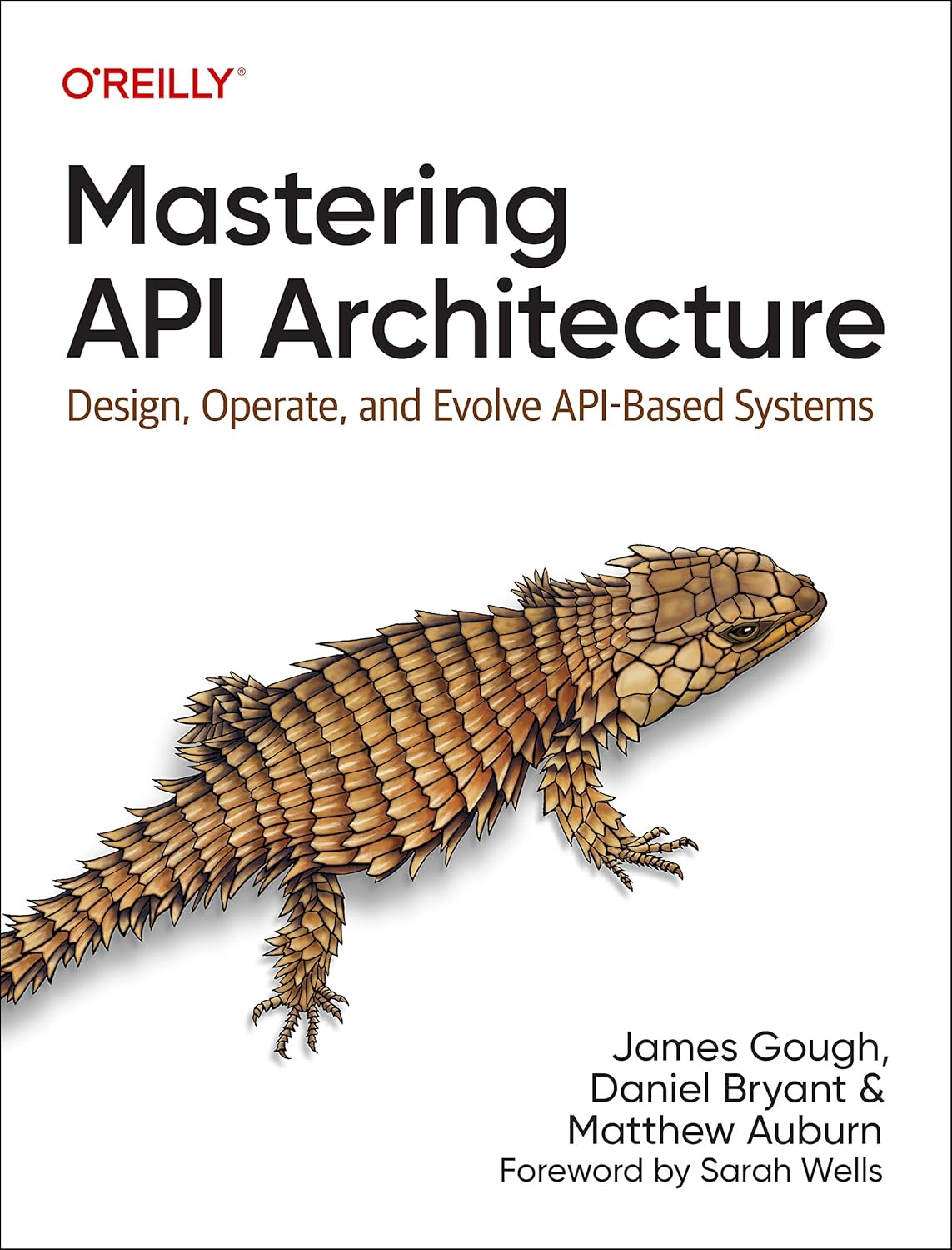
Mastering API Architecture: Design, Operate, and Evolve API-Based Systems

Description:

Most organizations with a web presence build and operate APIs; the doorway for customers to interact with the company's services. Designing, building, and managing these critical programs affect everyone in the organization, from engineers and product owners to C-suite executives. But the real challenge for developers and solution architects is creating an API platform from the ground up.

With this practical book, you'll learn strategies for building and testing REST APIs that use API gateways to combine offerings at the microservice level. Authors James Gough, Daniel Bryant, and Matthew Auburn demonstrate how simple additions to this infrastructure can help engineers and organizations migrate to the cloud; and open the opportunity to connect internal services using technologies like a service mesh.

  • Learn API fundamentals and architectural patterns for building an API platform
  • Use practical examples to understand how to design, build, and test API-based systems
  • Deploy, operate, and configure key components of an API platform
  • Use API gateways and service meshes appropriately, based on case studies
  • Understand core security and common vulnerabilities in API architecture
  • Secure data and APIs using threat modeling and technologies like OAuth2 and TLS
  • Learn how to evolve existing systems toward API- and cloud-based architectures


Editorial Reviews

About the Author

James Gough is a Distinguished Engineer at Morgan Stanley, and has worked extensively with Java and financial systems. He is a Java Champion applying a pragmatic approach to building software, and co-author of Optimizing Java. He currently leads a large enterprise API program, supporting architecture and infrastructure transformation.

Daniel Bryant works as a Product Architect at Datawire. His technical expertise focuses on ‘DevOps’ tooling, cloud/container platforms, and microservice implementations. Daniel is a Java Champion, and contributes to several open source projects. He also writes for InfoQ, O’Reilly, and TheNewStack, and regularly presents at international conferences such as OSCON, QCon and JavaOne. In his copious amounts of free time he enjoys running, reading and traveling.

Matthew Auburn has worked for Morgan Stanley on a variety of financial systems. Before working at Morgan Stanley he has built a variety of mobile and web applications. Matthew’s Masters degree primarily focused on security and this has fed into working in the security space for building APIs.

Reviews:

5.0 out of 5 stars Comprehensive view of API Architecture

R.D. · January 11, 2024

This book shares an architect's view of developing and deploying APIs. They discuss the major components that go into an API architecture and some of the technologies that apply to each one.They use a couple of the architect's tools throughout, specifically C4 diagrams and Architecture Decision Records (ADRs). The ADRs are particularly effective as they evolve the architecture of the example API throughout the chapters.The book is well done and a useful reference.

Good book

J.S. · March 9, 2023

Has a good breadth of topics and the depth needed for a reference book.

Easy explained and rich content

K.J. · May 8, 2024

This is really good literature in this era of API.

Too high level, too many assumptions

J.S.G. · January 6, 2025

This isn't a bad book. In fact, I enjoyed it. The problem I have is that it's one of those tech books that doesn't address any single audience segment particularly well.For any mid-to-senior level architect or systems/infra engineers, most of what the authors offer in this book is most likely obvious and already well understood. But then, for technical folks who are new to the topics covered, there's hardly any depth - the book moves fast and countless topics get only a passing mention, with some scattered links to references for further reading, etc.The other problem I have with the book is the assumptions the authors make. Further to my above point, they often use tech jargon and refer to trends and technologies with little background, on the assumption you'll know what they're talking about. That's fine for pros – but for a junior reader I anticipate a fair amount of frustration and side-Googling as you read.Finally, one particularly weird assumption they authors make (imho) is that you the reader will be well versed on Kubernetes. A number of the chapters refer to Kubernetes features, operations, architectural details, etc. (not to mention related technologies like Helm, etc.), with zero background introduction on the topic – assuming you the reader are well versed in Kubernetes. I am, so that was fine with me – but nothing in the book title suggests K8s is a prerequisite for large sections of this book. Particularly puzzling, to me, is that almost the only _actually_ _technical_ content in this book (i.e. code/implementation stuff) is YAML config files that are peppered across various chapters relating to configuring various K8s features. ...I would have loved to see a lot more code in this book – but K8s YAML is literally the last thing I had any need for in a book like this. Just... a swing and a miss, if you ask me.Again, overall this is not a bad book. It's simply more of a high-level overview to refresh minds and inspire some thinking than, well… a book that will help anyone _master_ much of anything. :-/

Lacking in any practical detail

d. · February 4, 2023

Even though the book does give an overview of multiple topics and technologies, it is heavily lacking in detail.

Mastering API Architecture: Design, Operate, and Evolve API-Based Systems

Product ID: U1492090638
Condition: New

4.4

AED27610

Price includes VAT & Import Duties
Type: Paperback
Availability: In Stock

Quantity:

|

Order today to get by 7-14 business days

This item qualifies for free delivery

Returns & Warranty policies

Imported From: United States

At BOLO, we work hard to ensure the products you receive are new, genuine, and sourced from reputable suppliers.

BOLO is not an authorized or official retailer for most brands, nor are we affiliated with manufacturers unless specifically stated on a product page. Instead, we source verified sellers, authorized distributors or directly from the manufacturer.

Each product undergoes thorough inspection and verification at our consolidation and fulfilment centers to ensure it meets our strict authenticity and quality standards before being shipped and delivered to you.

If you ever have concerns regarding the authenticity of a product purchased from us, please contact Bolo Support. We will review your inquiry promptly and, if necessary, provide documentation verifying authenticity or offer a suitable resolution.

Your trust is our top priority, and we are committed to maintaining transparency and integrity in every transaction.

All product information, images, descriptions, and reviews originate from the manufacturer or from trusted sellers overseas. BOLO is not affiliated with, endorsed by, or an authorized retailer for most brands listed on our website unless stated otherwise.

While we strive to display accurate information, variations in packaging, labeling, instructions, or formulation may occasionally occur due to regional differences or supplier updates. For detailed or manufacturer-specific information, please contact the brand directly or reach out to BOLO Support for assistance.

Unless otherwise stated, all prices displayed on the product page include applicable taxes and import duties.

BOLO operates in accordance with the laws and regulations of United Arab Emirates. Any items found to be restricted or prohibited for sale within the UAE will be cancelled prior to shipment. We take proactive measures to ensure that only products permitted for sale in United Arab Emirates are listed on our website.

All items are shipped by air, and any products classified as “Dangerous Goods (DG)” under IATA regulations will be removed from the order and cancelled.

All orders are processed manually, and we make every effort to process them promptly once confirmed. Products cancelled due to the above reasons will be permanently removed from listings across the website.

Similar suggestions by Bolo

More from this brand

Similar items from “Testing”

Mastering API Architecture: Design, Operate, and Evolve API-Based Systems

Product ID: U1492090638
Condition: New

4.4

Mastering API Architecture: Design, Operate, and Evolve API-Based Systems-0
Type: Paperback

AED27610

Price includes VAT & Import Duties
Availability: In Stock

Quantity:

|

Order today to get by 7-14 business days

This item qualifies for free delivery

Returns & Warranty policies

Imported From: United States

At BOLO, we work hard to ensure the products you receive are new, genuine, and sourced from reputable suppliers.

BOLO is not an authorized or official retailer for most brands, nor are we affiliated with manufacturers unless specifically stated on a product page. Instead, we source verified sellers, authorized distributors or directly from the manufacturer.

Each product undergoes thorough inspection and verification at our consolidation and fulfilment centers to ensure it meets our strict authenticity and quality standards before being shipped and delivered to you.

If you ever have concerns regarding the authenticity of a product purchased from us, please contact Bolo Support. We will review your inquiry promptly and, if necessary, provide documentation verifying authenticity or offer a suitable resolution.

Your trust is our top priority, and we are committed to maintaining transparency and integrity in every transaction.

All product information, images, descriptions, and reviews originate from the manufacturer or from trusted sellers overseas. BOLO is not affiliated with, endorsed by, or an authorized retailer for most brands listed on our website unless stated otherwise.

While we strive to display accurate information, variations in packaging, labeling, instructions, or formulation may occasionally occur due to regional differences or supplier updates. For detailed or manufacturer-specific information, please contact the brand directly or reach out to BOLO Support for assistance.

Unless otherwise stated, all prices displayed on the product page include applicable taxes and import duties.

BOLO operates in accordance with the laws and regulations of United Arab Emirates. Any items found to be restricted or prohibited for sale within the UAE will be cancelled prior to shipment. We take proactive measures to ensure that only products permitted for sale in United Arab Emirates are listed on our website.

All items are shipped by air, and any products classified as “Dangerous Goods (DG)” under IATA regulations will be removed from the order and cancelled.

All orders are processed manually, and we make every effort to process them promptly once confirmed. Products cancelled due to the above reasons will be permanently removed from listings across the website.

Description:

Most organizations with a web presence build and operate APIs; the doorway for customers to interact with the company's services. Designing, building, and managing these critical programs affect everyone in the organization, from engineers and product owners to C-suite executives. But the real challenge for developers and solution architects is creating an API platform from the ground up.

With this practical book, you'll learn strategies for building and testing REST APIs that use API gateways to combine offerings at the microservice level. Authors James Gough, Daniel Bryant, and Matthew Auburn demonstrate how simple additions to this infrastructure can help engineers and organizations migrate to the cloud; and open the opportunity to connect internal services using technologies like a service mesh.

  • Learn API fundamentals and architectural patterns for building an API platform
  • Use practical examples to understand how to design, build, and test API-based systems
  • Deploy, operate, and configure key components of an API platform
  • Use API gateways and service meshes appropriately, based on case studies
  • Understand core security and common vulnerabilities in API architecture
  • Secure data and APIs using threat modeling and technologies like OAuth2 and TLS
  • Learn how to evolve existing systems toward API- and cloud-based architectures


Editorial Reviews

About the Author

James Gough is a Distinguished Engineer at Morgan Stanley, and has worked extensively with Java and financial systems. He is a Java Champion applying a pragmatic approach to building software, and co-author of Optimizing Java. He currently leads a large enterprise API program, supporting architecture and infrastructure transformation.

Daniel Bryant works as a Product Architect at Datawire. His technical expertise focuses on ‘DevOps’ tooling, cloud/container platforms, and microservice implementations. Daniel is a Java Champion, and contributes to several open source projects. He also writes for InfoQ, O’Reilly, and TheNewStack, and regularly presents at international conferences such as OSCON, QCon and JavaOne. In his copious amounts of free time he enjoys running, reading and traveling.

Matthew Auburn has worked for Morgan Stanley on a variety of financial systems. Before working at Morgan Stanley he has built a variety of mobile and web applications. Matthew’s Masters degree primarily focused on security and this has fed into working in the security space for building APIs.

Reviews:

5.0 out of 5 stars Comprehensive view of API Architecture

R.D. · January 11, 2024

This book shares an architect's view of developing and deploying APIs. They discuss the major components that go into an API architecture and some of the technologies that apply to each one.They use a couple of the architect's tools throughout, specifically C4 diagrams and Architecture Decision Records (ADRs). The ADRs are particularly effective as they evolve the architecture of the example API throughout the chapters.The book is well done and a useful reference.

Good book

J.S. · March 9, 2023

Has a good breadth of topics and the depth needed for a reference book.

Easy explained and rich content

K.J. · May 8, 2024

This is really good literature in this era of API.

Too high level, too many assumptions

J.S.G. · January 6, 2025

This isn't a bad book. In fact, I enjoyed it. The problem I have is that it's one of those tech books that doesn't address any single audience segment particularly well.For any mid-to-senior level architect or systems/infra engineers, most of what the authors offer in this book is most likely obvious and already well understood. But then, for technical folks who are new to the topics covered, there's hardly any depth - the book moves fast and countless topics get only a passing mention, with some scattered links to references for further reading, etc.The other problem I have with the book is the assumptions the authors make. Further to my above point, they often use tech jargon and refer to trends and technologies with little background, on the assumption you'll know what they're talking about. That's fine for pros – but for a junior reader I anticipate a fair amount of frustration and side-Googling as you read.Finally, one particularly weird assumption they authors make (imho) is that you the reader will be well versed on Kubernetes. A number of the chapters refer to Kubernetes features, operations, architectural details, etc. (not to mention related technologies like Helm, etc.), with zero background introduction on the topic – assuming you the reader are well versed in Kubernetes. I am, so that was fine with me – but nothing in the book title suggests K8s is a prerequisite for large sections of this book. Particularly puzzling, to me, is that almost the only _actually_ _technical_ content in this book (i.e. code/implementation stuff) is YAML config files that are peppered across various chapters relating to configuring various K8s features. ...I would have loved to see a lot more code in this book – but K8s YAML is literally the last thing I had any need for in a book like this. Just... a swing and a miss, if you ask me.Again, overall this is not a bad book. It's simply more of a high-level overview to refresh minds and inspire some thinking than, well… a book that will help anyone _master_ much of anything. :-/

Lacking in any practical detail

d. · February 4, 2023

Even though the book does give an overview of multiple topics and technologies, it is heavily lacking in detail.

Similar suggestions by Bolo

More from this brand

Similar items from “Testing”