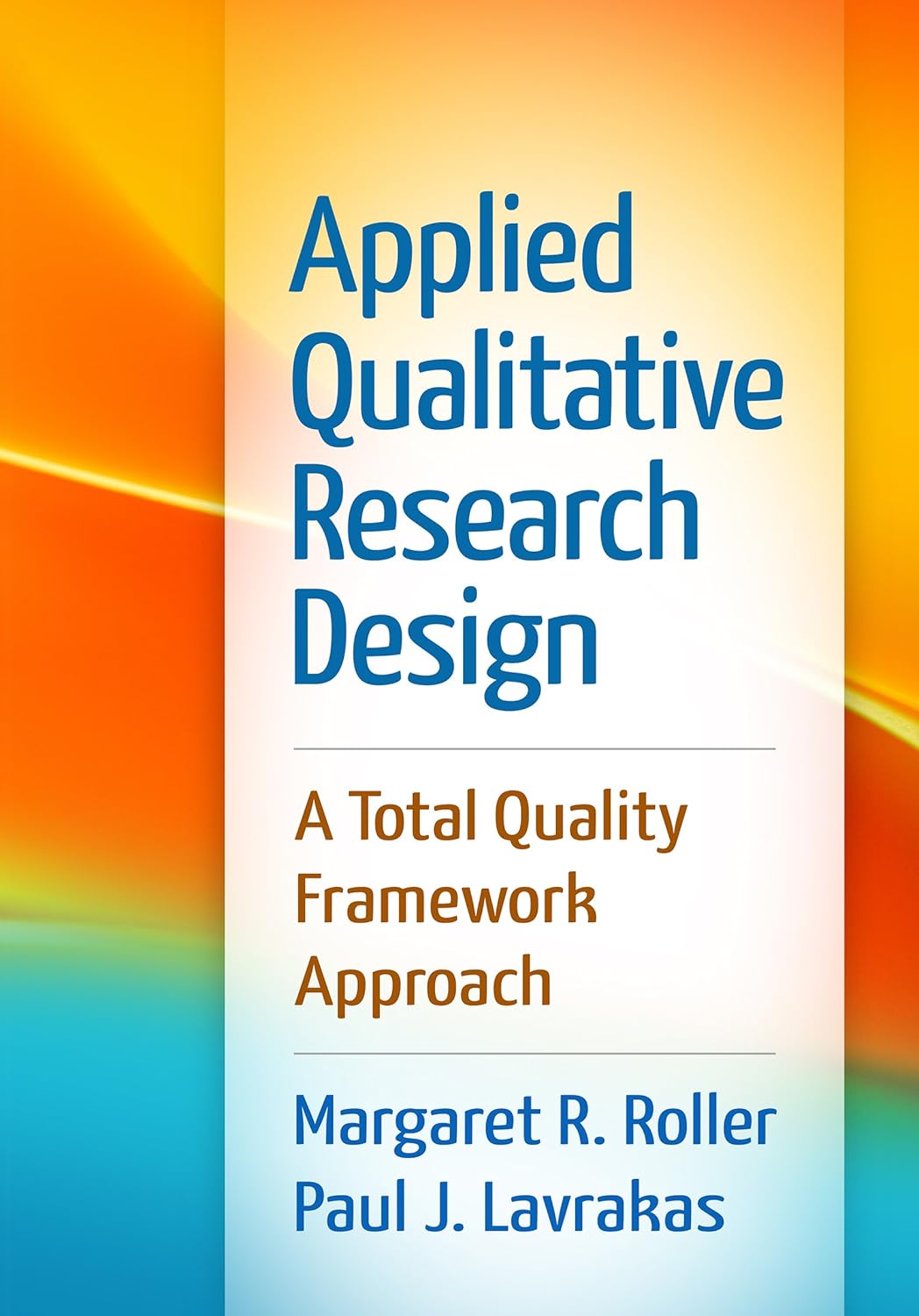
Description:
Editorial Reviews
Review
“A most original contribution that has been put together with the greatest of care. I applaud the authors for dividing each of the five methods chapters into well-organized sections that cover all aspects of the methods and explain how and why to apply TQF principles. Each chapter ends with an exceptionally effective case study to illustrate the concepts described. Other highlights of the book include the discussion topics and exercises to further readers’ thinking and understanding. This will be a great text for my senior-level honors seminar in qualitative research design."--Kimberley Ducey, PhD, Department of Sociology, University of Winnipeg, Canada
“This is an excellent text for a graduate qualitative research course, as well as a valuable reference for professionals. Well-written and easy to use, it provides a practical approach for students by incorporating exercises, case studies, web resources, and discussion topics. The latest research trends are discussed throughout, such as email IDIs, mobile ethnography, and synchronous versus asynchronous online discussion boards. The authors’ years of experience in conducting qualitative research make this book not only informative, but interesting to read.”--Candice R. Hollenbeck, PhD, Department of Marketing, University of Georgia
“A much-needed, pathbreaking book that will help set new standards of authoritativeness and excellence in qualitative research. The TQF is a powerful approach that can inform all types of research. I particularly like the authors' thorough attention to context, which they carefully explain in the introduction and develop throughout the book; this is one of the most important aspects of qualitative research."--Gerald Kosicki, PhD, School of Communication, The Ohio State University
“The writing is clear with helpful illustrative examples. Strengths of the book include its user-friendly narrative language and the effective applied exercises and case studies at the end of each chapter.”--Mary I. Dereshiwsky, PhD, Department of Educational Leadership, Northern Arizona University
"Roller and Lavrakas do a fantastic job of identifying strengths and limitations of each design model.” ― The Qualitative Report Published On: 2018-01-01
"This book is suffused with the elements of what the authors call the total quality framework--namely credibility, analyzability, transparency, and usefulness. Each chapter is built around this framework so the important decisions needed throughout the stages of a qualitative research study are covered….Good use is made of chapter summaries and discussion topics and worked examples….Where appropriate, the advantages and disadvantages of preparing for, collecting, and analyzing data using technology is explored providing an additional dimension to the text. I would recommend this book to educators, researchers, and postgraduate students who are undertaking qualitative research.” ― Nurse Researcher Published On: 2016-01-01
"A hands-on, innovative, integrated methods text….The framework provides principles and practices for researchers to apply throughout the research process so that they are more likely to gather high-quality data, come to a more complete and valid interpretation of their data, and generate and present useful outcomes….The book contains chapters on each of the main qualitative methods: in-depth interviews, focus groups, ethnography, content analysis, and case studies. The authors, in keeping with the integrated approach of their model, in parallel fashion apply each of the four elements of the framework to each technique and its particular requirements. This feature alone is a major strength of this work. But each method chapter contains some additional valuable elements, such as skills researchers must bring to that particular technique, strengths and weaknesses of that approach, and ethical considerations. The authors also provide a case study at the end of each chapter that is an example of a research project utilizing the TQF standards for that specific method. If that weren’t enough, the final chapter focuses on how to use the TQF to assess the quality of qualitative studies done by others--or at least, grant or project proposals….The book itself is very well organized and well written….Section headings and parallel organization make it easy to jump back and forth, and chapter summaries along with an extensive glossary likewise aid the reader….Overall, Roller and Lavrakas have done social science scholars of all stripes a big favor."
― Public Opinion Quarterly Published On: 2016-05-01
“Readers will benefit from the book’s organization, with its similarly formatted chapters, and from the frequent examples, bulleted lists, diagrams, and annotated bibliographies at the end of the chapters. The overall presentation facilitates comprehension of what can be, for some, difficult content….This is an outstanding adjunctive resource for those using particular research paradigms (e.g., grounded theory, phenomenology, ethnography, etc.) and for those in need of a framework to ensure rigor in any qualitative research study. The book provides a new, fresh, and meticulous approach to creating, understanding, using, and evaluating qualitative research.” (review by Martha M. Scheckel, PhD, RN) ― Doody's Review Service Published On: 2015-07-10
About the Author
Paul J. Lavrakas, PhD, a research psychologist, serves as a senior methodological research consultant for several public and private sector organizations. He is also a Senior Fellow at the independent research organization NORC at the University of Chicago, and a Visiting Scholar at Northern Arizona University. Dr. Lavrakas has used quantitative and qualitative research methods extensively throughout his more than 40 years as an active research practitioner. Past president of the American Association for Public Opinion Research, he served as Vice President and chief methodologist for Nielsen Media Research and was on the faculties of Northwestern University and Ohio State University. His many publications include, most recently, the coedited volume Online Panel Research: A Data Quality Perspective.
Details:
Visit the The Guilford Press Store
Applied Qualitative Research Design: A Total Quality Framework Approach
AED47329
Quantity:
Order today to get by 7-14 business days
This item qualifies for free delivery
 Imported From: United States
At BOLO, we work hard to ensure the products you receive are new, genuine, and sourced from reputable suppliers.
Every product in the BOLO catalogue is sourced through our Verified Global Supply Network of verified sellers, authorized distributors or directly from the manufacturer.
Each product undergoes thorough inspection and verification at our consolidation and fulfilment centers to ensure it meets our strict authenticity and quality standards before being shipped and delivered to you.
If you ever have concerns regarding the authenticity of a product purchased from us, please contact Bolo Support. We will review your inquiry promptly and, if necessary, provide documentation verifying authenticity or offer a suitable resolution.
Your trust is our top priority, and we are committed to maintaining transparency and integrity in every transaction.
While we strive to display accurate information, variations in packaging, labeling, instructions, or formulation may occasionally occur due to regional differences or supplier updates. For detailed or manufacturer-specific information, please contact the brand directly or reach out to BOLO Support for assistance.
Unless otherwise stated, all prices displayed on the product page include applicable taxes and import duties.
BOLO operates in accordance with the laws and regulations of United Arab Emirates. Any items found to be restricted or prohibited for sale within the United Arab Emirates will be cancelled prior to shipment. We take proactive measures to ensure that only products permitted for sale in United Arab Emirates are listed on our website.
All items are shipped by air, and any products classified as “Dangerous Goods (DG)” under IATA regulations will be removed from the order and cancelled.
All orders are processed manually, and we make every effort to process them promptly once confirmed. Products cancelled due to the above reasons will be permanently removed from listings across the website.
Similar suggestions by Bolo
More from this brand
Similar items from “Total Quality Management”
Share with
Or share with link
https://www.bolo.ae/products/U1462515754
Visit the The Guilford Press Store
Applied Qualitative Research Design: A Total Quality Framework Approach
AED47329
Quantity:
Order today to get by 7-14 business days
This item qualifies for free delivery
Imported From: United States
At BOLO, we work hard to ensure the products you receive are new, genuine, and sourced from reputable suppliers.
Every product in the BOLO catalogue is sourced through our Verified Global Supply Network of verified sellers, authorized distributors or directly from the manufacturer.
Each product undergoes thorough inspection and verification at our consolidation and fulfilment centers to ensure it meets our strict authenticity and quality standards before being shipped and delivered to you.
If you ever have concerns regarding the authenticity of a product purchased from us, please contact Bolo Support. We will review your inquiry promptly and, if necessary, provide documentation verifying authenticity or offer a suitable resolution.
Your trust is our top priority, and we are committed to maintaining transparency and integrity in every transaction.
While we strive to display accurate information, variations in packaging, labeling, instructions, or formulation may occasionally occur due to regional differences or supplier updates. For detailed or manufacturer-specific information, please contact the brand directly or reach out to BOLO Support for assistance.
Unless otherwise stated, all prices displayed on the product page include applicable taxes and import duties.
BOLO operates in accordance with the laws and regulations of United Arab Emirates. Any items found to be restricted or prohibited for sale within the United Arab Emirates will be cancelled prior to shipment. We take proactive measures to ensure that only products permitted for sale in United Arab Emirates are listed on our website.
All items are shipped by air, and any products classified as “Dangerous Goods (DG)” under IATA regulations will be removed from the order and cancelled.
All orders are processed manually, and we make every effort to process them promptly once confirmed. Products cancelled due to the above reasons will be permanently removed from listings across the website.
Description:
Editorial Reviews
Review
“A most original contribution that has been put together with the greatest of care. I applaud the authors for dividing each of the five methods chapters into well-organized sections that cover all aspects of the methods and explain how and why to apply TQF principles. Each chapter ends with an exceptionally effective case study to illustrate the concepts described. Other highlights of the book include the discussion topics and exercises to further readers’ thinking and understanding. This will be a great text for my senior-level honors seminar in qualitative research design."--Kimberley Ducey, PhD, Department of Sociology, University of Winnipeg, Canada
“This is an excellent text for a graduate qualitative research course, as well as a valuable reference for professionals. Well-written and easy to use, it provides a practical approach for students by incorporating exercises, case studies, web resources, and discussion topics. The latest research trends are discussed throughout, such as email IDIs, mobile ethnography, and synchronous versus asynchronous online discussion boards. The authors’ years of experience in conducting qualitative research make this book not only informative, but interesting to read.”--Candice R. Hollenbeck, PhD, Department of Marketing, University of Georgia
“A much-needed, pathbreaking book that will help set new standards of authoritativeness and excellence in qualitative research. The TQF is a powerful approach that can inform all types of research. I particularly like the authors' thorough attention to context, which they carefully explain in the introduction and develop throughout the book; this is one of the most important aspects of qualitative research."--Gerald Kosicki, PhD, School of Communication, The Ohio State University
“The writing is clear with helpful illustrative examples. Strengths of the book include its user-friendly narrative language and the effective applied exercises and case studies at the end of each chapter.”--Mary I. Dereshiwsky, PhD, Department of Educational Leadership, Northern Arizona University
"Roller and Lavrakas do a fantastic job of identifying strengths and limitations of each design model.” ― The Qualitative Report Published On: 2018-01-01
"This book is suffused with the elements of what the authors call the total quality framework--namely credibility, analyzability, transparency, and usefulness. Each chapter is built around this framework so the important decisions needed throughout the stages of a qualitative research study are covered….Good use is made of chapter summaries and discussion topics and worked examples….Where appropriate, the advantages and disadvantages of preparing for, collecting, and analyzing data using technology is explored providing an additional dimension to the text. I would recommend this book to educators, researchers, and postgraduate students who are undertaking qualitative research.” ― Nurse Researcher Published On: 2016-01-01
"A hands-on, innovative, integrated methods text….The framework provides principles and practices for researchers to apply throughout the research process so that they are more likely to gather high-quality data, come to a more complete and valid interpretation of their data, and generate and present useful outcomes….The book contains chapters on each of the main qualitative methods: in-depth interviews, focus groups, ethnography, content analysis, and case studies. The authors, in keeping with the integrated approach of their model, in parallel fashion apply each of the four elements of the framework to each technique and its particular requirements. This feature alone is a major strength of this work. But each method chapter contains some additional valuable elements, such as skills researchers must bring to that particular technique, strengths and weaknesses of that approach, and ethical considerations. The authors also provide a case study at the end of each chapter that is an example of a research project utilizing the TQF standards for that specific method. If that weren’t enough, the final chapter focuses on how to use the TQF to assess the quality of qualitative studies done by others--or at least, grant or project proposals….The book itself is very well organized and well written….Section headings and parallel organization make it easy to jump back and forth, and chapter summaries along with an extensive glossary likewise aid the reader….Overall, Roller and Lavrakas have done social science scholars of all stripes a big favor."
― Public Opinion Quarterly Published On: 2016-05-01
“Readers will benefit from the book’s organization, with its similarly formatted chapters, and from the frequent examples, bulleted lists, diagrams, and annotated bibliographies at the end of the chapters. The overall presentation facilitates comprehension of what can be, for some, difficult content….This is an outstanding adjunctive resource for those using particular research paradigms (e.g., grounded theory, phenomenology, ethnography, etc.) and for those in need of a framework to ensure rigor in any qualitative research study. The book provides a new, fresh, and meticulous approach to creating, understanding, using, and evaluating qualitative research.” (review by Martha M. Scheckel, PhD, RN) ― Doody's Review Service Published On: 2015-07-10
About the Author
Paul J. Lavrakas, PhD, a research psychologist, serves as a senior methodological research consultant for several public and private sector organizations. He is also a Senior Fellow at the independent research organization NORC at the University of Chicago, and a Visiting Scholar at Northern Arizona University. Dr. Lavrakas has used quantitative and qualitative research methods extensively throughout his more than 40 years as an active research practitioner. Past president of the American Association for Public Opinion Research, he served as Vice President and chief methodologist for Nielsen Media Research and was on the faculties of Northwestern University and Ohio State University. His many publications include, most recently, the coedited volume Online Panel Research: A Data Quality Perspective.
Details:
Similar suggestions by Bolo
More from this brand
Similar items from “Total Quality Management”
Share with
Or share with link
https://www.bolo.ae/products/U1462515754