Description:
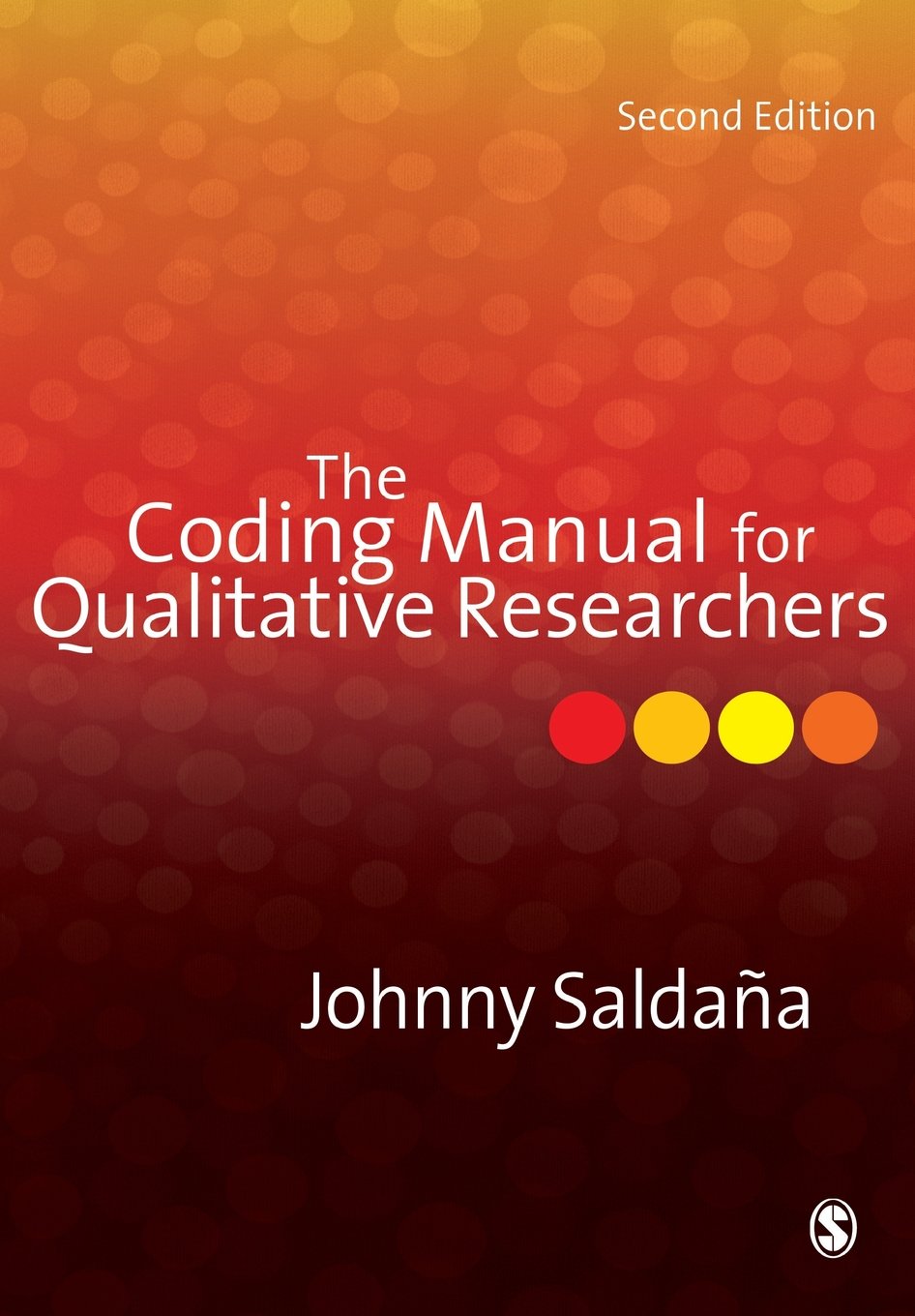
The Second Edition of Johnny Saldaña′s international bestseller provides an in-depth guide to the multiple approaches available for coding qualitative data.
Fully up-to-date, it includes new chapters, more coding techniques and an additional glossary. Clear, practical and authoritative, the book:
- Describes how coding initiates qualitative data analysis
- Demonstrates the writing of analytic memos
- Discusses available analytic software
- Suggests how best to use the book for particular studies
In total, 32 coding methods are profiled that can be applied to a range of research genres from grounded theory to phenomenology to narrative inquiry. For each approach, Saldaña discusses the method′s origins, a description of the method, practical applications, and a clearly illustrated example with analytic follow-up.
A unique and invaluable reference for students, teachers, and practitioners of qualitative inquiry, this book is essential reading across the social sciences.
Review
Mark Winton
University of Central Florida
An excellent handbook that helps demystify the coding process with a comprehensive assessment of different coding types, examples and exercises. As such it is a valuable teaching resource and it will also be of use to anyone undertaking qualitative analysis.
Kevin Meethan
Plymouth University
The Coding Manual describes the qualitative coding process with clarity and expertise. Its wide array of strategies, from the more straightforward to the more complex, are skilfully explained and exemplified. This extremely usable manual is a must-have resource for qualitative researchers at all levels.
Tara M. Brown
Brandeis University
"One admirable quality of Saldaña’s work is that he does not overstate the significance of qualitative data coding: he positions himself as a strong believer in its value, while acknowledging and addressing six common critiques of coding including that coding can be reductionist or even dangerous (pp. 38–40). This proleptic honesty only makes his argument for more principled and rigorous coding all the more convincing...More than anything, this text is highly practical; in addition to definitions, catalogs, and examples, Saldaña delineates in painstaking detail every step of the coding process, including discussions of what exactly can be coded, quantity of data to code, and coding mechanics...The chapters in the Manual follow a helpfully predictable format…after having studied one chapter, the reader will become accustomed to the book’s pattern of presenting key concepts and practical applications."
-- Elmar Hashimov, Ball State UniversityThe Coding Manual for Qualitative Researchers, by Johnny Saldana, was not around when I learned to code qualitative data. I wish it had been...Saldana provides a skeleton on which to hang qualitative data analysis, which I have not seen in other approaches to the subject. -- Molly Engle, American Journal of Evaluation
I ended up using it mostly with Doctoral Students. Clear and detailed. -- Arianna Bove ― drupal Published On: 2014-06-27
Excellent resource for doctoral students to understand basic analysis in qualitative research -- Debra Scrandis ― drupal Published On: 2013-12-05
I have list the book in my syllabus as a recommended resource. It is too dense to be read as a text, but it is excellent as a comprehensive collection of analysis approaches for the scholar who continues to work in a variety of types of qualitative research -- Dr Alan Davis ― drupal Published On: 2013-08-09
This book gives a comprehensive review of coding, an essential part of qualitative analysis. While the book as a whole contains a level of detail that may be overwhelming for students approaching qualitative research for the first time, the first couple of chapters do provide a good introduction to the task. The examples of interview extracts and subsequent codes help to consolidate the instructions described and interesting and important references are provided for avid researchers. -- Dr Benjamin Gardner ― drupal Published On: 2013-12-02
My research students often ask me where they can \find out how to do coding". Whilst there are various texts available the processes are discussed here in different ways depending on the research methodology. This book by Johnny Saldana is a comprehensive tome providing a wide range of coding strategies. If anything it could be overwhelming to first-time qualitative researchers to see such a range, but it enables doctoral students in particular to apply a coding method more finely tuned for their particular methodology. The other difficulty some students have is generating theory from codes and categories. This book is also helpful here and includes the art of memo writing and the use of CAQDAS. I will be recommending it to my postgraduate students. -- Dr Carol Taylor ― drupal Published On: 2013-01-25
Will use as a reference text in my work with doctoral students and as a supplemental text for the qualitative research methods course I teach. -- Dr Carolyn Graff ― drupal Published On: 2015-05-03
This is the best book for teaching the \how-tos\" for data analysis. " -- Dr Cassie Quigley ― drupal Published On: 2014-01-21
Contains many useful suggestions to help both young and experienced research.
-- Dr Celina Leao ― drupal Published On: 2013-04-19
This book is specially designed for those who have trouble in coding. The book firstly introduces codifying and categorizing steps and various styles of coding. This is highly recommended for postgraduate and doctoral students who are at the stage of qualitative data analysis. -- Dr Chavi Chen ― drupal Published On: 2013-05-03
Using in my Qualitative Research class. The most comprehensive text I′ve reviewed on coding methods. -- Dr Clarence Williamson ― drupal Published On: 2013-12-14
This is a well-written manual addressing comprehensively the process and possibilities of qualitative coding. It will be Recommended reading on my course-list for the next MA Education intake at UCD. -- Dr Conor Galvin ― drupal Published On: 2012-12-06
Liked the book very much. -- Dr Crystal Machado ― drupal Published On: 2014-07-27
The use of coding is important in research, and I feel this book will add in our students obtaining a fresh insight into this process. -- Dr Denis Feather ― drupal Published On: 2013-01-07
It contains very good description, applications, examples and analysis to help students at all levels gain a real understanding of qualitative research methods. -- Dr Denis Hyams-Ssekasi ― drupal Published On: 2013-07-15
Very useful text for qualitative researcher. -- Dr Dina Williams ― drupal Published On: 2013-07-25
Good enter level text for qualitative research coding -- Dr Douglas Rush ― drupal Published On: 2014-02-18
Essentail reading for the undergraduate students planning their research and useful for students when analysing their data. -- Dr Elaine Haycock-Stuart ― drupal Published On: 2012-12-04
appropriate for students in a qualitative research course -- Dr Elizabeth Norman ― drupal Published On: 2015-03-13
this book is more pertinent to students considering research and critique of approaches. this has been a useful book for phd students. -- Dr Ellen Kitson-reynolds ― drupal Published On: 2012-12-02
This book demonstrates the messiness of coding and the challenges faced by researchers during the coding process.
\
It clearly defines what a code is and why codes are used as the intial stages of coding and the importance of pre-coding, continuous coding throughout the research and analysis processes. There are also good descriptions of how to code using qualitative software and tips to make this process work better for the researcher.
\
However, due to the several different methods of coding the book can get laborious and somewhat confusing and in parts difficult to decipher how different styles of coding maybe different from others. However, on seeing names or labels for the way you personally code data is very valuable.
\
Overall I think the authors have done well in explaining and demonstrating a very complex but essential aspect of the analysis processes. -- Dr Emma Rowland ― drupal Published On: 2013-02-07
This is an excellent and thorough book on qualitative coding. However, it is a little too in depth for an introductory course. -- Dr Fiona Harris ― drupal Published On: 2013-04-04
The book covers an impressive number of coding types, purposes and methods, with lots of practical examples, giving the reader a good chance to see the theoretical principles applied in practice. There are also numerous contextualised suggestions for further reading, a very helpful ′glossary of analytic recommendations′ and exercises for qualitative analytic skills development, as well as up-to-date qualitative research software examples and screen shots. The books is written in an accessible style and contains helpful terminological explanations and clarifications of frequent confusions (e.g., code vs. theme). Highly recommended for MA and PhD students in the Social Sciences. -- Dr Florentina Taylor ― drupal Published On: 2012-12-17
The only book of its kind. A terrific resource for students and staff. I wish I′d known about this one earlier. -- Dr Hazel Brown ― drupal Published On: 2013-01-07
Saldana has an excellent style that is understandable and accessible for my students. He provides practical concepts for the new qualitative researcher, as well as great review and tips for experienced researchers too. -- Dr Heather Exby ― drupal Published On: 2013-09-27
A wonderful book which took me step by step to complete my research project -- Dr Jabulani Makhubele ― drupal Published On: 2013-05-22
It was to technical for the kind of qualitative course that I was teaching. I am using it myself in my research and in supervising of PhD′s. -- Dr Jakob Demant ― drupal Published On: 2013-06-18
I thought this was a very useful text for students. -- Dr Janet Astley ― drupal Published On: 2013-04-23
This book is one of the most comprehensive and practical qualitative data analysis books I have found. Fabulous!!! -- Dr Jeanita Richardson ― drupal Published On: 2013-07-29
What a useful book! I am recommending it to all my undergraduate, postgraduate and doctoral students who are planning to collect qualitative data to help them plan and manage the analysis. -- Dr Jill Collis ― drupal Published On: 2013-06-24
What a useful book! I am recommending it to my undergraduate, postgraduate and doctoral students who are planning to collect qualitative data to help them plan and manage the analysis. -- Dr Jill Collis ― drupal Published On: 2013-06-24
clear detail for coding -- Dr Joan Engebretson ― drupal Published On: 2014-04-01
Essential text for anyone learning how to code qualitative data with a purpose. -- Dr Joel Amidon ― drupal Published On: 2013-03-07
Not appropriate for our students. Preferred books are Denzin and Lincoln, and Burrell and Morgan -- Dr Julian Sims ― drupal Published On: 2013-05-09
Saldana′s reference is the most complete guide to coding qualitative data. -- Dr Kelly Hall ― drupal Published On: 2015-02-26
The perfect reference for researchers and students doing qualitative research. The book is well structured according to the steps of qualitative analysis. One can simply pick the coding method that best fits the research question. For each method crucial information is given to get you started. -- Dr Marco Lehmann ― drupal Published On: 2013-12-30
This fills in a big gap in our professional doctorate module on planning a practitioner research project. -- Dr Mehmet Ali Dikerdem ― drupal Published On: 2013-06-10
This is a very specialised book which provides a useful guide to the critical task of coding for qualitative research. It challenges rather than prescribes and continually obliges the practitioner to clarify fuzzy concepts, eliminate preconceptions and test interpretations. It is an essential reference for anyone engaged in qualitative research -- Dr Michael Anderson ― drupal Published On: 2013-06-29
This is an excellent manual for students conducting qualitative research. It is clear and offers them a clear pathway into collecting and analyzing data. -- Dr Nadine Bonda ― drupal Published On: 2014-03-21
An excellent guidebook for graduate level methods courses in education. A practical, how-to approach to guide student research designs and data analysis, particularly in EdD programs for educators with little prior training in qualitative methods. -- Dr Nancy Sanders ― drupal Published On: 2013-08-16
The course I teach is an introduction to Qualitative Research, so the students engage in only preliminary coding. It would be helpful for an advanced course in qualitative research. I do recommend it to students. -- Dr Norma Hedin ― drupal Published On: 2014-04-02
I have this book on several course reading lists and I frequently recommend it to research students, who all find it invaluable. -- Dr Pamela Woolner ― drupal Published On: 2014-08-07
This was a helpful text that introduces students, undertaking manily qualitative research projects in their final year, to the complexity of coding qualitative data in an accessible and understandable manner. -- Dr Peter Day ― drupal Published On: 2014-07-17
a very concise manual, yet full of practical examples; i found it a very useful teaching aid and students refered to it whenver they found themselves ′lost′ in anchors and themes...
-- Dr Rossela Roberts ― drupal Published On: 2013-10-31
Excellent book on coding. Very suitable for students undertaking qualitative research and analysis -- Dr Samar Baddar AL-Husan ― drupal Published On: 2013-08-28
I am recommending to all of my doctoral students who are in the proposal or dissertation process. -- Dr Shirley Mills ― drupal Published On: 2013-09-04
helpful tool for both MA and Research Degree students -- Dr Steve Emery-Wright ― drupal Published On: 2013-01-17
Saldaña′s description of coding and his discussion of memo writing are among the clearest I have found. They are especially accessible to students learning qualitative data analysis for the first time who often struggle with the concepts. In my course we focus on Grounded Theory approaches to coding, but I also consider this book an excellent reference for students who will continue doing qualitative research because of Saldaña′s comprehensive (encyclopedic!) summary of coding strategies. -- Dr Steven Harvey ― drupal Published On: 2014-06-06
This book clarifies much of what we do in evaluation of qualitative data and I wish I had had it when I was in graduate school. -- Dr Veronica Michaelsen ― drupal Published On: 2013-09-06
I have recommended this book to both our PG and the UH PGR students. it is a very useful book. -- Dr Yasmin Imani ― drupal Published On: 2013-05-02
Good book, needs a bit more depth about other coding methods. -- Mr Abdul Jabbar ― drupal Published On: 2013-06-06
The book is to complex for the level of our course on research techniques in social sciences of religion. The book is better suited for more advanced students. For the social sciences of religion a more basic and general coding is needed. -- Mr Andreas Cetrez ― drupal Published On: 2013-01-17
This is a terrific textbook that guides the reader through the various intracacies and levels of coding in qualitative research in a clear and concise way. Excellent examples are provided to illuminate theory and practice of coding, ad the addition of a glossary od coding methods is a great development from the first edition. Saldana has done qualitative researchers, experienced and novice, a great service. I will be recommending this book to students undertaking qualitative research dissertations. -- Mr Colin Thain ― drupal Published On: 2012-11-28
This is an excellent detailed text for any student who is considering or planning a qualitative approach for a research project. It can take them on, from the germs of an idea, right through to the end, providing invaluable advice all the way. -- Mr Damon Lane ― drupal Published On: 2013-02-04
This book is excellently written and will assist all researchers with the analysis of qualitative data. -- Mr Douglas Newman-Valentine ― drupal Published On: 2013-03-25
Useful as a complementary book with a book addressing the process of qualitative research -- Mr Gerlof Donga ― drupal Published On: 2012-11-22
This book certainly fills a gap in research texts. I hadn′t previously seen the first edition so was reviewing it for module purposes for the first time. I like its practical approach, and the diverse range of coding methods that are described, with plenty of illustrations and examples. It is highly readable and it is easy to navigate around topics. I have added it to the ′reference list′ for Masters social work students (as a recommended text) and asked both our library and campus bookshop to order a good number of copies. -- Mr Ian Brodie ― drupal Published On: 2012-11-22
The book has not been adopted by me. -- Mr IZZET DOS ― drupal Published On: 2013-05-16
This text was too academic for my students at the lower graduate level courses. -- Mr John Ferrante ― drupal Published On: 2015-01-03
A great book that will be invaluable to nursing students wanting to use qualitative research methods. Very concise and easy to comprehend. -- Mr Keith Ford ― drupal Published On: 2012-12-19
As it was the first time we taught the course, we discovered that for the duration and level of the course, the students found the book just too much. However, as the book′s structure and practical approach impressed me a lot, I will definitely recommend this book in the future when supervising thesis research and Master degree assignments. -- Mr Leonhardt Van Efferink ― drupal Published On: 2013-10-06
A useful guide for students doing research where coding is important. -- Mr Neil Rutledge ― drupal Published On: 2012-11-07
As a specialised text book of high quality I will be asking the Library to purchase multiple copies. -- Mr Roger Gossett ― drupal Published On: 2013-01-14
Good text for post-registration and Masters students who are completing research projects. Easy to read and understand -- Mr Simon Nixon ― drupal Published On: 2012-12-17
An excellent and essential text for all qualitative researchers which is applicable to Masters and PhD research studies. -- Mrs Anne Smith ― drupal Published On: 2012-10-31
An excellent and essential text for qualitative researchers for all students from Masters through to PhD research studeies. -- Mrs Anne Smith ― drupal Published On: 2012-10-31
The chapter summaries are useful in helping to reinforce the learning from the chapters. The examples used are up to date and relevant. The descriptions help to reinforce the points made. The applications and notes are useful for learning -- Mrs Caroline Holliday ― drupal Published On: 2013-02-05
This text has some useful details for students struggling with this aspect of qualitative research. It is perfect for MSc level, although I found feedback from my undergrads that they found it difficult to apply. -- Mrs Claire Marsh ― drupal Published On: 2013-02-15
Detailed instruction -- Mrs Cynthia Knittle ― drupal Published On: 2013-08-07
A very interesting book that could be used as a kind of ′cook book′ during the research process. For our students too detailed. -- Mrs Jacqueline Swet ― drupal Published On: 2013-12-31
An excellent manual that supports students undertaking data analysis for the first time -- Mrs Sally Boyle ― drupal Published On: 2013-02-02
Excellent -- Mrs Tania De Villiers ― drupal Published On: 2013-10-15
My students are studying at Master′s Level, but being medical scientists, this course is the beginning of their foray into to social science. The accessible language and clear layout of this book makes it a good choice of recommended reading for those wishing to / needing to code naturally occurring and collected qualitative data. -- Ms Alison Devine ― drupal Published On: 2013-05-24
An absolute treasure guiding the students through the intricacies of coding qualitative data! -- Ms Elizabeth San Miguel ― drupal Published On: 2012-11-05
An absolute treasure guiding the student to the intricacies of coding qualitative data! -- Ms Elizabeth San Miguel ― drupal Published On: 2012-11-05
One of the texts recommended for those undertaking qualitative research -- Ms Hazel Messenger ― drupal Published On: 2013-06-17
It is a very thorough text on qualitative coding, but much of it will be too complicated for undergraduate students, it would be more suited to postgraduate researchers, so will not be adopted for this course but may recommend it to other researchers. -- Ms Helen Hewertson ― drupal Published On: 2013-02-13
A comprehensible book of coding procedures with many examples, useful for students trying their hand at coding. -- Ms Julia Franz ― drupal Published On: 2013-03-13
a great book for those who are trying to find their way through coding dilemas!! -- Ms Kate Moseley ― drupal Published On: 2013-06-10
Very good book on coding. I have used this for Masters students. -- Ms Kathleen Rooney ― drupal Published On: 2013-03-14
ordered for library -- Ms Ntombana Rala ― drupal Published On: 2013-09-23
The more experienced researcher might still find some good tips from this book, and those who has had some coding experience will find a more structured way of doing it. If you are just about to embark on the world of coding then definitely use this book! -- Ms S Asmayawati ― drupal Published On: 2014-01-10
This is a very useful text to be able to offer doctoral candidates. It is available for candidates to examine at all our doctoral seminars. -- Ms Zoe Bennett ― drupal Published On: 2013-11-22
Coding is always a tricky issue and this book enables researchers do go about coding their data in a rigorous manner -- Professor Aletta Delport ― drupal Published On: 2012-12-12
This was an excellent source for advanced methods of qualitative research coding. -- Professor Dani McMay ― drupal Published On: 2014-10-30
Useful and good - recommended for students in their final stages of their graduate studies (MA theses) to develop their own research. -- Professor Eva Heidbreder ― drupal Published On: 2013-01-02
I did already comment on this book. Why does it show up in my list again? (This true for other books in the list too.)
\
And it is twice in my list... -- Professor Joerg Struebing ― drupal Published On: 2013-12-11
This excellent book gives a level of detail which I have not seen anywhere else. It really works through the quakitative process as is needed if the quality of this kind of research is to be improved. -- Professor Keith Topping ― drupal Published On: 2012-11-19
The book offers important tools and guidelines for coding qualitative data as well as it is a guide easily accessible to students and researchers, promoting good quality of qualitative research. -- Professor Marcelo Medeiros ― drupal Published On: 2013-03-06
I recommend this book to all students doing interview studies.
I really like it.
\
In the ideal case it would contain some examples that are shown end-to-end -- Professor Michel Chaudron ― drupal Published On: 2013-10-09
Excellent book, but I couldn′t fit it into my existing syllabus. -- Professor Susan Hawes ― drupal Published On: 2014-01-26
About the Author
Johnny Saldaña is Professor Emeritus from Arizona State University’s (ASU) School of Film, Dance, and Theatre in the Herberger Institute for Design and the Arts, where he taught from 1981 to 2014. He received his BFA in Drama and English Education in 1976, and MFA in Drama Education in 1979 from the University of Texas at Austin.
Saldaña is the author of Longitudinal Qualitative Research: Analyzing Change through Time (AltaMira Press, 2003); Fundamentals of Qualitative Research (Oxford University Press, 2011); Ethnotheatre: Research from Page to Stage (Left Coast Press, 2011); Thinking Qualitatively: Methods of Mind (Sage Publications, 2015); a commissioned title for Routledge’s World Library of Educationalists Series, Writing Qualitatively: The Selected Works of Johnny Saldaña (Routledge, 2018); co-author with the late Matthew B. Miles and A. Michael Huberman for Qualitative Data Analysis: A Methods Sourcebook (4th ed., Sage Publications, 2020); co-author with Matt Omasta for Qualitative Research: Analyzing Life (Sage Publications, 2018); and the editor of Ethnodrama: An Anthology of Reality Theatre (AltaMira Press, 2005). Previous editions of The Coding Manual for Qualitative Researchers have been translated into Korean, Turkish, and Chinese-Simplified.
Saldaña’s methods works have been cited and referenced in more than 16,000 research studies conducted in over 130 countries in disciplines such as K-12 and higher education, medicine and health care, technology and social media, business and economics, government and social services, the fine arts, the social sciences, human development, and communication. He has published a wide range of research articles in journals such as Research in Drama Education, The Qualitative Report, Multicultural Perspectives, Youth Theatre Journal, Journal of Curriculum and Pedagogy, Teaching Theatre, Research Studies in Music Education, Cultural Studies ? Critical Methodologies, the International Journal of Qualitative Methods, the International Review of Qualitative Research,and Qualitative Inquiry, and has contributed several chapters to research methods handbooks. His most popular journal article, “Blue-Collar Qualitative Research: A Rant” (Qualitative Inquiry, 2014), has been downloaded by over 3,000 readers, according to ResearchGate.
Saldaña’s research in qualitative inquiry, data analysis, and performance ethnography has received awards from the American Alliance for Theatre & Education, the National Communication Association-Ethnography Division, the American Educational Research Association’s Qualitative Research Special Interest Group, New York University’s Program in Educational Theatre, the Children’s Theatre Foundation of America, and the ASU Herberger Institute for Design and the Arts.
Details:
Visit the SAGE Publications Ltd Store
The Coding Manual for Qualitative Researchers
AED25555
Quantity:
Order today to get by 7-14 business days
This item qualifies for free delivery
 Imported From: United States
At BOLO, we work hard to ensure the products you receive are new, genuine, and sourced from reputable suppliers.
Every product in the BOLO catalogue is sourced through our Verified Global Supply Network of verified sellers, authorized distributors or directly from the manufacturer.
Each product undergoes thorough inspection and verification at our consolidation and fulfilment centers to ensure it meets our strict authenticity and quality standards before being shipped and delivered to you.
If you ever have concerns regarding the authenticity of a product purchased from us, please contact Bolo Support. We will review your inquiry promptly and, if necessary, provide documentation verifying authenticity or offer a suitable resolution.
Your trust is our top priority, and we are committed to maintaining transparency and integrity in every transaction.
While we strive to display accurate information, variations in packaging, labeling, instructions, or formulation may occasionally occur due to regional differences or supplier updates. For detailed or manufacturer-specific information, please contact the brand directly or reach out to BOLO Support for assistance.
Unless otherwise stated, all prices displayed on the product page include applicable taxes and import duties.
BOLO operates in accordance with the laws and regulations of United Arab Emirates. Any items found to be restricted or prohibited for sale within the United Arab Emirates will be cancelled prior to shipment. We take proactive measures to ensure that only products permitted for sale in United Arab Emirates are listed on our website.
All items are shipped by air, and any products classified as “Dangerous Goods (DG)” under IATA regulations will be removed from the order and cancelled.
All orders are processed manually, and we make every effort to process them promptly once confirmed. Products cancelled due to the above reasons will be permanently removed from listings across the website.
Similar suggestions by Bolo
More from this brand
Similar items from “Research”
Share with
Or share with link
https://www.bolo.ae/products/U1446247376
Visit the SAGE Publications Ltd Store
The Coding Manual for Qualitative Researchers
AED25555
Quantity:
Order today to get by 7-14 business days
This item qualifies for free delivery
Imported From: United States
At BOLO, we work hard to ensure the products you receive are new, genuine, and sourced from reputable suppliers.
Every product in the BOLO catalogue is sourced through our Verified Global Supply Network of verified sellers, authorized distributors or directly from the manufacturer.
Each product undergoes thorough inspection and verification at our consolidation and fulfilment centers to ensure it meets our strict authenticity and quality standards before being shipped and delivered to you.
If you ever have concerns regarding the authenticity of a product purchased from us, please contact Bolo Support. We will review your inquiry promptly and, if necessary, provide documentation verifying authenticity or offer a suitable resolution.
Your trust is our top priority, and we are committed to maintaining transparency and integrity in every transaction.
While we strive to display accurate information, variations in packaging, labeling, instructions, or formulation may occasionally occur due to regional differences or supplier updates. For detailed or manufacturer-specific information, please contact the brand directly or reach out to BOLO Support for assistance.
Unless otherwise stated, all prices displayed on the product page include applicable taxes and import duties.
BOLO operates in accordance with the laws and regulations of United Arab Emirates. Any items found to be restricted or prohibited for sale within the United Arab Emirates will be cancelled prior to shipment. We take proactive measures to ensure that only products permitted for sale in United Arab Emirates are listed on our website.
All items are shipped by air, and any products classified as “Dangerous Goods (DG)” under IATA regulations will be removed from the order and cancelled.
All orders are processed manually, and we make every effort to process them promptly once confirmed. Products cancelled due to the above reasons will be permanently removed from listings across the website.
Description:
The Second Edition of Johnny Saldaña′s international bestseller provides an in-depth guide to the multiple approaches available for coding qualitative data.
Fully up-to-date, it includes new chapters, more coding techniques and an additional glossary. Clear, practical and authoritative, the book:
- Describes how coding initiates qualitative data analysis
- Demonstrates the writing of analytic memos
- Discusses available analytic software
- Suggests how best to use the book for particular studies
In total, 32 coding methods are profiled that can be applied to a range of research genres from grounded theory to phenomenology to narrative inquiry. For each approach, Saldaña discusses the method′s origins, a description of the method, practical applications, and a clearly illustrated example with analytic follow-up.
A unique and invaluable reference for students, teachers, and practitioners of qualitative inquiry, this book is essential reading across the social sciences.
Review
Mark Winton
University of Central Florida
An excellent handbook that helps demystify the coding process with a comprehensive assessment of different coding types, examples and exercises. As such it is a valuable teaching resource and it will also be of use to anyone undertaking qualitative analysis.
Kevin Meethan
Plymouth University
The Coding Manual describes the qualitative coding process with clarity and expertise. Its wide array of strategies, from the more straightforward to the more complex, are skilfully explained and exemplified. This extremely usable manual is a must-have resource for qualitative researchers at all levels.
Tara M. Brown
Brandeis University
"One admirable quality of Saldaña’s work is that he does not overstate the significance of qualitative data coding: he positions himself as a strong believer in its value, while acknowledging and addressing six common critiques of coding including that coding can be reductionist or even dangerous (pp. 38–40). This proleptic honesty only makes his argument for more principled and rigorous coding all the more convincing...More than anything, this text is highly practical; in addition to definitions, catalogs, and examples, Saldaña delineates in painstaking detail every step of the coding process, including discussions of what exactly can be coded, quantity of data to code, and coding mechanics...The chapters in the Manual follow a helpfully predictable format…after having studied one chapter, the reader will become accustomed to the book’s pattern of presenting key concepts and practical applications."
-- Elmar Hashimov, Ball State UniversityThe Coding Manual for Qualitative Researchers, by Johnny Saldana, was not around when I learned to code qualitative data. I wish it had been...Saldana provides a skeleton on which to hang qualitative data analysis, which I have not seen in other approaches to the subject. -- Molly Engle, American Journal of Evaluation
I ended up using it mostly with Doctoral Students. Clear and detailed. -- Arianna Bove ― drupal Published On: 2014-06-27
Excellent resource for doctoral students to understand basic analysis in qualitative research -- Debra Scrandis ― drupal Published On: 2013-12-05
I have list the book in my syllabus as a recommended resource. It is too dense to be read as a text, but it is excellent as a comprehensive collection of analysis approaches for the scholar who continues to work in a variety of types of qualitative research -- Dr Alan Davis ― drupal Published On: 2013-08-09
This book gives a comprehensive review of coding, an essential part of qualitative analysis. While the book as a whole contains a level of detail that may be overwhelming for students approaching qualitative research for the first time, the first couple of chapters do provide a good introduction to the task. The examples of interview extracts and subsequent codes help to consolidate the instructions described and interesting and important references are provided for avid researchers. -- Dr Benjamin Gardner ― drupal Published On: 2013-12-02
My research students often ask me where they can \find out how to do coding". Whilst there are various texts available the processes are discussed here in different ways depending on the research methodology. This book by Johnny Saldana is a comprehensive tome providing a wide range of coding strategies. If anything it could be overwhelming to first-time qualitative researchers to see such a range, but it enables doctoral students in particular to apply a coding method more finely tuned for their particular methodology. The other difficulty some students have is generating theory from codes and categories. This book is also helpful here and includes the art of memo writing and the use of CAQDAS. I will be recommending it to my postgraduate students. -- Dr Carol Taylor ― drupal Published On: 2013-01-25
Will use as a reference text in my work with doctoral students and as a supplemental text for the qualitative research methods course I teach. -- Dr Carolyn Graff ― drupal Published On: 2015-05-03
This is the best book for teaching the \how-tos\" for data analysis. " -- Dr Cassie Quigley ― drupal Published On: 2014-01-21
Contains many useful suggestions to help both young and experienced research.
-- Dr Celina Leao ― drupal Published On: 2013-04-19
This book is specially designed for those who have trouble in coding. The book firstly introduces codifying and categorizing steps and various styles of coding. This is highly recommended for postgraduate and doctoral students who are at the stage of qualitative data analysis. -- Dr Chavi Chen ― drupal Published On: 2013-05-03
Using in my Qualitative Research class. The most comprehensive text I′ve reviewed on coding methods. -- Dr Clarence Williamson ― drupal Published On: 2013-12-14
This is a well-written manual addressing comprehensively the process and possibilities of qualitative coding. It will be Recommended reading on my course-list for the next MA Education intake at UCD. -- Dr Conor Galvin ― drupal Published On: 2012-12-06
Liked the book very much. -- Dr Crystal Machado ― drupal Published On: 2014-07-27
The use of coding is important in research, and I feel this book will add in our students obtaining a fresh insight into this process. -- Dr Denis Feather ― drupal Published On: 2013-01-07
It contains very good description, applications, examples and analysis to help students at all levels gain a real understanding of qualitative research methods. -- Dr Denis Hyams-Ssekasi ― drupal Published On: 2013-07-15
Very useful text for qualitative researcher. -- Dr Dina Williams ― drupal Published On: 2013-07-25
Good enter level text for qualitative research coding -- Dr Douglas Rush ― drupal Published On: 2014-02-18
Essentail reading for the undergraduate students planning their research and useful for students when analysing their data. -- Dr Elaine Haycock-Stuart ― drupal Published On: 2012-12-04
appropriate for students in a qualitative research course -- Dr Elizabeth Norman ― drupal Published On: 2015-03-13
this book is more pertinent to students considering research and critique of approaches. this has been a useful book for phd students. -- Dr Ellen Kitson-reynolds ― drupal Published On: 2012-12-02
This book demonstrates the messiness of coding and the challenges faced by researchers during the coding process.
\
It clearly defines what a code is and why codes are used as the intial stages of coding and the importance of pre-coding, continuous coding throughout the research and analysis processes. There are also good descriptions of how to code using qualitative software and tips to make this process work better for the researcher.
\
However, due to the several different methods of coding the book can get laborious and somewhat confusing and in parts difficult to decipher how different styles of coding maybe different from others. However, on seeing names or labels for the way you personally code data is very valuable.
\
Overall I think the authors have done well in explaining and demonstrating a very complex but essential aspect of the analysis processes. -- Dr Emma Rowland ― drupal Published On: 2013-02-07
This is an excellent and thorough book on qualitative coding. However, it is a little too in depth for an introductory course. -- Dr Fiona Harris ― drupal Published On: 2013-04-04
The book covers an impressive number of coding types, purposes and methods, with lots of practical examples, giving the reader a good chance to see the theoretical principles applied in practice. There are also numerous contextualised suggestions for further reading, a very helpful ′glossary of analytic recommendations′ and exercises for qualitative analytic skills development, as well as up-to-date qualitative research software examples and screen shots. The books is written in an accessible style and contains helpful terminological explanations and clarifications of frequent confusions (e.g., code vs. theme). Highly recommended for MA and PhD students in the Social Sciences. -- Dr Florentina Taylor ― drupal Published On: 2012-12-17
The only book of its kind. A terrific resource for students and staff. I wish I′d known about this one earlier. -- Dr Hazel Brown ― drupal Published On: 2013-01-07
Saldana has an excellent style that is understandable and accessible for my students. He provides practical concepts for the new qualitative researcher, as well as great review and tips for experienced researchers too. -- Dr Heather Exby ― drupal Published On: 2013-09-27
A wonderful book which took me step by step to complete my research project -- Dr Jabulani Makhubele ― drupal Published On: 2013-05-22
It was to technical for the kind of qualitative course that I was teaching. I am using it myself in my research and in supervising of PhD′s. -- Dr Jakob Demant ― drupal Published On: 2013-06-18
I thought this was a very useful text for students. -- Dr Janet Astley ― drupal Published On: 2013-04-23
This book is one of the most comprehensive and practical qualitative data analysis books I have found. Fabulous!!! -- Dr Jeanita Richardson ― drupal Published On: 2013-07-29
What a useful book! I am recommending it to all my undergraduate, postgraduate and doctoral students who are planning to collect qualitative data to help them plan and manage the analysis. -- Dr Jill Collis ― drupal Published On: 2013-06-24
What a useful book! I am recommending it to my undergraduate, postgraduate and doctoral students who are planning to collect qualitative data to help them plan and manage the analysis. -- Dr Jill Collis ― drupal Published On: 2013-06-24
clear detail for coding -- Dr Joan Engebretson ― drupal Published On: 2014-04-01
Essential text for anyone learning how to code qualitative data with a purpose. -- Dr Joel Amidon ― drupal Published On: 2013-03-07
Not appropriate for our students. Preferred books are Denzin and Lincoln, and Burrell and Morgan -- Dr Julian Sims ― drupal Published On: 2013-05-09
Saldana′s reference is the most complete guide to coding qualitative data. -- Dr Kelly Hall ― drupal Published On: 2015-02-26
The perfect reference for researchers and students doing qualitative research. The book is well structured according to the steps of qualitative analysis. One can simply pick the coding method that best fits the research question. For each method crucial information is given to get you started. -- Dr Marco Lehmann ― drupal Published On: 2013-12-30
This fills in a big gap in our professional doctorate module on planning a practitioner research project. -- Dr Mehmet Ali Dikerdem ― drupal Published On: 2013-06-10
This is a very specialised book which provides a useful guide to the critical task of coding for qualitative research. It challenges rather than prescribes and continually obliges the practitioner to clarify fuzzy concepts, eliminate preconceptions and test interpretations. It is an essential reference for anyone engaged in qualitative research -- Dr Michael Anderson ― drupal Published On: 2013-06-29
This is an excellent manual for students conducting qualitative research. It is clear and offers them a clear pathway into collecting and analyzing data. -- Dr Nadine Bonda ― drupal Published On: 2014-03-21
An excellent guidebook for graduate level methods courses in education. A practical, how-to approach to guide student research designs and data analysis, particularly in EdD programs for educators with little prior training in qualitative methods. -- Dr Nancy Sanders ― drupal Published On: 2013-08-16
The course I teach is an introduction to Qualitative Research, so the students engage in only preliminary coding. It would be helpful for an advanced course in qualitative research. I do recommend it to students. -- Dr Norma Hedin ― drupal Published On: 2014-04-02
I have this book on several course reading lists and I frequently recommend it to research students, who all find it invaluable. -- Dr Pamela Woolner ― drupal Published On: 2014-08-07
This was a helpful text that introduces students, undertaking manily qualitative research projects in their final year, to the complexity of coding qualitative data in an accessible and understandable manner. -- Dr Peter Day ― drupal Published On: 2014-07-17
a very concise manual, yet full of practical examples; i found it a very useful teaching aid and students refered to it whenver they found themselves ′lost′ in anchors and themes...
-- Dr Rossela Roberts ― drupal Published On: 2013-10-31
Excellent book on coding. Very suitable for students undertaking qualitative research and analysis -- Dr Samar Baddar AL-Husan ― drupal Published On: 2013-08-28
I am recommending to all of my doctoral students who are in the proposal or dissertation process. -- Dr Shirley Mills ― drupal Published On: 2013-09-04
helpful tool for both MA and Research Degree students -- Dr Steve Emery-Wright ― drupal Published On: 2013-01-17
Saldaña′s description of coding and his discussion of memo writing are among the clearest I have found. They are especially accessible to students learning qualitative data analysis for the first time who often struggle with the concepts. In my course we focus on Grounded Theory approaches to coding, but I also consider this book an excellent reference for students who will continue doing qualitative research because of Saldaña′s comprehensive (encyclopedic!) summary of coding strategies. -- Dr Steven Harvey ― drupal Published On: 2014-06-06
This book clarifies much of what we do in evaluation of qualitative data and I wish I had had it when I was in graduate school. -- Dr Veronica Michaelsen ― drupal Published On: 2013-09-06
I have recommended this book to both our PG and the UH PGR students. it is a very useful book. -- Dr Yasmin Imani ― drupal Published On: 2013-05-02
Good book, needs a bit more depth about other coding methods. -- Mr Abdul Jabbar ― drupal Published On: 2013-06-06
The book is to complex for the level of our course on research techniques in social sciences of religion. The book is better suited for more advanced students. For the social sciences of religion a more basic and general coding is needed. -- Mr Andreas Cetrez ― drupal Published On: 2013-01-17
This is a terrific textbook that guides the reader through the various intracacies and levels of coding in qualitative research in a clear and concise way. Excellent examples are provided to illuminate theory and practice of coding, ad the addition of a glossary od coding methods is a great development from the first edition. Saldana has done qualitative researchers, experienced and novice, a great service. I will be recommending this book to students undertaking qualitative research dissertations. -- Mr Colin Thain ― drupal Published On: 2012-11-28
This is an excellent detailed text for any student who is considering or planning a qualitative approach for a research project. It can take them on, from the germs of an idea, right through to the end, providing invaluable advice all the way. -- Mr Damon Lane ― drupal Published On: 2013-02-04
This book is excellently written and will assist all researchers with the analysis of qualitative data. -- Mr Douglas Newman-Valentine ― drupal Published On: 2013-03-25
Useful as a complementary book with a book addressing the process of qualitative research -- Mr Gerlof Donga ― drupal Published On: 2012-11-22
This book certainly fills a gap in research texts. I hadn′t previously seen the first edition so was reviewing it for module purposes for the first time. I like its practical approach, and the diverse range of coding methods that are described, with plenty of illustrations and examples. It is highly readable and it is easy to navigate around topics. I have added it to the ′reference list′ for Masters social work students (as a recommended text) and asked both our library and campus bookshop to order a good number of copies. -- Mr Ian Brodie ― drupal Published On: 2012-11-22
The book has not been adopted by me. -- Mr IZZET DOS ― drupal Published On: 2013-05-16
This text was too academic for my students at the lower graduate level courses. -- Mr John Ferrante ― drupal Published On: 2015-01-03
A great book that will be invaluable to nursing students wanting to use qualitative research methods. Very concise and easy to comprehend. -- Mr Keith Ford ― drupal Published On: 2012-12-19
As it was the first time we taught the course, we discovered that for the duration and level of the course, the students found the book just too much. However, as the book′s structure and practical approach impressed me a lot, I will definitely recommend this book in the future when supervising thesis research and Master degree assignments. -- Mr Leonhardt Van Efferink ― drupal Published On: 2013-10-06
A useful guide for students doing research where coding is important. -- Mr Neil Rutledge ― drupal Published On: 2012-11-07
As a specialised text book of high quality I will be asking the Library to purchase multiple copies. -- Mr Roger Gossett ― drupal Published On: 2013-01-14
Good text for post-registration and Masters students who are completing research projects. Easy to read and understand -- Mr Simon Nixon ― drupal Published On: 2012-12-17
An excellent and essential text for all qualitative researchers which is applicable to Masters and PhD research studies. -- Mrs Anne Smith ― drupal Published On: 2012-10-31
An excellent and essential text for qualitative researchers for all students from Masters through to PhD research studeies. -- Mrs Anne Smith ― drupal Published On: 2012-10-31
The chapter summaries are useful in helping to reinforce the learning from the chapters. The examples used are up to date and relevant. The descriptions help to reinforce the points made. The applications and notes are useful for learning -- Mrs Caroline Holliday ― drupal Published On: 2013-02-05
This text has some useful details for students struggling with this aspect of qualitative research. It is perfect for MSc level, although I found feedback from my undergrads that they found it difficult to apply. -- Mrs Claire Marsh ― drupal Published On: 2013-02-15
Detailed instruction -- Mrs Cynthia Knittle ― drupal Published On: 2013-08-07
A very interesting book that could be used as a kind of ′cook book′ during the research process. For our students too detailed. -- Mrs Jacqueline Swet ― drupal Published On: 2013-12-31
An excellent manual that supports students undertaking data analysis for the first time -- Mrs Sally Boyle ― drupal Published On: 2013-02-02
Excellent -- Mrs Tania De Villiers ― drupal Published On: 2013-10-15
My students are studying at Master′s Level, but being medical scientists, this course is the beginning of their foray into to social science. The accessible language and clear layout of this book makes it a good choice of recommended reading for those wishing to / needing to code naturally occurring and collected qualitative data. -- Ms Alison Devine ― drupal Published On: 2013-05-24
An absolute treasure guiding the students through the intricacies of coding qualitative data! -- Ms Elizabeth San Miguel ― drupal Published On: 2012-11-05
An absolute treasure guiding the student to the intricacies of coding qualitative data! -- Ms Elizabeth San Miguel ― drupal Published On: 2012-11-05
One of the texts recommended for those undertaking qualitative research -- Ms Hazel Messenger ― drupal Published On: 2013-06-17
It is a very thorough text on qualitative coding, but much of it will be too complicated for undergraduate students, it would be more suited to postgraduate researchers, so will not be adopted for this course but may recommend it to other researchers. -- Ms Helen Hewertson ― drupal Published On: 2013-02-13
A comprehensible book of coding procedures with many examples, useful for students trying their hand at coding. -- Ms Julia Franz ― drupal Published On: 2013-03-13
a great book for those who are trying to find their way through coding dilemas!! -- Ms Kate Moseley ― drupal Published On: 2013-06-10
Very good book on coding. I have used this for Masters students. -- Ms Kathleen Rooney ― drupal Published On: 2013-03-14
ordered for library -- Ms Ntombana Rala ― drupal Published On: 2013-09-23
The more experienced researcher might still find some good tips from this book, and those who has had some coding experience will find a more structured way of doing it. If you are just about to embark on the world of coding then definitely use this book! -- Ms S Asmayawati ― drupal Published On: 2014-01-10
This is a very useful text to be able to offer doctoral candidates. It is available for candidates to examine at all our doctoral seminars. -- Ms Zoe Bennett ― drupal Published On: 2013-11-22
Coding is always a tricky issue and this book enables researchers do go about coding their data in a rigorous manner -- Professor Aletta Delport ― drupal Published On: 2012-12-12
This was an excellent source for advanced methods of qualitative research coding. -- Professor Dani McMay ― drupal Published On: 2014-10-30
Useful and good - recommended for students in their final stages of their graduate studies (MA theses) to develop their own research. -- Professor Eva Heidbreder ― drupal Published On: 2013-01-02
I did already comment on this book. Why does it show up in my list again? (This true for other books in the list too.)
\
And it is twice in my list... -- Professor Joerg Struebing ― drupal Published On: 2013-12-11
This excellent book gives a level of detail which I have not seen anywhere else. It really works through the quakitative process as is needed if the quality of this kind of research is to be improved. -- Professor Keith Topping ― drupal Published On: 2012-11-19
The book offers important tools and guidelines for coding qualitative data as well as it is a guide easily accessible to students and researchers, promoting good quality of qualitative research. -- Professor Marcelo Medeiros ― drupal Published On: 2013-03-06
I recommend this book to all students doing interview studies.
I really like it.
\
In the ideal case it would contain some examples that are shown end-to-end -- Professor Michel Chaudron ― drupal Published On: 2013-10-09
Excellent book, but I couldn′t fit it into my existing syllabus. -- Professor Susan Hawes ― drupal Published On: 2014-01-26
About the Author
Johnny Saldaña is Professor Emeritus from Arizona State University’s (ASU) School of Film, Dance, and Theatre in the Herberger Institute for Design and the Arts, where he taught from 1981 to 2014. He received his BFA in Drama and English Education in 1976, and MFA in Drama Education in 1979 from the University of Texas at Austin.
Saldaña is the author of Longitudinal Qualitative Research: Analyzing Change through Time (AltaMira Press, 2003); Fundamentals of Qualitative Research (Oxford University Press, 2011); Ethnotheatre: Research from Page to Stage (Left Coast Press, 2011); Thinking Qualitatively: Methods of Mind (Sage Publications, 2015); a commissioned title for Routledge’s World Library of Educationalists Series, Writing Qualitatively: The Selected Works of Johnny Saldaña (Routledge, 2018); co-author with the late Matthew B. Miles and A. Michael Huberman for Qualitative Data Analysis: A Methods Sourcebook (4th ed., Sage Publications, 2020); co-author with Matt Omasta for Qualitative Research: Analyzing Life (Sage Publications, 2018); and the editor of Ethnodrama: An Anthology of Reality Theatre (AltaMira Press, 2005). Previous editions of The Coding Manual for Qualitative Researchers have been translated into Korean, Turkish, and Chinese-Simplified.
Saldaña’s methods works have been cited and referenced in more than 16,000 research studies conducted in over 130 countries in disciplines such as K-12 and higher education, medicine and health care, technology and social media, business and economics, government and social services, the fine arts, the social sciences, human development, and communication. He has published a wide range of research articles in journals such as Research in Drama Education, The Qualitative Report, Multicultural Perspectives, Youth Theatre Journal, Journal of Curriculum and Pedagogy, Teaching Theatre, Research Studies in Music Education, Cultural Studies ? Critical Methodologies, the International Journal of Qualitative Methods, the International Review of Qualitative Research,and Qualitative Inquiry, and has contributed several chapters to research methods handbooks. His most popular journal article, “Blue-Collar Qualitative Research: A Rant” (Qualitative Inquiry, 2014), has been downloaded by over 3,000 readers, according to ResearchGate.
Saldaña’s research in qualitative inquiry, data analysis, and performance ethnography has received awards from the American Alliance for Theatre & Education, the National Communication Association-Ethnography Division, the American Educational Research Association’s Qualitative Research Special Interest Group, New York University’s Program in Educational Theatre, the Children’s Theatre Foundation of America, and the ASU Herberger Institute for Design and the Arts.
Details:
Similar suggestions by Bolo
More from this brand
Similar items from “Research”
Share with
Or share with link
https://www.bolo.ae/products/U1446247376