Description:
Editorial Reviews
About the Author
John C. Maxwell is a #1 New York Times bestselling author, coach, and speaker who has sold more than 33 million books in fifty languages. He has been identified as the #1 leader in business and the most influential leadership expert in the world. His organizations - the John Maxwell Company, The John Maxwell Team, EQUIP, and the John Maxwell Leadership Foundation - have translated his teachings into seventy languages and used them to train millions of leaders from every country of the world. A recipient of the Horatio Alger Award, as well as the Mother Teresa Prize for Global Peace and Leadership from the Luminary Leadership Network, Dr. Maxwell influences Fortune 500 CEOs, the presidents of nations, and entrepreneurs worldwide. For more information about him visit JohnMaxwell.com.
Excerpt. © Reprinted by permission. All rights reserved.
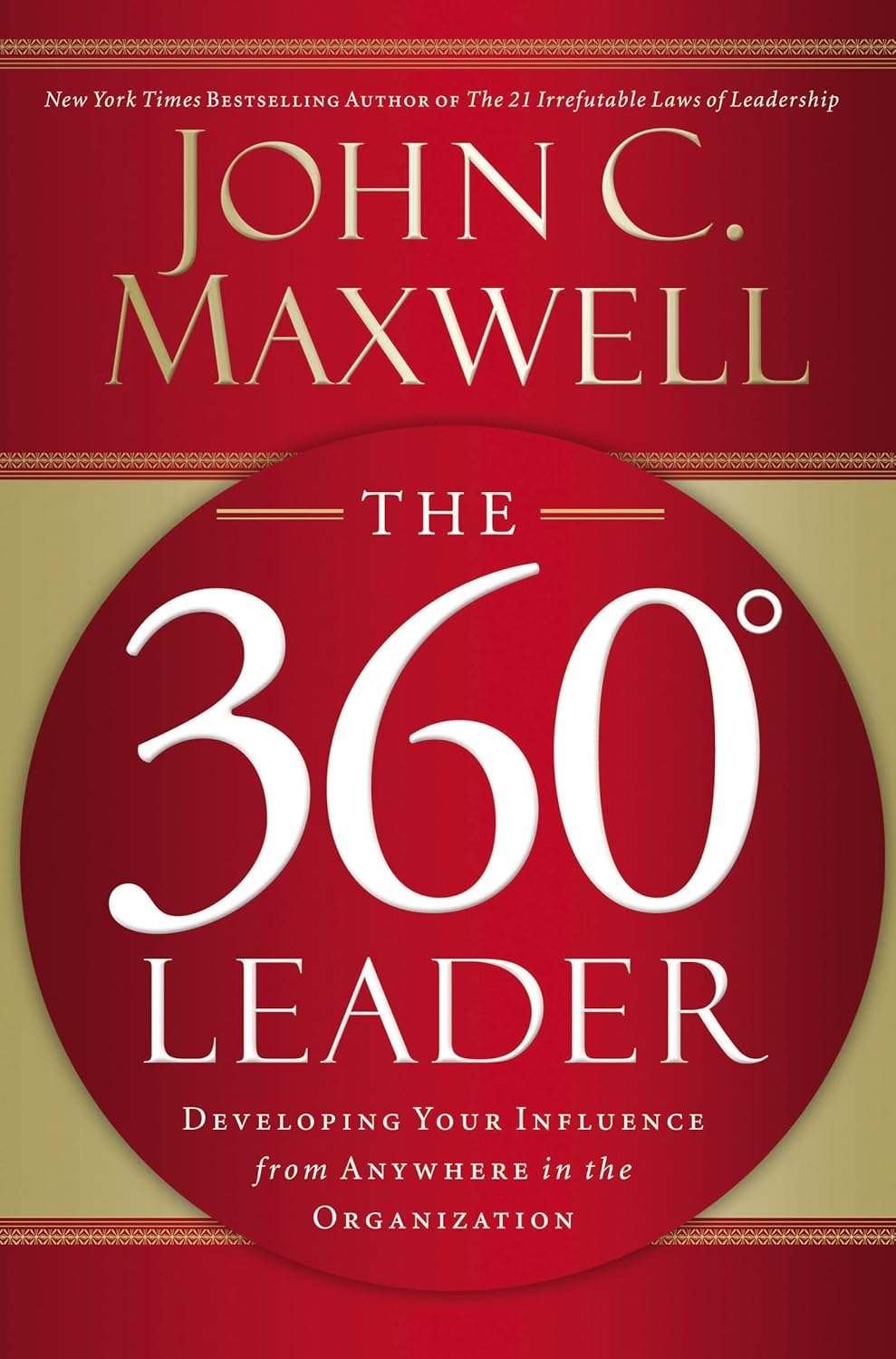
THE 360° LEADER
Developing Your Influence from Anywhere in the OrganizationBy John C. MaxwellThomas Nelson
Copyright © 2011 John C. MaxwellAll right reserved.
ISBN: 978-1-4002-0359-8
Contents
Myth #1 The Position Myth: "I can't lead if I am not at the top"..........................................................4Myth #2 The Destination Myth: "When I get to the top, then I'll learn to lead"............................................8Myth #3 The Influence Myth: "If I were on top, then people would follow me"...............................................10Myth #4 The Inexperience Myth: "When I get to the top, I'll be in control"................................................12Myth #5 The Freedom Myth: "When I get to the top, I'll no longer be limited"..............................................14Myth #6 The Potential Myth: "I can't reach my potential if I'm not the top leader"........................................17Myth #7 The All-or-Nothing Myth: "If I can't get to the top, then I won't try to lead"....................................19Section I Review..........................................................................................................22Challenge #1 The Tension Challenge: The Pressure of Being Caught in the Middle............................................25Challenge #2 The Frustration Challenge: Following an Ineffective Leader...................................................34Challenge #3 The Multi-Hat Challenge: One Head ... Many Hats..............................................................43Challenge #4 The Ego Challenge: You're Often Hidden in the Middle.........................................................50Challenge #5 The Fulfillment Challenge: Leaders Like the Front More Than the Middle.......................................56Challenge #6 The Vision Challenge: Championing the Vision Is More Difficult When You Didn't Create It.....................64Challenge #7 The Influence Challenge: Leading Others Beyond Your Position Is Not Easy.....................................73Section II Review.........................................................................................................80Lead-Up Principle #1 Lead Yourself Exceptionally Well.....................................................................84Lead-Up Principle #2 Lighten Your Leader's Load...........................................................................94Lead-Up Principle #3 Be Willing to Do What Others Won't...................................................................104Lead-Up Principle #4 Do More Than Manage-Lead!............................................................................112Lead-Up Principle #5 Invest in Relational Chemistry.......................................................................119Lead-Up Principle #6 Be Prepared Every Time You Take Your Leader's Time...................................................126Lead-Up Principle #7 Know When to Push and When to Back Off...............................................................134Lead-Up Principle #8 Become a Go-To Player................................................................................145Lead-Up Principle #9 Be Better Tomorrow Than You Are Today................................................................150Section III Review........................................................................................................157Lead-Across Principle #1 Understand, Practice, and Complete the Leadership Loop...........................................161Lead-Across Principle #2 Put Completing Fellow Leaders Ahead of Competing with Them.......................................169Lead-Across Principle #3 Be a Friend......................................................................................175Lead-Across Principle #4 Avoid Office Politics............................................................................181Lead-Across Principle #5 Expand Your Circle of Acquaintances..............................................................189Lead-Across Principle #6 Let the Best Idea Win............................................................................197Lead-Across Principle #7 Don't Pretend You're Perfect.....................................................................205Section IV Review.........................................................................................................210Lead-Down Principle #1 Walk Slowly Through the Halls......................................................................213Lead-Down Principle #2 See Everyone As a "10".............................................................................220Lead-Down Principle #3 Develop Each Team Member as a Person...............................................................228Lead-Down Principle #4 Place People in Their Strength Zones...............................................................237Lead-Down Principle #5 Model the Behavior You Desire......................................................................242Lead-Down Principle #6 Transfer the Vision................................................................................248Lead-Down Principle #7 Reward for Results.................................................................................254Section V Review..........................................................................................................261Value #1 A Leadership Team Is More Effective Than Just One Leader.........................................................265Value #2 Leaders Are Needed at Every Level of the Organization............................................................269Value #3 Leading Successfully at One Level Is a Qualifier for Leading at the Next Level...................................274Value #4 Good Leaders in the Middle Make Better Leaders at the Top........................................................279Value #5 360-Degree Leaders Possess Qualities Every Organization Needs....................................................285Section VI Review.........................................................................................................296Special Section: Create an Environment That Unleashes 360-Degree Leaders..................................................297Notes.....................................................................................................................309The 360-Degree Leader Workbook............................................................................................315About the Author..........................................................................................................345Chapter One
The Myths of Leading from the Middle of an OrganizationThese are classic pictures of leadership: William Wallace leading the charge of his warriors against the army that would oppress his people and him. Winston Churchill defying the Nazi threat as much of Europe collapsed. Mahatma Gandhi leading the two-hundred-mile march to the sea to protest the Salt Act. Mary Kay Ash going off on her own to create a world-class organization. Martin Luther King Jr. standing before the Lincoln Memorial challenging the nation with his dream of reconciliation.
Each of these people was a great leader and impacted hundreds of thousands, if not millions, of people. Yet these pictures can also be misleading. The reality is that 99 percent of all leadership occurs not from the top but from the middle of an organization. Usually, an organization has only one person who is the leader. So what do you do if you are not that one person?
I've taught leadership for nearly thirty years. And in just about every conference I've taught, someone has come up to me and said something such as, "I like what you teach about leadership, but I can't apply it. I'm not the main leader. And the person I work under is, at best, average."
Is that where you live? Are you working somewhere in the middle of your organization? You may not be a follower at the lowest level of the organization, but you're not the top dog either—yet you still want to lead, to make things happen, to make a contribution.
You do not have to be held hostage to your circumstances or position. You do not have to be the CEO to lead effectively. And you can learn to make an impact through your leadership even if you report to someone who is not a good leader. What's the secret? You learn to develop your influence from wherever you are in the organization by becoming a 360-Degree Leader. You learn to lead up, lead across, and lead down.
Not everyone understands what it means to influence others in every direction—those you work for, the people who are on the same level with you, and those who work for you. Some people are good at leading the members of their own team, but they seem to alienate the leaders in other departments of the organization. Other individuals excel at building a great relationship with their boss, but they have no influence with anyone below them in the organization. A few people can get along with just about anybody, but they never seem to get any work done. On the other hand, some people are productive, but they can't get along with anybody. But 360-Degree Leaders are different. Only 360-Degree Leaders influence people at every level of the organization. By helping others, they help themselves.
At this point, you may be saying, "Leading in every direction—that's easier said than done!" That's true, but it's not impossible. In fact, becoming a 360-Degree Leader is within the reach of anyone who possesses average or better leadership skills and is willing to work at it. So even if you would rate yourself as only a five or six on a scale of one to ten, you can improve your leadership and develop influence with the people all around you in an organization—and you can do it from anywhere in the organization.
Leading in all directions will require you to learn three different sets of leadership skills. You may already possess an intuitive sense of how well you lead up, across, and down. I want to help you make a more accurate assessment of those skills because it will help you to know how to direct your personal leadership growth. For that reason, I have arranged for purchasers of this book to be able to go to www.360DegreeLeader.com and take a free assessment of their 360-Degree Leadership skills. What's offered is a simple, straightforward on-line questionnaire that will ask you to rate yourself on issues related to leadership in each of the three areas. The assessment will take only about fifteen minutes, and when you're done, you will be able to download a lengthy report with your results.
If you look on the reverse side of the dust jacket of this book, you will find a personal identification code that can be used to access the assessment. If you are reading a paperback, international version of this book, you'll find your code on the sticker inside the cover. Go to http://www.360DegreeLeader.com. Once there, follow the instructions and, when prompted, type in your personal identification code to take the test free of charge.
I recommend that you complete the assessment before reading the rest of the book. That way, you'll know where your strengths and weaknesses are as you learn about each skill set. However, before we get into those, we need to address other issues, starting with seven myths believed by many people who lead from the middle of organizations. That is the subject of this first section of the book.
Myth #1
The Position Myth: "I can't lead if I am not at the top."
If I had to identify the number one misconception people have about leadership, it would be the belief that leadership comes simply from having a position or title. But nothing could be further from the truth. You don't need to possess a position at the top of your group, department, division, or organization in order to lead. If you think you do, then you have bought into the position myth.
A place at the top will not automatically make anyone a leader. The Law of Influence in The 21 Irrefutable Laws of Leadership states it clearly: "The true measure of leadership is influence—nothing more, nothing less."
Because I have led volunteer organizations most of my life, I have watched many people become tied up by the position myth. When people who buy into this myth are identified as potential leaders and put on a team, they are very uncomfortable if they have not been given some kind of title or position that labels them as leaders in the eyes of other team members. Instead of working to build relationships with others on the team and to gain influence naturally, they wait for the positional leader to invest them with authority and give them a title. After a while, they become more and more unhappy, until they finally decide to try another team, another leader, or another organization.
People who follow this pattern don't understand how effective leadership develops. If you've read some of my other leadership books, you might be aware of a leadership identification tool I call "The Five Levels of Leadership," which I introduce in Developing the Leader Within You. It captures the dynamics of leadership development as well as anything I know. Just in case you're not familiar with it, I'll explain it briefly here.
Leadership is dynamic, and the right to lead must be earned individually with each person you meet. Where you are on the "staircase of leadership" depends on your history with that person. And with everyone, we start at the bottom of the five steps or levels.
That bottom (or first) level is position. You can only start from the position you have been given, whatever it is: production-line worker, administrative assistant, salesperson, foreman, pastor, assistant manager, and so forth. Your position is whatever it is. From that place, you have certain rights that come with your title. But if you lead people using only your position, and you do nothing else to try to increase your influence, then people will follow you only because they have to. They will follow only within the boundaries of your job description. The lower your stated position, the less positional authority you possess. The good news is that you can increase your influence beyond your title and position. You can "move up" the staircase of leadership to higher levels.
If you move to level two, you begin to lead beyond your position because you have built relationships with the people you desire to lead. You treat them with dignity and respect. You value them as human beings. You care about them, not just the job they can do for you or the organization. Because you care about them, they begin to trust you more. As a result, they give you permission to lead them. In other words, they begin to follow you because they want to.
The third level is the production level. You move to this phase of leadership with others because of the results you achieve on the job. If the people you lead succeed in getting the job done because of your contribution to the team, then they will look to you more and more to lead the way. They follow you because of what you've done for the organization.
To reach the fourth level of leadership, you must focus on developing others. Accordingly, this is called the people-development level of leadership. Your agenda is to pour yourself into the individuals you lead—mentor them, help them develop their skills, and sharpen their leadership ability. What you are doing, in essence, is leadership reproduction. You value them, add value to them, and make them more valuable. At this level, they follow you because of what you've done for them.
The fifth and final level is the personhood level, but it is not a level one can strive to reach, because reaching it is outside of your control. Only others can put you there, and they do so because you have excelled in leading them from the first four levels for a long period of time. You have earned the reputation of a level-five leader.
Disposition More than Position
When potential leaders understand the dynamics of gaining influence with people using the Five Levels of Leadership, they come to realize that position has little to do with genuine leadership. Do individuals have to be at the top of the organizational chart to develop relationships with others and get them to like working with them? Do they need to possess the top title to achieve results and help others become productive? Do they have to be president or CEO to teach the people who report to them to see, think, and work like leaders? Of course not. Influencing others is a matter of disposition, not position.
You can lead others from anywhere in an organization. And when you do, you make the organization better. David Branker, a leader who has influenced others from the middle of organizations for years and who currently serves as an executive director in a large church, said, "To do nothing in the middle is to create more weight for the top leader to move. For some leaders—it might even feel like dead weight. Leaders in the middle can have a profound effect on an organization."
Every level of an organization depends on leadership from someone. The bottom line is this: Leadership is a choice you make, not a place you sit. Anyone can choose to become a leader wherever he is. You can make a difference no matter where you are.
Myth #2
The Destination Myth: "When I get to the top, then I'll learn to lead."
In 2003, Charlie Wetzel, my writer, decided he wanted to tackle a goal he had held for more than a decade. He was determined to run a marathon. If you were to meet Charlie, you'd never guess that he is a runner. The articles in running magazines say that at five feet ten inches tall, a distance runner should weigh 165 pounds or less. Charlie weighs more like 205. But he was a regular runner who averaged twelve to twenty miles a week and ran two or three 10K races every year, so he picked the Chicago marathon and decided to go for it.
Do you think Charlie just showed up at the starting line in downtown Chicago on race day and said, "Okay, I guess it's time to figure out how to run a marathon"? Of course not. He started doing his homework a year in advance. He read reviews of marathons held around the United States and learned that the Chicago marathon—held in October— enjoys great weather most years. It utilizes a fast, flat race course. It has a reputation for having the best fan support of any marathon in the nation. It was the perfect place for a first-time marathoner.
He also started learning how to train for a marathon. He read articles. He searched Web sites. He talked to marathon runners. He even recruited a friend who had run two marathons to race with him in Chicago on October 12. And, of course, he trained. He started the process in mid-April, increasing his mileage every week and eventually working his way up to two training runs of twenty miles each in addition to his other sessions. When race day came around, he was ready— and he completed the race.
Leadership is very similar. If you want to succeed, you need to learn as much as you can about leadership before you have a leadership position. When I meet people in social settings and they ask me what I do for a living, some of them are intrigued when I say I write books and speak. And they often ask what I write about. When I say leadership, the response that makes me chuckle most goes something like this: "Oh. Well, when I become a leader, I'll read some of your books!" What I don't say (but want to) is: "If you'd read some of my books, maybe you'd become a leader."
Good leadership is learned in the trenches. Leading as well as they can wherever they are is what prepares leaders for more and greater responsibility. Becoming a good leader is a lifelong learning process. If you don't try out your leadership skills and decision-making process when the stakes are small and the risks are low, you're likely to get into trouble at higher levels when the cost of mistakes is high, the impact is far reaching, and the exposure is greater. Mistakes made on a small scale can be easily overcome. Mistakes made when you're at the top cost the organization greatly, and they damage a leader's credibility.
How do you become the person you desire to be? You start now to adopt the thinking, learn the skills, and develop the habits of the person you wish to be. It's a mistake to daydream about "one day when you'll be on top" instead of handling today so that it prepares you for tomorrow. As Hall of Fame basketball coach John Wooden said, "When opportunity comes, it's too late to prepare." If you want to be a successful leader, learn to lead before you have a leadership position.
Myth #3
The Influence Myth: "If I were on top, then people would follow me."
I once read that President Woodrow Wilson had a housekeeper who constantly lamented that she and her husband didn't possess more prestigious positions in life. One day the lady approached the president after she heard that the secretary of labor had resigned from the administration.
"President Wilson," she said, "my husband is perfect for his vacant position. He is a laboring man, knows what labor is, and understands laboring people. Please consider him when you appoint the new secretary of labor."
"I appreciate your recommendation," answered Wilson, "but you must remember, the secretary of labor is an important position. It requires an influential person."
"But," the housekeeper said, "if you made my husband the secretary of labor, he would be an influential person!"
People who have no leadership experience have a tendency to overestimate the importance of a leadership title. That was the case for President Wilson's housekeeper. She thought that leadership was a reward that someone of importance could grant. But influence doesn't work that way. You may be able to grant someone a position, but you cannot grant him real leadership. Influence must be earned.
A position gives you a chance. It gives you the opportunity to try out your leadership. It asks people to give you the benefit of the doubt for a while. But given some time, you will earn your level of influence—for better or worse. Good leaders will gain in influence beyond their stated position. Bad leaders will shrink their influence down so that it is actually less than what originally came with the position. Remember, a position doesn't make a leader, but a leader can make the position.
(Continues...)
Excerpted from THE 360° LEADERby John C. Maxwell Copyright © 2011 by John C. Maxwell. Excerpted by permission of Thomas Nelson. All rights reserved. No part of this excerpt may be reproduced or reprinted without permission in writing from the publisher.
Excerpts are provided by Dial-A-Book Inc. solely for the personal use of visitors to this web site.
Details:
Visit the HarperCollins Leadership Store
The 360 Degree Leader: Developing Your Influence from Anywhere in the Organization
AED7055
Quantity:
Order today to get by 7-14 business days
Delivery fee of AED 20. Free for orders above AED 200.
 Imported From: United States
At BOLO, we work hard to ensure the products you receive are new, genuine, and sourced from reputable suppliers.
Every product in the BOLO catalogue is sourced through our Verified Global Supply Network of verified sellers, authorized distributors or directly from the manufacturer.
Each product undergoes thorough inspection and verification at our consolidation and fulfilment centers to ensure it meets our strict authenticity and quality standards before being shipped and delivered to you.
If you ever have concerns regarding the authenticity of a product purchased from us, please contact Bolo Support. We will review your inquiry promptly and, if necessary, provide documentation verifying authenticity or offer a suitable resolution.
Your trust is our top priority, and we are committed to maintaining transparency and integrity in every transaction.
While we strive to display accurate information, variations in packaging, labeling, instructions, or formulation may occasionally occur due to regional differences or supplier updates. For detailed or manufacturer-specific information, please contact the brand directly or reach out to BOLO Support for assistance.
Unless otherwise stated, all prices displayed on the product page include applicable taxes and import duties.
BOLO operates in accordance with the laws and regulations of United Arab Emirates. Any items found to be restricted or prohibited for sale within the United Arab Emirates will be cancelled prior to shipment. We take proactive measures to ensure that only products permitted for sale in United Arab Emirates are listed on our website.
All items are shipped by air, and any products classified as “Dangerous Goods (DG)” under IATA regulations will be removed from the order and cancelled.
All orders are processed manually, and we make every effort to process them promptly once confirmed. Products cancelled due to the above reasons will be permanently removed from listings across the website.
Similar suggestions by Bolo
More from this brand
Similar items from “Business”
Share with
Or share with link
https://www.bolo.ae/products/U1400203597
Visit the HarperCollins Leadership Store
The 360 Degree Leader: Developing Your Influence from Anywhere in the Organization
AED7055
Quantity:
Order today to get by 7-14 business days
Delivery fee of AED 20. Free for orders above AED 200.
Imported From: United States
At BOLO, we work hard to ensure the products you receive are new, genuine, and sourced from reputable suppliers.
Every product in the BOLO catalogue is sourced through our Verified Global Supply Network of verified sellers, authorized distributors or directly from the manufacturer.
Each product undergoes thorough inspection and verification at our consolidation and fulfilment centers to ensure it meets our strict authenticity and quality standards before being shipped and delivered to you.
If you ever have concerns regarding the authenticity of a product purchased from us, please contact Bolo Support. We will review your inquiry promptly and, if necessary, provide documentation verifying authenticity or offer a suitable resolution.
Your trust is our top priority, and we are committed to maintaining transparency and integrity in every transaction.
While we strive to display accurate information, variations in packaging, labeling, instructions, or formulation may occasionally occur due to regional differences or supplier updates. For detailed or manufacturer-specific information, please contact the brand directly or reach out to BOLO Support for assistance.
Unless otherwise stated, all prices displayed on the product page include applicable taxes and import duties.
BOLO operates in accordance with the laws and regulations of United Arab Emirates. Any items found to be restricted or prohibited for sale within the United Arab Emirates will be cancelled prior to shipment. We take proactive measures to ensure that only products permitted for sale in United Arab Emirates are listed on our website.
All items are shipped by air, and any products classified as “Dangerous Goods (DG)” under IATA regulations will be removed from the order and cancelled.
All orders are processed manually, and we make every effort to process them promptly once confirmed. Products cancelled due to the above reasons will be permanently removed from listings across the website.
Description:
Editorial Reviews
About the Author
John C. Maxwell is a #1 New York Times bestselling author, coach, and speaker who has sold more than 33 million books in fifty languages. He has been identified as the #1 leader in business and the most influential leadership expert in the world. His organizations - the John Maxwell Company, The John Maxwell Team, EQUIP, and the John Maxwell Leadership Foundation - have translated his teachings into seventy languages and used them to train millions of leaders from every country of the world. A recipient of the Horatio Alger Award, as well as the Mother Teresa Prize for Global Peace and Leadership from the Luminary Leadership Network, Dr. Maxwell influences Fortune 500 CEOs, the presidents of nations, and entrepreneurs worldwide. For more information about him visit JohnMaxwell.com.
Excerpt. © Reprinted by permission. All rights reserved.
THE 360° LEADER
Developing Your Influence from Anywhere in the OrganizationBy John C. MaxwellThomas Nelson
Copyright © 2011 John C. MaxwellAll right reserved.
ISBN: 978-1-4002-0359-8
Contents
Myth #1 The Position Myth: "I can't lead if I am not at the top"..........................................................4Myth #2 The Destination Myth: "When I get to the top, then I'll learn to lead"............................................8Myth #3 The Influence Myth: "If I were on top, then people would follow me"...............................................10Myth #4 The Inexperience Myth: "When I get to the top, I'll be in control"................................................12Myth #5 The Freedom Myth: "When I get to the top, I'll no longer be limited"..............................................14Myth #6 The Potential Myth: "I can't reach my potential if I'm not the top leader"........................................17Myth #7 The All-or-Nothing Myth: "If I can't get to the top, then I won't try to lead"....................................19Section I Review..........................................................................................................22Challenge #1 The Tension Challenge: The Pressure of Being Caught in the Middle............................................25Challenge #2 The Frustration Challenge: Following an Ineffective Leader...................................................34Challenge #3 The Multi-Hat Challenge: One Head ... Many Hats..............................................................43Challenge #4 The Ego Challenge: You're Often Hidden in the Middle.........................................................50Challenge #5 The Fulfillment Challenge: Leaders Like the Front More Than the Middle.......................................56Challenge #6 The Vision Challenge: Championing the Vision Is More Difficult When You Didn't Create It.....................64Challenge #7 The Influence Challenge: Leading Others Beyond Your Position Is Not Easy.....................................73Section II Review.........................................................................................................80Lead-Up Principle #1 Lead Yourself Exceptionally Well.....................................................................84Lead-Up Principle #2 Lighten Your Leader's Load...........................................................................94Lead-Up Principle #3 Be Willing to Do What Others Won't...................................................................104Lead-Up Principle #4 Do More Than Manage-Lead!............................................................................112Lead-Up Principle #5 Invest in Relational Chemistry.......................................................................119Lead-Up Principle #6 Be Prepared Every Time You Take Your Leader's Time...................................................126Lead-Up Principle #7 Know When to Push and When to Back Off...............................................................134Lead-Up Principle #8 Become a Go-To Player................................................................................145Lead-Up Principle #9 Be Better Tomorrow Than You Are Today................................................................150Section III Review........................................................................................................157Lead-Across Principle #1 Understand, Practice, and Complete the Leadership Loop...........................................161Lead-Across Principle #2 Put Completing Fellow Leaders Ahead of Competing with Them.......................................169Lead-Across Principle #3 Be a Friend......................................................................................175Lead-Across Principle #4 Avoid Office Politics............................................................................181Lead-Across Principle #5 Expand Your Circle of Acquaintances..............................................................189Lead-Across Principle #6 Let the Best Idea Win............................................................................197Lead-Across Principle #7 Don't Pretend You're Perfect.....................................................................205Section IV Review.........................................................................................................210Lead-Down Principle #1 Walk Slowly Through the Halls......................................................................213Lead-Down Principle #2 See Everyone As a "10".............................................................................220Lead-Down Principle #3 Develop Each Team Member as a Person...............................................................228Lead-Down Principle #4 Place People in Their Strength Zones...............................................................237Lead-Down Principle #5 Model the Behavior You Desire......................................................................242Lead-Down Principle #6 Transfer the Vision................................................................................248Lead-Down Principle #7 Reward for Results.................................................................................254Section V Review..........................................................................................................261Value #1 A Leadership Team Is More Effective Than Just One Leader.........................................................265Value #2 Leaders Are Needed at Every Level of the Organization............................................................269Value #3 Leading Successfully at One Level Is a Qualifier for Leading at the Next Level...................................274Value #4 Good Leaders in the Middle Make Better Leaders at the Top........................................................279Value #5 360-Degree Leaders Possess Qualities Every Organization Needs....................................................285Section VI Review.........................................................................................................296Special Section: Create an Environment That Unleashes 360-Degree Leaders..................................................297Notes.....................................................................................................................309The 360-Degree Leader Workbook............................................................................................315About the Author..........................................................................................................345Chapter One
The Myths of Leading from the Middle of an OrganizationThese are classic pictures of leadership: William Wallace leading the charge of his warriors against the army that would oppress his people and him. Winston Churchill defying the Nazi threat as much of Europe collapsed. Mahatma Gandhi leading the two-hundred-mile march to the sea to protest the Salt Act. Mary Kay Ash going off on her own to create a world-class organization. Martin Luther King Jr. standing before the Lincoln Memorial challenging the nation with his dream of reconciliation.
Each of these people was a great leader and impacted hundreds of thousands, if not millions, of people. Yet these pictures can also be misleading. The reality is that 99 percent of all leadership occurs not from the top but from the middle of an organization. Usually, an organization has only one person who is the leader. So what do you do if you are not that one person?
I've taught leadership for nearly thirty years. And in just about every conference I've taught, someone has come up to me and said something such as, "I like what you teach about leadership, but I can't apply it. I'm not the main leader. And the person I work under is, at best, average."
Is that where you live? Are you working somewhere in the middle of your organization? You may not be a follower at the lowest level of the organization, but you're not the top dog either—yet you still want to lead, to make things happen, to make a contribution.
You do not have to be held hostage to your circumstances or position. You do not have to be the CEO to lead effectively. And you can learn to make an impact through your leadership even if you report to someone who is not a good leader. What's the secret? You learn to develop your influence from wherever you are in the organization by becoming a 360-Degree Leader. You learn to lead up, lead across, and lead down.
Not everyone understands what it means to influence others in every direction—those you work for, the people who are on the same level with you, and those who work for you. Some people are good at leading the members of their own team, but they seem to alienate the leaders in other departments of the organization. Other individuals excel at building a great relationship with their boss, but they have no influence with anyone below them in the organization. A few people can get along with just about anybody, but they never seem to get any work done. On the other hand, some people are productive, but they can't get along with anybody. But 360-Degree Leaders are different. Only 360-Degree Leaders influence people at every level of the organization. By helping others, they help themselves.
At this point, you may be saying, "Leading in every direction—that's easier said than done!" That's true, but it's not impossible. In fact, becoming a 360-Degree Leader is within the reach of anyone who possesses average or better leadership skills and is willing to work at it. So even if you would rate yourself as only a five or six on a scale of one to ten, you can improve your leadership and develop influence with the people all around you in an organization—and you can do it from anywhere in the organization.
Leading in all directions will require you to learn three different sets of leadership skills. You may already possess an intuitive sense of how well you lead up, across, and down. I want to help you make a more accurate assessment of those skills because it will help you to know how to direct your personal leadership growth. For that reason, I have arranged for purchasers of this book to be able to go to www.360DegreeLeader.com and take a free assessment of their 360-Degree Leadership skills. What's offered is a simple, straightforward on-line questionnaire that will ask you to rate yourself on issues related to leadership in each of the three areas. The assessment will take only about fifteen minutes, and when you're done, you will be able to download a lengthy report with your results.
If you look on the reverse side of the dust jacket of this book, you will find a personal identification code that can be used to access the assessment. If you are reading a paperback, international version of this book, you'll find your code on the sticker inside the cover. Go to http://www.360DegreeLeader.com. Once there, follow the instructions and, when prompted, type in your personal identification code to take the test free of charge.
I recommend that you complete the assessment before reading the rest of the book. That way, you'll know where your strengths and weaknesses are as you learn about each skill set. However, before we get into those, we need to address other issues, starting with seven myths believed by many people who lead from the middle of organizations. That is the subject of this first section of the book.
Myth #1
The Position Myth: "I can't lead if I am not at the top."
If I had to identify the number one misconception people have about leadership, it would be the belief that leadership comes simply from having a position or title. But nothing could be further from the truth. You don't need to possess a position at the top of your group, department, division, or organization in order to lead. If you think you do, then you have bought into the position myth.
A place at the top will not automatically make anyone a leader. The Law of Influence in The 21 Irrefutable Laws of Leadership states it clearly: "The true measure of leadership is influence—nothing more, nothing less."
Because I have led volunteer organizations most of my life, I have watched many people become tied up by the position myth. When people who buy into this myth are identified as potential leaders and put on a team, they are very uncomfortable if they have not been given some kind of title or position that labels them as leaders in the eyes of other team members. Instead of working to build relationships with others on the team and to gain influence naturally, they wait for the positional leader to invest them with authority and give them a title. After a while, they become more and more unhappy, until they finally decide to try another team, another leader, or another organization.
People who follow this pattern don't understand how effective leadership develops. If you've read some of my other leadership books, you might be aware of a leadership identification tool I call "The Five Levels of Leadership," which I introduce in Developing the Leader Within You. It captures the dynamics of leadership development as well as anything I know. Just in case you're not familiar with it, I'll explain it briefly here.
Leadership is dynamic, and the right to lead must be earned individually with each person you meet. Where you are on the "staircase of leadership" depends on your history with that person. And with everyone, we start at the bottom of the five steps or levels.
That bottom (or first) level is position. You can only start from the position you have been given, whatever it is: production-line worker, administrative assistant, salesperson, foreman, pastor, assistant manager, and so forth. Your position is whatever it is. From that place, you have certain rights that come with your title. But if you lead people using only your position, and you do nothing else to try to increase your influence, then people will follow you only because they have to. They will follow only within the boundaries of your job description. The lower your stated position, the less positional authority you possess. The good news is that you can increase your influence beyond your title and position. You can "move up" the staircase of leadership to higher levels.
If you move to level two, you begin to lead beyond your position because you have built relationships with the people you desire to lead. You treat them with dignity and respect. You value them as human beings. You care about them, not just the job they can do for you or the organization. Because you care about them, they begin to trust you more. As a result, they give you permission to lead them. In other words, they begin to follow you because they want to.
The third level is the production level. You move to this phase of leadership with others because of the results you achieve on the job. If the people you lead succeed in getting the job done because of your contribution to the team, then they will look to you more and more to lead the way. They follow you because of what you've done for the organization.
To reach the fourth level of leadership, you must focus on developing others. Accordingly, this is called the people-development level of leadership. Your agenda is to pour yourself into the individuals you lead—mentor them, help them develop their skills, and sharpen their leadership ability. What you are doing, in essence, is leadership reproduction. You value them, add value to them, and make them more valuable. At this level, they follow you because of what you've done for them.
The fifth and final level is the personhood level, but it is not a level one can strive to reach, because reaching it is outside of your control. Only others can put you there, and they do so because you have excelled in leading them from the first four levels for a long period of time. You have earned the reputation of a level-five leader.
Disposition More than Position
When potential leaders understand the dynamics of gaining influence with people using the Five Levels of Leadership, they come to realize that position has little to do with genuine leadership. Do individuals have to be at the top of the organizational chart to develop relationships with others and get them to like working with them? Do they need to possess the top title to achieve results and help others become productive? Do they have to be president or CEO to teach the people who report to them to see, think, and work like leaders? Of course not. Influencing others is a matter of disposition, not position.
You can lead others from anywhere in an organization. And when you do, you make the organization better. David Branker, a leader who has influenced others from the middle of organizations for years and who currently serves as an executive director in a large church, said, "To do nothing in the middle is to create more weight for the top leader to move. For some leaders—it might even feel like dead weight. Leaders in the middle can have a profound effect on an organization."
Every level of an organization depends on leadership from someone. The bottom line is this: Leadership is a choice you make, not a place you sit. Anyone can choose to become a leader wherever he is. You can make a difference no matter where you are.
Myth #2
The Destination Myth: "When I get to the top, then I'll learn to lead."
In 2003, Charlie Wetzel, my writer, decided he wanted to tackle a goal he had held for more than a decade. He was determined to run a marathon. If you were to meet Charlie, you'd never guess that he is a runner. The articles in running magazines say that at five feet ten inches tall, a distance runner should weigh 165 pounds or less. Charlie weighs more like 205. But he was a regular runner who averaged twelve to twenty miles a week and ran two or three 10K races every year, so he picked the Chicago marathon and decided to go for it.
Do you think Charlie just showed up at the starting line in downtown Chicago on race day and said, "Okay, I guess it's time to figure out how to run a marathon"? Of course not. He started doing his homework a year in advance. He read reviews of marathons held around the United States and learned that the Chicago marathon—held in October— enjoys great weather most years. It utilizes a fast, flat race course. It has a reputation for having the best fan support of any marathon in the nation. It was the perfect place for a first-time marathoner.
He also started learning how to train for a marathon. He read articles. He searched Web sites. He talked to marathon runners. He even recruited a friend who had run two marathons to race with him in Chicago on October 12. And, of course, he trained. He started the process in mid-April, increasing his mileage every week and eventually working his way up to two training runs of twenty miles each in addition to his other sessions. When race day came around, he was ready— and he completed the race.
Leadership is very similar. If you want to succeed, you need to learn as much as you can about leadership before you have a leadership position. When I meet people in social settings and they ask me what I do for a living, some of them are intrigued when I say I write books and speak. And they often ask what I write about. When I say leadership, the response that makes me chuckle most goes something like this: "Oh. Well, when I become a leader, I'll read some of your books!" What I don't say (but want to) is: "If you'd read some of my books, maybe you'd become a leader."
Good leadership is learned in the trenches. Leading as well as they can wherever they are is what prepares leaders for more and greater responsibility. Becoming a good leader is a lifelong learning process. If you don't try out your leadership skills and decision-making process when the stakes are small and the risks are low, you're likely to get into trouble at higher levels when the cost of mistakes is high, the impact is far reaching, and the exposure is greater. Mistakes made on a small scale can be easily overcome. Mistakes made when you're at the top cost the organization greatly, and they damage a leader's credibility.
How do you become the person you desire to be? You start now to adopt the thinking, learn the skills, and develop the habits of the person you wish to be. It's a mistake to daydream about "one day when you'll be on top" instead of handling today so that it prepares you for tomorrow. As Hall of Fame basketball coach John Wooden said, "When opportunity comes, it's too late to prepare." If you want to be a successful leader, learn to lead before you have a leadership position.
Myth #3
The Influence Myth: "If I were on top, then people would follow me."
I once read that President Woodrow Wilson had a housekeeper who constantly lamented that she and her husband didn't possess more prestigious positions in life. One day the lady approached the president after she heard that the secretary of labor had resigned from the administration.
"President Wilson," she said, "my husband is perfect for his vacant position. He is a laboring man, knows what labor is, and understands laboring people. Please consider him when you appoint the new secretary of labor."
"I appreciate your recommendation," answered Wilson, "but you must remember, the secretary of labor is an important position. It requires an influential person."
"But," the housekeeper said, "if you made my husband the secretary of labor, he would be an influential person!"
People who have no leadership experience have a tendency to overestimate the importance of a leadership title. That was the case for President Wilson's housekeeper. She thought that leadership was a reward that someone of importance could grant. But influence doesn't work that way. You may be able to grant someone a position, but you cannot grant him real leadership. Influence must be earned.
A position gives you a chance. It gives you the opportunity to try out your leadership. It asks people to give you the benefit of the doubt for a while. But given some time, you will earn your level of influence—for better or worse. Good leaders will gain in influence beyond their stated position. Bad leaders will shrink their influence down so that it is actually less than what originally came with the position. Remember, a position doesn't make a leader, but a leader can make the position.
(Continues...)
Excerpted from THE 360° LEADERby John C. Maxwell Copyright © 2011 by John C. Maxwell. Excerpted by permission of Thomas Nelson. All rights reserved. No part of this excerpt may be reproduced or reprinted without permission in writing from the publisher.
Excerpts are provided by Dial-A-Book Inc. solely for the personal use of visitors to this web site.
Details:
Similar suggestions by Bolo
More from this brand
Similar items from “Business”
Share with
Or share with link
https://www.bolo.ae/products/U1400203597