Description:
Editorial Reviews
Review
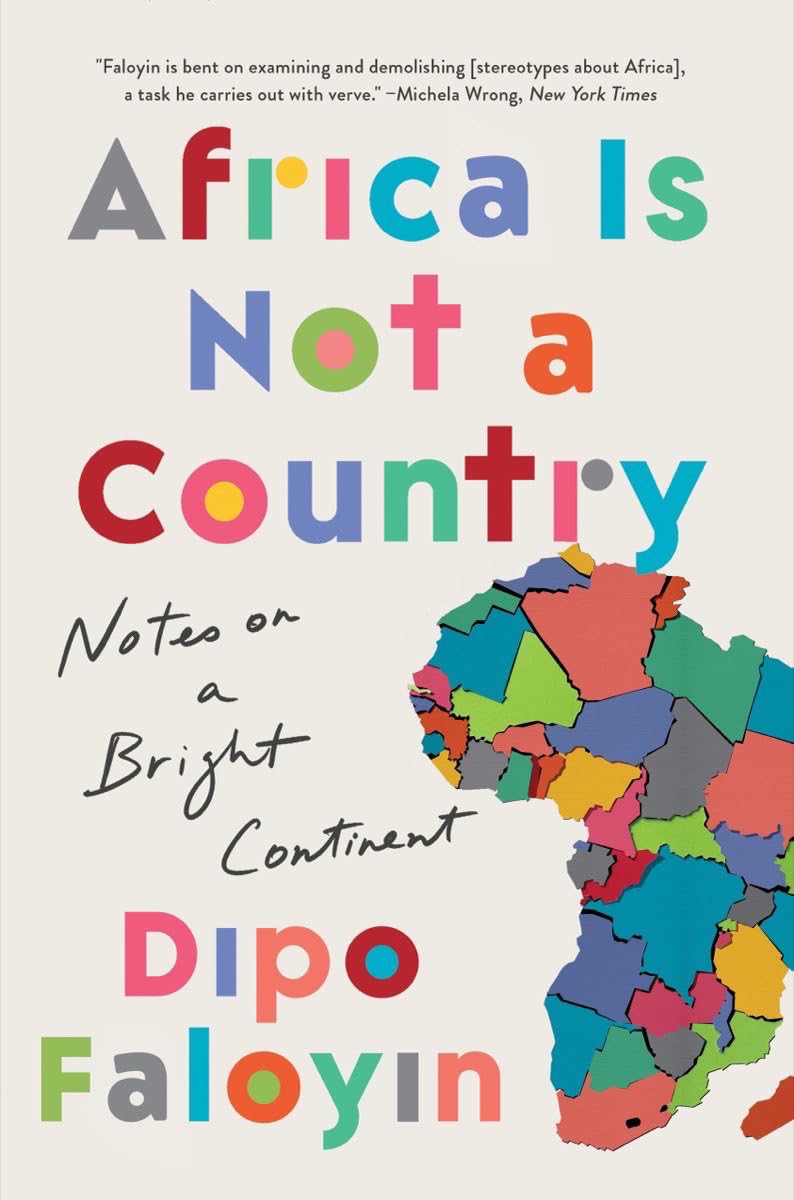
― Michela Wrong, New York Times
"Powerful and heartfelt…Faloyin has written a book inspired by love and hope for a much-abused and maligned continent, whose future, he insists, is filled with promise."
― PD Smith, Guardian
"Faloyin [is] a smart, often scathingly funny writer…While much of the history of Western involvement in Africa is sordid and depressing, Africa Is Not a Country is not. It brims with the sort of outrage that speaks of hope, of change."
― Bookpage (starred review)
"With clarity and incisive wit, journalist Faloyin explores the origins of the 54 countries of Africa…Africa Is Not a Country [is] a forceful rebuttal of erased histories and simplified imagery as well as a celebration of a continent already living its dynamic future."
― Booklist (starred review)
"A spirited critique of Western misrepresentations of Africa…[E]xuberant and informative."
― Publishers Weekly
"Trenchant…A well-researched, cleareyed deconstruction of highly flawed conventional wisdom about Africa."
― Kirkus Reviews
"A necessary book that deserves its place in the canon as essential reading for anyone seeking an introduction to this vast continent―as well as the rest of us, who need to be regularly challenged on what we think we know about Africa and the damage done by that."
― Sally Hayden, Irish Times
"Warm, funny, biting and essential reading."
― Adam Rutherford, author of How to Argue With a Racist
"A brilliant, prescient exploration of a richly complex continent. An antidote for our times."
― Irenosen Okojie, author of Nudibranch
"This book is hilarious, ferocious, generous, and convincing. It made me reconsider almost everything I thought I knew about Africa, which is somewhere we often hear about, but far too rarely hear from."
― Oliver Bullough, author of Moneyland
"An impeccably researched work, brimming with humor and intellect. A necessary read for 2022."
― J K Chukwu, author of The Unfortunates
"A triumph of a book. A charismatic and hugely enjoyable read packed full of essential information―revealing a huge, vastly diverse set of stories, situations, and histories that really do pop the balloon of lazy stereotyping of Africa. You’d be doing yourself a disservice if you didn’t read this book."
― Nels Abbey, coauthor of Think Like a White Man
"This book should be on the curriculum."
― Nikki May, author of Wahala
About the Author
Reviews:
5.0 out of 5 stars Top of my reader list
This book is eye opening and cleared up many misconception many people including myself had about the continent of Africa. This inspired me to visit the continent in very short order.
4.0 out of 5 stars The Beauty of Africa Deserves the Whole Story
Dipo Faloyin’s Africa Is Not a Country is at its best when it does exactly what the title promises; reminds the reader that Africa is not, in fact, a single monolithic place but a vast, intricate continent made up of dozens of nations and thousands of cultures, each with its own traditions, politics, and quirks. When Faloyin leans into this diversity, the book shines. His descriptions of daily life, food, languages, and humor across different regions give the reader glimpses of the real Africa that is too often blurred into a single stereotype in Western discourse. These sections feel like windows opening, letting in fresh air that sweeps away the tired generalizations.Where the book falters is in Faloyin’s tendency to swing the pendulum too far in the other direction. In correcting the West’s caricature of Africa, he often paints with his own broad brush; highlighting only the noble, positive, and vibrant aspects of African societies while casting European colonizers and their descendants as the sole villains of history. To be clear, the history of European colonialism in Africa is a horror show of greed, violence, and bureaucratic cruelty, and it requires no defense. But framing Africa’s struggles as exclusively the fault of colonial powers is a lie by omission. Slavery did not arrive in Africa on a Portuguese ship in the 1400s, nor did conquest begin when a European picked up a musket. African societies had their own histories of expansion, enslavement, and internecine conflict long before, and long after, the arrival of Europeans. Ignoring those elements doesn’t protect Africa’s dignity; it strips away the full story of its resilience, complexity, and depth.Africa deserves to be understood on its own terms, not just in contrast to colonial brutality. To tell the story of the continent as a counterweight to the sins of the West may be emotionally compelling, but it risks becoming spiritually hollow. The real beauty of Africa lies not in a defensive narrative that erases uncomfortable truths, but in the richness of its diverse histories and peoples. Africa’s story did not begin 500 years ago, and it will not end with a single narrative crafted to win an argument against stereotypes.Faloyin’s book is worth reading for its humor, its humanity, and its vivid vignettes of modern African life. Just don’t confuse it with the whole story. If the book reminds you that Africa is not a country, it should also remind you that African history is not a morality play. It is, like all human history, complicated, contradictory, and, precisely because of that, worth celebrating in full.
5.0 out of 5 stars easy read
very easy read. thoroughly enjoyed it.
5.0 out of 5 stars Fascinating Read
I'm not one for history books (yawn) but this is written so well and delivers hard truths strongly but with a light touch. Intriguing and hugely educational. I feel like huge gaps of knowledge about Africa and colonialism are being, if not filled, at least made a bit smaller.
3.0 out of 5 stars What is truth vs drivel handed down by Mainstream headlines?
I enjoy the sharp wit of the author. I actually was enjoying this book. For nearly the first 1/2 I felt like I was learning about Africa. Then came the beginning of chapter VI "This is family Business". Here he starts the chapter with writing about politics in America. I was taken aback because all he does is quote headlines of some of the mainstream media who in America are political machines themselves. There is no depth to his comments, no understanding of what is truly happening, just a parrot repeating the gotcha headlines of the worst rags in America. Why this bothered me isn't because I don't agree with his opinion, it is because it caused me to wonder if the same amount of work/knowledge went into the rest of the book about countries in Africa and Europe. Is this just a book putting together all the BS that mainstream media is trying to sell us into one place? Frustrating, because I was enjoying the book thinking I was learning, but now I question everything he writes. Is it all just uneducated opinion? I hope not, so that it wasn't a colossus waste of my time, but I can't help that nagging feeling that this is one person writing down headlines fed to us like sheep with no basis in fact.I will continue reading this, as I hope that the author has a much better understanding of the intricacies on his continent than he does in America. But I will do so much more cautiously.
4.0 out of 5 stars Excellent reading
I was in London as spotted this book in a store and picked it up for reading on the plane home; unlike many history books, it isn't dry or boring, it is fun, interesting, and worth a read (or two). It could go deeper, but it is a great overview of a continent that too many of us lump together as one country.
5.0 out of 5 stars Required Reading for Anyone going to the African Continent.
Dipo Faloyin writes an engaging insightful overview of the African continent explaining how brutal colonialism shaped the formation of African countries. Faloyin points out resulting challenges and persistent negative stereotypes which cloud the truth. However, progress is described along with information on current political movements and culture. A must read for anyone, especially if white, traveling to the African continent.
5.0 out of 5 stars Informative and delightful
Having been to Africa and lived with students from Africa, I was going crazy with all the ugly stereotypes of Africa. Without being dry and scholarly, the author gives a delightful but honest review of the diversity that makes up the continent of Africa. A delightful read
Visit the W. W. Norton & Company Store
Africa Is Not a Country: Notes on a Bright Continent
AED9656
Quantity:
Order today to get by 7-14 business days
Delivery fee of AED 20. Free for orders above AED 200.
Imported From: United States
At BOLO, we work hard to ensure the products you receive are new, genuine, and sourced from reputable suppliers.
BOLO is not an authorized or official retailer for most brands, nor are we affiliated with manufacturers unless specifically stated on a product page. Instead, we source verified sellers, authorized distributors or directly from the manufacturer.
Each product undergoes thorough inspection and verification at our consolidation and fulfilment centers to ensure it meets our strict authenticity and quality standards before being shipped and delivered to you.
If you ever have concerns regarding the authenticity of a product purchased from us, please contact Bolo Support. We will review your inquiry promptly and, if necessary, provide documentation verifying authenticity or offer a suitable resolution.
Your trust is our top priority, and we are committed to maintaining transparency and integrity in every transaction.
All product information, images, descriptions, and reviews originate from the manufacturer or from trusted sellers overseas. BOLO is not affiliated with, endorsed by, or an authorized retailer for most brands listed on our website unless stated otherwise.
While we strive to display accurate information, variations in packaging, labeling, instructions, or formulation may occasionally occur due to regional differences or supplier updates. For detailed or manufacturer-specific information, please contact the brand directly or reach out to BOLO Support for assistance.
Unless otherwise stated, all prices displayed on the product page include applicable taxes and import duties.
BOLO operates in accordance with the laws and regulations of United Arab Emirates. Any items found to be restricted or prohibited for sale within the UAE will be cancelled prior to shipment. We take proactive measures to ensure that only products permitted for sale in United Arab Emirates are listed on our website.
All items are shipped by air, and any products classified as “Dangerous Goods (DG)” under IATA regulations will be removed from the order and cancelled.
All orders are processed manually, and we make every effort to process them promptly once confirmed. Products cancelled due to the above reasons will be permanently removed from listings across the website.
Similar suggestions by Bolo
More from this brand
Similar items from “Globalization”
Share with
Or share with link
https://www.bolo.ae/products/U1324065893
Visit the W. W. Norton & Company Store
Africa Is Not a Country: Notes on a Bright Continent

AED9656
Quantity:
Order today to get by 7-14 business days
Delivery fee of AED 20. Free for orders above AED 200.
Imported From: United States
At BOLO, we work hard to ensure the products you receive are new, genuine, and sourced from reputable suppliers.
BOLO is not an authorized or official retailer for most brands, nor are we affiliated with manufacturers unless specifically stated on a product page. Instead, we source verified sellers, authorized distributors or directly from the manufacturer.
Each product undergoes thorough inspection and verification at our consolidation and fulfilment centers to ensure it meets our strict authenticity and quality standards before being shipped and delivered to you.
If you ever have concerns regarding the authenticity of a product purchased from us, please contact Bolo Support. We will review your inquiry promptly and, if necessary, provide documentation verifying authenticity or offer a suitable resolution.
Your trust is our top priority, and we are committed to maintaining transparency and integrity in every transaction.
All product information, images, descriptions, and reviews originate from the manufacturer or from trusted sellers overseas. BOLO is not affiliated with, endorsed by, or an authorized retailer for most brands listed on our website unless stated otherwise.
While we strive to display accurate information, variations in packaging, labeling, instructions, or formulation may occasionally occur due to regional differences or supplier updates. For detailed or manufacturer-specific information, please contact the brand directly or reach out to BOLO Support for assistance.
Unless otherwise stated, all prices displayed on the product page include applicable taxes and import duties.
BOLO operates in accordance with the laws and regulations of United Arab Emirates. Any items found to be restricted or prohibited for sale within the UAE will be cancelled prior to shipment. We take proactive measures to ensure that only products permitted for sale in United Arab Emirates are listed on our website.
All items are shipped by air, and any products classified as “Dangerous Goods (DG)” under IATA regulations will be removed from the order and cancelled.
All orders are processed manually, and we make every effort to process them promptly once confirmed. Products cancelled due to the above reasons will be permanently removed from listings across the website.
Description:
Editorial Reviews
Review
― Michela Wrong, New York Times
"Powerful and heartfelt…Faloyin has written a book inspired by love and hope for a much-abused and maligned continent, whose future, he insists, is filled with promise."
― PD Smith, Guardian
"Faloyin [is] a smart, often scathingly funny writer…While much of the history of Western involvement in Africa is sordid and depressing, Africa Is Not a Country is not. It brims with the sort of outrage that speaks of hope, of change."
― Bookpage (starred review)
"With clarity and incisive wit, journalist Faloyin explores the origins of the 54 countries of Africa…Africa Is Not a Country [is] a forceful rebuttal of erased histories and simplified imagery as well as a celebration of a continent already living its dynamic future."
― Booklist (starred review)
"A spirited critique of Western misrepresentations of Africa…[E]xuberant and informative."
― Publishers Weekly
"Trenchant…A well-researched, cleareyed deconstruction of highly flawed conventional wisdom about Africa."
― Kirkus Reviews
"A necessary book that deserves its place in the canon as essential reading for anyone seeking an introduction to this vast continent―as well as the rest of us, who need to be regularly challenged on what we think we know about Africa and the damage done by that."
― Sally Hayden, Irish Times
"Warm, funny, biting and essential reading."
― Adam Rutherford, author of How to Argue With a Racist
"A brilliant, prescient exploration of a richly complex continent. An antidote for our times."
― Irenosen Okojie, author of Nudibranch
"This book is hilarious, ferocious, generous, and convincing. It made me reconsider almost everything I thought I knew about Africa, which is somewhere we often hear about, but far too rarely hear from."
― Oliver Bullough, author of Moneyland
"An impeccably researched work, brimming with humor and intellect. A necessary read for 2022."
― J K Chukwu, author of The Unfortunates
"A triumph of a book. A charismatic and hugely enjoyable read packed full of essential information―revealing a huge, vastly diverse set of stories, situations, and histories that really do pop the balloon of lazy stereotyping of Africa. You’d be doing yourself a disservice if you didn’t read this book."
― Nels Abbey, coauthor of Think Like a White Man
"This book should be on the curriculum."
― Nikki May, author of Wahala
About the Author
Reviews:
5.0 out of 5 stars Top of my reader list
This book is eye opening and cleared up many misconception many people including myself had about the continent of Africa. This inspired me to visit the continent in very short order.
4.0 out of 5 stars The Beauty of Africa Deserves the Whole Story
Dipo Faloyin’s Africa Is Not a Country is at its best when it does exactly what the title promises; reminds the reader that Africa is not, in fact, a single monolithic place but a vast, intricate continent made up of dozens of nations and thousands of cultures, each with its own traditions, politics, and quirks. When Faloyin leans into this diversity, the book shines. His descriptions of daily life, food, languages, and humor across different regions give the reader glimpses of the real Africa that is too often blurred into a single stereotype in Western discourse. These sections feel like windows opening, letting in fresh air that sweeps away the tired generalizations.Where the book falters is in Faloyin’s tendency to swing the pendulum too far in the other direction. In correcting the West’s caricature of Africa, he often paints with his own broad brush; highlighting only the noble, positive, and vibrant aspects of African societies while casting European colonizers and their descendants as the sole villains of history. To be clear, the history of European colonialism in Africa is a horror show of greed, violence, and bureaucratic cruelty, and it requires no defense. But framing Africa’s struggles as exclusively the fault of colonial powers is a lie by omission. Slavery did not arrive in Africa on a Portuguese ship in the 1400s, nor did conquest begin when a European picked up a musket. African societies had their own histories of expansion, enslavement, and internecine conflict long before, and long after, the arrival of Europeans. Ignoring those elements doesn’t protect Africa’s dignity; it strips away the full story of its resilience, complexity, and depth.Africa deserves to be understood on its own terms, not just in contrast to colonial brutality. To tell the story of the continent as a counterweight to the sins of the West may be emotionally compelling, but it risks becoming spiritually hollow. The real beauty of Africa lies not in a defensive narrative that erases uncomfortable truths, but in the richness of its diverse histories and peoples. Africa’s story did not begin 500 years ago, and it will not end with a single narrative crafted to win an argument against stereotypes.Faloyin’s book is worth reading for its humor, its humanity, and its vivid vignettes of modern African life. Just don’t confuse it with the whole story. If the book reminds you that Africa is not a country, it should also remind you that African history is not a morality play. It is, like all human history, complicated, contradictory, and, precisely because of that, worth celebrating in full.
5.0 out of 5 stars easy read
very easy read. thoroughly enjoyed it.
5.0 out of 5 stars Fascinating Read
I'm not one for history books (yawn) but this is written so well and delivers hard truths strongly but with a light touch. Intriguing and hugely educational. I feel like huge gaps of knowledge about Africa and colonialism are being, if not filled, at least made a bit smaller.
3.0 out of 5 stars What is truth vs drivel handed down by Mainstream headlines?
I enjoy the sharp wit of the author. I actually was enjoying this book. For nearly the first 1/2 I felt like I was learning about Africa. Then came the beginning of chapter VI "This is family Business". Here he starts the chapter with writing about politics in America. I was taken aback because all he does is quote headlines of some of the mainstream media who in America are political machines themselves. There is no depth to his comments, no understanding of what is truly happening, just a parrot repeating the gotcha headlines of the worst rags in America. Why this bothered me isn't because I don't agree with his opinion, it is because it caused me to wonder if the same amount of work/knowledge went into the rest of the book about countries in Africa and Europe. Is this just a book putting together all the BS that mainstream media is trying to sell us into one place? Frustrating, because I was enjoying the book thinking I was learning, but now I question everything he writes. Is it all just uneducated opinion? I hope not, so that it wasn't a colossus waste of my time, but I can't help that nagging feeling that this is one person writing down headlines fed to us like sheep with no basis in fact.I will continue reading this, as I hope that the author has a much better understanding of the intricacies on his continent than he does in America. But I will do so much more cautiously.
4.0 out of 5 stars Excellent reading
I was in London as spotted this book in a store and picked it up for reading on the plane home; unlike many history books, it isn't dry or boring, it is fun, interesting, and worth a read (or two). It could go deeper, but it is a great overview of a continent that too many of us lump together as one country.
5.0 out of 5 stars Required Reading for Anyone going to the African Continent.
Dipo Faloyin writes an engaging insightful overview of the African continent explaining how brutal colonialism shaped the formation of African countries. Faloyin points out resulting challenges and persistent negative stereotypes which cloud the truth. However, progress is described along with information on current political movements and culture. A must read for anyone, especially if white, traveling to the African continent.
5.0 out of 5 stars Informative and delightful
Having been to Africa and lived with students from Africa, I was going crazy with all the ugly stereotypes of Africa. Without being dry and scholarly, the author gives a delightful but honest review of the diversity that makes up the continent of Africa. A delightful read
Similar suggestions by Bolo
More from this brand
Similar items from “Globalization”
Share with
Or share with link
https://www.bolo.ae/products/U1324065893