"If you are a science teacher or homeschool parent looking for a simplified yet engaging approach to teaching science, this book provides a perfect guide to help students experience (not just learn about) science. This organized, research-based resource fits the title of a "toolbox." It can help anyone from the novice to veteran teacher plan and deliver lessons that will excite students about concepts in science (aligned to the Next Generation Science Standards)." - Dr. Amanda McAdams, Director of Curriculum in Wyoming's Lincoln County School District #2, 2010 Arizona Teacher of the Year
"This book contains valuable strategies for both new and veteran teachers. It is an organized and interesting compilation of ready to use tools that will engage students at all levels." - Robin Norwich, NBCT, Math and Physics teacher, 2019 recipient of the Sloan Award for Excellence in Teaching Science and Mathematics
"This book is a comprehensive collection of creative lesson plan strategies with detailed references and supplementary resources cited. Also, Part III provides many general strategies for effective teaching. Clearly written in both content and organization, it provides specific and detailed concrete examples for putting into practice the authors' Introduction: 'Not having heard something is not as good as having heard it, having heard it is not as good as having seen it, having seen it is not as good as knowing it, knowing it is not as good as putting it into practice' - attributed to Chinese Philosopher Xun Kuang.
I recommend it to any science teacher, and especially those new to teaching science or with minimal scientific knowledge. I think, with this book, even I, an engineer, could teach a quality science course." - Jon S. Wilson, BSME, MAE, MSIE; 25+ years practicing engineer and 25+ years training practicing engineers
"As a teacher, I have often heard professionals discuss the importance of "soft skills" our students require upon graduation. The ideas in The Science Teacher's Toolbox successfully describe solid strategies for teachers to utilize in their classrooms to get kids experiencing science, producing thinking, problem-solving citizens that the world will need." -Connie Kennedy, K-12 Mathematics & Science Instructional Support Specialist, Bay City Public Schools
"As a science teacher of nearly 20 years, I found the information laid out in The Science Teacher's Toolbox extremely valuable. I believe that new teachers would benefit immensely from reading this book, as well as veteran teachers. Over the years I have found that students struggle with the ability to extract the important elements from scientific text as well as how to think critically. This book provides strategies that help students to improve these skills. In addition, as a veteran teacher, I found the information the authors outlined in relation to learning goals and scales invaluable. Using learning goals and scales helps identify the essential elements of what you want your students to know and helps teachers to identify students who need interventions but the most important element of this is that it helps students reflect on their own learning. The strategies found in this book changed the way I teach and can do the same for you, which ultimately impacts student learning, the ultimate goal of a master teacher." - Jami Spencer, biology teacher and science department chair, Cottonwood High School, Utah
"As a principal who has worked in K-12 settings for 15 years, I find this book to be remarkably useful. It's application for effectively differentiating science instruction and for developing critical thinking skills in students is far reaching. Any educator will find this resource to be valuable for improving his or her craft." - Mike Deignan, Principal, Desert Vista High School
"I love the book and how easy it is to follow. It gives excellent suggestions and examples on how to implement them, with step-by-step instructions and visuals." - Amy Rankey, 5th Grade Teacher, Hampton Elementary School
"If you are a science teacher or homeschool parent looking for a simplified yet engaging approach to teaching science, this book provides a perfect guide to help students experience (not just learn about) science. This organized, research-based resource fits the title of a "toolbox." It can help anyone from the novice to veteran teacher plan and deliver lessons that will excite students about concepts in science (aligned to the Next Generation Science Standards)."
―Dr. Amanda McAdams, Director of Curriculum in Wyoming’s Lincoln County School District #2, 2010 Arizona Teacher of the Year
"This book contains valuable strategies for both new and veteran teachers. It is an organized and interesting compilation of ready to use tools that will engage students at all levels."
―Robin Norwich, NBCT, Math and Physics teacher, 2019 recipient of the Sloan Award for Excellence in Teaching Science and Mathematics
"This book is a comprehensive collection of creative lesson plan strategies with detailed references and supplementary resources cited. Also, Part III provides many general strategies for effective teaching. Clearly written in both content and organization, it provides specific and detailed concrete examples for putting into practice the authors’ Introduction: 'Not having heard something is not as good as having heard it, having heard it is not as good as having seen it, having seen it is not as good as knowing it, knowing it is not as good as putting it into practice'―attributed to Chinese Philosopher Xun Kuang.
I recommend it to any science teacher, and especially those new to teaching science or with minimal scientific knowledge. I think, with this book, even I, an engineer, could teach a quality science course."
―Jon S. Wilson, BSME, MAE, MSIE; 25+ years practicing engineer and 25+ years training practicing engineers
"As a teacher, I have often heard professionals discuss the importance of "soft skills" our students require upon graduation. The ideas in The Science Teacher’s Toolbox successfully describe solid strategies for teachers to utilize in their classrooms to get kids experiencing science, producing thinking, problem-solving citizens that the world will need."
―Connie Kennedy, K-12 Mathematics & Science Instructional Support Specialist, Bay City Public Schools
"As a science teacher of nearly 20 years, I found the information laid out in The Science Teacher's Toolbox extremely valuable. I believe that new teachers would benefit immensely from reading this book, as well as veteran teachers. Over the years I have found that students struggle with the ability to extract the important elements from scientific text as well as how to think critically. This book provides strategies that help students to improve these skills. In addition, as a veteran teacher, I found the information the authors outlined in relation to learning goals and scales invaluable. Using learning goals and scales helps identify the essential elements of what you want your students to know and helps teachers to identify students who need interventions but the most important element of this is that it helps students reflect on their own learning. The strategies found in this book changed the way I teach and can do the same for you, which ultimately impacts student learning, the ultimate goal of a master teacher."
―Jami Spencer, biology teacher and science department chair, Cottonwood High School, Utah
"As a principal who has worked in K-12 settings for 15 years, I find this book to be remarkably useful. It's application for effectively differentiating science instruction and for developing critical thinking skills in students is far reaching. Any educator will find this resource to be valuable for improving his or her craft."
―Mike Deignan, Principal, Desert Vista High School
"I love the book and how easy it is to follow. It gives excellent suggestions and examples on how to implement them, with step-by-step instructions and visuals."
―Amy Rankey, 5th Grade Teacher, Hampton Elementary School
From the Inside Flap
Spark Engagement in Your Classroom with Hundreds of Low-Prep, High-Value Science Lessons and Strategies
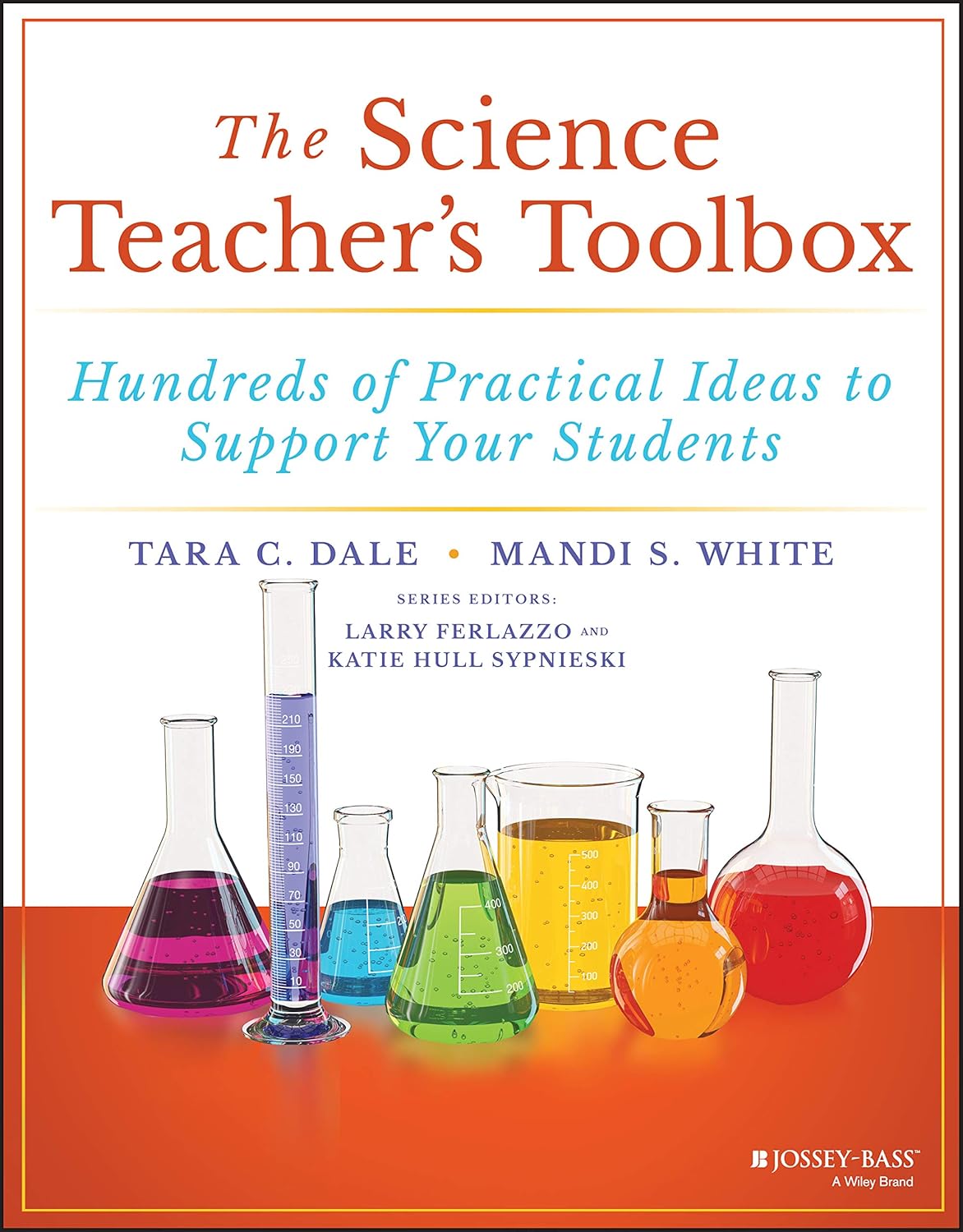
The Science Teacher's Toolbox offers hundreds of educational strategies that can be easily implemented in any science classroom. Part of the popular Teacher's Toolbox series, this practical, research-based book helps your students actively experience science and strengthen their critical thinking skills. The authors draw from their years of real-world classroom experience to provide high-impact activities, fully aligned with Common Core standards, and step-by-step teaching strategies that emphasize intellectually engaging all students, including students with varied learning abilities.
The book focuses on physical sciences, earth and space sciences, life sciences, engineering, technology, and application of science. The strategies and learning activities highlight the Science and Engineering Practices and Crosscutting Concepts identified in the Next Generation Science Standards (NGSS) where applicable. The book presents strategies for teaching essential science lab formats, including the scientific method, project-based learning, and the inquiry process. It also covers integrating English Language Arts (ELA), mathematics, and the arts, and contains additional resources such as strategies for assessing student learning, cultural responsiveness, and activating prior knowledge.
From the Back Cover
Spark Engagement in Your Classroom with Hundreds of Low-Prep, High-Value Science Lessons and Strategies
The Science Teacher's Toolbox offers hundreds of educational strategies that can be easily implemented in any science classroom. Part of the popular Teacher's Toolbox series, this practical, research-based book helps your students actively experience science and strengthen their critical thinking skills. The authors draw from their years of real-world classroom experience to provide high-impact activities, fully aligned with Common Core standards, and step-by-step teaching strategies that emphasize intellectually engaging all students, including students with varied learning abilities.
The book focuses on physical sciences, earth and space sciences, life sciences, engineering, technology, and application of science. The strategies and learning activities highlight the Science and Engineering Practices and Crosscutting Concepts identified in the Next Generation Science Standards (NGSS) where applicable. The book presents strategies for teaching essential science lab formats, including the scientific method, project-based learning, and the inquiry process. It also covers integrating English Language Arts (ELA), mathematics, and the arts, and contains additional resources such as strategies for assessing student learning, cultural responsiveness, and activating prior knowledge.
About the Author
TARA C. DALE is a National Board Certified Teacher (NBCT), currently teaching high school science and working as an instructional coach. She has taught middle school Science and Social Studies as well as Biology, Ecology, Earth Science, AP Psychology, and AP Environmental Science. She sits on the Board of Directors for the Arizona NBCT Network and is on the Superintendent Teacher Advisor Team for Maricopa County, Arizona. Tara has facilitated professional development classes and presented at conferences throughout the United States.
MANDI S. WHITE is currently an academic and behavior specialist at Kyrene del Pueblo Middle School in Chandler, Arizona. She has worked as a middle school special education resource teacher and has taught English, Social Studies, and Math. She holds Master's Degrees in Special Education and Educational Leadership, as well as a graduate certificate in Positive Behavior Support. Also, she has helped facilitate professional development for educators in Arizona.
LARRY FERLAZZO teaches English, Social Studies, and International Baccalaureate classes to English language learners and others at Luther Burbank High School in Sacramento, California. He is the author and co-author of nine books, including The ELL Teacher's Toolbox, and writes a weekly teacher advice column for Education Week Teacher. He is the recipient of the Ford Foundation's Leadership for a Changing World Award and winner of the International Reading Association Award for Technology and Reading.
KATIE HULL SYPNIESKI has taught English language learners and others at the secondary level for over twenty years. She teaches middle school English Language Arts and Social Studies at Fern Bacon Middle School in Sacramento, California, and leads professional development for educators as a consultant with the Area 3 Writing Project at the University of California, Davis. She is co-author of several books, including The ELL Teacher's Toolbox.
 Imported From: United States