Deliver toUnited Arab Emirates
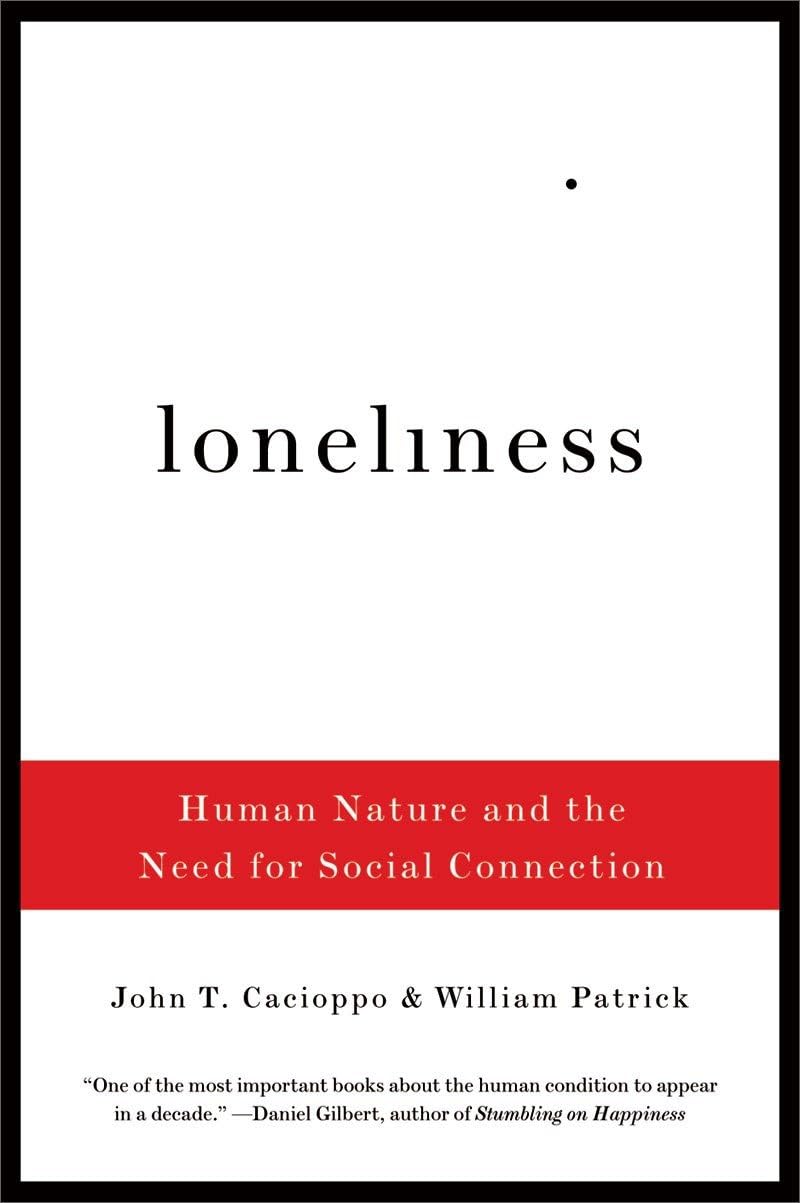
Loneliness: Human Nature and the Need for Social Connection

Description:

Based on groundbreaking research showing that prolonged loneliness can be as harmful to your health as smoking, Loneliness is “one of the most important books about the human condition to appear in a decade” (Daniel Gilbert, author of Stumbling on Happiness). 

University of Chicago social neuroscientist John T. Cacioppo pioneered research on the startling effects of loneliness: a sense of isolation or social rejection disrupts not only our ability to think and will power but also our immune systems, and can be as damaging as obesity or smoking. On the flip side, social connection can be a powerful therapy. Cacioppo’s sophisticated studies relying on brain imaging, analysis of blood pressure, immune response, stress hormones, behavior, and even gene expression show that human beings are simply far more intertwined and interdependent―physiologically as well as psychologically―than our cultural assumptions have ever allowed us to acknowledge.

Loneliness traces the evolution of these tandem forces, showing how, for our primitive ancestors, survival depended not on greater brawn but on greater commitments to each other. Serving as a prompt to repair frayed social bonds, the pain of loneliness engendered a fear response so powerfully disruptive that even now, millions of years later, a persistent sense of rejection or isolation can impair DNA transcription in our immune cells. This disruption also impairs our ability to read social signals and exercise social skills, as well as limits our ability to internally regulate our emotions―all of which can combine to trap us in self-defeating behaviors that reinforce the very isolation and rejection that we dread.

Loneliness shows us how to overcome this feedback loop to achieve better health and greater happiness. As individuals and as a society, we have everything to gain, and everything to lose, in how well or how poorly we manage our need for social bonds.


12 illustrations


Editorial Reviews

Review

"A magnificent exposé."
Frans de Waal

"Wise, beautifully written, and often funny…a tour-de-force."
Shelley E. Taylor, professor of psychology, University of California, Los Angeles

"Superb."
Library Journal

About the Author

John T. Cacioppo (1951―2018) was a psychology professor at the University of Chicago and director of the university’s Center for Cognitive and Social Neuroscience. He was the author of more than a dozen books, including Loneliness: Human Nature and the Need for Social Connections.

William Patrick, former editor for science and medicine at Harvard University Press, is editor in chief of the Journal of Life Sciences. He lives in Ipswich, Massachusetts.

Reviews:

5.0 out of 5 stars Loneliness is a voice that is crying in the wilderness. We all need to hear and heed that cry. Human connection is vital!

M.R.K. · May 24, 2018

I had the privilege of meeting Dr. Cacioppo and his lovely wife a few years ago at a lecture he gave at Baldwin Wallace University in Berea Ohio. He was an intelligent, caring person. His book documents his life's work on loneliness. The book is part of his legacy. He past away earlier this month. The book reveals the all too often hidden devastating effects that loneliness has on people who is chronically alone. It demonstrates how being alone can lead to aging and declining health. Quoting Dr. Cacciopo from his book "Loneliness": The data tell us that loneliness seriously accelerates age-related declines in health and well-being, yet the idea of promoting connection is rarely discussed alongside the heated issues of the cost of pharmaceuticals and other medical interventions necessary to deal with an increasingly lonely, isolated, and agin population."He adds: "Given the statistical impact of loneliness, if its effects were caused by an impurityin our air or water, perhaps now there would be congressional hearings on how to reduce it. Perhaps we can hope for a similar awakening to the idea, grounded in rigorous science, that restorning bonds among people can be cost-effective and practical point of leverage for solving some of our most pressing social problems, not the least of which is the looming crisis in health care and eldercare."Dr. Cacioppo points out the need for a place for people to gather and demonstrates how places of faith worship have fulfilled that need in the past. "The type of Christianity tht went on to become the primary structural element of the Western world focused on a simple message of self-esteem - "The kingdom of God is within you" -- combined with communal meals and even communal living. Its streamlined theology set aside the complex cleansing rituals of Judaism, and it presented evil less in mystical terms and more as a question of the behavior of one person toward another. The church that survived and prospered extended the basic ethics of the Hebrew tradition -- already a strong source of social support -- explicitly into the individual's inner life, creating a prohibitions against mere thoughts that were harmful to social connections: anger, hatred, misdirected lust. It dispensed with the temple in Jerusalem as the center of religious life, but maintained rituals to sanctify the basic elements of ordinary human existence: reproduction (marriage), birth (baptism), illness (anointment), and death (last rites). By way of these ceremonies it provided guidelines for social connection throughout the life cycle, making this universal church a practical social convention; It offered self-worth, it buried the dead, and it provided for the poor. Like Judaism, Islam, Confucianism and Buddhism, Christianity regulated all social transactions with the community, ranging from relationships within marriage and the family to standards for conducting business and dealing with neighbors."Social connections are life saving connections. When we gather with our family, friends and neighbors, we produce the "happiness hormone" Oxcytocin. When we are isolated, when we move far away from family, when we begin to age and lose the close contact with our children our friends, when we stop going to church because the beliefs we once held are no longer relevant to us, is when we begin our own decline. We need other people in our lives. It's as important to have people who care about us and who we care about as it is to have the very oxygen we breath in the air.I am a technology buff. I love my Apple devices. However, after reading Loneliness, I have awakened my appreciation of and my awareness for the need to put those amazing devices in their separate compartments in my life. If we do not break the hold technology has on the majority of people today, we will suffer the coming consequences of being Avatar's instead of human beings.I love and appreciate Dr. Cacioppo's work on loneliness. It's a topic all too often not only disregarded in todays fast paced society but an aspect of life that has faded into the background of the screens of our devices. We no longer sit on a porch on a warm summer evening sharing a cool drink or a beer with a couple of neighbors while the children play around us. We are all too busy checking our devices, making comments on Facebook, or playing video games. As Dr. Caccioppo points out people need real people in front of them - talking, laughing, sharing, learning from each other. We need to see their faces, feel their emotions, read their body language and feel their touch. Emoticon's are a very poor attempt to replace actual living human beings in our lives.

5.0 out of 5 stars A positive and powerful analysis of the human condition

A.F. · February 4, 2022

A fabulous resource that I have recommended to several people already. Very insightful into the human condition from a scientific perspective, which, amazingly reminds us of the basic truths we have known but now on a synaptic and even cellular level—being positive, unselfish human beings makes us healthier, saner, and happier people in family life and community. There is more to it than that—but I felt very comforted and inspired by the thorough analysis.

4.0 out of 5 stars A "key" to the cause and effect of loneliness

J.I.M. · November 23, 2012

I really wanted to give this book a five star rating, but it just fell short in a couple areas for me. This is a fantastic book that offers the reader an insight into the range of loneliness which can be from a simple awareness of this feeling to the extreme sense of isolation which intermingles with depression. The book defines the line between loneliness and depression,but both become quickly entangled with one another in that they are almost indistinguishable. The book looks at loneliness as a feeling that can be/is part of our DNA and in our genes which motivates human contact,socialization,and procreation just like the hormones that spur our sexual drive to reproduce. Loneliness is described as a "social pain that protects the individual from isolation". But,as a feeling,loneliness can produce all to many negative effects on an individual, even when surrounded by social groups or people. The chapters include the physiological aspects of loneliness to include the brain,mind,and effects on the body. What I got from the book is that loneliness is a perception held by the individual, and that perception can be developed in a number of ways throughout your life. It can be developed during the infant years or as we proceed to grow and experience life. Some people are more predisposed genetically to possess the qualities that bring on loneliness. Loneliness can produce that "whole in your heart" that yearns to be filled by the love of a parent,friend,mate,or simply the need to be accepted by others. The truth is that no one can fill this "whole" except yourself. Loneliness can mask itself as someone who is needy,insecure,and wanting. Loneliness can over time alter your perceptions and your thinking processes, as well as your emotions and feelings and generate negative affect of fear,anxiety,anger,and hostility. The book points out that more often than not,the individual trying to fill the void of loneliness only brings more of it into their lives and creates a loop that they can get stuck into. The end of the book goes about explaining how loneliness can be turned around and managed by changing perceptions,our social interactions,or even engaging in clinical Cognitive Behavioral Therapy. My only complaints are that the book could have been a little better organized as I felt it jumped around a bit and that some of the experimental studies, both human and monkeys,could have been omitted to make the reading more refined and flow better. But still,highly recommended reading for the individual,couple,parent,or anyone interested in psychology.

The social psychology of loneliness

J. · July 8, 2012

This book represents thorough social psychology research on loneliness. The text is split in three broad sections:Part 1 deals with the correlates and consequences of loneliness. Following the authors' reasoning, people have different expectations regarding social contacts and thus the individual perception of loneliness determines if the consequences of being lonely apply or not. Lonely people are less healthy due to higher perceived stress, they show less ability to cope with stress and less self-control. Compared to less lonely people, they focus on social information, but are less able to interprete this information correctly. E.g., loneliness increases the tendency to interpret others' reactions as critical appraisals of the own person.Thus, a lonely person suffers from negative emotions, she struggles to find companions, but due to her way of thinking faces particular huge hurdles on this way.Part 2 explains the biological causes and consequences of humans' need for affiliation. Topics cover e.g. the reasons for genetic survival of altruistic behaviours, the importance of social contact for the individual's early development, social behaviour in animals, neurological reasons for the impact of loneliness on individuals, biased processing of social information and lonely peoples' way to deal with conflicts.Part 3 centers on ways to fight the loneliness, especially through small steps to open to other people (without being open to be exploited).Cacioppo and Patrick write in a captivating style, many results of experiments serve to demonstrate and explain the ideas. Thus, the text proves to be an interesting read not only for scientific use.

:')

n. · October 12, 2024

Libro regalato, che alla fine mi sono ritrovata a leggere.Pensavo fosse noioso e pieno di termini tecnici, invece si è rilevato una piacevole lettura nonostante il tema. È ricco di esempi, storie interessanti e rivelazioni che mi hanno fatto capire come funziona il sentimento della solitudine e come il nostro corpo reagisce fisicamente a una cosa che ho sempre pensato intangibile.Lo consiglio a tutti, da chi è interessato ai lavori di Cacioppo a chi si è trovato in situazioni di solitudine acuta.Capire come funziona la solitudine mi ha aiutato a riconoscere certi comportamenti, sensazioni naturali e pensieri, permettendomi di essere più preparata di fronte a certe situazioni.Consigliatissimo

Muy recomendable

C.A. · August 9, 2016

Un texto muy recomendable que explica, de manera científica y amena a la par, los efectos devastadores de la soledad sobre nuestra salud física y mental

Excellent read

T. · March 3, 2019

Great book, would recommend.

If you consider yourself lonely or not, this is well worth a read.

J.M. · April 16, 2014

Firstly you do not have to consider yourself "lonely" to get an awful lot from this book. If however , you do suspect that you or a loved one are becoming aware of feelings of loneliness, this book will help explain what you may be feeling, possibly explain why these feelings have presented themselves and in doing so, give you knowledge to deal with any anxiety and fear you may be feeling when looking into your present situation and give you an outlook and options for the future.This is not designed as a self help book but, with solid evidence It clearly explains why loneliness is a perfectly normal emotion, the effects it can have on your health and how the need for connection binds us all and has done since the beginning.Its well written, easy to connect with and a great read full of "aha" moments that certainly rang true with me.This is a book that I have high lighted passages within and will return to again and again.A book on an area of human nature and social connection, written in perfectly understandable, lay terms.

Loneliness: Human Nature and the Need for Social Connection

Product ID: U0393335283
Condition: New

4.4

AED13989

Price includes VAT & Import Duties
Type: Paperback
Availability: In Stock

Quantity:

|

Order today to get by 7-14 business days

Delivery fee of AED 20. Free for orders above AED 200.

Returns & Warranty policies

Imported From: United States

At BOLO, we work hard to ensure the products you receive are new, genuine, and sourced from reputable suppliers.

BOLO is not an authorized or official retailer for most brands, nor are we affiliated with manufacturers unless specifically stated on a product page. Instead, we source verified sellers, authorized distributors or directly from the manufacturer.

Each product undergoes thorough inspection and verification at our consolidation and fulfilment centers to ensure it meets our strict authenticity and quality standards before being shipped and delivered to you.

If you ever have concerns regarding the authenticity of a product purchased from us, please contact Bolo Support. We will review your inquiry promptly and, if necessary, provide documentation verifying authenticity or offer a suitable resolution.

Your trust is our top priority, and we are committed to maintaining transparency and integrity in every transaction.

All product information, images, descriptions, and reviews originate from the manufacturer or from trusted sellers overseas. BOLO is not affiliated with, endorsed by, or an authorized retailer for most brands listed on our website unless stated otherwise.

While we strive to display accurate information, variations in packaging, labeling, instructions, or formulation may occasionally occur due to regional differences or supplier updates. For detailed or manufacturer-specific information, please contact the brand directly or reach out to BOLO Support for assistance.

Unless otherwise stated, all prices displayed on the product page include applicable taxes and import duties.

BOLO operates in accordance with the laws and regulations of United Arab Emirates. Any items found to be restricted or prohibited for sale within the UAE will be cancelled prior to shipment. We take proactive measures to ensure that only products permitted for sale in United Arab Emirates are listed on our website.

All items are shipped by air, and any products classified as “Dangerous Goods (DG)” under IATA regulations will be removed from the order and cancelled.

All orders are processed manually, and we make every effort to process them promptly once confirmed. Products cancelled due to the above reasons will be permanently removed from listings across the website.

Similar suggestions by Bolo

More from this brand

Similar items from “Interpersonal Relations”

Loneliness: Human Nature and the Need for Social Connection

Product ID: U0393335283
Condition: New

4.4

Loneliness: Human Nature and the Need for Social Connection-0
Type: Paperback

AED13989

Price includes VAT & Import Duties
Availability: In Stock

Quantity:

|

Order today to get by 7-14 business days

Delivery fee of AED 20. Free for orders above AED 200.

Returns & Warranty policies

Imported From: United States

At BOLO, we work hard to ensure the products you receive are new, genuine, and sourced from reputable suppliers.

BOLO is not an authorized or official retailer for most brands, nor are we affiliated with manufacturers unless specifically stated on a product page. Instead, we source verified sellers, authorized distributors or directly from the manufacturer.

Each product undergoes thorough inspection and verification at our consolidation and fulfilment centers to ensure it meets our strict authenticity and quality standards before being shipped and delivered to you.

If you ever have concerns regarding the authenticity of a product purchased from us, please contact Bolo Support. We will review your inquiry promptly and, if necessary, provide documentation verifying authenticity or offer a suitable resolution.

Your trust is our top priority, and we are committed to maintaining transparency and integrity in every transaction.

All product information, images, descriptions, and reviews originate from the manufacturer or from trusted sellers overseas. BOLO is not affiliated with, endorsed by, or an authorized retailer for most brands listed on our website unless stated otherwise.

While we strive to display accurate information, variations in packaging, labeling, instructions, or formulation may occasionally occur due to regional differences or supplier updates. For detailed or manufacturer-specific information, please contact the brand directly or reach out to BOLO Support for assistance.

Unless otherwise stated, all prices displayed on the product page include applicable taxes and import duties.

BOLO operates in accordance with the laws and regulations of United Arab Emirates. Any items found to be restricted or prohibited for sale within the UAE will be cancelled prior to shipment. We take proactive measures to ensure that only products permitted for sale in United Arab Emirates are listed on our website.

All items are shipped by air, and any products classified as “Dangerous Goods (DG)” under IATA regulations will be removed from the order and cancelled.

All orders are processed manually, and we make every effort to process them promptly once confirmed. Products cancelled due to the above reasons will be permanently removed from listings across the website.

Description:

Based on groundbreaking research showing that prolonged loneliness can be as harmful to your health as smoking, Loneliness is “one of the most important books about the human condition to appear in a decade” (Daniel Gilbert, author of Stumbling on Happiness). 

University of Chicago social neuroscientist John T. Cacioppo pioneered research on the startling effects of loneliness: a sense of isolation or social rejection disrupts not only our ability to think and will power but also our immune systems, and can be as damaging as obesity or smoking. On the flip side, social connection can be a powerful therapy. Cacioppo’s sophisticated studies relying on brain imaging, analysis of blood pressure, immune response, stress hormones, behavior, and even gene expression show that human beings are simply far more intertwined and interdependent―physiologically as well as psychologically―than our cultural assumptions have ever allowed us to acknowledge.

Loneliness traces the evolution of these tandem forces, showing how, for our primitive ancestors, survival depended not on greater brawn but on greater commitments to each other. Serving as a prompt to repair frayed social bonds, the pain of loneliness engendered a fear response so powerfully disruptive that even now, millions of years later, a persistent sense of rejection or isolation can impair DNA transcription in our immune cells. This disruption also impairs our ability to read social signals and exercise social skills, as well as limits our ability to internally regulate our emotions―all of which can combine to trap us in self-defeating behaviors that reinforce the very isolation and rejection that we dread.

Loneliness shows us how to overcome this feedback loop to achieve better health and greater happiness. As individuals and as a society, we have everything to gain, and everything to lose, in how well or how poorly we manage our need for social bonds.


12 illustrations


Editorial Reviews

Review

"A magnificent exposé."
Frans de Waal

"Wise, beautifully written, and often funny…a tour-de-force."
Shelley E. Taylor, professor of psychology, University of California, Los Angeles

"Superb."
Library Journal

About the Author

John T. Cacioppo (1951―2018) was a psychology professor at the University of Chicago and director of the university’s Center for Cognitive and Social Neuroscience. He was the author of more than a dozen books, including Loneliness: Human Nature and the Need for Social Connections.

William Patrick, former editor for science and medicine at Harvard University Press, is editor in chief of the Journal of Life Sciences. He lives in Ipswich, Massachusetts.

Reviews:

5.0 out of 5 stars Loneliness is a voice that is crying in the wilderness. We all need to hear and heed that cry. Human connection is vital!

M.R.K. · May 24, 2018

I had the privilege of meeting Dr. Cacioppo and his lovely wife a few years ago at a lecture he gave at Baldwin Wallace University in Berea Ohio. He was an intelligent, caring person. His book documents his life's work on loneliness. The book is part of his legacy. He past away earlier this month. The book reveals the all too often hidden devastating effects that loneliness has on people who is chronically alone. It demonstrates how being alone can lead to aging and declining health. Quoting Dr. Cacciopo from his book "Loneliness": The data tell us that loneliness seriously accelerates age-related declines in health and well-being, yet the idea of promoting connection is rarely discussed alongside the heated issues of the cost of pharmaceuticals and other medical interventions necessary to deal with an increasingly lonely, isolated, and agin population."He adds: "Given the statistical impact of loneliness, if its effects were caused by an impurityin our air or water, perhaps now there would be congressional hearings on how to reduce it. Perhaps we can hope for a similar awakening to the idea, grounded in rigorous science, that restorning bonds among people can be cost-effective and practical point of leverage for solving some of our most pressing social problems, not the least of which is the looming crisis in health care and eldercare."Dr. Cacioppo points out the need for a place for people to gather and demonstrates how places of faith worship have fulfilled that need in the past. "The type of Christianity tht went on to become the primary structural element of the Western world focused on a simple message of self-esteem - "The kingdom of God is within you" -- combined with communal meals and even communal living. Its streamlined theology set aside the complex cleansing rituals of Judaism, and it presented evil less in mystical terms and more as a question of the behavior of one person toward another. The church that survived and prospered extended the basic ethics of the Hebrew tradition -- already a strong source of social support -- explicitly into the individual's inner life, creating a prohibitions against mere thoughts that were harmful to social connections: anger, hatred, misdirected lust. It dispensed with the temple in Jerusalem as the center of religious life, but maintained rituals to sanctify the basic elements of ordinary human existence: reproduction (marriage), birth (baptism), illness (anointment), and death (last rites). By way of these ceremonies it provided guidelines for social connection throughout the life cycle, making this universal church a practical social convention; It offered self-worth, it buried the dead, and it provided for the poor. Like Judaism, Islam, Confucianism and Buddhism, Christianity regulated all social transactions with the community, ranging from relationships within marriage and the family to standards for conducting business and dealing with neighbors."Social connections are life saving connections. When we gather with our family, friends and neighbors, we produce the "happiness hormone" Oxcytocin. When we are isolated, when we move far away from family, when we begin to age and lose the close contact with our children our friends, when we stop going to church because the beliefs we once held are no longer relevant to us, is when we begin our own decline. We need other people in our lives. It's as important to have people who care about us and who we care about as it is to have the very oxygen we breath in the air.I am a technology buff. I love my Apple devices. However, after reading Loneliness, I have awakened my appreciation of and my awareness for the need to put those amazing devices in their separate compartments in my life. If we do not break the hold technology has on the majority of people today, we will suffer the coming consequences of being Avatar's instead of human beings.I love and appreciate Dr. Cacioppo's work on loneliness. It's a topic all too often not only disregarded in todays fast paced society but an aspect of life that has faded into the background of the screens of our devices. We no longer sit on a porch on a warm summer evening sharing a cool drink or a beer with a couple of neighbors while the children play around us. We are all too busy checking our devices, making comments on Facebook, or playing video games. As Dr. Caccioppo points out people need real people in front of them - talking, laughing, sharing, learning from each other. We need to see their faces, feel their emotions, read their body language and feel their touch. Emoticon's are a very poor attempt to replace actual living human beings in our lives.

5.0 out of 5 stars A positive and powerful analysis of the human condition

A.F. · February 4, 2022

A fabulous resource that I have recommended to several people already. Very insightful into the human condition from a scientific perspective, which, amazingly reminds us of the basic truths we have known but now on a synaptic and even cellular level—being positive, unselfish human beings makes us healthier, saner, and happier people in family life and community. There is more to it than that—but I felt very comforted and inspired by the thorough analysis.

4.0 out of 5 stars A "key" to the cause and effect of loneliness

J.I.M. · November 23, 2012

I really wanted to give this book a five star rating, but it just fell short in a couple areas for me. This is a fantastic book that offers the reader an insight into the range of loneliness which can be from a simple awareness of this feeling to the extreme sense of isolation which intermingles with depression. The book defines the line between loneliness and depression,but both become quickly entangled with one another in that they are almost indistinguishable. The book looks at loneliness as a feeling that can be/is part of our DNA and in our genes which motivates human contact,socialization,and procreation just like the hormones that spur our sexual drive to reproduce. Loneliness is described as a "social pain that protects the individual from isolation". But,as a feeling,loneliness can produce all to many negative effects on an individual, even when surrounded by social groups or people. The chapters include the physiological aspects of loneliness to include the brain,mind,and effects on the body. What I got from the book is that loneliness is a perception held by the individual, and that perception can be developed in a number of ways throughout your life. It can be developed during the infant years or as we proceed to grow and experience life. Some people are more predisposed genetically to possess the qualities that bring on loneliness. Loneliness can produce that "whole in your heart" that yearns to be filled by the love of a parent,friend,mate,or simply the need to be accepted by others. The truth is that no one can fill this "whole" except yourself. Loneliness can mask itself as someone who is needy,insecure,and wanting. Loneliness can over time alter your perceptions and your thinking processes, as well as your emotions and feelings and generate negative affect of fear,anxiety,anger,and hostility. The book points out that more often than not,the individual trying to fill the void of loneliness only brings more of it into their lives and creates a loop that they can get stuck into. The end of the book goes about explaining how loneliness can be turned around and managed by changing perceptions,our social interactions,or even engaging in clinical Cognitive Behavioral Therapy. My only complaints are that the book could have been a little better organized as I felt it jumped around a bit and that some of the experimental studies, both human and monkeys,could have been omitted to make the reading more refined and flow better. But still,highly recommended reading for the individual,couple,parent,or anyone interested in psychology.

The social psychology of loneliness

J. · July 8, 2012

This book represents thorough social psychology research on loneliness. The text is split in three broad sections:Part 1 deals with the correlates and consequences of loneliness. Following the authors' reasoning, people have different expectations regarding social contacts and thus the individual perception of loneliness determines if the consequences of being lonely apply or not. Lonely people are less healthy due to higher perceived stress, they show less ability to cope with stress and less self-control. Compared to less lonely people, they focus on social information, but are less able to interprete this information correctly. E.g., loneliness increases the tendency to interpret others' reactions as critical appraisals of the own person.Thus, a lonely person suffers from negative emotions, she struggles to find companions, but due to her way of thinking faces particular huge hurdles on this way.Part 2 explains the biological causes and consequences of humans' need for affiliation. Topics cover e.g. the reasons for genetic survival of altruistic behaviours, the importance of social contact for the individual's early development, social behaviour in animals, neurological reasons for the impact of loneliness on individuals, biased processing of social information and lonely peoples' way to deal with conflicts.Part 3 centers on ways to fight the loneliness, especially through small steps to open to other people (without being open to be exploited).Cacioppo and Patrick write in a captivating style, many results of experiments serve to demonstrate and explain the ideas. Thus, the text proves to be an interesting read not only for scientific use.

:')

n. · October 12, 2024

Libro regalato, che alla fine mi sono ritrovata a leggere.Pensavo fosse noioso e pieno di termini tecnici, invece si è rilevato una piacevole lettura nonostante il tema. È ricco di esempi, storie interessanti e rivelazioni che mi hanno fatto capire come funziona il sentimento della solitudine e come il nostro corpo reagisce fisicamente a una cosa che ho sempre pensato intangibile.Lo consiglio a tutti, da chi è interessato ai lavori di Cacioppo a chi si è trovato in situazioni di solitudine acuta.Capire come funziona la solitudine mi ha aiutato a riconoscere certi comportamenti, sensazioni naturali e pensieri, permettendomi di essere più preparata di fronte a certe situazioni.Consigliatissimo

Muy recomendable

C.A. · August 9, 2016

Un texto muy recomendable que explica, de manera científica y amena a la par, los efectos devastadores de la soledad sobre nuestra salud física y mental

Excellent read

T. · March 3, 2019

Great book, would recommend.

If you consider yourself lonely or not, this is well worth a read.

J.M. · April 16, 2014

Firstly you do not have to consider yourself "lonely" to get an awful lot from this book. If however , you do suspect that you or a loved one are becoming aware of feelings of loneliness, this book will help explain what you may be feeling, possibly explain why these feelings have presented themselves and in doing so, give you knowledge to deal with any anxiety and fear you may be feeling when looking into your present situation and give you an outlook and options for the future.This is not designed as a self help book but, with solid evidence It clearly explains why loneliness is a perfectly normal emotion, the effects it can have on your health and how the need for connection binds us all and has done since the beginning.Its well written, easy to connect with and a great read full of "aha" moments that certainly rang true with me.This is a book that I have high lighted passages within and will return to again and again.A book on an area of human nature and social connection, written in perfectly understandable, lay terms.

Similar suggestions by Bolo

More from this brand

Similar items from “Interpersonal Relations”