Deliver toUnited Arab Emirates
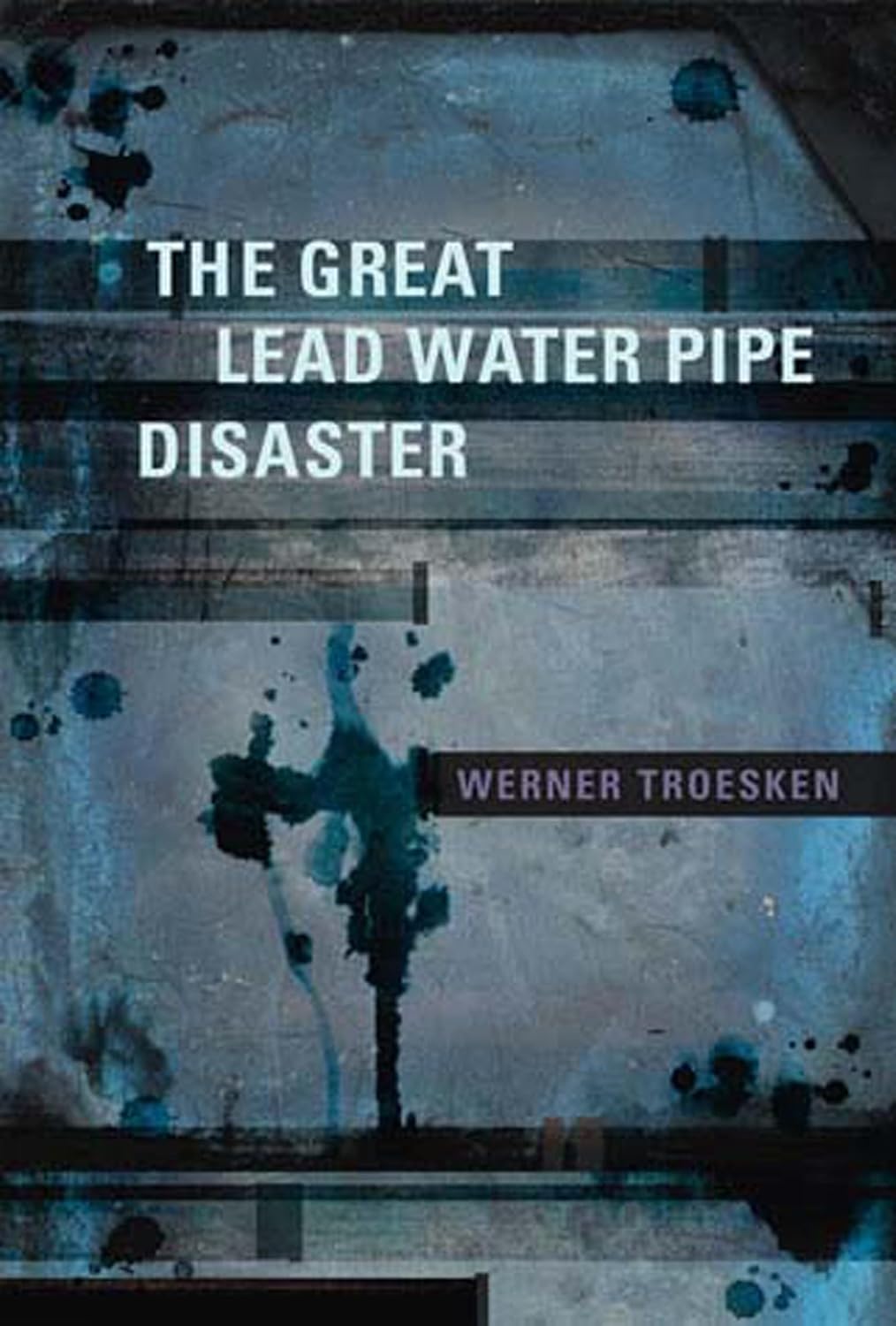
The Great Lead Water Pipe Disaster (Mit Press)

Description:

The history of a long-running environmental catastrophe chronicles the harmful effects of lead pipes and their continued use despite evidence that they pose a significant health risk.

In The Great Lead Water Pipe Disaster, Werner Troesken looks at a long-running environmental and public health catastrophe: 150 years of lead pipes in local water systems and the associated sickness, premature death, political inaction, and social denial. The harmful effects of lead water pipes became apparent almost as soon as cities the world over began to install them. Doctors and scientists noted cases of acute illness and death attributable to lead in public water beginning in the middle of the nineteenth century, and an editorial in the New York Herald called for the city to study the matter after a bizarre illness made headlines in 1868. But officials took no action for many years. New York City, for example, did not take any steps to reduce lead levels in water until 1992, long after the most serious damage had been done. By then, in any case, much of the old lead pipe had been replaced with safer materials. Troesken examines the health effects of lead exposure, analyzing cases from New York City, Boston, and Glasgow and many smaller towns in Massachusetts, New Hampshire, and England. He draws on period accounts, government reports, court decisions, and economic and demographic analysis to document the widespread nature of the problem, the recognized health effects—particularly for pregnant women and young children—and official intransigence. He presents an accessible overview of the old and new science of lead exposure—explaining, for example, why areas with soft water suffered more harmful effects than areas with hard water. And he gives us compelling and vivid accounts of the people and politics involved. The effects of lead in water continue to be felt; many older houses still have lead service pipes. The Great Lead Water Pipe Disaster is essential reading for understanding this past and ongoing public health problem.


Editorial Reviews

Review

The Great Lead Pipe Disaster is a fascinating read, one that in exploring the intersections of public health, public policy, science, and economics offers lessons and has implications far beyond the details of lead content in water.—Civil Engineering

A challenging and important contribution to our understanding of one of the great public health problems of the past two centuries—lead and it's pollution of the environment. Troesken has provided us with new insights, and we should applaud him for it.

American Scientist

Each chapter is wonderfully written in accessible language, and the author is meticulous with attributions and supporting evidence.

JAMA

About the Author

Werner Troesken is Professor of History at the University of Pittsburgh and Faculty Research Associate at NBER. He is the author of Water, Race, and Disease (MIT Press, 2004).

Reviews:

5.0 out of 5 stars history, science, policy--what more could you want?

V.R.F. · December 18, 2006

Troesken smoothly integrates several complex topics in a very readable style. If you wondered how lead is so toxic, as well as the surprising level of exposure to it in the past, wonder no more. He carefully establishes how common it was to be exposed to levels of lead in drinking water that were dozens of times higher than the present day EPA maximum. He establishes that public officials were loathe to do anything about it, in large part due to lead's excellent capabilities--it's malleable, strong, and cheap. And ever so toxic. Troesken concludes with a recommendation for further study on an overlooked topic--effects on human health of nonorganic toxins in the past. One more reason I'm glad to be alive now.

3.0 out of 5 stars A little lead won't hurt ya! Look at me

A. · March 31, 2007

Romans had lead in their pipes--you wanna blame the rise and fall of the Roman Empire on lead pipes? Lead is just a nuissance, ntohing more. Hech, I used to eat lead painat asa a kidd and I don't have any long erm side effects that I'm awarae of.More seriously, the book has an irritating flaw: it keeps comparing old standards of care with modern standards of care in diagnosing lead, and then becomes an apologist for why the old standards were not that bad. Case in point: throughout the book the author points out that in the past people warned about lead in water, but since the mechanism on how lead hurts people was not fully understood (and still isn't, as the author says), these people could be ignored. That's like saying since the exact mechanism for smoking causing cancer is not yet fully understood, at the molecular level, then past attempts to say smoking is harmful are flawed and can be ignored. This point by the author is emphasized throughout and is irritating.Other than that, a decent book, but since the literature on lead is so extensive, I don't really see this book adding anything of value already not known. It also tries too hard to be 'scientific' by discussing a regression analysis, as if that's something radical. Further, the author spends little time on the 'real reason' (IMO) why lead mitigation is ignored: it's not too little scientific data, but rather the huge costs in upgrading municipal water supplies. The same argument is being made even today, not just for lead, as the author points out for Washington, DC, but for other drugs and chemicals found in water.3 stars max.

5.0 out of 5 stars Important History

J.B. · May 19, 2021

Having working in lead poisoning prevention for a number of years, this book helped me understand the history of lead pipes and the effect on health and society.

5.0 out of 5 stars Excellent histrical expose about the negative inpacts of lead contamination

M.E.B. · July 1, 2007

Troesken(T) has done an excellent job of demonstrating why lead was used in ,and contined to be used in,water pipes over a period of 150 years despite a great deal of scientific and anecdotal evidence linking the lead to numerous physical ailments being available to city planners during this time period.The answer was that decision makers were penny wise and pound foolish.Lead water pipes were very cheap to build,long lasting,and easy to maintain.One area of discussion that should have been more heavily emphasized was the overwhelming connection between lead exposure and lower IQ scores.Lead exposure from birth to age 10 leads to a loss in IQ of from 6-10 points.The major groups impacted are black and Latino -Hispanic Americans getting their drinking water from city-metropolitan water systems.This accounts for about 40% to 67% of the alleged disparity in IQ scores that is supposed to exist between white and black Americans .These facts are ignored by Herrnstein and Murray in their book" The Bell Curve"(1994).

5.0 out of 5 stars A Must Read!

B.G. · March 2, 2007

Werner Troesken presents the history of lead water pipe use without hyperbole. Instead you get scientific analysis mixed with telling anecdotes and then more scientific analysis. You might think the lack of hype would make for a boring read, but this book is truly fascinating. Mr. Troesken gives us a great example of how we don't see things until we believe in them. The copy I read was borrowed from the library, but I am buying my own copy now.

The Great Lead Water Pipe Disaster (Mit Press)

Product ID: U0262701251
Condition: New

4.2

AED29045

Price includes VAT & Import Duties
Type: Paperback
Availability: In Stock

Quantity:

|

Order today to get by 7-14 business days

This item qualifies for free delivery

Returns & Warranty policies

Imported From: United States

At BOLO, we work hard to ensure the products you receive are new, genuine, and sourced from reputable suppliers.

BOLO is not an authorized or official retailer for most brands, nor are we affiliated with manufacturers unless specifically stated on a product page. Instead, we source verified sellers, authorized distributors or directly from the manufacturer.

Each product undergoes thorough inspection and verification at our consolidation and fulfilment centers to ensure it meets our strict authenticity and quality standards before being shipped and delivered to you.

If you ever have concerns regarding the authenticity of a product purchased from us, please contact Bolo Support. We will review your inquiry promptly and, if necessary, provide documentation verifying authenticity or offer a suitable resolution.

Your trust is our top priority, and we are committed to maintaining transparency and integrity in every transaction.

All product information, images, descriptions, and reviews originate from the manufacturer or from trusted sellers overseas. BOLO is not affiliated with, endorsed by, or an authorized retailer for most brands listed on our website unless stated otherwise.

While we strive to display accurate information, variations in packaging, labeling, instructions, or formulation may occasionally occur due to regional differences or supplier updates. For detailed or manufacturer-specific information, please contact the brand directly or reach out to BOLO Support for assistance.

Unless otherwise stated, all prices displayed on the product page include applicable taxes and import duties.

BOLO operates in accordance with the laws and regulations of United Arab Emirates. Any items found to be restricted or prohibited for sale within the UAE will be cancelled prior to shipment. We take proactive measures to ensure that only products permitted for sale in United Arab Emirates are listed on our website.

All items are shipped by air, and any products classified as “Dangerous Goods (DG)” under IATA regulations will be removed from the order and cancelled.

All orders are processed manually, and we make every effort to process them promptly once confirmed. Products cancelled due to the above reasons will be permanently removed from listings across the website.

Similar suggestions by Bolo

More from this brand

Similar items from “Water Quality & Treatment”

The Great Lead Water Pipe Disaster (Mit Press)

Product ID: U0262701251
Condition: New

4.2

The Great Lead Water Pipe Disaster (Mit Press)-0
Type: Paperback

AED29045

Price includes VAT & Import Duties
Availability: In Stock

Quantity:

|

Order today to get by 7-14 business days

This item qualifies for free delivery

Returns & Warranty policies

Imported From: United States

At BOLO, we work hard to ensure the products you receive are new, genuine, and sourced from reputable suppliers.

BOLO is not an authorized or official retailer for most brands, nor are we affiliated with manufacturers unless specifically stated on a product page. Instead, we source verified sellers, authorized distributors or directly from the manufacturer.

Each product undergoes thorough inspection and verification at our consolidation and fulfilment centers to ensure it meets our strict authenticity and quality standards before being shipped and delivered to you.

If you ever have concerns regarding the authenticity of a product purchased from us, please contact Bolo Support. We will review your inquiry promptly and, if necessary, provide documentation verifying authenticity or offer a suitable resolution.

Your trust is our top priority, and we are committed to maintaining transparency and integrity in every transaction.

All product information, images, descriptions, and reviews originate from the manufacturer or from trusted sellers overseas. BOLO is not affiliated with, endorsed by, or an authorized retailer for most brands listed on our website unless stated otherwise.

While we strive to display accurate information, variations in packaging, labeling, instructions, or formulation may occasionally occur due to regional differences or supplier updates. For detailed or manufacturer-specific information, please contact the brand directly or reach out to BOLO Support for assistance.

Unless otherwise stated, all prices displayed on the product page include applicable taxes and import duties.

BOLO operates in accordance with the laws and regulations of United Arab Emirates. Any items found to be restricted or prohibited for sale within the UAE will be cancelled prior to shipment. We take proactive measures to ensure that only products permitted for sale in United Arab Emirates are listed on our website.

All items are shipped by air, and any products classified as “Dangerous Goods (DG)” under IATA regulations will be removed from the order and cancelled.

All orders are processed manually, and we make every effort to process them promptly once confirmed. Products cancelled due to the above reasons will be permanently removed from listings across the website.

Description:

The history of a long-running environmental catastrophe chronicles the harmful effects of lead pipes and their continued use despite evidence that they pose a significant health risk.

In The Great Lead Water Pipe Disaster, Werner Troesken looks at a long-running environmental and public health catastrophe: 150 years of lead pipes in local water systems and the associated sickness, premature death, political inaction, and social denial. The harmful effects of lead water pipes became apparent almost as soon as cities the world over began to install them. Doctors and scientists noted cases of acute illness and death attributable to lead in public water beginning in the middle of the nineteenth century, and an editorial in the New York Herald called for the city to study the matter after a bizarre illness made headlines in 1868. But officials took no action for many years. New York City, for example, did not take any steps to reduce lead levels in water until 1992, long after the most serious damage had been done. By then, in any case, much of the old lead pipe had been replaced with safer materials. Troesken examines the health effects of lead exposure, analyzing cases from New York City, Boston, and Glasgow and many smaller towns in Massachusetts, New Hampshire, and England. He draws on period accounts, government reports, court decisions, and economic and demographic analysis to document the widespread nature of the problem, the recognized health effects—particularly for pregnant women and young children—and official intransigence. He presents an accessible overview of the old and new science of lead exposure—explaining, for example, why areas with soft water suffered more harmful effects than areas with hard water. And he gives us compelling and vivid accounts of the people and politics involved. The effects of lead in water continue to be felt; many older houses still have lead service pipes. The Great Lead Water Pipe Disaster is essential reading for understanding this past and ongoing public health problem.


Editorial Reviews

Review

The Great Lead Pipe Disaster is a fascinating read, one that in exploring the intersections of public health, public policy, science, and economics offers lessons and has implications far beyond the details of lead content in water.—Civil Engineering

A challenging and important contribution to our understanding of one of the great public health problems of the past two centuries—lead and it's pollution of the environment. Troesken has provided us with new insights, and we should applaud him for it.

American Scientist

Each chapter is wonderfully written in accessible language, and the author is meticulous with attributions and supporting evidence.

JAMA

About the Author

Werner Troesken is Professor of History at the University of Pittsburgh and Faculty Research Associate at NBER. He is the author of Water, Race, and Disease (MIT Press, 2004).

Reviews:

5.0 out of 5 stars history, science, policy--what more could you want?

V.R.F. · December 18, 2006

Troesken smoothly integrates several complex topics in a very readable style. If you wondered how lead is so toxic, as well as the surprising level of exposure to it in the past, wonder no more. He carefully establishes how common it was to be exposed to levels of lead in drinking water that were dozens of times higher than the present day EPA maximum. He establishes that public officials were loathe to do anything about it, in large part due to lead's excellent capabilities--it's malleable, strong, and cheap. And ever so toxic. Troesken concludes with a recommendation for further study on an overlooked topic--effects on human health of nonorganic toxins in the past. One more reason I'm glad to be alive now.

3.0 out of 5 stars A little lead won't hurt ya! Look at me

A. · March 31, 2007

Romans had lead in their pipes--you wanna blame the rise and fall of the Roman Empire on lead pipes? Lead is just a nuissance, ntohing more. Hech, I used to eat lead painat asa a kidd and I don't have any long erm side effects that I'm awarae of.More seriously, the book has an irritating flaw: it keeps comparing old standards of care with modern standards of care in diagnosing lead, and then becomes an apologist for why the old standards were not that bad. Case in point: throughout the book the author points out that in the past people warned about lead in water, but since the mechanism on how lead hurts people was not fully understood (and still isn't, as the author says), these people could be ignored. That's like saying since the exact mechanism for smoking causing cancer is not yet fully understood, at the molecular level, then past attempts to say smoking is harmful are flawed and can be ignored. This point by the author is emphasized throughout and is irritating.Other than that, a decent book, but since the literature on lead is so extensive, I don't really see this book adding anything of value already not known. It also tries too hard to be 'scientific' by discussing a regression analysis, as if that's something radical. Further, the author spends little time on the 'real reason' (IMO) why lead mitigation is ignored: it's not too little scientific data, but rather the huge costs in upgrading municipal water supplies. The same argument is being made even today, not just for lead, as the author points out for Washington, DC, but for other drugs and chemicals found in water.3 stars max.

5.0 out of 5 stars Important History

J.B. · May 19, 2021

Having working in lead poisoning prevention for a number of years, this book helped me understand the history of lead pipes and the effect on health and society.

5.0 out of 5 stars Excellent histrical expose about the negative inpacts of lead contamination

M.E.B. · July 1, 2007

Troesken(T) has done an excellent job of demonstrating why lead was used in ,and contined to be used in,water pipes over a period of 150 years despite a great deal of scientific and anecdotal evidence linking the lead to numerous physical ailments being available to city planners during this time period.The answer was that decision makers were penny wise and pound foolish.Lead water pipes were very cheap to build,long lasting,and easy to maintain.One area of discussion that should have been more heavily emphasized was the overwhelming connection between lead exposure and lower IQ scores.Lead exposure from birth to age 10 leads to a loss in IQ of from 6-10 points.The major groups impacted are black and Latino -Hispanic Americans getting their drinking water from city-metropolitan water systems.This accounts for about 40% to 67% of the alleged disparity in IQ scores that is supposed to exist between white and black Americans .These facts are ignored by Herrnstein and Murray in their book" The Bell Curve"(1994).

5.0 out of 5 stars A Must Read!

B.G. · March 2, 2007

Werner Troesken presents the history of lead water pipe use without hyperbole. Instead you get scientific analysis mixed with telling anecdotes and then more scientific analysis. You might think the lack of hype would make for a boring read, but this book is truly fascinating. Mr. Troesken gives us a great example of how we don't see things until we believe in them. The copy I read was borrowed from the library, but I am buying my own copy now.

Similar suggestions by Bolo

More from this brand

Similar items from “Water Quality & Treatment”