Deliver toUnited Arab Emirates
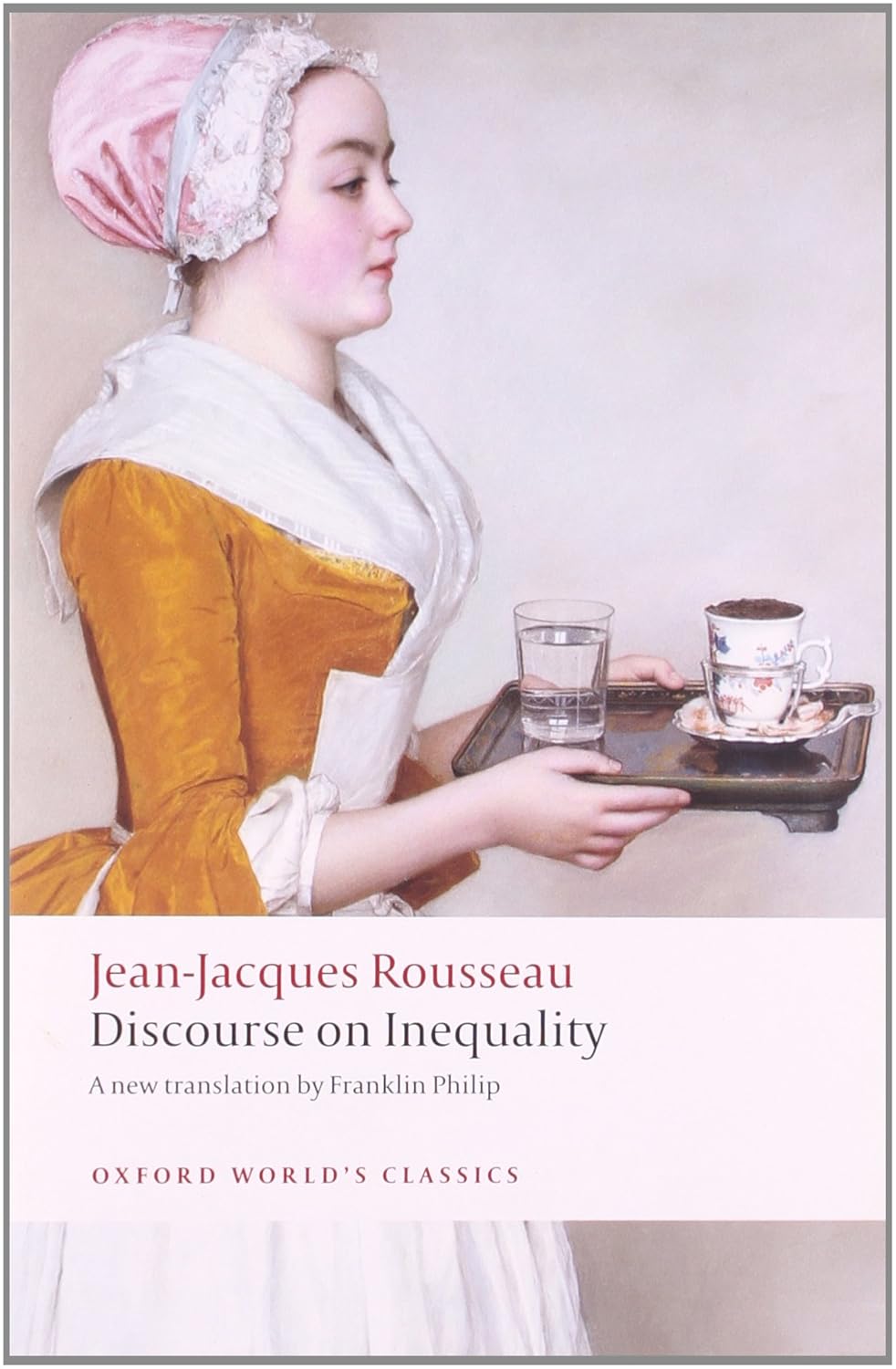
Discourse on the Origin of Inequality (Oxford World's Classics)

Description:

In his Discourses (1755), Rousseau argues that inequalities of rank, wealth, and power are the inevitable result of the civilizing process. If inequality is intolerable - and Rousseau shows with unparalledled eloquence how it robs us not only of our material but also of our psychological independence - then how can we recover the peaceful self-sufficiency of life in the state of nature? We cannot return to a simpler time, but measuring the costs of progress may help us to imagine alternatives to the corruption and oppressive conformity of modern society.
Rousseau's sweeping account of humanity's social and political development epitomizes the innovative boldness of the Englightment, and it is one of the most provocative and influential works of the eighteenth century. This new translation includes all Rousseau's own notes, and Patrick Coleman's introduction builds on recent key scholarship, considering particularly the relationship between political and aesthetic thought.


Editorial Reviews

About the Author

Franklin Philip is the prize-winning translator of numerous French texts. Patrick Coleman is the author of Rousseau's Political Imagination (1984).

Reviews:

5.0 out of 5 stars Five Stars

K. · January 22, 2015

New book, fast shipping, no problems. Thank you!

3.0 out of 5 stars The quality of the book is good, author is questionable

C.E. · September 21, 2013

First off, the actual book is fine, especially for a class or something educational. However, on a deeper level, I myself am not such a huge fan of Rousseau, with his ideas of "humans being naturally innocent and then being corrupted by society"; I myself much prefer Voltaire's view of the world during the period of the Enlightenment. This "book" is actually an essay that Rousseau wrote for a contest sometime in the 18th century, and the judges were so disgusted that they didn't even finish it. I'm inclined to agree with them. A must if needed for educational purposes (college-level would probably be best-I needed it for a cultural-philosophy course) but if you want to read philosophy, or an author's viewpoint during Enlightenment, find something better, like Kant or Voltaire.

4.0 out of 5 stars Four Stars

N.P. · December 13, 2016

Book served its purpose for my daughter's college class.

1.0 out of 5 stars Damaged!

D. · January 16, 2024

Tip #1 when opening boxes of books...don't use a box cutter! The book came damaged and it was clear that a box cutter had been used. Cannot just ask for a replacement without returning which is pathetic!

4.0 out of 5 stars The Dijon Academy contest was the following:

C. · May 28, 2022

"What is the origin of inequality among people, and is it authorized by natural law?"

4.0 out of 5 stars Man, Animal -- Manimal!

b.l. · September 18, 2003

This essay was Rousseaus's submission to the Academy of Dijon contest, entitled, "Has the progress of the arts and sciences contributed more to the corruption or purification of morals?".This text is his story about Nature, and Society, and the scandal that happens when people come together, build, divide, dance, sing, and compare themselves with one another. In many ways, it is his answer to the problem of evil.Natural man is, in many ways, good, because his needs are immediately felt and immediately fulfilled. Social man begins to compete, to hoard, and to use cunning to enslave his fellows, to gain their esteem, take their property, and sometimes their lives.His picture of the natural man is half what we think of an "animal" and half the "human" that we recognize in ourselves. He shifts his description as the flow of arguement dictates. The habitual provocateur, Rousseau - watch him!In a way, he is rewriting the Christian "Creation Myth". In his version, evil does not originate at that moment when man eats the fruit of the "Tree of Knowledge of Good and Evil" --to "be like God"; it happens when Adam wants a better apple than Eve's got for herself. Before society develops as we know it, Adam would have been fine with just a pear.

Rousseau

s.m. · April 13, 2024

Amazing philosophercant read enough!!

Discourse on the Origin of Inequality (Oxford World's Classics)

Product ID: U0199555427
Condition: New

4.4

AED6523

Price includes VAT & Import Duties
Type: Paperback
Availability: In Stock

Quantity:

|

Order today to get by 7-14 business days

Delivery fee of AED 20. Free for orders above AED 200.

Returns & Warranty policies

Imported From: United States

At BOLO, we work hard to ensure the products you receive are new, genuine, and sourced from reputable suppliers.

BOLO is not an authorized or official retailer for most brands, nor are we affiliated with manufacturers unless specifically stated on a product page. Instead, we source verified sellers, authorized distributors or directly from the manufacturer.

Each product undergoes thorough inspection and verification at our consolidation and fulfilment centers to ensure it meets our strict authenticity and quality standards before being shipped and delivered to you.

If you ever have concerns regarding the authenticity of a product purchased from us, please contact Bolo Support. We will review your inquiry promptly and, if necessary, provide documentation verifying authenticity or offer a suitable resolution.

Your trust is our top priority, and we are committed to maintaining transparency and integrity in every transaction.

All product information, images, descriptions, and reviews originate from the manufacturer or from trusted sellers overseas. BOLO is not affiliated with, endorsed by, or an authorized retailer for most brands listed on our website unless stated otherwise.

While we strive to display accurate information, variations in packaging, labeling, instructions, or formulation may occasionally occur due to regional differences or supplier updates. For detailed or manufacturer-specific information, please contact the brand directly or reach out to BOLO Support for assistance.

Unless otherwise stated, all prices displayed on the product page include applicable taxes and import duties.

BOLO operates in accordance with the laws and regulations of United Arab Emirates. Any items found to be restricted or prohibited for sale within the UAE will be cancelled prior to shipment. We take proactive measures to ensure that only products permitted for sale in United Arab Emirates are listed on our website.

All items are shipped by air, and any products classified as “Dangerous Goods (DG)” under IATA regulations will be removed from the order and cancelled.

All orders are processed manually, and we make every effort to process them promptly once confirmed. Products cancelled due to the above reasons will be permanently removed from listings across the website.

Similar suggestions by Bolo

More from this brand

Similar items from “History & Theory”

Discourse on the Origin of Inequality (Oxford World's Classics)

Product ID: U0199555427
Condition: New

4.4

Discourse on the Origin of Inequality (Oxford World's Classics)-0
Type: Paperback

AED6523

Price includes VAT & Import Duties
Availability: In Stock

Quantity:

|

Order today to get by 7-14 business days

Delivery fee of AED 20. Free for orders above AED 200.

Returns & Warranty policies

Imported From: United States

At BOLO, we work hard to ensure the products you receive are new, genuine, and sourced from reputable suppliers.

BOLO is not an authorized or official retailer for most brands, nor are we affiliated with manufacturers unless specifically stated on a product page. Instead, we source verified sellers, authorized distributors or directly from the manufacturer.

Each product undergoes thorough inspection and verification at our consolidation and fulfilment centers to ensure it meets our strict authenticity and quality standards before being shipped and delivered to you.

If you ever have concerns regarding the authenticity of a product purchased from us, please contact Bolo Support. We will review your inquiry promptly and, if necessary, provide documentation verifying authenticity or offer a suitable resolution.

Your trust is our top priority, and we are committed to maintaining transparency and integrity in every transaction.

All product information, images, descriptions, and reviews originate from the manufacturer or from trusted sellers overseas. BOLO is not affiliated with, endorsed by, or an authorized retailer for most brands listed on our website unless stated otherwise.

While we strive to display accurate information, variations in packaging, labeling, instructions, or formulation may occasionally occur due to regional differences or supplier updates. For detailed or manufacturer-specific information, please contact the brand directly or reach out to BOLO Support for assistance.

Unless otherwise stated, all prices displayed on the product page include applicable taxes and import duties.

BOLO operates in accordance with the laws and regulations of United Arab Emirates. Any items found to be restricted or prohibited for sale within the UAE will be cancelled prior to shipment. We take proactive measures to ensure that only products permitted for sale in United Arab Emirates are listed on our website.

All items are shipped by air, and any products classified as “Dangerous Goods (DG)” under IATA regulations will be removed from the order and cancelled.

All orders are processed manually, and we make every effort to process them promptly once confirmed. Products cancelled due to the above reasons will be permanently removed from listings across the website.

Description:

In his Discourses (1755), Rousseau argues that inequalities of rank, wealth, and power are the inevitable result of the civilizing process. If inequality is intolerable - and Rousseau shows with unparalledled eloquence how it robs us not only of our material but also of our psychological independence - then how can we recover the peaceful self-sufficiency of life in the state of nature? We cannot return to a simpler time, but measuring the costs of progress may help us to imagine alternatives to the corruption and oppressive conformity of modern society.
Rousseau's sweeping account of humanity's social and political development epitomizes the innovative boldness of the Englightment, and it is one of the most provocative and influential works of the eighteenth century. This new translation includes all Rousseau's own notes, and Patrick Coleman's introduction builds on recent key scholarship, considering particularly the relationship between political and aesthetic thought.


Editorial Reviews

About the Author

Franklin Philip is the prize-winning translator of numerous French texts. Patrick Coleman is the author of Rousseau's Political Imagination (1984).

Reviews:

5.0 out of 5 stars Five Stars

K. · January 22, 2015

New book, fast shipping, no problems. Thank you!

3.0 out of 5 stars The quality of the book is good, author is questionable

C.E. · September 21, 2013

First off, the actual book is fine, especially for a class or something educational. However, on a deeper level, I myself am not such a huge fan of Rousseau, with his ideas of "humans being naturally innocent and then being corrupted by society"; I myself much prefer Voltaire's view of the world during the period of the Enlightenment. This "book" is actually an essay that Rousseau wrote for a contest sometime in the 18th century, and the judges were so disgusted that they didn't even finish it. I'm inclined to agree with them. A must if needed for educational purposes (college-level would probably be best-I needed it for a cultural-philosophy course) but if you want to read philosophy, or an author's viewpoint during Enlightenment, find something better, like Kant or Voltaire.

4.0 out of 5 stars Four Stars

N.P. · December 13, 2016

Book served its purpose for my daughter's college class.

1.0 out of 5 stars Damaged!

D. · January 16, 2024

Tip #1 when opening boxes of books...don't use a box cutter! The book came damaged and it was clear that a box cutter had been used. Cannot just ask for a replacement without returning which is pathetic!

4.0 out of 5 stars The Dijon Academy contest was the following:

C. · May 28, 2022

"What is the origin of inequality among people, and is it authorized by natural law?"

4.0 out of 5 stars Man, Animal -- Manimal!

b.l. · September 18, 2003

This essay was Rousseaus's submission to the Academy of Dijon contest, entitled, "Has the progress of the arts and sciences contributed more to the corruption or purification of morals?".This text is his story about Nature, and Society, and the scandal that happens when people come together, build, divide, dance, sing, and compare themselves with one another. In many ways, it is his answer to the problem of evil.Natural man is, in many ways, good, because his needs are immediately felt and immediately fulfilled. Social man begins to compete, to hoard, and to use cunning to enslave his fellows, to gain their esteem, take their property, and sometimes their lives.His picture of the natural man is half what we think of an "animal" and half the "human" that we recognize in ourselves. He shifts his description as the flow of arguement dictates. The habitual provocateur, Rousseau - watch him!In a way, he is rewriting the Christian "Creation Myth". In his version, evil does not originate at that moment when man eats the fruit of the "Tree of Knowledge of Good and Evil" --to "be like God"; it happens when Adam wants a better apple than Eve's got for herself. Before society develops as we know it, Adam would have been fine with just a pear.

Rousseau

s.m. · April 13, 2024

Amazing philosophercant read enough!!

Similar suggestions by Bolo

More from this brand

Similar items from “History & Theory”