Deliver toUnited Arab Emirates
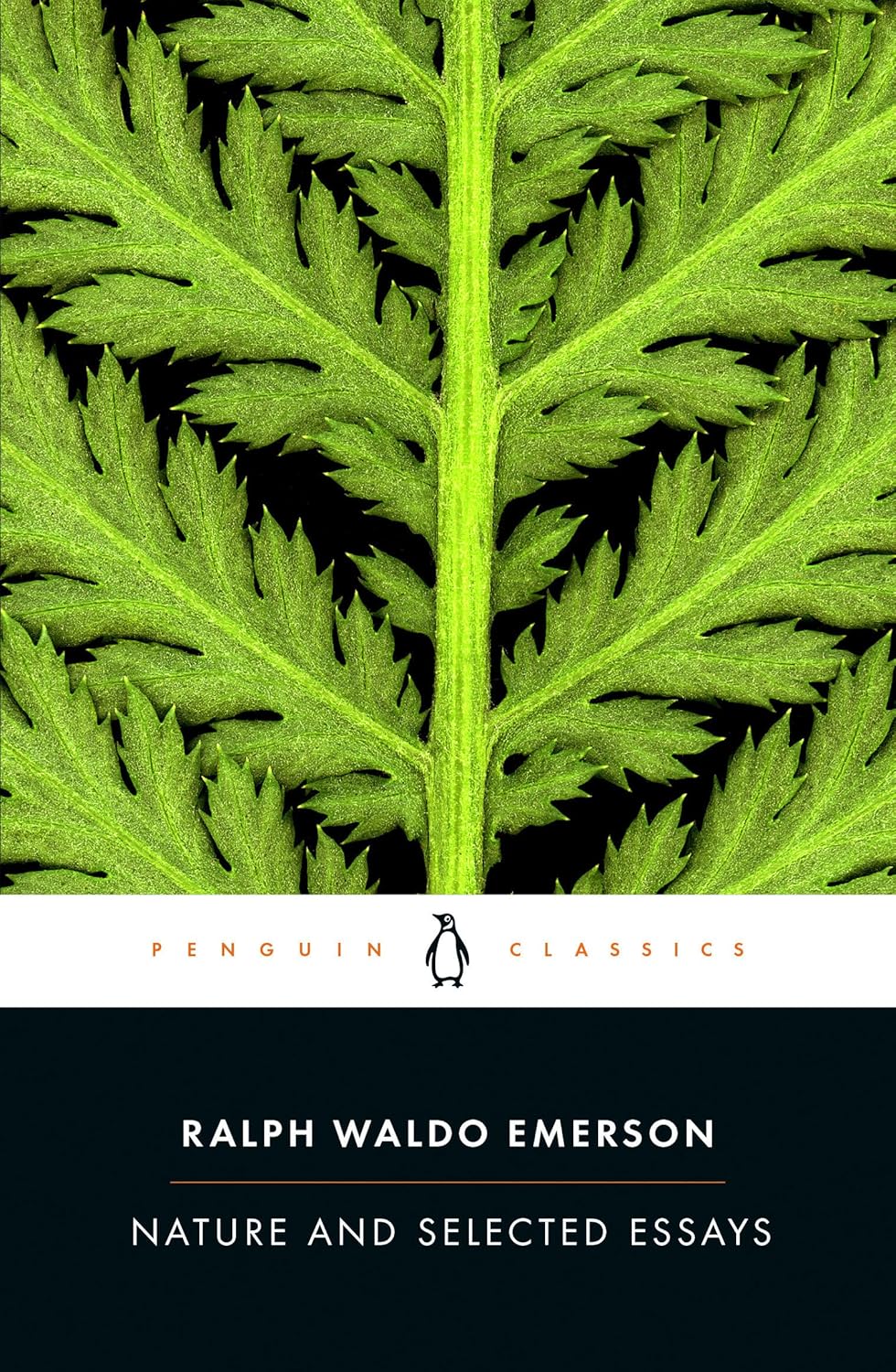
Nature and Selected Essays (Penguin Classics)

Description:

An indispensible look at Emerson's influential life philosophy

Through his writing and his own personal philosophy, Ralph Waldo Emerson unburdened his young country of Europe's traditional sense of history and showed Americans how to be creators of their own circumstances. His mandate, which called for harmony with, rather than domestication of, nature, and for a reliance on individual integrity, rather than on materialistic institutions, is echoed in many of the great American philosophical and literary works of his time and ours, and has given an impetus to modern political and social activism.

Larzer Ziff's introduction to this collection of fifteen of Emerson's most significant writings provides the important backdrop to the society in which Emerson lived during his formative years.

For more than seventy years, Penguin has been the leading publisher of classic literature in the English-speaking world. With more than 1,700 titles, Penguin Classics represents a global bookshelf of the best works throughout history and across genres and disciplines. Readers trust the series to provide authoritative texts enhanced by introductions and notes by distinguished scholars and contemporary authors, as well as up-to-date translations by award-winning translators.


Editorial Reviews

About the Author

Ralph Waldo Emerson, the son of a Unitarian minister and a chaplain during the American Revolution, was born in 1803 in Boston. He attended the Boston Latin School, and in 1817 entered Harvard, graduating in 1820. Emerson supported himself as a schoolteacher from 1821-26. In 1826 he was "approbated to preach," and in 1829 became pastor of the Scond Church (Unitarian) in Boston. That same year he married Ellen Louise Tucker, who was to die of tuberculosis only seventeen months later. In 1832 Emerson resigned his pastorate and traveled to Eurpe, where he met Coleridge, Wordsworth, and Carlyle. He settled in Concord, Massachusetts, in 1834, where he began a new career as a public lecturer, and married Lydia Jackson a year later. A group that gathered around Emerson in Concord came to be known as "the Concord school," and included Bronson Alcott, Henry David Thoreau, Nathaniel Hawthorne, and Margaret Fuller. Every year Emerson made a lecture tour; and these lectures were the source of most of his essays. Nature (1836), his first published work, contained the essence of his transcendental philosophy, which views the world of phenomena as a sort of symbol of the inner life and emphasizes individual freedom and self-reliance. Emerson's address to the Phi Beta Kappa society of Harvard (1837) and another address to the graduating class of the Harvard Divinity School (1838) applied his doctrine to the scholar and the clergyman, provoking sharp controversy. An ardent abolitionist, Emerson lectured and wrote widely against slavery from the 1840's through the Civil War. His principal publications include two volumes ofEssays (1841, 1844), Poems (1847), Representative Men (1850), The Conduct of Life (1860), and Society and Solitude (1870). He died of pneumonia in 1882 and was buried in Concord.

Larzer Ziff is a research professor of English at Johns Hopkins University who has written extensively on American literary culture.

Reviews:

5.0 out of 5 stars A good intro to Emerson

C. · January 29, 2021

This book required patience and a dictionary on hand while reading. Which is not a bad thing if you can stick with it. Emerson has some amazing truths to share, he uses a poetic and eloquent style of writing hence the need for patience. Take time to chew on what he’s saying and meditate on it to get the most out of it. He had some revolutionary ideas that are timeless even though they were written over 100 years ago.If you’d like an intro to Transcendentalism and are curious about the writings of Ralph Waldo Emerson then I definitely suggest checking this out! It includes the famous “Nature” essay as well as “The American Scholar”, “Man the Reformer”, “History”, “Self Reliance”, “The Oversoul”, “Circles”, “The Transcendentalist”, “The Poet”, “Experience”, “Montaigne”, “Napoleon”, “Fate”, and “Thoreau”.

5.0 out of 5 stars RWEmerson--WOW! What else is there to say?

S.M.M. · May 1, 2002

For anyone who enjoys beautiful prose with intellectually stimulating ideas and thoughts--this book is a "MUST-HAVE" for your library collection! These classic and quotable essays are enlighting and refreshing! If you (like I do) reject the Transcendentalist doctrine and theology, you may find yourself dismissing a couple of the essays as too tasking ideologically as they are at times on the fringe of transcendental ideology. Emerson's use of the English language, however, is a breath of fresh air in this era where the common vernacular is characterized by the grotesque abuses of ebonics, profanity, and laziness. It would be incredibly wonderful if all Americans would return to the most eloquent and beautiful use of our language as Emerson does.

5.0 out of 5 stars Emerson- amazing

I.B. · February 8, 2013

Emerson is amazing, one of the most talented writers in the english language, full of dialectic sophistication, loving intuition, poetic beauty and astute observation. This is a great collection of essays, which contains a rare assortment of favorites: experience, self-reliance, history, and the skeptic.

4.0 out of 5 stars Very exuberant and often thoughtful

J.C. · March 4, 2024

I'd probably give this a 3.5 rating because I like Emerson but he gets ahead of himself: just read his section on drawing a circle around yourself and keep troublesome people out (I'm simplifying.) I guess Mr. Emerson had never heard of "hostile takeovers" in business. (Which aren't all bad.) So, even though I strongly endorse his can-do attitude I think he occasionally gets naive. Much to like and admire but don't go overboard with it.

5.0 out of 5 stars These essays were given to me by my father. They worked for me then...

J.C. · July 23, 2019

All of Ralph Waldo's works were invariably eloquent, logical, and well thought out. My favorite essay is Self Reliance, but I thing they all have pertinent lessons.

5.0 out of 5 stars Emerson's "Self-reliance" & "Nature" have become the very advice that ...

R. · July 11, 2017

Emerson's "Self-reliance" & "Nature" have become the very advice that most of us need to heed in this day and age. You know it's a masterpiece when the argument and content still maintain their efficiency and adaptability more to this time now than Emerson's own time.

5.0 out of 5 stars Interesting Points on Life

A.C. · February 19, 2016

This book really shows you the true wonders life has to offer. Would by it again just to have a 2nd copy!

5.0 out of 5 stars Must read

S.F. · July 8, 2015

I've always been a huge Ralph Waldo Emerson fan. Any fan of literature and nature that has not read this definitely should.

⭐⭐⭐⭐⭐A portable manifesto of wonder and will—uneven in places, inexhaustible in rewards.

Y. · August 28, 2025

1) Short Verdict 🌲💡A compact gateway to American Transcendentalism: lyrical, aphoristic, and quietly radical in its defense of self-reliance, intuition, and the divine in nature. Slim pages, big afterglow.2) Literary Analysis (Themes, Form, Style) 🔎Themes: 🌿 Nature as living symbol of spirit · 🧭 Individual conscience vs. conformity · 🌀 Perception, flux, and the “Over-Soul” · 🏛️ Scholar’s duty to originality.Form: A suite anchored by “Nature” (1836) and key essays like “Self-Reliance,” “The American Scholar,” “The Over-Soul,” “Circles,” “Experience,” “The Poet.” They converse with—sometimes correct—one another (the later “Experience” darkens the early optimism).Style: Sermonic yet spry; crystalline aphorisms, metaphor chains, and sudden maxims you’ll want to underline. Expect brilliance and inconsistency—by design.Reading note: Best taken in unhurried sips; keep a pencil handy ✍️.3) Placement in Literature & Culture 📚A cornerstone of the American Renaissance, shaping Thoreau and Whitman, echoing in Nietzsche and early pragmatism, and feeding modern environmental thought. Emerson reframed intellectual independence as a civic and spiritual task—still bracingly current.4) Trivia & Background 🗂️📜 Nature first appeared 1836; “Self-Reliance” 1841; “The American Scholar” was a 1837 address at Harvard.📘 Penguin Classics paperback (edited with introduction/notes for classroom and general readers): April 24, 2003 (per your note).5) Final Take & Rating 🏁⭐A portable manifesto of wonder and will—uneven in places, inexhaustible in rewards.Rating: ⭐⭐⭐⭐⭐

It’s a Penguin Classic

K. · June 26, 2024

American publication, so the cover is a little shinier and the black is more of a blue-black than the UK Penguin Classics (in case your collection skews one way or another). Great quality paper.

Obra de Arte

C. · July 7, 2023

Es una obra de arte de principio a fin. La parte de Thoreau - a quien admiro y mucho - es excelente

Very nice

K.C. · March 1, 2025

I have 5 stars what's not tonlike

Prima!

S.S. · August 31, 2023

Super!

Nature and Selected Essays (Penguin Classics)

Product ID: U014243762K
Condition: New

4.6

AED13989

Price includes VAT & Import Duties
Type: Paperback
Availability: In Stock

Quantity:

|

Order today to get by 7-14 business days

Delivery fee of AED 20. Free for orders above AED 200.

Returns & Warranty policies

Imported From: United States

At BOLO, we work hard to ensure the products you receive are new, genuine, and sourced from reputable suppliers.

BOLO is not an authorized or official retailer for most brands, nor are we affiliated with manufacturers unless specifically stated on a product page. Instead, we source verified sellers, authorized distributors or directly from the manufacturer.

Each product undergoes thorough inspection and verification at our consolidation and fulfilment centers to ensure it meets our strict authenticity and quality standards before being shipped and delivered to you.

If you ever have concerns regarding the authenticity of a product purchased from us, please contact Bolo Support. We will review your inquiry promptly and, if necessary, provide documentation verifying authenticity or offer a suitable resolution.

Your trust is our top priority, and we are committed to maintaining transparency and integrity in every transaction.

All product information, images, descriptions, and reviews originate from the manufacturer or from trusted sellers overseas. BOLO is not affiliated with, endorsed by, or an authorized retailer for most brands listed on our website unless stated otherwise.

While we strive to display accurate information, variations in packaging, labeling, instructions, or formulation may occasionally occur due to regional differences or supplier updates. For detailed or manufacturer-specific information, please contact the brand directly or reach out to BOLO Support for assistance.

Unless otherwise stated, all prices displayed on the product page include applicable taxes and import duties.

BOLO operates in accordance with the laws and regulations of United Arab Emirates. Any items found to be restricted or prohibited for sale within the UAE will be cancelled prior to shipment. We take proactive measures to ensure that only products permitted for sale in United Arab Emirates are listed on our website.

All items are shipped by air, and any products classified as “Dangerous Goods (DG)” under IATA regulations will be removed from the order and cancelled.

All orders are processed manually, and we make every effort to process them promptly once confirmed. Products cancelled due to the above reasons will be permanently removed from listings across the website.

Similar suggestions by Bolo

More from this brand

Similar items from “Western”

Nature and Selected Essays (Penguin Classics)

Product ID: U014243762K
Condition: New

4.6

Nature and Selected Essays (Penguin Classics)-0
Type: Paperback

AED13989

Price includes VAT & Import Duties
Availability: In Stock

Quantity:

|

Order today to get by 7-14 business days

Delivery fee of AED 20. Free for orders above AED 200.

Returns & Warranty policies

Imported From: United States

At BOLO, we work hard to ensure the products you receive are new, genuine, and sourced from reputable suppliers.

BOLO is not an authorized or official retailer for most brands, nor are we affiliated with manufacturers unless specifically stated on a product page. Instead, we source verified sellers, authorized distributors or directly from the manufacturer.

Each product undergoes thorough inspection and verification at our consolidation and fulfilment centers to ensure it meets our strict authenticity and quality standards before being shipped and delivered to you.

If you ever have concerns regarding the authenticity of a product purchased from us, please contact Bolo Support. We will review your inquiry promptly and, if necessary, provide documentation verifying authenticity or offer a suitable resolution.

Your trust is our top priority, and we are committed to maintaining transparency and integrity in every transaction.

All product information, images, descriptions, and reviews originate from the manufacturer or from trusted sellers overseas. BOLO is not affiliated with, endorsed by, or an authorized retailer for most brands listed on our website unless stated otherwise.

While we strive to display accurate information, variations in packaging, labeling, instructions, or formulation may occasionally occur due to regional differences or supplier updates. For detailed or manufacturer-specific information, please contact the brand directly or reach out to BOLO Support for assistance.

Unless otherwise stated, all prices displayed on the product page include applicable taxes and import duties.

BOLO operates in accordance with the laws and regulations of United Arab Emirates. Any items found to be restricted or prohibited for sale within the UAE will be cancelled prior to shipment. We take proactive measures to ensure that only products permitted for sale in United Arab Emirates are listed on our website.

All items are shipped by air, and any products classified as “Dangerous Goods (DG)” under IATA regulations will be removed from the order and cancelled.

All orders are processed manually, and we make every effort to process them promptly once confirmed. Products cancelled due to the above reasons will be permanently removed from listings across the website.

Description:

An indispensible look at Emerson's influential life philosophy

Through his writing and his own personal philosophy, Ralph Waldo Emerson unburdened his young country of Europe's traditional sense of history and showed Americans how to be creators of their own circumstances. His mandate, which called for harmony with, rather than domestication of, nature, and for a reliance on individual integrity, rather than on materialistic institutions, is echoed in many of the great American philosophical and literary works of his time and ours, and has given an impetus to modern political and social activism.

Larzer Ziff's introduction to this collection of fifteen of Emerson's most significant writings provides the important backdrop to the society in which Emerson lived during his formative years.

For more than seventy years, Penguin has been the leading publisher of classic literature in the English-speaking world. With more than 1,700 titles, Penguin Classics represents a global bookshelf of the best works throughout history and across genres and disciplines. Readers trust the series to provide authoritative texts enhanced by introductions and notes by distinguished scholars and contemporary authors, as well as up-to-date translations by award-winning translators.


Editorial Reviews

About the Author

Ralph Waldo Emerson, the son of a Unitarian minister and a chaplain during the American Revolution, was born in 1803 in Boston. He attended the Boston Latin School, and in 1817 entered Harvard, graduating in 1820. Emerson supported himself as a schoolteacher from 1821-26. In 1826 he was "approbated to preach," and in 1829 became pastor of the Scond Church (Unitarian) in Boston. That same year he married Ellen Louise Tucker, who was to die of tuberculosis only seventeen months later. In 1832 Emerson resigned his pastorate and traveled to Eurpe, where he met Coleridge, Wordsworth, and Carlyle. He settled in Concord, Massachusetts, in 1834, where he began a new career as a public lecturer, and married Lydia Jackson a year later. A group that gathered around Emerson in Concord came to be known as "the Concord school," and included Bronson Alcott, Henry David Thoreau, Nathaniel Hawthorne, and Margaret Fuller. Every year Emerson made a lecture tour; and these lectures were the source of most of his essays. Nature (1836), his first published work, contained the essence of his transcendental philosophy, which views the world of phenomena as a sort of symbol of the inner life and emphasizes individual freedom and self-reliance. Emerson's address to the Phi Beta Kappa society of Harvard (1837) and another address to the graduating class of the Harvard Divinity School (1838) applied his doctrine to the scholar and the clergyman, provoking sharp controversy. An ardent abolitionist, Emerson lectured and wrote widely against slavery from the 1840's through the Civil War. His principal publications include two volumes ofEssays (1841, 1844), Poems (1847), Representative Men (1850), The Conduct of Life (1860), and Society and Solitude (1870). He died of pneumonia in 1882 and was buried in Concord.

Larzer Ziff is a research professor of English at Johns Hopkins University who has written extensively on American literary culture.

Reviews:

5.0 out of 5 stars A good intro to Emerson

C. · January 29, 2021

This book required patience and a dictionary on hand while reading. Which is not a bad thing if you can stick with it. Emerson has some amazing truths to share, he uses a poetic and eloquent style of writing hence the need for patience. Take time to chew on what he’s saying and meditate on it to get the most out of it. He had some revolutionary ideas that are timeless even though they were written over 100 years ago.If you’d like an intro to Transcendentalism and are curious about the writings of Ralph Waldo Emerson then I definitely suggest checking this out! It includes the famous “Nature” essay as well as “The American Scholar”, “Man the Reformer”, “History”, “Self Reliance”, “The Oversoul”, “Circles”, “The Transcendentalist”, “The Poet”, “Experience”, “Montaigne”, “Napoleon”, “Fate”, and “Thoreau”.

5.0 out of 5 stars RWEmerson--WOW! What else is there to say?

S.M.M. · May 1, 2002

For anyone who enjoys beautiful prose with intellectually stimulating ideas and thoughts--this book is a "MUST-HAVE" for your library collection! These classic and quotable essays are enlighting and refreshing! If you (like I do) reject the Transcendentalist doctrine and theology, you may find yourself dismissing a couple of the essays as too tasking ideologically as they are at times on the fringe of transcendental ideology. Emerson's use of the English language, however, is a breath of fresh air in this era where the common vernacular is characterized by the grotesque abuses of ebonics, profanity, and laziness. It would be incredibly wonderful if all Americans would return to the most eloquent and beautiful use of our language as Emerson does.

5.0 out of 5 stars Emerson- amazing

I.B. · February 8, 2013

Emerson is amazing, one of the most talented writers in the english language, full of dialectic sophistication, loving intuition, poetic beauty and astute observation. This is a great collection of essays, which contains a rare assortment of favorites: experience, self-reliance, history, and the skeptic.

4.0 out of 5 stars Very exuberant and often thoughtful

J.C. · March 4, 2024

I'd probably give this a 3.5 rating because I like Emerson but he gets ahead of himself: just read his section on drawing a circle around yourself and keep troublesome people out (I'm simplifying.) I guess Mr. Emerson had never heard of "hostile takeovers" in business. (Which aren't all bad.) So, even though I strongly endorse his can-do attitude I think he occasionally gets naive. Much to like and admire but don't go overboard with it.

5.0 out of 5 stars These essays were given to me by my father. They worked for me then...

J.C. · July 23, 2019

All of Ralph Waldo's works were invariably eloquent, logical, and well thought out. My favorite essay is Self Reliance, but I thing they all have pertinent lessons.

5.0 out of 5 stars Emerson's "Self-reliance" & "Nature" have become the very advice that ...

R. · July 11, 2017

Emerson's "Self-reliance" & "Nature" have become the very advice that most of us need to heed in this day and age. You know it's a masterpiece when the argument and content still maintain their efficiency and adaptability more to this time now than Emerson's own time.

5.0 out of 5 stars Interesting Points on Life

A.C. · February 19, 2016

This book really shows you the true wonders life has to offer. Would by it again just to have a 2nd copy!

5.0 out of 5 stars Must read

S.F. · July 8, 2015

I've always been a huge Ralph Waldo Emerson fan. Any fan of literature and nature that has not read this definitely should.

⭐⭐⭐⭐⭐A portable manifesto of wonder and will—uneven in places, inexhaustible in rewards.

Y. · August 28, 2025

1) Short Verdict 🌲💡A compact gateway to American Transcendentalism: lyrical, aphoristic, and quietly radical in its defense of self-reliance, intuition, and the divine in nature. Slim pages, big afterglow.2) Literary Analysis (Themes, Form, Style) 🔎Themes: 🌿 Nature as living symbol of spirit · 🧭 Individual conscience vs. conformity · 🌀 Perception, flux, and the “Over-Soul” · 🏛️ Scholar’s duty to originality.Form: A suite anchored by “Nature” (1836) and key essays like “Self-Reliance,” “The American Scholar,” “The Over-Soul,” “Circles,” “Experience,” “The Poet.” They converse with—sometimes correct—one another (the later “Experience” darkens the early optimism).Style: Sermonic yet spry; crystalline aphorisms, metaphor chains, and sudden maxims you’ll want to underline. Expect brilliance and inconsistency—by design.Reading note: Best taken in unhurried sips; keep a pencil handy ✍️.3) Placement in Literature & Culture 📚A cornerstone of the American Renaissance, shaping Thoreau and Whitman, echoing in Nietzsche and early pragmatism, and feeding modern environmental thought. Emerson reframed intellectual independence as a civic and spiritual task—still bracingly current.4) Trivia & Background 🗂️📜 Nature first appeared 1836; “Self-Reliance” 1841; “The American Scholar” was a 1837 address at Harvard.📘 Penguin Classics paperback (edited with introduction/notes for classroom and general readers): April 24, 2003 (per your note).5) Final Take & Rating 🏁⭐A portable manifesto of wonder and will—uneven in places, inexhaustible in rewards.Rating: ⭐⭐⭐⭐⭐

It’s a Penguin Classic

K. · June 26, 2024

American publication, so the cover is a little shinier and the black is more of a blue-black than the UK Penguin Classics (in case your collection skews one way or another). Great quality paper.

Obra de Arte

C. · July 7, 2023

Es una obra de arte de principio a fin. La parte de Thoreau - a quien admiro y mucho - es excelente

Very nice

K.C. · March 1, 2025

I have 5 stars what's not tonlike

Prima!

S.S. · August 31, 2023

Super!

Similar suggestions by Bolo

More from this brand

Similar items from “Western”