Description:
Editorial Reviews
Reviews:
5.0 out of 5 stars A readable religious book that still makes you think.
Religious, and specifically Christian, books can be a challenging lot. On the one hand there are plenty of great theological texts to read (Augustine, Aquinas, Calvin, Rahner, Barth, etc), but suffice it to say they are not the type of book you curl up with at the end of the day. On the other hand, there are too many "Christian-lite" books (I'll be nice and not name names) which touch on Christian themes, but lack the depth to really challenge the faithful.With his rather bold title, The Jesuit Guide to (Almost) Everything, James Martin, SJ looks like he would fall in the latter category. But happily, what we find here is a treatment of the Christian faith (through a Jesuit lens) which is not difficult to digest, but will challenge the reader to reexamine their stance toward faith. This is not just wordplay when I say "stance toward faith." Martin honestly and respectfully engages readers who may be atheists or agnostics, as well as any Christian still examining their faith. He does note that much of what he offers from his Jesuit life could be adopted by non-Christians. But give Martin credit for not being embarrassed of his faith and making a strong case for Christianity.Martin acknowledges his own wordplay when he addresses his title. "It's not a guide to understanding everything about everything (thus the Almost). Rather, it's a guide to discovering how God can be found in every dimension of your life." The essence of the book is that every aspect of your life is spiritual -- faith is not just concerned with your thoughts on God, but what you say in those emails to a coworker. This is the first of four definitions that comes from Jesuit spirituality, namely, that everything in your life is important. The second idea is "contemplative in action," in which Martin outlines how a contemplative life translates into an active life. This theme plays a major role throughout the book as Martin explores how those of us who are not Jesuits can still actively incorporate spirituality into our lives. Third, not only is everything important, but God can be found everywhere. This carries the theological phrase of incarnational spirituality, but the idea is simple. Finally, many readers may be surprised to hear that people who pledge obedience see their spiritual life as one of freedom and detachment from distracting influences as opposed to a set of rules to follow.Martin spends a great deal of time looking at the role of prayer in our lives. Again he is not afraid to challenge, as he does with the conventional excuse of "busyness," when it comes to why we find prayer challenging. One of Martin's strengths is that he understands the challenges of the working world. He came to his own faith decisions after a, ahem, active collegiate experience and after having a successful business career. He knows what many people deal with daily, and although not the head of a family, he understands the stresses the life of a parent has to contend with in addition to finding prayer time. But he points out that all relationships need nurturing, and our relationship with God is no different.He offers several options, but his focus on "The Examen" is the most enlightening. This Jesuit prayer is central to the Jesuit way of life. Created by the Jesuit founder, St. Ignatius Loyola (and Jesuit spirituality is often called Ignatian spirituality), this prayer takes a person through five steps at the end of the day. The prayer focuses on the course of the day. In Martin's version (and we learn throughout that Jesuits are a pretty flexible lot on faith issues) we start with gratitude for what went well, and then review all actions of the day. When we recall events we are sorry for we have reached the third step, which leads naturally to seeking forgiveness, step four. Finally, we seek God's grace for the coming day.Simple as it sounds, and it is simple, the prayer reinforces that idea of all aspects of your life are important to God. All our actions should reflect our faith, and when we fail, we should seek to remedy our wrongs. Regardless of one's faith inclination, a thorough review of the day and an accounting for one's actions is bound to create opportunities to move forward.Martin's explanations of the vows of obedience, chastity, and poverty are enlightening in not only understanding what those vows mean, but what they have to do with the rest of us. No, he is not promoting worldwide chastity in the normal sense, but he does argue that loving chastely lets those even in sexual relationships realize there are many ways to express love. In a sex-obsessed culture, this rather obvious line of thinking is desperately needed.This is how Martin works throughout the book. He explains how Jesuit's think and why, and then looks to tie it in with everyday life for the non-Jesuits of the world. While it sounds simple, it is challenging in both content and translation to life. If you just want an easy "feel good" book or "10 steps to live like a Jesuit," look elsewhere. If you want to think about faith and how it underlies your life, this is the place to start. But not to worry, Martin does all this with a sense of humor. He knows when some thinking sounds funny, and he points it out. He loves to tell Jesuit jokes, almost always at the expense of Jesuits, and the book is filled with real-life stories to illustrate his points. How often do you get to read a priest talk about being overwhelmed by sexual obsession just weeks before ordination? Martin does, and he spares himself little in the telling of tales. But his honesty and humor make all this thinking that more fun. And after all, if we cannot enjoy our faith, we must be missing something.Martin also keeps a friendly, informative Facebook page where you can read about his other comments on life.
5.0 out of 5 stars Hitchhiker's Guide to Jesuit Spirituality
THE JESUIT GUIDE TO ALMOST EVERYTHING is the latest book by the acclaimed, bestselling Jesuit writer, James Martin, S.J., whose earlier work MY LIFE WITH THE SAINTS has become a contemporary classic of popular Jesuit spirituality. Father Martin has deservedly won accolades for his accessible yet insightful writings; the "America Magazine" writer and editor has even gained a popular following through his occasional appearances on "The Colbert Report." (His national television presence may well make him the Archbishop Fulton Sheen of the early twenty-first century --sans the former's flashy episcopal habiliment.) Father Martin's writing style conveys a sense of being effortless, that is to say, it is without evident artifice; his writing makes him as approachable as he appears on television (and on Facebook). He's also down-to-earth about his own foibles; no holier-than-Saint Joe cleric here.This book--as the title suggests--runs the gamut of life issues, taking as its starting point and organizing principle the essence of Jesuit spirituality, founder St. Ignatius Loyola's "way of proceeding." By explaining the "way of proceeding," Martin sums up on the first page what his book is all about: "the freedom to become the person you're meant to be, to love and accept love, to make good decisions, and to experience the beauty of creation and the mystery of God's love." The chapters unfold from there, treating such topics as seeking God; living a simple life; plumbing the real meaning of chastity, love, and friendship; understanding and accepting obedience and suffering; learning the Ignatian way of decision making, discovering the role of desire in vocation, and being "who you is." Occasionally one encounters a section that feels less organic than pastiche, but Martin's presentation is always engaging and useful.While the reader is likely to have had some interest in religion or spirituality to have even picked up the book, Martin attempts to expand the meaningfulness of this material to all "seekers." This is both ambitious and in keeping with the Jesuit (and the Christian) charge to evangelize, but it's difficult to surmise how successful he is in that regard. One of the goals of the Society of Jesus (the formal name of the Jesuit Order) has always been to extend its thinking and practices beyond its mostly clerical membership, an ever more challenging (and important) mission as the Order's ranks diminish. Since Martin's world is principally that of the Jesuits, his examples, just as in earlier books, come mostly from his years of Jesuit formation and the experiences of his present life as a priest. Thus, there's a quite a bit of insider Jesuit religious life (vice experiences of everyday lay life) that Martin attempts to convert into lessons for the layperson. I think he does this rather successfully and engagingly--though I should note that my judgment might be influenced by the few wonderful years I once numbered in the edifying company of the Jesuits. It'd be interesting to see if spiritually minded non-Catholics are paying attention. I hope so.If I had been the publisher, I might have tinkered with the presentation of the material. I see this as a spiritual guidebook, and so it would have interested me to have seen this formatted accordingly, like a travel guidebook rather than as a travel narrative. One might read a travel guide cover-to-cover in preparing for a trip, but while on the journey one will want to go right to the section most applicable. In this context, one might want to ready-reference Martin's excellent synopsis of, say, the Examen or the Ignatian decision-making process, and a guidebook format would both facilitate locating those sections and highlight the salient points through text boxes, charts and other graphic devices. Note to HarperOne: it's not too late to get an illustrated guidebook version of this book out by next Christmas!One will wonder what's NOT covered by an "almost" guide. Well, sex *is*, in a way (actually, in a profound way), so not that. There's a definite deficit of attention paid to food (though Rick Curry, S.J. is mentioned--ah, no, I'm not punning on his name; the Jesuit brother who founded the National Theater Workshop of the Handicapped has also written books on soupmaking and breadmaking), but I note that sort-of tongue-in-cheek. The book actually is quite comprehensive, but fortunately, should Martin choose, he still has plenty of topics to cover. In a follow-up he could address or further develop such matters as understanding the nature of evil/Satan in the modern context (thinking beyond Dana Carvey's Church Lady); the relationship between science and faith; the challenge of living faith-filled, counter-cultural lives in an affluent, comfortable society; end-of-life (and associated quality-of-life) issues; and death and resurrection. An expanded treatment of the Jesuit performing and visual arts would be welcomed. In any case, I'll be looking forward to whatever Father Martin should choose to write about, even if it's about sitting in the Colbert Green Room.
5.0 out of 5 stars Fr James Martin is awesome
Father James Martin. What an amazing man and author and inspiration. I usually don't ever even read much but this book had me feeling hooked and fulfilled with many chapters. What a great guide especially for those interested in Ignatian philosophy.
People from all faiths can benefit from the spiriituality from this book
People from all faiths can get awesome spiritual material from this book.I am a Hindu and I read literature from all faiths and that benefits me a lot.
bellissimo (ma prolisso)
il pregio: è scritto per americaniil difetto: è scritto per americanisecondo me ancor più interessante per un non-credente e mostra come la chiesa abbia in se lati moderni, tolleranti ed al passo con i tempi
Buy this book. Helpful and a great read...
This is a book I could happily recommend to anyone, regardless of faith, background and degrees of scepticism on matters spiritual. It is highly readable, mixing humour with profundity, anecdote with quotation ensuring that the reader is drawn on; ever keener to learn the wisdom that is to be found on every page of this deeply inspiring and in places, moving book.There is so much to say about this book but there are a few ideas worth picking out.. Live a simple life- focus on what is important, what makes us better people, stronger in faith and more accepting and loving of others?. Prayer – our relationship with God is basis for everything, from the beginning to the end of life, from first thing in the morning to the end of the day. So we should have a routine that ensures we actively relate to God..Reflection- What have we done with our day, where do we owe gratitude, what was good and what was less so. Are we doing the will of God as we discern it or simply wasting our time in dissolute behaviours?.Are we sufficiently ‘detached’ from the World and our own selfish feelings to be able understand the dictates of conscience and the needs of others? Do we have enough time to ourselves to really discern what we need to do with our lives?.Do not be afraid of words like ‘Obedience’ and ‘humility’, they are the keystones to a rich inner life. They do not imply weakness or derogation of personal responsibility, merely a way of being that allows a person to grow in faith and surety of feeling.The Jesuit approach is not about being ‘happy’ and ‘having it all’. it is about the individual adopting a particular set of attitudes, behaviours and beliefs that strengthens their relationship with God and helps them deal with all that is good and bad in life.Wonderful book. Highly recommended.
Insightful, real and funny
The best way I've found so far to enter the Jesuit spirituality! Highly recommended to anyone looking into his or her spirituality.
Libro sobre la espiritualidad Ignaciana
Es un libro de lenguaje sencillo que te introducirá en la espiritualidad Ignaciana. Es un libro de referencia obligada. El autor ha elaborado una gran obra
Visit the HarperOne Store
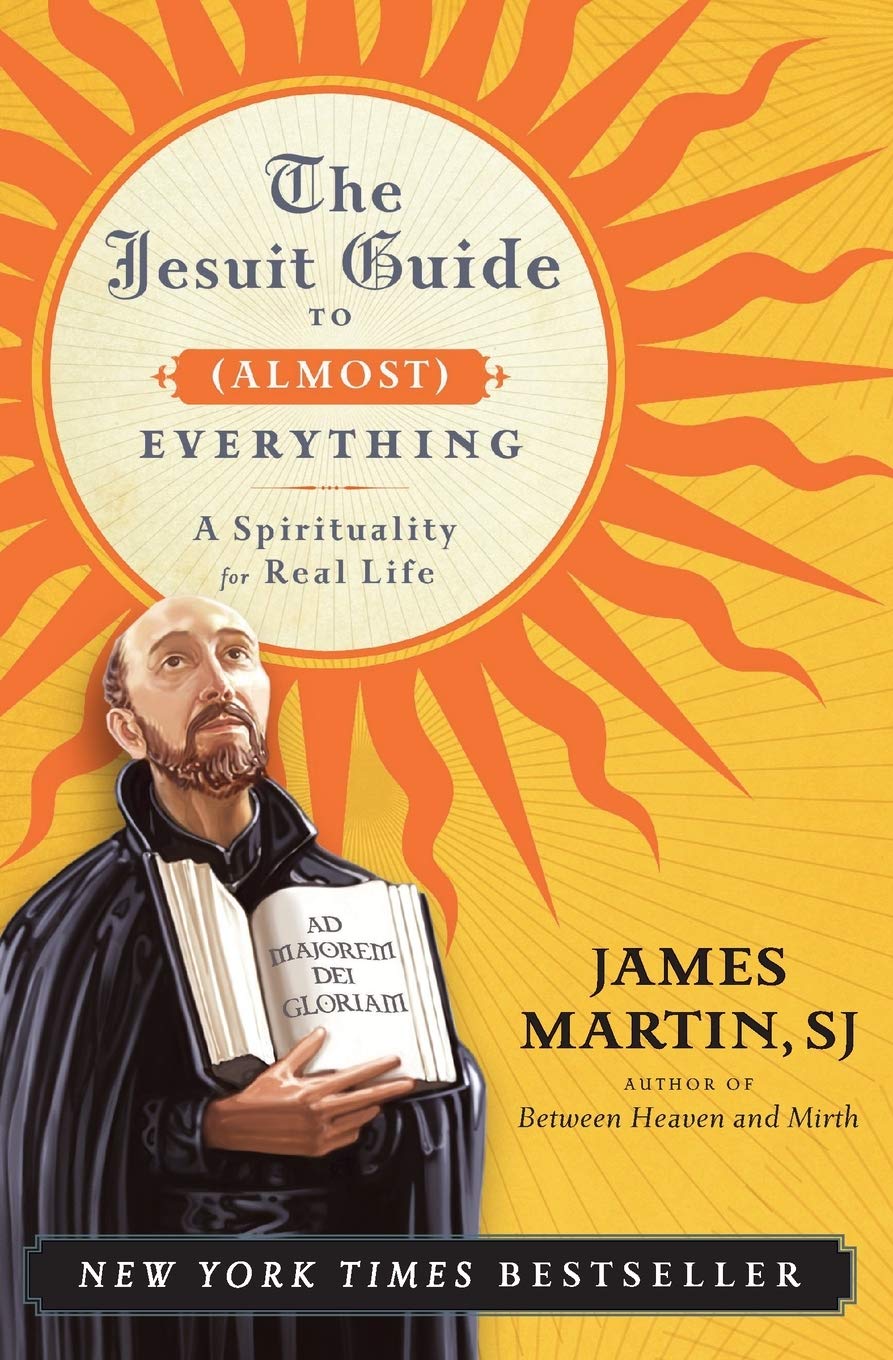
The Jesuit Guide to (Almost) Everything: A Spirituality for Real Life
AED6434
Quantity:
Order today to get by 7-14 business days
Delivery fee of AED 20. Free for orders above AED 200.
Imported From: United States
At BOLO, we work hard to ensure the products you receive are new, genuine, and sourced from reputable suppliers.
BOLO is not an authorized or official retailer for most brands, nor are we affiliated with manufacturers unless specifically stated on a product page. Instead, we source verified sellers, authorized distributors or directly from the manufacturer.
Each product undergoes thorough inspection and verification at our consolidation and fulfilment centers to ensure it meets our strict authenticity and quality standards before being shipped and delivered to you.
If you ever have concerns regarding the authenticity of a product purchased from us, please contact Bolo Support. We will review your inquiry promptly and, if necessary, provide documentation verifying authenticity or offer a suitable resolution.
Your trust is our top priority, and we are committed to maintaining transparency and integrity in every transaction.
All product information, images, descriptions, and reviews originate from the manufacturer or from trusted sellers overseas. BOLO is not affiliated with, endorsed by, or an authorized retailer for most brands listed on our website unless stated otherwise.
While we strive to display accurate information, variations in packaging, labeling, instructions, or formulation may occasionally occur due to regional differences or supplier updates. For detailed or manufacturer-specific information, please contact the brand directly or reach out to BOLO Support for assistance.
Unless otherwise stated, all prices displayed on the product page include applicable taxes and import duties.
BOLO operates in accordance with the laws and regulations of United Arab Emirates. Any items found to be restricted or prohibited for sale within the UAE will be cancelled prior to shipment. We take proactive measures to ensure that only products permitted for sale in United Arab Emirates are listed on our website.
All items are shipped by air, and any products classified as “Dangerous Goods (DG)” under IATA regulations will be removed from the order and cancelled.
All orders are processed manually, and we make every effort to process them promptly once confirmed. Products cancelled due to the above reasons will be permanently removed from listings across the website.
More from this brand
Similar items from “Christianity”
Share with
Or share with link
https://www.bolo.ae/products/U0061432695
Visit the HarperOne Store
The Jesuit Guide to (Almost) Everything: A Spirituality for Real Life

AED6434
Quantity:
Order today to get by 7-14 business days
Delivery fee of AED 20. Free for orders above AED 200.
Imported From: United States
At BOLO, we work hard to ensure the products you receive are new, genuine, and sourced from reputable suppliers.
BOLO is not an authorized or official retailer for most brands, nor are we affiliated with manufacturers unless specifically stated on a product page. Instead, we source verified sellers, authorized distributors or directly from the manufacturer.
Each product undergoes thorough inspection and verification at our consolidation and fulfilment centers to ensure it meets our strict authenticity and quality standards before being shipped and delivered to you.
If you ever have concerns regarding the authenticity of a product purchased from us, please contact Bolo Support. We will review your inquiry promptly and, if necessary, provide documentation verifying authenticity or offer a suitable resolution.
Your trust is our top priority, and we are committed to maintaining transparency and integrity in every transaction.
All product information, images, descriptions, and reviews originate from the manufacturer or from trusted sellers overseas. BOLO is not affiliated with, endorsed by, or an authorized retailer for most brands listed on our website unless stated otherwise.
While we strive to display accurate information, variations in packaging, labeling, instructions, or formulation may occasionally occur due to regional differences or supplier updates. For detailed or manufacturer-specific information, please contact the brand directly or reach out to BOLO Support for assistance.
Unless otherwise stated, all prices displayed on the product page include applicable taxes and import duties.
BOLO operates in accordance with the laws and regulations of United Arab Emirates. Any items found to be restricted or prohibited for sale within the UAE will be cancelled prior to shipment. We take proactive measures to ensure that only products permitted for sale in United Arab Emirates are listed on our website.
All items are shipped by air, and any products classified as “Dangerous Goods (DG)” under IATA regulations will be removed from the order and cancelled.
All orders are processed manually, and we make every effort to process them promptly once confirmed. Products cancelled due to the above reasons will be permanently removed from listings across the website.
Description:
Editorial Reviews
Reviews:
5.0 out of 5 stars A readable religious book that still makes you think.
Religious, and specifically Christian, books can be a challenging lot. On the one hand there are plenty of great theological texts to read (Augustine, Aquinas, Calvin, Rahner, Barth, etc), but suffice it to say they are not the type of book you curl up with at the end of the day. On the other hand, there are too many "Christian-lite" books (I'll be nice and not name names) which touch on Christian themes, but lack the depth to really challenge the faithful.With his rather bold title, The Jesuit Guide to (Almost) Everything, James Martin, SJ looks like he would fall in the latter category. But happily, what we find here is a treatment of the Christian faith (through a Jesuit lens) which is not difficult to digest, but will challenge the reader to reexamine their stance toward faith. This is not just wordplay when I say "stance toward faith." Martin honestly and respectfully engages readers who may be atheists or agnostics, as well as any Christian still examining their faith. He does note that much of what he offers from his Jesuit life could be adopted by non-Christians. But give Martin credit for not being embarrassed of his faith and making a strong case for Christianity.Martin acknowledges his own wordplay when he addresses his title. "It's not a guide to understanding everything about everything (thus the Almost). Rather, it's a guide to discovering how God can be found in every dimension of your life." The essence of the book is that every aspect of your life is spiritual -- faith is not just concerned with your thoughts on God, but what you say in those emails to a coworker. This is the first of four definitions that comes from Jesuit spirituality, namely, that everything in your life is important. The second idea is "contemplative in action," in which Martin outlines how a contemplative life translates into an active life. This theme plays a major role throughout the book as Martin explores how those of us who are not Jesuits can still actively incorporate spirituality into our lives. Third, not only is everything important, but God can be found everywhere. This carries the theological phrase of incarnational spirituality, but the idea is simple. Finally, many readers may be surprised to hear that people who pledge obedience see their spiritual life as one of freedom and detachment from distracting influences as opposed to a set of rules to follow.Martin spends a great deal of time looking at the role of prayer in our lives. Again he is not afraid to challenge, as he does with the conventional excuse of "busyness," when it comes to why we find prayer challenging. One of Martin's strengths is that he understands the challenges of the working world. He came to his own faith decisions after a, ahem, active collegiate experience and after having a successful business career. He knows what many people deal with daily, and although not the head of a family, he understands the stresses the life of a parent has to contend with in addition to finding prayer time. But he points out that all relationships need nurturing, and our relationship with God is no different.He offers several options, but his focus on "The Examen" is the most enlightening. This Jesuit prayer is central to the Jesuit way of life. Created by the Jesuit founder, St. Ignatius Loyola (and Jesuit spirituality is often called Ignatian spirituality), this prayer takes a person through five steps at the end of the day. The prayer focuses on the course of the day. In Martin's version (and we learn throughout that Jesuits are a pretty flexible lot on faith issues) we start with gratitude for what went well, and then review all actions of the day. When we recall events we are sorry for we have reached the third step, which leads naturally to seeking forgiveness, step four. Finally, we seek God's grace for the coming day.Simple as it sounds, and it is simple, the prayer reinforces that idea of all aspects of your life are important to God. All our actions should reflect our faith, and when we fail, we should seek to remedy our wrongs. Regardless of one's faith inclination, a thorough review of the day and an accounting for one's actions is bound to create opportunities to move forward.Martin's explanations of the vows of obedience, chastity, and poverty are enlightening in not only understanding what those vows mean, but what they have to do with the rest of us. No, he is not promoting worldwide chastity in the normal sense, but he does argue that loving chastely lets those even in sexual relationships realize there are many ways to express love. In a sex-obsessed culture, this rather obvious line of thinking is desperately needed.This is how Martin works throughout the book. He explains how Jesuit's think and why, and then looks to tie it in with everyday life for the non-Jesuits of the world. While it sounds simple, it is challenging in both content and translation to life. If you just want an easy "feel good" book or "10 steps to live like a Jesuit," look elsewhere. If you want to think about faith and how it underlies your life, this is the place to start. But not to worry, Martin does all this with a sense of humor. He knows when some thinking sounds funny, and he points it out. He loves to tell Jesuit jokes, almost always at the expense of Jesuits, and the book is filled with real-life stories to illustrate his points. How often do you get to read a priest talk about being overwhelmed by sexual obsession just weeks before ordination? Martin does, and he spares himself little in the telling of tales. But his honesty and humor make all this thinking that more fun. And after all, if we cannot enjoy our faith, we must be missing something.Martin also keeps a friendly, informative Facebook page where you can read about his other comments on life.
5.0 out of 5 stars Hitchhiker's Guide to Jesuit Spirituality
THE JESUIT GUIDE TO ALMOST EVERYTHING is the latest book by the acclaimed, bestselling Jesuit writer, James Martin, S.J., whose earlier work MY LIFE WITH THE SAINTS has become a contemporary classic of popular Jesuit spirituality. Father Martin has deservedly won accolades for his accessible yet insightful writings; the "America Magazine" writer and editor has even gained a popular following through his occasional appearances on "The Colbert Report." (His national television presence may well make him the Archbishop Fulton Sheen of the early twenty-first century --sans the former's flashy episcopal habiliment.) Father Martin's writing style conveys a sense of being effortless, that is to say, it is without evident artifice; his writing makes him as approachable as he appears on television (and on Facebook). He's also down-to-earth about his own foibles; no holier-than-Saint Joe cleric here.This book--as the title suggests--runs the gamut of life issues, taking as its starting point and organizing principle the essence of Jesuit spirituality, founder St. Ignatius Loyola's "way of proceeding." By explaining the "way of proceeding," Martin sums up on the first page what his book is all about: "the freedom to become the person you're meant to be, to love and accept love, to make good decisions, and to experience the beauty of creation and the mystery of God's love." The chapters unfold from there, treating such topics as seeking God; living a simple life; plumbing the real meaning of chastity, love, and friendship; understanding and accepting obedience and suffering; learning the Ignatian way of decision making, discovering the role of desire in vocation, and being "who you is." Occasionally one encounters a section that feels less organic than pastiche, but Martin's presentation is always engaging and useful.While the reader is likely to have had some interest in religion or spirituality to have even picked up the book, Martin attempts to expand the meaningfulness of this material to all "seekers." This is both ambitious and in keeping with the Jesuit (and the Christian) charge to evangelize, but it's difficult to surmise how successful he is in that regard. One of the goals of the Society of Jesus (the formal name of the Jesuit Order) has always been to extend its thinking and practices beyond its mostly clerical membership, an ever more challenging (and important) mission as the Order's ranks diminish. Since Martin's world is principally that of the Jesuits, his examples, just as in earlier books, come mostly from his years of Jesuit formation and the experiences of his present life as a priest. Thus, there's a quite a bit of insider Jesuit religious life (vice experiences of everyday lay life) that Martin attempts to convert into lessons for the layperson. I think he does this rather successfully and engagingly--though I should note that my judgment might be influenced by the few wonderful years I once numbered in the edifying company of the Jesuits. It'd be interesting to see if spiritually minded non-Catholics are paying attention. I hope so.If I had been the publisher, I might have tinkered with the presentation of the material. I see this as a spiritual guidebook, and so it would have interested me to have seen this formatted accordingly, like a travel guidebook rather than as a travel narrative. One might read a travel guide cover-to-cover in preparing for a trip, but while on the journey one will want to go right to the section most applicable. In this context, one might want to ready-reference Martin's excellent synopsis of, say, the Examen or the Ignatian decision-making process, and a guidebook format would both facilitate locating those sections and highlight the salient points through text boxes, charts and other graphic devices. Note to HarperOne: it's not too late to get an illustrated guidebook version of this book out by next Christmas!One will wonder what's NOT covered by an "almost" guide. Well, sex *is*, in a way (actually, in a profound way), so not that. There's a definite deficit of attention paid to food (though Rick Curry, S.J. is mentioned--ah, no, I'm not punning on his name; the Jesuit brother who founded the National Theater Workshop of the Handicapped has also written books on soupmaking and breadmaking), but I note that sort-of tongue-in-cheek. The book actually is quite comprehensive, but fortunately, should Martin choose, he still has plenty of topics to cover. In a follow-up he could address or further develop such matters as understanding the nature of evil/Satan in the modern context (thinking beyond Dana Carvey's Church Lady); the relationship between science and faith; the challenge of living faith-filled, counter-cultural lives in an affluent, comfortable society; end-of-life (and associated quality-of-life) issues; and death and resurrection. An expanded treatment of the Jesuit performing and visual arts would be welcomed. In any case, I'll be looking forward to whatever Father Martin should choose to write about, even if it's about sitting in the Colbert Green Room.
5.0 out of 5 stars Fr James Martin is awesome
Father James Martin. What an amazing man and author and inspiration. I usually don't ever even read much but this book had me feeling hooked and fulfilled with many chapters. What a great guide especially for those interested in Ignatian philosophy.
People from all faiths can benefit from the spiriituality from this book
People from all faiths can get awesome spiritual material from this book.I am a Hindu and I read literature from all faiths and that benefits me a lot.
bellissimo (ma prolisso)
il pregio: è scritto per americaniil difetto: è scritto per americanisecondo me ancor più interessante per un non-credente e mostra come la chiesa abbia in se lati moderni, tolleranti ed al passo con i tempi
Buy this book. Helpful and a great read...
This is a book I could happily recommend to anyone, regardless of faith, background and degrees of scepticism on matters spiritual. It is highly readable, mixing humour with profundity, anecdote with quotation ensuring that the reader is drawn on; ever keener to learn the wisdom that is to be found on every page of this deeply inspiring and in places, moving book.There is so much to say about this book but there are a few ideas worth picking out.. Live a simple life- focus on what is important, what makes us better people, stronger in faith and more accepting and loving of others?. Prayer – our relationship with God is basis for everything, from the beginning to the end of life, from first thing in the morning to the end of the day. So we should have a routine that ensures we actively relate to God..Reflection- What have we done with our day, where do we owe gratitude, what was good and what was less so. Are we doing the will of God as we discern it or simply wasting our time in dissolute behaviours?.Are we sufficiently ‘detached’ from the World and our own selfish feelings to be able understand the dictates of conscience and the needs of others? Do we have enough time to ourselves to really discern what we need to do with our lives?.Do not be afraid of words like ‘Obedience’ and ‘humility’, they are the keystones to a rich inner life. They do not imply weakness or derogation of personal responsibility, merely a way of being that allows a person to grow in faith and surety of feeling.The Jesuit approach is not about being ‘happy’ and ‘having it all’. it is about the individual adopting a particular set of attitudes, behaviours and beliefs that strengthens their relationship with God and helps them deal with all that is good and bad in life.Wonderful book. Highly recommended.
Insightful, real and funny
The best way I've found so far to enter the Jesuit spirituality! Highly recommended to anyone looking into his or her spirituality.
Libro sobre la espiritualidad Ignaciana
Es un libro de lenguaje sencillo que te introducirá en la espiritualidad Ignaciana. Es un libro de referencia obligada. El autor ha elaborado una gran obra
More from this brand
Similar items from “Christianity”
Share with
Or share with link
https://www.bolo.ae/products/U0061432695