Deliver toUnited Arab Emirates
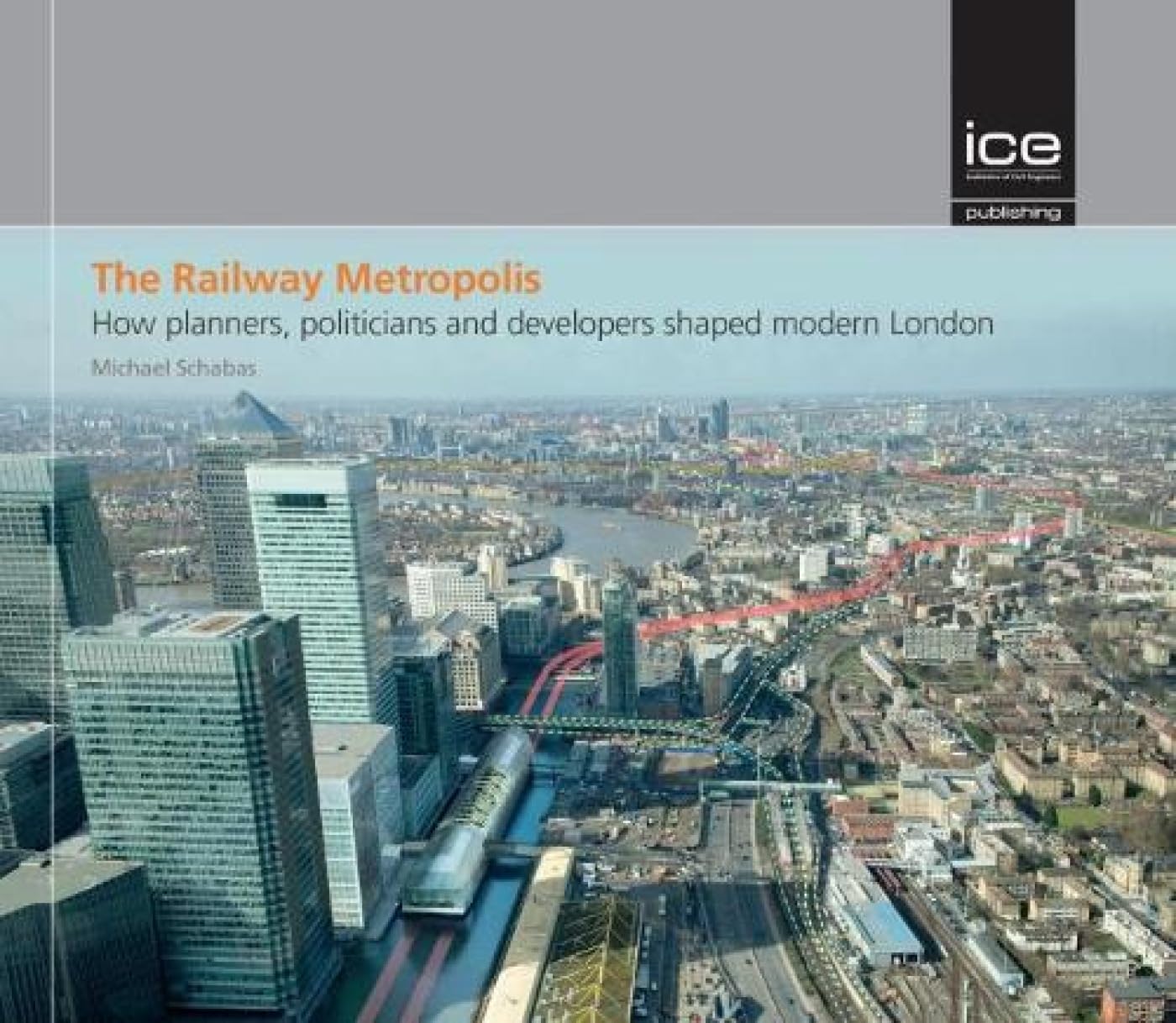
The Railway Metropolis: How planners, politicians and developers shaped modern London

Description:

The Railway Metropolis describes the fascinating story of how planners, politicians and developers have shaped London’s railways. Focusing on the new lines that have been added since 1980, the author considers the reasons why they were built, whether they have proved worthwhile and what lessons can be learned. Based upon extensive research, the book explains the planning, technology choice, design and funding decisions that have shaped London’s rail network, and the changing operating practices, fares and management that have been equally critical to the modernisation of London’s transport system.

The book covers the period from the election of a Conservative government in 1979 through to the present day and six lines that transformed London: Docklands Light Railway, Jubilee Line Extension, High Speed One, Overground, Thameslink and Crossrail. The author has drawn upon extensive industry experience as well as public and private documents, archives, recollections and interviews with more than 50 people who influenced the rebirth of London’s railways to arrive at an authoritative analysis.

The Railway Metropolis is an essential read for all those involved in the industry, including engineers, architects, city planners, railway operators and politicians, and it will also appeal to those with a general interest in the history and development of London’s rail network. Written in an accessible and engaging style, and fully illustrated throughout, the book presents a valuable perspective on why things were done the way they were, the results and whether we can learn how to do them better.


Reviews:

5.0 out of 5 stars A must read

A.C. · 4 March 2017

This book gives a very well documented insight into London's transport evolution over the last few decades. It has the ideal depth in the topics being neither too technical or too historical. It focuses on the process of the development of the different transport schemes. In addition to that the book tells the story what happened and what could have happened if decision maker decided slightly differently. A must read if you want to understand how Londons transport system is as it is today.

5.0 out of 5 stars Five Stars

J.G. · 24 May 2017

Excellent and comprehensive

5.0 out of 5 stars Strangely inspiring

G.M. · 2 May 2022

Strange to say, given one's views of politicians, the story of London's transport is quite inspiring. No other city has such narrow, winding, ancient roads and yet the place works. You can get around. Millions do and it is public transport that does it, much of it rail. Michael Schabas's tells the story; he was an insider for a lot of it. The book, super, just a pity the font is a bit small.George M

5.0 out of 5 stars The Megacity where the rich ride public transport : Why London needs to build more railways

N.M. · 28 December 2016

This is a really important book. Reflecting on the author`s account of rail development in modern London, one realises that a new paradigm is needed for thinking about London`s planning. Probably the most famous book published on London`s planning is London 2000 by the late Peter Hall. His narrative forecast the vast region that is now the real London as opposed to the administrative area of the GLA, but he envisaged a vastly dispersed population living at lower densities and hugely dependent on the private vehicle. Michael Schabas has been associated with virtually every railway project in London over three decades. He explains that no other city grew as large before widespread car ownership. Inner London lacks an express road system or even the wide avenues of New York or Paris. London is less dependent on the automobile than any other megacity. In a memorable phrase he pithly concludes “It is a city built by merchants, not princes.”As someone who assisted Professor Colin Buchanan at the GLDP inquiry in the 1970`s where the four ring roads proposed in the plan (only the outer orbital – now the M25 -was built) attracted huge public opposition, I can confidently assert that the scale of rail building in London that has materialised was never foreseen. The six lines that transformed London: Docklands Light Railway, Jubilee Line Extension, High Speed One, Overground, Thameslink and Crossrail have enabled London to grow at densities never envisaged in the 1970`s when threads of Abercrombie`s dispersed strategy for the future London were still lingering in County Hall. Londonism is a term coined by The Economist to describe a creed which is pro-finance, pro-immigration and investment hungry and was championed by Ken Livingstone and Boris Johnson and now Sadiq Khan. It would not have been possible without the massive rail investment that has dramatically improved both connectivity and productivity in the capital city.The book is copiously illustrated and details the planning, technology, choice, design and funding decisions that have shaped London`s rail network since 1980, and the changing operating practices, fares and management that have been equally critical to the modernisation of London`s transport system. What marks this book out from the vast railway literature glimpsed in any second – hand book shop is the extensive coverage given to how the political and administrative decisions were made, the mistakes, the sub- optimal choices, the naïve assumptions. The author concludes that nevertheless none of the new lines built in London has been a mistake and many have succeeded beyond expectations. But almost all schemes have taken longer and cost substantially more than originally promised. Evaluating the achievements and mistakes of the last quarter century, London – in the author`s view – gets a Len Goodman score of “7” out of 10. He is optimistic that if the lessons described in the book can be applied the mark for the next quarter century will be higher.

5.0 out of 5 stars The Lessons Learned alone should save the time and cost of many a consultant’s study.

H.P.I. · 19 April 2017

This is an important and timely book, the author being not only a participant in the shaping of London’s rail network but also able to present the subject in a readable, thoughtful, useful manner.Make no mistake, this is not a book that can be read in one sitting. It possesses a substantial Thump Factor, and is therefore best taken in little bites; but the layout of the book makes it equally useful for people preferring a skim to a deep dive, as the graphics and text work well together. The book should therefore appeal to a broad range of readers, from economists to engineers to historians. And for policy types, the Lessons Learned alone should save the time and cost of many a consultant’s study.As the city is one of the world's most dependent on rail infrastructure, it is fortunate that Michael Schabas is both an insider and a writer; his book does this complex subject justice.Henry Posner IIIChairmanRailroad Development Corp.Pittsburgh, PA, USA

The Railway Metropolis: How planners, politicians and developers shaped modern London

Product ID: K0727761803
Condition: New

5

AED53563

Price includes VAT & Import Duties
Type: Hardcover
Availability: In Stock

Quantity:

|

Order today to get by 7-14 business days

This item qualifies for free delivery

Returns & Warranty policies

Imported From: United Kingdom

At BOLO, we work hard to ensure the products you receive are new, genuine, and sourced from reputable suppliers.

BOLO is not an authorized or official retailer for most brands, nor are we affiliated with manufacturers unless specifically stated on a product page. Instead, we source verified sellers, authorized distributors or directly from the manufacturer.

Each product undergoes thorough inspection and verification at our consolidation and fulfilment centers to ensure it meets our strict authenticity and quality standards before being shipped and delivered to you.

If you ever have concerns regarding the authenticity of a product purchased from us, please contact Bolo Support. We will review your inquiry promptly and, if necessary, provide documentation verifying authenticity or offer a suitable resolution.

Your trust is our top priority, and we are committed to maintaining transparency and integrity in every transaction.

All product information, images, descriptions, and reviews originate from the manufacturer or from trusted sellers overseas. BOLO is not affiliated with, endorsed by, or an authorized retailer for most brands listed on our website unless stated otherwise.

While we strive to display accurate information, variations in packaging, labeling, instructions, or formulation may occasionally occur due to regional differences or supplier updates. For detailed or manufacturer-specific information, please contact the brand directly or reach out to BOLO Support for assistance.

Unless otherwise stated, all prices displayed on the product page include applicable taxes and import duties.

BOLO operates in accordance with the laws and regulations of United Arab Emirates. Any items found to be restricted or prohibited for sale within the UAE will be cancelled prior to shipment. We take proactive measures to ensure that only products permitted for sale in United Arab Emirates are listed on our website.

All items are shipped by air, and any products classified as “Dangerous Goods (DG)” under IATA regulations will be removed from the order and cancelled.

All orders are processed manually, and we make every effort to process them promptly once confirmed. Products cancelled due to the above reasons will be permanently removed from listings across the website.

More from this brand

Similar items from “History”

The Railway Metropolis: How planners, politicians and developers shaped modern London

Product ID: K0727761803
Condition: New

5

The Railway Metropolis: How planners, politicians and developers shaped modern London-0
Type: Hardcover

AED53563

Price includes VAT & Import Duties
Availability: In Stock

Quantity:

|

Order today to get by 7-14 business days

This item qualifies for free delivery

Returns & Warranty policies

Imported From: United Kingdom

At BOLO, we work hard to ensure the products you receive are new, genuine, and sourced from reputable suppliers.

BOLO is not an authorized or official retailer for most brands, nor are we affiliated with manufacturers unless specifically stated on a product page. Instead, we source verified sellers, authorized distributors or directly from the manufacturer.

Each product undergoes thorough inspection and verification at our consolidation and fulfilment centers to ensure it meets our strict authenticity and quality standards before being shipped and delivered to you.

If you ever have concerns regarding the authenticity of a product purchased from us, please contact Bolo Support. We will review your inquiry promptly and, if necessary, provide documentation verifying authenticity or offer a suitable resolution.

Your trust is our top priority, and we are committed to maintaining transparency and integrity in every transaction.

All product information, images, descriptions, and reviews originate from the manufacturer or from trusted sellers overseas. BOLO is not affiliated with, endorsed by, or an authorized retailer for most brands listed on our website unless stated otherwise.

While we strive to display accurate information, variations in packaging, labeling, instructions, or formulation may occasionally occur due to regional differences or supplier updates. For detailed or manufacturer-specific information, please contact the brand directly or reach out to BOLO Support for assistance.

Unless otherwise stated, all prices displayed on the product page include applicable taxes and import duties.

BOLO operates in accordance with the laws and regulations of United Arab Emirates. Any items found to be restricted or prohibited for sale within the UAE will be cancelled prior to shipment. We take proactive measures to ensure that only products permitted for sale in United Arab Emirates are listed on our website.

All items are shipped by air, and any products classified as “Dangerous Goods (DG)” under IATA regulations will be removed from the order and cancelled.

All orders are processed manually, and we make every effort to process them promptly once confirmed. Products cancelled due to the above reasons will be permanently removed from listings across the website.

Description:

The Railway Metropolis describes the fascinating story of how planners, politicians and developers have shaped London’s railways. Focusing on the new lines that have been added since 1980, the author considers the reasons why they were built, whether they have proved worthwhile and what lessons can be learned. Based upon extensive research, the book explains the planning, technology choice, design and funding decisions that have shaped London’s rail network, and the changing operating practices, fares and management that have been equally critical to the modernisation of London’s transport system.

The book covers the period from the election of a Conservative government in 1979 through to the present day and six lines that transformed London: Docklands Light Railway, Jubilee Line Extension, High Speed One, Overground, Thameslink and Crossrail. The author has drawn upon extensive industry experience as well as public and private documents, archives, recollections and interviews with more than 50 people who influenced the rebirth of London’s railways to arrive at an authoritative analysis.

The Railway Metropolis is an essential read for all those involved in the industry, including engineers, architects, city planners, railway operators and politicians, and it will also appeal to those with a general interest in the history and development of London’s rail network. Written in an accessible and engaging style, and fully illustrated throughout, the book presents a valuable perspective on why things were done the way they were, the results and whether we can learn how to do them better.


Reviews:

5.0 out of 5 stars A must read

A.C. · 4 March 2017

This book gives a very well documented insight into London's transport evolution over the last few decades. It has the ideal depth in the topics being neither too technical or too historical. It focuses on the process of the development of the different transport schemes. In addition to that the book tells the story what happened and what could have happened if decision maker decided slightly differently. A must read if you want to understand how Londons transport system is as it is today.

5.0 out of 5 stars Five Stars

J.G. · 24 May 2017

Excellent and comprehensive

5.0 out of 5 stars Strangely inspiring

G.M. · 2 May 2022

Strange to say, given one's views of politicians, the story of London's transport is quite inspiring. No other city has such narrow, winding, ancient roads and yet the place works. You can get around. Millions do and it is public transport that does it, much of it rail. Michael Schabas's tells the story; he was an insider for a lot of it. The book, super, just a pity the font is a bit small.George M

5.0 out of 5 stars The Megacity where the rich ride public transport : Why London needs to build more railways

N.M. · 28 December 2016

This is a really important book. Reflecting on the author`s account of rail development in modern London, one realises that a new paradigm is needed for thinking about London`s planning. Probably the most famous book published on London`s planning is London 2000 by the late Peter Hall. His narrative forecast the vast region that is now the real London as opposed to the administrative area of the GLA, but he envisaged a vastly dispersed population living at lower densities and hugely dependent on the private vehicle. Michael Schabas has been associated with virtually every railway project in London over three decades. He explains that no other city grew as large before widespread car ownership. Inner London lacks an express road system or even the wide avenues of New York or Paris. London is less dependent on the automobile than any other megacity. In a memorable phrase he pithly concludes “It is a city built by merchants, not princes.”As someone who assisted Professor Colin Buchanan at the GLDP inquiry in the 1970`s where the four ring roads proposed in the plan (only the outer orbital – now the M25 -was built) attracted huge public opposition, I can confidently assert that the scale of rail building in London that has materialised was never foreseen. The six lines that transformed London: Docklands Light Railway, Jubilee Line Extension, High Speed One, Overground, Thameslink and Crossrail have enabled London to grow at densities never envisaged in the 1970`s when threads of Abercrombie`s dispersed strategy for the future London were still lingering in County Hall. Londonism is a term coined by The Economist to describe a creed which is pro-finance, pro-immigration and investment hungry and was championed by Ken Livingstone and Boris Johnson and now Sadiq Khan. It would not have been possible without the massive rail investment that has dramatically improved both connectivity and productivity in the capital city.The book is copiously illustrated and details the planning, technology, choice, design and funding decisions that have shaped London`s rail network since 1980, and the changing operating practices, fares and management that have been equally critical to the modernisation of London`s transport system. What marks this book out from the vast railway literature glimpsed in any second – hand book shop is the extensive coverage given to how the political and administrative decisions were made, the mistakes, the sub- optimal choices, the naïve assumptions. The author concludes that nevertheless none of the new lines built in London has been a mistake and many have succeeded beyond expectations. But almost all schemes have taken longer and cost substantially more than originally promised. Evaluating the achievements and mistakes of the last quarter century, London – in the author`s view – gets a Len Goodman score of “7” out of 10. He is optimistic that if the lessons described in the book can be applied the mark for the next quarter century will be higher.

5.0 out of 5 stars The Lessons Learned alone should save the time and cost of many a consultant’s study.

H.P.I. · 19 April 2017

This is an important and timely book, the author being not only a participant in the shaping of London’s rail network but also able to present the subject in a readable, thoughtful, useful manner.Make no mistake, this is not a book that can be read in one sitting. It possesses a substantial Thump Factor, and is therefore best taken in little bites; but the layout of the book makes it equally useful for people preferring a skim to a deep dive, as the graphics and text work well together. The book should therefore appeal to a broad range of readers, from economists to engineers to historians. And for policy types, the Lessons Learned alone should save the time and cost of many a consultant’s study.As the city is one of the world's most dependent on rail infrastructure, it is fortunate that Michael Schabas is both an insider and a writer; his book does this complex subject justice.Henry Posner IIIChairmanRailroad Development Corp.Pittsburgh, PA, USA

More from this brand

Similar items from “History”