Deliver toUnited Arab Emirates
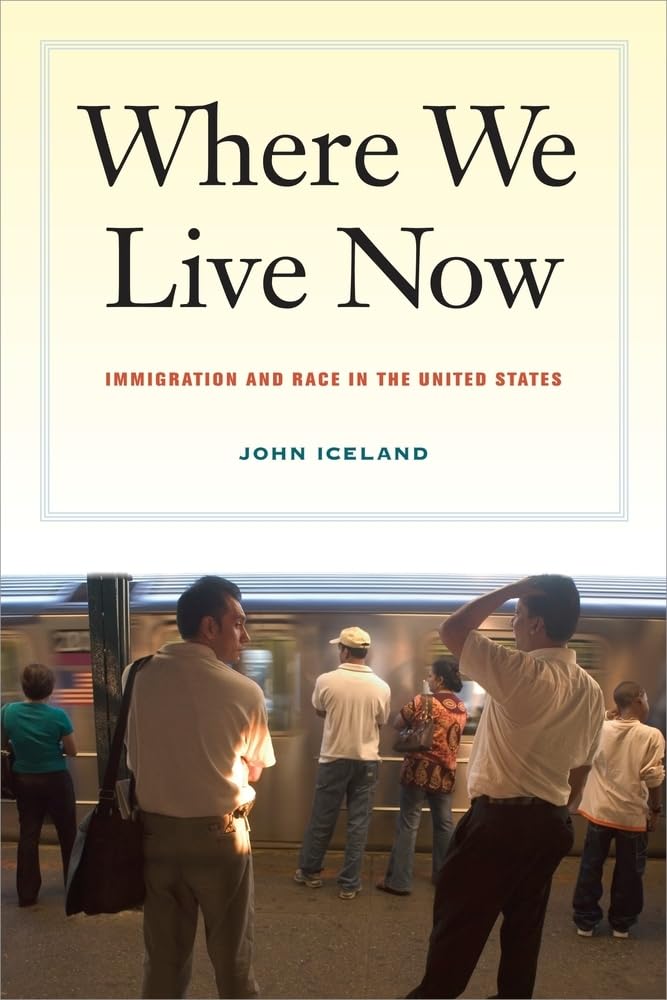
Where We Live Now: Immigration and Race in the United States

Description:

Where We Live Now explores the ways in which immigration is reshaping American neighborhoods. In his examination of residential segregation patterns, John Iceland addresses these questions: What evidence suggests that immigrants are assimilating residentially? Does the assimilation process change for immigrants of different racial and ethnic backgrounds? How has immigration affected the residential patterns of native-born blacks and whites? Drawing on census data and information from other ethnographic and quantitative studies, Iceland affirms that immigrants are becoming residentially assimilated in American metropolitan areas. While the future remains uncertain, the evidence provided in the book suggests that America's metropolitan areas are not splintering irrevocably into hostile, homogeneous, and ethnically based neighborhoods. Instead, Iceland's findings suggest a blurring of the American color line in the coming years and indicate that as we become more diverse, we may in some important respects become less segregated.


Review

"A well-documented study. . . . Recommended."-- "Choice" (7/8/2010 12:00:00 AM)

"Supremely well researched, drawing on an impressive selection of studies."-- "Sociology" (7/24/2012 12:00:00 AM)

"The book is lucid and well structured."--Bozena Sojka "Political Studies Review" (9/1/2012 12:00:00 AM)

From the Inside Flap

"In Where We Live Now, John Iceland documents the levels and changes in residential segregation of African Americans, Hispanics, and Asian Americans from Census 2000. Although the concentration of new immigrants in neighborhoods with more co-ethnics temporarily increases segregation, there is a clear trend toward lowered residential segregation of native born Hispanics and Asians, especially for those with higher socioeconomic status. There has been a modest decrease in black-white segregation, especially in multi-ethnic cities, but African Americans, including black immigrants, continue to experience much higher levels of housing discrimination than any other group. These important findings are clearly explained in a well written story of the continuing American struggle to live the promise of E Pluribus Unum."--Charles Hirschman, University of Washington

"
Where We Live Now puts on dazzling display all the virtues of rigorous social science to go beyond mere headlines about contemporary American neighborhoods. Iceland's book reveals much more complex developments than can be summarized in a simple storyline and dissects them with admirable precision to identify their dynamics and implications. The reader comes away with a more sophisticated understanding of the ways in which residential patterns are moving in the direction of the American ideal of integration and the ways in which they come grossly short of it."--Richard Alba, co-author of Remaking the American Mainstream

"A unique work that takes on immigration, race and ethnicity in a novel way. It presents cutting-edge research and scholarship in a manner that policy makers and other nonspecialist social scientists can easily see how the trends he examines are reshaping American life."--Andrew A. Beveridge, Queens College and the Graduate Center of City University of New York

"This is the new major book about racial residential segregation; one that will influence research in this field for several decades. Using new measures, John Iceland convincingly shows that the Asian and Hispanic immigrants who are arriving in large numbers gradually adopt the residential patterns of whites. The presence of many immigrants, he demonstrates, is also linked to declining black-white segregation. His analysis shows that the era of 'white flight' has ended since many racially mixed neighborhoods now are stable over time. This careful analysis cogently explains how race, economic status, nativity and length of residence in the United States contribute to declining residential segregation. Future investigators who conduct research about racial and ethnic residential patterns will begin by citing Iceland's
Where We Live Now."--Reynolds Farley, Research Scientist, University of Michigan Population Studies Center

"
Where We Live Now is both a very timely and highly significant study of changes in living patterns among racial/ethnic groups in the United States, showing how such groups are being affected by immigration, and what this means for racial/ethnic relations today and tomorrow. This book is a must-read for all persons interested in the country's new diversity."--Frank D. Bean, Director, Center for Research on Immigration

"In
Where We Live Now, John Iceland paints a clear yet nuanced picture of the complex racial and ethnic residential landscape that characterizes contemporary metropolitan America. No other book of which I am aware places residential segregation so squarely or effectively in the context of immigration-fueled diversity. Thanks to its rare blend of theoretical insight, empirical rigor, and readability, Where We Live Now should appeal to audiences ranging from research and policy experts to undergraduate students."--Barrett Lee, Professor of Sociology and Demography, Pennsylvania State University

No Customer Reviews

Where We Live Now: Immigration and Race in the United States

Product ID: K0520257634
Condition: New

5

AED18745

Price includes VAT & Import Duties
Type: Paperback
Availability: In Stock

Quantity:

|

Order today to get by 7-14 business days

Delivery fee of AED 20. Free for orders above AED 200.

Returns & Warranty policies

Imported From: United Kingdom

At BOLO, we work hard to ensure the products you receive are new, genuine, and sourced from reputable suppliers.

BOLO is not an authorized or official retailer for most brands, nor are we affiliated with manufacturers unless specifically stated on a product page. Instead, we source verified sellers, authorized distributors or directly from the manufacturer.

Each product undergoes thorough inspection and verification at our consolidation and fulfilment centers to ensure it meets our strict authenticity and quality standards before being shipped and delivered to you.

If you ever have concerns regarding the authenticity of a product purchased from us, please contact Bolo Support. We will review your inquiry promptly and, if necessary, provide documentation verifying authenticity or offer a suitable resolution.

Your trust is our top priority, and we are committed to maintaining transparency and integrity in every transaction.

All product information, images, descriptions, and reviews originate from the manufacturer or from trusted sellers overseas. BOLO is not affiliated with, endorsed by, or an authorized retailer for most brands listed on our website unless stated otherwise.

While we strive to display accurate information, variations in packaging, labeling, instructions, or formulation may occasionally occur due to regional differences or supplier updates. For detailed or manufacturer-specific information, please contact the brand directly or reach out to BOLO Support for assistance.

Unless otherwise stated, all prices displayed on the product page include applicable taxes and import duties.

BOLO operates in accordance with the laws and regulations of United Arab Emirates. Any items found to be restricted or prohibited for sale within the UAE will be cancelled prior to shipment. We take proactive measures to ensure that only products permitted for sale in United Arab Emirates are listed on our website.

All items are shipped by air, and any products classified as “Dangerous Goods (DG)” under IATA regulations will be removed from the order and cancelled.

All orders are processed manually, and we make every effort to process them promptly once confirmed. Products cancelled due to the above reasons will be permanently removed from listings across the website.

More from this brand

Similar items from “Population & Demography”

Where We Live Now: Immigration and Race in the United States

Product ID: K0520257634
Condition: New

5

Where We Live Now: Immigration and Race in the United States-0
Type: Paperback

AED18745

Price includes VAT & Import Duties
Availability: In Stock

Quantity:

|

Order today to get by 7-14 business days

Delivery fee of AED 20. Free for orders above AED 200.

Returns & Warranty policies

Imported From: United Kingdom

At BOLO, we work hard to ensure the products you receive are new, genuine, and sourced from reputable suppliers.

BOLO is not an authorized or official retailer for most brands, nor are we affiliated with manufacturers unless specifically stated on a product page. Instead, we source verified sellers, authorized distributors or directly from the manufacturer.

Each product undergoes thorough inspection and verification at our consolidation and fulfilment centers to ensure it meets our strict authenticity and quality standards before being shipped and delivered to you.

If you ever have concerns regarding the authenticity of a product purchased from us, please contact Bolo Support. We will review your inquiry promptly and, if necessary, provide documentation verifying authenticity or offer a suitable resolution.

Your trust is our top priority, and we are committed to maintaining transparency and integrity in every transaction.

All product information, images, descriptions, and reviews originate from the manufacturer or from trusted sellers overseas. BOLO is not affiliated with, endorsed by, or an authorized retailer for most brands listed on our website unless stated otherwise.

While we strive to display accurate information, variations in packaging, labeling, instructions, or formulation may occasionally occur due to regional differences or supplier updates. For detailed or manufacturer-specific information, please contact the brand directly or reach out to BOLO Support for assistance.

Unless otherwise stated, all prices displayed on the product page include applicable taxes and import duties.

BOLO operates in accordance with the laws and regulations of United Arab Emirates. Any items found to be restricted or prohibited for sale within the UAE will be cancelled prior to shipment. We take proactive measures to ensure that only products permitted for sale in United Arab Emirates are listed on our website.

All items are shipped by air, and any products classified as “Dangerous Goods (DG)” under IATA regulations will be removed from the order and cancelled.

All orders are processed manually, and we make every effort to process them promptly once confirmed. Products cancelled due to the above reasons will be permanently removed from listings across the website.

Description:

Where We Live Now explores the ways in which immigration is reshaping American neighborhoods. In his examination of residential segregation patterns, John Iceland addresses these questions: What evidence suggests that immigrants are assimilating residentially? Does the assimilation process change for immigrants of different racial and ethnic backgrounds? How has immigration affected the residential patterns of native-born blacks and whites? Drawing on census data and information from other ethnographic and quantitative studies, Iceland affirms that immigrants are becoming residentially assimilated in American metropolitan areas. While the future remains uncertain, the evidence provided in the book suggests that America's metropolitan areas are not splintering irrevocably into hostile, homogeneous, and ethnically based neighborhoods. Instead, Iceland's findings suggest a blurring of the American color line in the coming years and indicate that as we become more diverse, we may in some important respects become less segregated.


Review

"A well-documented study. . . . Recommended."-- "Choice" (7/8/2010 12:00:00 AM)

"Supremely well researched, drawing on an impressive selection of studies."-- "Sociology" (7/24/2012 12:00:00 AM)

"The book is lucid and well structured."--Bozena Sojka "Political Studies Review" (9/1/2012 12:00:00 AM)

From the Inside Flap

"In Where We Live Now, John Iceland documents the levels and changes in residential segregation of African Americans, Hispanics, and Asian Americans from Census 2000. Although the concentration of new immigrants in neighborhoods with more co-ethnics temporarily increases segregation, there is a clear trend toward lowered residential segregation of native born Hispanics and Asians, especially for those with higher socioeconomic status. There has been a modest decrease in black-white segregation, especially in multi-ethnic cities, but African Americans, including black immigrants, continue to experience much higher levels of housing discrimination than any other group. These important findings are clearly explained in a well written story of the continuing American struggle to live the promise of E Pluribus Unum."--Charles Hirschman, University of Washington

"
Where We Live Now puts on dazzling display all the virtues of rigorous social science to go beyond mere headlines about contemporary American neighborhoods. Iceland's book reveals much more complex developments than can be summarized in a simple storyline and dissects them with admirable precision to identify their dynamics and implications. The reader comes away with a more sophisticated understanding of the ways in which residential patterns are moving in the direction of the American ideal of integration and the ways in which they come grossly short of it."--Richard Alba, co-author of Remaking the American Mainstream

"A unique work that takes on immigration, race and ethnicity in a novel way. It presents cutting-edge research and scholarship in a manner that policy makers and other nonspecialist social scientists can easily see how the trends he examines are reshaping American life."--Andrew A. Beveridge, Queens College and the Graduate Center of City University of New York

"This is the new major book about racial residential segregation; one that will influence research in this field for several decades. Using new measures, John Iceland convincingly shows that the Asian and Hispanic immigrants who are arriving in large numbers gradually adopt the residential patterns of whites. The presence of many immigrants, he demonstrates, is also linked to declining black-white segregation. His analysis shows that the era of 'white flight' has ended since many racially mixed neighborhoods now are stable over time. This careful analysis cogently explains how race, economic status, nativity and length of residence in the United States contribute to declining residential segregation. Future investigators who conduct research about racial and ethnic residential patterns will begin by citing Iceland's
Where We Live Now."--Reynolds Farley, Research Scientist, University of Michigan Population Studies Center

"
Where We Live Now is both a very timely and highly significant study of changes in living patterns among racial/ethnic groups in the United States, showing how such groups are being affected by immigration, and what this means for racial/ethnic relations today and tomorrow. This book is a must-read for all persons interested in the country's new diversity."--Frank D. Bean, Director, Center for Research on Immigration

"In
Where We Live Now, John Iceland paints a clear yet nuanced picture of the complex racial and ethnic residential landscape that characterizes contemporary metropolitan America. No other book of which I am aware places residential segregation so squarely or effectively in the context of immigration-fueled diversity. Thanks to its rare blend of theoretical insight, empirical rigor, and readability, Where We Live Now should appeal to audiences ranging from research and policy experts to undergraduate students."--Barrett Lee, Professor of Sociology and Demography, Pennsylvania State University

No Customer Reviews

More from this brand

Similar items from “Population & Demography”