Deliver toUnited Arab Emirates
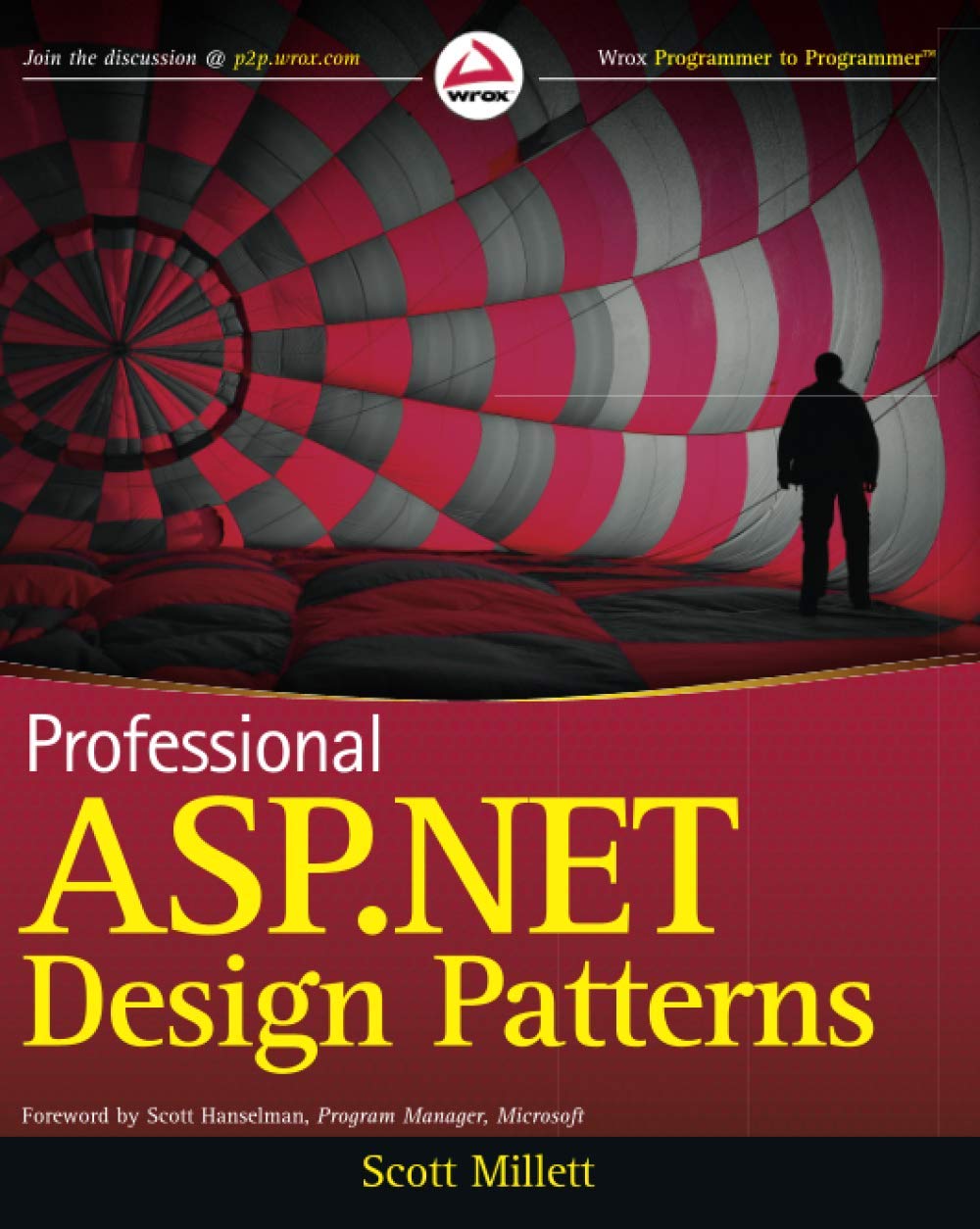
Professional ASP.NET Design Patterns

Description:

Professional ASP.NET Design Patterns is all about showing you how to use the power of design patterns and core design principles in real ASP.NET applications. The goal of this book is to educate developers on the fundamentals of object oriented programming, design patterns, principles, and methodologies that can help you become a better programmer. Design patterns and principles enable loosely coupled and highly cohesive code, which will improve your code’s readability, flexibility, and maintenance. Each chapter addresses a layer in an enterprise ASP.NET application and shows how proven patterns, principles, and best practices can be leveraged to solve problems and improve the design of your code. In addition, a professional-level, end-to-end case study is used to show how to use best practice design patterns and principles in a real website.

Professional ASP.NET Design Patterns is for ASP.NET developers who are comfortable with the .NET framework but are looking to improve how they code and understand why design patterns, design principles, and best practices will make their code more maintainable and adaptable. Readers who have had experience with design patterns before may wish to skip Part 1 of the book, which acts as an introduction to the Gang of Four design patterns and common design principles, including the S.O.L.I.D. principles and Martin Fowler’s enterprise patterns. All code samples are written in C# but the concepts can be applied very easily to VB.NET.

This book covers well-known patterns and best practices for developing enterprise-level ASP.NET applications. The patterns used can be applied to any version of ASP.NET from 1.0 to 4.0. The patterns themselves are language agnostic and can be applied to any object oriented programming language.

Professional ASP.NET Design Patterns can be used both as a step-by-step guide and as a continuous source of reference to dip into at your leisure. The book is broken into three distinct sections. Part 1 is an introduction to patterns and design principles. Part 2 examines how patterns and principles can be used in the various layers of an ASP.NET application. Part 3 represents an end-to-end case study showcasing many of the patterns covered in the book. You may find it useful to work through the chapters before reading the case study, or you may find it easier to see the patterns in action by reading the case study section first and referring back to Part 2 for a more detailed view on the patterns and principles used.

Within those parts the coverage includes:

  • The origins of the Gang of Four design patterns, their relevance in today’s world, and their decoupling from specific programming languages.
  • An overview of some common design principles and the S.O.L.I.D. design principles follows, and the chapter ends with a description of Fowler’s enterprise patterns.
  • Layering Your Application and Separating Your Concerns
  • A description of the Transaction Script pattern followed by the Active Record, with an exercise to demonstrate the pattern using the Castle Windsor project.
  • The Domain Model pattern demonstrated in an exercise with NHibernate and a review of the domain-driven design (DDD) methodology
  • Patterns and principles that can be used construct your objects and how to make sure that you are building your application for scalability and maintainability: Factory, Decorator, Template, State, Strategy, Composite, Specification and Layer Supertype.
  • Design principles that can improve your code’s maintainability and flexibility; these include Dependency Injection, Interface Segregation, and Liskov Substitution Principle
  • Service Oriented Architecture, the Facade design pattern, messaging patterns such as Document Message, Request-Response, Reservation, and the Idempotent pattern
  • The Data Access Layer: Two data access strategies are demonstrated to help organize your persistence layer: Repository and Data Access Objects. Enterprise patterns and principles that will help you fulfill your data access requirement needs elegantly, including Lazy Loading, Identity Map, Unit of Work, and the Query Object.
  • An introduction to Object Relational Mappers and the problems they solve.
  • An enterprise Domain Driven exercise with POCO business entities utilizing both NHibernate and the MS Entity Framework.
  • The Presentation Layer: how you can tie your loosely coupled code together Structure Map and an Inversion of Control container.
  • Presentation patterns, including letting the view be in charge with the Model-View-Presenter pattern and ASP.NET web forms, the Front Controller presentation pattern utilizing the Command and Chain of Responsibility patterns, as well as the Model-View-Controller Pattern implemented with the ASP.NET MVC framework and Windsor’s Castle Monorail framework. The final presentation pattern covered is PageController as used in ASP.NET web forms.
  • A pattern that can be used with organizational patterns, namely the ViewModel pattern and how to automate domain entities to ViewModel mapping with AutoMapper
  • The User Experience Layer: AJAX, JavaScript libraries, including jQuery. AJAX patterns: Ajax Periodic Refresh and Timeout patterns, maintaining history with the Unique URL pattern, client side data binding with JTemplate, and the Ajax Predictive Fetch pattern
  • An end-to-end e-commerce store case study with ASP.NET MVC, NHibernate, jQuery, Json, AutoMapper, ASP.NET membership provider and a second 3rd party authentication method, and PayPal as a payment merchant


From the Inside Flap

Implement proven solutions to recurrent design problems

This unique book takes good ASP.NET application construction one step further by emphasizing loosely coupled and highly cohesive ASP.NET web application architectural design. Each chapter addresses a layer in an enterprise ASP.NET application and shows how proven patterns, principles, and best practices can be leveraged to solve problems and improve the design of your code. In addition, a professional-level, end-to-end case study is used to show how to actuate best practice design patterns and principles in a real web site. The framework built to support the case study can be used as the basis from which you can build real web sites, extend the code, and implement specific ASP.NET code.

Professional ASP.NET Design Patterns:

  • Demonstrates how to use the Gang of Four design patterns to improve your ASP.NET code

  • Shows how Fowler's enterprise patterns fit into an enterprise-level ASP.NET site

  • Provides details on how to layer an ASP.NET application and separate your concerns and responsibilities

  • Details AJAX patterns using JQuery and Json, and messaging patterns with WCF

  • Shares best practice tools for ASP.NET such as AutoMapper, NHibernate, StructureMap, Entity Framework, and Castle MonoRail

  • Uncovers tips for separating a site's UX and presentation layer from the pluggable data access layer and business logic layer

wrox.com

Programmer Forums
Join our Programmer to Programmer forums to ask and answer programming questions about this book, join discussions on the hottest topics in the industry, and connect with fellow programmers from around the world.

Code Downloads
Take advantage of free code samples from this book, as well as code samples from hundreds of other books, all ready to use.

Read More
Find articles, ebooks, sample chapters, and tables of contents for hundreds of books, and more reference resources on programming topics that matter to you.

Wrox Professional guides are planned and written by working programmers to meet the real-world needs of programmers, developers, and IT professionals. Focused and relevant, they address the issues technology professionals face every day. They provide examples, practical solutions, and expert education in new technologies, all designed to help programmers do a better job.

From the Back Cover

Implement proven solutions to recurrent design problems

This unique book takes good ASP.NET application construction one step further by emphasizing loosely coupled and highly cohesive ASP.NET web application architectural design. Each chapter addresses a layer in an enterprise ASP.NET application and shows how proven patterns, principles, and best practices can be leveraged to solve problems and improve the design of your code. In addition, a professional-level, end-to-end case study is used to show how to actuate best practice design patterns and principles in a real web site. The framework built to support the case study can be used as the basis from which you can build real web sites, extend the code, and implement specific ASP.NET code.

Professional ASP.NET Design Patterns:

  • Demonstrates how to use the Gang of Four design patterns to improve your ASP.NET code

  • Shows how Fowler's enterprise patterns fit into an enterprise-level ASP.NET site

  • Provides details on how to layer an ASP.NET application and separate your concerns and responsibilities

  • Details AJAX patterns using JQuery and Json, and messaging patterns with WCF

  • Shares best practice tools for ASP.NET such as AutoMapper, NHibernate, StructureMap, Entity Framework, and Castle MonoRail

  • Uncovers tips for separating a site's UX and presentation layer from the pluggable data access layer and business logic layer

wrox.com

Programmer Forums
Join our Programmer to Programmer forums to ask and answer programming questions about this book, join discussions on the hottest topics in the industry, and connect with fellow programmers from around the world.

Code Downloads
Take advantage of free code samples from this book, as well as code samples from hundreds of other books, all ready to use.

Read More
Find articles, ebooks, sample chapters, and tables of contents for hundreds of books, and more reference resources on programming topics that matter to you.

Wrox Professional guides are planned and written by working programmers to meet the real-world needs of programmers, developers, and IT professionals. Focused and relevant, they address the issues technology professionals face every day. They provide examples, practical solutions, and expert education in new technologies, all designed to help programmers do a better job.

Reviews:

5.0 out of 5 stars exactly what i was hoping for

G.H. · 22 January 2011

(function() { P.when('cr-A', 'ready').execute(function(A) { if(typeof A.toggleExpanderAriaLabel === 'function') { A.toggleExpanderAriaLabel('review_text_read_more', 'Read more of this review', 'Read less of this review'); } }); })(); .review-text-read-more-expander:focus-visible { outline: 2px solid #2162a1; outline-offset: 2px; border-radius: 5px; } I've had this book for quite some time now and it definitely deserves a long overdue review. I was looking for something that gave an up to date insight on how real applications are built using some of the most popular and proven patterns. There are too many books around that go head first into one specific way of doing things, and it quickly becomes apparent that you cant apply a lot of the techniques to real world situations. This book is not one of those.Scott provides an introduction to some popular and common design patterns (at which point you will probably find yourself saying 'oh yeah, i used that in '), how they are categorized and most importantly how to read, understand and apply them. He then moves swiftly on to show how these can be used to piece together a rich layered framework on which to build an application. There are various examples of how the various layers interact with each other, all in a very well explained manner, making it easy to understand for developers at any level.I made the mistake of taking this book into the office, and it has been the source of many conversations since.Highly recommended.

5.0 out of 5 stars Excellent and clear

K.C. · 30 May 2012

As many others have said this book contains good clear introductions to, and examples of the design patterns contained. As anyone who has studied the patterns in theory knows, translating them to the real world is not always as straightforward as one would like and this book does an excellent job of this. It provides lots of good source code, nearly always more than one option e.g. EntityFramework or NHibernate, and good general architecture design.

4.0 out of 5 stars Not for beginners, but an excellent book (although with some flaws)

Y. · 10 January 2011

I bought this book in the hope that it would teach me design patterns. I realised after reading the first few chapters that it was mostly over my head. If you don't have a very solid background in OO design, and a reasonable idea of design patterns, then don't read this book - yet.This is not a criticism of the book, it's a warning to those (like me) who might expect it to do something that, in my opinion at least, it does not do.I went away and read Head First Design Patterns, which was absolutely superb, and only then came back to read this book. With that background, this book made a lot more sense. It was still heavy reading, but with concentration, I learned a lot from it.So, why four stars and not five? Well, the first reason is that the book has a lot of mistakes in it. Many of these are simple typos that are not of major consequence, but are annoying. Many are in the UML diagrams, where it looks like they copied and pasted, and forgot to change some of the labels. A few are in the code, although if you read the code carefully (which is the only way you're going to get anything out of this book), you'll probably spot these.However, a more serious flaw in this book is the lack of clear explanations as to what is going on. One of the selling points in the official blurb is that this book contains lots and lots of code, instead of boring you with theory. Well yes, it does contain an awful amount of code, but a little more theory would have gone a long way to explaining why he did some things the way he did. A lot of the time, he showed a 2-3 page code listing, then by way of explanation, just pulled out selected parts, without really saying why they were there.I think the main point here is that a high-level overview of his approach would have made the code a lot more understandable.I don't claim to be any kind of expert in these matters (which is why I bought the book!), but I would still question quite a lot of his approaches. For example, when building an Entity Framework model, he coded all the classes by hand, then generated the model using the Visual Studio wizard, and deleted the classes the wizard created! The whole point of the wizard is that is does all the code generation for you, you don't need to write all your entity classes by hand. I really couldn't see any reason for taking such a long-winded and error-prone approach to something that was designed to be easy.There are other examples like this. It could be that he had good reason for them, but the lack of overview obscured any reasons.Without wishing to sound critical (which I'm not, I really did think it was a good book), the large case study in the last few chapters was spoiled by the fact that he used MVC, and so tied himself into something that doesn't allow you to use the methods in other frameworks. He could have picked a less specific UI approach, and it would have been a more useful case study.Despite these criticisms, I still think it's an excellent book, and one that I shall probably read again.

5.0 out of 5 stars Must have to take leap from junior developer

G.H. · 16 March 2015

Exactly what I was looking for. Cannot recommend this book enough

5.0 out of 5 stars Five Stars

A. · 30 August 2014

Good trxt

3.0 out of 5 stars The writing is very small and the colour of the text is very pale so it is a hard book to read easily because of this

b.r. · 30 August 2015

I'm not professionally qualified enough to give an accurate 1-5 star guidebut from what I've rad it sure as helped me a lot.But what I can comment on is the presentation. The writing is very small and the colour of the text is very pale so it is a hard book to read easily because of this. Layout, logical presentation and style of writing are great. Just beware of the issues I've mentioned.

4.0 out of 5 stars Great and valuable book in my collection. Kindle edition has too many typos.

E. · 29 November 2012

Content of this book is outstanding and much needed for my job. For the content i give the book 5/5, this is just for the kindle edition errors.I own both the actual real life book and the kindle edition. Unfortunately, the Kindle edition has alot of errors in the code examples. I imagine this is due to a less than perfect process of creating the kindle file from the original material but it is very annoying none the less.It's not a major problem as you realize a piece of code does not look right. But an absolute c# novice may be unable to see these and wonder why the code examples dont work.Again, the book is fantastic but the code errors in the kindle edition are a little annoying.

3.0 out of 5 stars Good content, not a great publication, even worse indexing!

A. · 27 May 2011

I have owned this product for two days and can see that the content is well structured with numerous code examples to see how the design patterns may be applied in real-life.However, I have two problems with this product:1) The book is not indexed correctly. According to the index, a UML representation of the Strategy Pattern can be found on p.114. Um, try p.116!! Apprently the MVC pattern can be found on p.344-345... Perhaps not. It's actually from p.348 onwards. I know this is a petty thing to complain about, but I expect a book's index to reference content correctly as a bare minimum and it gets annoying when you want to find something quickly!2) There are typos and grammatical mistakes which can become annoying at times.That said, these are the only two problems I have with the book and I'm sure you'll be happy with your purchase if you can see past them.

Impression réduite...

E. · 5 April 2022

(function() { P.when('cr-A', 'ready').execute(function(A) { if(typeof A.toggleExpanderAriaLabel === 'function') { A.toggleExpanderAriaLabel('review_text_read_more', 'Read more of this review', 'Read less of this review'); } }); })(); .review-text-read-more-expander:focus-visible { outline: 2px solid #2162a1; outline-offset: 2px; border-radius: 5px; } Très bon bouquin sur les Design Patterns pour ASP.NET ! (+5)Suis-je le seul à avoir un problème d'impression sur chaque page du bouquin: échelle réduite à 75% de la largeur des pages ??? (-1)WROX m'avait habitué à mieux en style d'impression...

This book is very imp for standard desgin and with ...

a. · 8 January 2015

This book is very imp for standard desgin and with a mvc project .It is not for beginners but one can if he loves asp.net,OOPS , c#.

buon libro per i pattern

L. · 30 April 2014

il libro spiega in modo molto chiaro e semplice, i vari pattern, e con esempi calati su un esempio reale ne mostra l'applicazione. se si ha già un'infarinatura è meglio si fa meno fatica a comprendere.

The best software book I have read yet

G.T. · 25 December 2012

I am a young professional software engineer, and I have been reading a lot of various software books lately. Coming out of college with a Computer Science degree, I really had no idea how poorly I really understood OO concepts and most of the code I was producing was very procedural in nature. Once I discovered patterns via the Gang of Four book "Design Patterns", I decided it was time to learn some real techniques. Since I was working in an ASP.Net environment, I read some reviews of this book and gave it a shot.I can easily say this is the best book I have read for software engineering yet because I have been able to incorporate so much of what the book offers. This book really has a lot of great patterns that are exactly what I needed to make my development environment more robust. Correctly learning and implementing the multitude of patterns (at each level of the architecture) and learning about various architectural designs has already paid dividends for my systems' stability, testability, and performance.One of the things I like best about this book is that all of the examples are explained very clearly, in great detail. All of the code is downloadable from the WROX site, so I was able to take a hands-on approach to learning the topic. There were a few third-party tools to download (an IoC container, NHibernate, and a mapping tool come to mind), but overall there wasn't much needed other than Visual Studio to start working (of course, all of the necessary dlls were included in the projects from the WROX site, so just using those you wouldn't need to download the third-party tools). I've found that one of the biggest challenges with other books is just getting the environment configured and that wasn't an issue here.It was also good that the author used a multitude of different technologies in the examples. For example, in discussing the implementation of the Repository pattern, ADO.Net, Entities Framework, and NHibernate are all shown as options throughout the book. In discussing the presentation layer, MVP, MVC, and a couple other patterns are discussed, with MVC showing off .Net 4.0's MVC.I would highly recommend this to any professional looking to learn enterprise patterns. Even if you've read the GoF book "Design Patterns", this is excellent because it covers many new patterns that have arisen in the nearly 20 years since that book was first published.

Fantastic book, and knowledgeable author

K.S. · 17 December 2010

Let me start by saying that while I was reading this book I had many moments where I thought, "he's explained the concept well, but how would you ACTUALLY write the code for that" and then BAM! there's the code example! Really enjoyed this book, it definitely pulls in a lot of concepts, but Scott does a great job explaining how to use various "Gang of Four" design patterns in a REAL application. The early chapters provide a concise summary of the major design patterns, along with some tips and advice on when and how to use them, which I found very helpful. The later chapters Scott walks us through the development of an ASP.NET MVC e-Commerce application, explaining and showing with code how to apply the patterns learned in the earlier parts of the book.I've been developing ASP.NET Web Forms sites for over 5 years, and more recently started doing ASP.NET MVC and I found the book to have just the right tone in terms of introductory concepts and more advanced concepts, without being overwhelming at any point. Personally, I learned a LOT from reading this book, and I have a feeling I'll be re-reading it quite a few more times to fully grasp some of the concepts, and I'll be keeping it handy as a reference as well.I have had conversations with Scott over twitter and I have posted several questions on the Wrox forum, which Scott seems to do a great job monitoring and responding to, which is MUCH APPRECIATED!Bottom line, if you've been doing .NET development for a few years, this book is a MUST HAVE in my opinion. It might be a tad too advanced if you're not familiar with basic OOP principles, but definitely put it on your wishlist :)

Professional ASP.NET Design Patterns

Product ID: K0470292784
Condition: New

4.6

AED45979

Price includes VAT & Import Duties
Type: Paperback
Availability: In Stock

Quantity:

|

Order today to get by 7-14 business days

This item qualifies for free delivery

Returns & Warranty policies

Imported From: United Kingdom

At BOLO, we work hard to ensure the products you receive are new, genuine, and sourced from reputable suppliers.

BOLO is not an authorized or official retailer for most brands, nor are we affiliated with manufacturers unless specifically stated on a product page. Instead, we source verified sellers, authorized distributors or directly from the manufacturer.

Each product undergoes thorough inspection and verification at our consolidation and fulfilment centers to ensure it meets our strict authenticity and quality standards before being shipped and delivered to you.

If you ever have concerns regarding the authenticity of a product purchased from us, please contact Bolo Support. We will review your inquiry promptly and, if necessary, provide documentation verifying authenticity or offer a suitable resolution.

Your trust is our top priority, and we are committed to maintaining transparency and integrity in every transaction.

All product information, images, descriptions, and reviews originate from the manufacturer or from trusted sellers overseas. BOLO is not affiliated with, endorsed by, or an authorized retailer for most brands listed on our website unless stated otherwise.

While we strive to display accurate information, variations in packaging, labeling, instructions, or formulation may occasionally occur due to regional differences or supplier updates. For detailed or manufacturer-specific information, please contact the brand directly or reach out to BOLO Support for assistance.

Unless otherwise stated, all prices displayed on the product page include applicable taxes and import duties.

BOLO operates in accordance with the laws and regulations of United Arab Emirates. Any items found to be restricted or prohibited for sale within the UAE will be cancelled prior to shipment. We take proactive measures to ensure that only products permitted for sale in United Arab Emirates are listed on our website.

All items are shipped by air, and any products classified as “Dangerous Goods (DG)” under IATA regulations will be removed from the order and cancelled.

All orders are processed manually, and we make every effort to process them promptly once confirmed. Products cancelled due to the above reasons will be permanently removed from listings across the website.

More from this brand

Similar items from “Programming”

Professional ASP.NET Design Patterns

Product ID: K0470292784
Condition: New

4.6

Professional ASP.NET Design Patterns-0
Type: Paperback

AED45979

Price includes VAT & Import Duties
Availability: In Stock

Quantity:

|

Order today to get by 7-14 business days

This item qualifies for free delivery

Returns & Warranty policies

Imported From: United Kingdom

At BOLO, we work hard to ensure the products you receive are new, genuine, and sourced from reputable suppliers.

BOLO is not an authorized or official retailer for most brands, nor are we affiliated with manufacturers unless specifically stated on a product page. Instead, we source verified sellers, authorized distributors or directly from the manufacturer.

Each product undergoes thorough inspection and verification at our consolidation and fulfilment centers to ensure it meets our strict authenticity and quality standards before being shipped and delivered to you.

If you ever have concerns regarding the authenticity of a product purchased from us, please contact Bolo Support. We will review your inquiry promptly and, if necessary, provide documentation verifying authenticity or offer a suitable resolution.

Your trust is our top priority, and we are committed to maintaining transparency and integrity in every transaction.

All product information, images, descriptions, and reviews originate from the manufacturer or from trusted sellers overseas. BOLO is not affiliated with, endorsed by, or an authorized retailer for most brands listed on our website unless stated otherwise.

While we strive to display accurate information, variations in packaging, labeling, instructions, or formulation may occasionally occur due to regional differences or supplier updates. For detailed or manufacturer-specific information, please contact the brand directly or reach out to BOLO Support for assistance.

Unless otherwise stated, all prices displayed on the product page include applicable taxes and import duties.

BOLO operates in accordance with the laws and regulations of United Arab Emirates. Any items found to be restricted or prohibited for sale within the UAE will be cancelled prior to shipment. We take proactive measures to ensure that only products permitted for sale in United Arab Emirates are listed on our website.

All items are shipped by air, and any products classified as “Dangerous Goods (DG)” under IATA regulations will be removed from the order and cancelled.

All orders are processed manually, and we make every effort to process them promptly once confirmed. Products cancelled due to the above reasons will be permanently removed from listings across the website.

Description:

Professional ASP.NET Design Patterns is all about showing you how to use the power of design patterns and core design principles in real ASP.NET applications. The goal of this book is to educate developers on the fundamentals of object oriented programming, design patterns, principles, and methodologies that can help you become a better programmer. Design patterns and principles enable loosely coupled and highly cohesive code, which will improve your code’s readability, flexibility, and maintenance. Each chapter addresses a layer in an enterprise ASP.NET application and shows how proven patterns, principles, and best practices can be leveraged to solve problems and improve the design of your code. In addition, a professional-level, end-to-end case study is used to show how to use best practice design patterns and principles in a real website.

Professional ASP.NET Design Patterns is for ASP.NET developers who are comfortable with the .NET framework but are looking to improve how they code and understand why design patterns, design principles, and best practices will make their code more maintainable and adaptable. Readers who have had experience with design patterns before may wish to skip Part 1 of the book, which acts as an introduction to the Gang of Four design patterns and common design principles, including the S.O.L.I.D. principles and Martin Fowler’s enterprise patterns. All code samples are written in C# but the concepts can be applied very easily to VB.NET.

This book covers well-known patterns and best practices for developing enterprise-level ASP.NET applications. The patterns used can be applied to any version of ASP.NET from 1.0 to 4.0. The patterns themselves are language agnostic and can be applied to any object oriented programming language.

Professional ASP.NET Design Patterns can be used both as a step-by-step guide and as a continuous source of reference to dip into at your leisure. The book is broken into three distinct sections. Part 1 is an introduction to patterns and design principles. Part 2 examines how patterns and principles can be used in the various layers of an ASP.NET application. Part 3 represents an end-to-end case study showcasing many of the patterns covered in the book. You may find it useful to work through the chapters before reading the case study, or you may find it easier to see the patterns in action by reading the case study section first and referring back to Part 2 for a more detailed view on the patterns and principles used.

Within those parts the coverage includes:

  • The origins of the Gang of Four design patterns, their relevance in today’s world, and their decoupling from specific programming languages.
  • An overview of some common design principles and the S.O.L.I.D. design principles follows, and the chapter ends with a description of Fowler’s enterprise patterns.
  • Layering Your Application and Separating Your Concerns
  • A description of the Transaction Script pattern followed by the Active Record, with an exercise to demonstrate the pattern using the Castle Windsor project.
  • The Domain Model pattern demonstrated in an exercise with NHibernate and a review of the domain-driven design (DDD) methodology
  • Patterns and principles that can be used construct your objects and how to make sure that you are building your application for scalability and maintainability: Factory, Decorator, Template, State, Strategy, Composite, Specification and Layer Supertype.
  • Design principles that can improve your code’s maintainability and flexibility; these include Dependency Injection, Interface Segregation, and Liskov Substitution Principle
  • Service Oriented Architecture, the Facade design pattern, messaging patterns such as Document Message, Request-Response, Reservation, and the Idempotent pattern
  • The Data Access Layer: Two data access strategies are demonstrated to help organize your persistence layer: Repository and Data Access Objects. Enterprise patterns and principles that will help you fulfill your data access requirement needs elegantly, including Lazy Loading, Identity Map, Unit of Work, and the Query Object.
  • An introduction to Object Relational Mappers and the problems they solve.
  • An enterprise Domain Driven exercise with POCO business entities utilizing both NHibernate and the MS Entity Framework.
  • The Presentation Layer: how you can tie your loosely coupled code together Structure Map and an Inversion of Control container.
  • Presentation patterns, including letting the view be in charge with the Model-View-Presenter pattern and ASP.NET web forms, the Front Controller presentation pattern utilizing the Command and Chain of Responsibility patterns, as well as the Model-View-Controller Pattern implemented with the ASP.NET MVC framework and Windsor’s Castle Monorail framework. The final presentation pattern covered is PageController as used in ASP.NET web forms.
  • A pattern that can be used with organizational patterns, namely the ViewModel pattern and how to automate domain entities to ViewModel mapping with AutoMapper
  • The User Experience Layer: AJAX, JavaScript libraries, including jQuery. AJAX patterns: Ajax Periodic Refresh and Timeout patterns, maintaining history with the Unique URL pattern, client side data binding with JTemplate, and the Ajax Predictive Fetch pattern
  • An end-to-end e-commerce store case study with ASP.NET MVC, NHibernate, jQuery, Json, AutoMapper, ASP.NET membership provider and a second 3rd party authentication method, and PayPal as a payment merchant


From the Inside Flap

Implement proven solutions to recurrent design problems

This unique book takes good ASP.NET application construction one step further by emphasizing loosely coupled and highly cohesive ASP.NET web application architectural design. Each chapter addresses a layer in an enterprise ASP.NET application and shows how proven patterns, principles, and best practices can be leveraged to solve problems and improve the design of your code. In addition, a professional-level, end-to-end case study is used to show how to actuate best practice design patterns and principles in a real web site. The framework built to support the case study can be used as the basis from which you can build real web sites, extend the code, and implement specific ASP.NET code.

Professional ASP.NET Design Patterns:

  • Demonstrates how to use the Gang of Four design patterns to improve your ASP.NET code

  • Shows how Fowler's enterprise patterns fit into an enterprise-level ASP.NET site

  • Provides details on how to layer an ASP.NET application and separate your concerns and responsibilities

  • Details AJAX patterns using JQuery and Json, and messaging patterns with WCF

  • Shares best practice tools for ASP.NET such as AutoMapper, NHibernate, StructureMap, Entity Framework, and Castle MonoRail

  • Uncovers tips for separating a site's UX and presentation layer from the pluggable data access layer and business logic layer

wrox.com

Programmer Forums
Join our Programmer to Programmer forums to ask and answer programming questions about this book, join discussions on the hottest topics in the industry, and connect with fellow programmers from around the world.

Code Downloads
Take advantage of free code samples from this book, as well as code samples from hundreds of other books, all ready to use.

Read More
Find articles, ebooks, sample chapters, and tables of contents for hundreds of books, and more reference resources on programming topics that matter to you.

Wrox Professional guides are planned and written by working programmers to meet the real-world needs of programmers, developers, and IT professionals. Focused and relevant, they address the issues technology professionals face every day. They provide examples, practical solutions, and expert education in new technologies, all designed to help programmers do a better job.

From the Back Cover

Implement proven solutions to recurrent design problems

This unique book takes good ASP.NET application construction one step further by emphasizing loosely coupled and highly cohesive ASP.NET web application architectural design. Each chapter addresses a layer in an enterprise ASP.NET application and shows how proven patterns, principles, and best practices can be leveraged to solve problems and improve the design of your code. In addition, a professional-level, end-to-end case study is used to show how to actuate best practice design patterns and principles in a real web site. The framework built to support the case study can be used as the basis from which you can build real web sites, extend the code, and implement specific ASP.NET code.

Professional ASP.NET Design Patterns:

  • Demonstrates how to use the Gang of Four design patterns to improve your ASP.NET code

  • Shows how Fowler's enterprise patterns fit into an enterprise-level ASP.NET site

  • Provides details on how to layer an ASP.NET application and separate your concerns and responsibilities

  • Details AJAX patterns using JQuery and Json, and messaging patterns with WCF

  • Shares best practice tools for ASP.NET such as AutoMapper, NHibernate, StructureMap, Entity Framework, and Castle MonoRail

  • Uncovers tips for separating a site's UX and presentation layer from the pluggable data access layer and business logic layer

wrox.com

Programmer Forums
Join our Programmer to Programmer forums to ask and answer programming questions about this book, join discussions on the hottest topics in the industry, and connect with fellow programmers from around the world.

Code Downloads
Take advantage of free code samples from this book, as well as code samples from hundreds of other books, all ready to use.

Read More
Find articles, ebooks, sample chapters, and tables of contents for hundreds of books, and more reference resources on programming topics that matter to you.

Wrox Professional guides are planned and written by working programmers to meet the real-world needs of programmers, developers, and IT professionals. Focused and relevant, they address the issues technology professionals face every day. They provide examples, practical solutions, and expert education in new technologies, all designed to help programmers do a better job.

Reviews:

5.0 out of 5 stars exactly what i was hoping for

G.H. · 22 January 2011

(function() { P.when('cr-A', 'ready').execute(function(A) { if(typeof A.toggleExpanderAriaLabel === 'function') { A.toggleExpanderAriaLabel('review_text_read_more', 'Read more of this review', 'Read less of this review'); } }); })(); .review-text-read-more-expander:focus-visible { outline: 2px solid #2162a1; outline-offset: 2px; border-radius: 5px; } I've had this book for quite some time now and it definitely deserves a long overdue review. I was looking for something that gave an up to date insight on how real applications are built using some of the most popular and proven patterns. There are too many books around that go head first into one specific way of doing things, and it quickly becomes apparent that you cant apply a lot of the techniques to real world situations. This book is not one of those.Scott provides an introduction to some popular and common design patterns (at which point you will probably find yourself saying 'oh yeah, i used that in '), how they are categorized and most importantly how to read, understand and apply them. He then moves swiftly on to show how these can be used to piece together a rich layered framework on which to build an application. There are various examples of how the various layers interact with each other, all in a very well explained manner, making it easy to understand for developers at any level.I made the mistake of taking this book into the office, and it has been the source of many conversations since.Highly recommended.

5.0 out of 5 stars Excellent and clear

K.C. · 30 May 2012

As many others have said this book contains good clear introductions to, and examples of the design patterns contained. As anyone who has studied the patterns in theory knows, translating them to the real world is not always as straightforward as one would like and this book does an excellent job of this. It provides lots of good source code, nearly always more than one option e.g. EntityFramework or NHibernate, and good general architecture design.

4.0 out of 5 stars Not for beginners, but an excellent book (although with some flaws)

Y. · 10 January 2011

I bought this book in the hope that it would teach me design patterns. I realised after reading the first few chapters that it was mostly over my head. If you don't have a very solid background in OO design, and a reasonable idea of design patterns, then don't read this book - yet.This is not a criticism of the book, it's a warning to those (like me) who might expect it to do something that, in my opinion at least, it does not do.I went away and read Head First Design Patterns, which was absolutely superb, and only then came back to read this book. With that background, this book made a lot more sense. It was still heavy reading, but with concentration, I learned a lot from it.So, why four stars and not five? Well, the first reason is that the book has a lot of mistakes in it. Many of these are simple typos that are not of major consequence, but are annoying. Many are in the UML diagrams, where it looks like they copied and pasted, and forgot to change some of the labels. A few are in the code, although if you read the code carefully (which is the only way you're going to get anything out of this book), you'll probably spot these.However, a more serious flaw in this book is the lack of clear explanations as to what is going on. One of the selling points in the official blurb is that this book contains lots and lots of code, instead of boring you with theory. Well yes, it does contain an awful amount of code, but a little more theory would have gone a long way to explaining why he did some things the way he did. A lot of the time, he showed a 2-3 page code listing, then by way of explanation, just pulled out selected parts, without really saying why they were there.I think the main point here is that a high-level overview of his approach would have made the code a lot more understandable.I don't claim to be any kind of expert in these matters (which is why I bought the book!), but I would still question quite a lot of his approaches. For example, when building an Entity Framework model, he coded all the classes by hand, then generated the model using the Visual Studio wizard, and deleted the classes the wizard created! The whole point of the wizard is that is does all the code generation for you, you don't need to write all your entity classes by hand. I really couldn't see any reason for taking such a long-winded and error-prone approach to something that was designed to be easy.There are other examples like this. It could be that he had good reason for them, but the lack of overview obscured any reasons.Without wishing to sound critical (which I'm not, I really did think it was a good book), the large case study in the last few chapters was spoiled by the fact that he used MVC, and so tied himself into something that doesn't allow you to use the methods in other frameworks. He could have picked a less specific UI approach, and it would have been a more useful case study.Despite these criticisms, I still think it's an excellent book, and one that I shall probably read again.

5.0 out of 5 stars Must have to take leap from junior developer

G.H. · 16 March 2015

Exactly what I was looking for. Cannot recommend this book enough

5.0 out of 5 stars Five Stars

A. · 30 August 2014

Good trxt

3.0 out of 5 stars The writing is very small and the colour of the text is very pale so it is a hard book to read easily because of this

b.r. · 30 August 2015

I'm not professionally qualified enough to give an accurate 1-5 star guidebut from what I've rad it sure as helped me a lot.But what I can comment on is the presentation. The writing is very small and the colour of the text is very pale so it is a hard book to read easily because of this. Layout, logical presentation and style of writing are great. Just beware of the issues I've mentioned.

4.0 out of 5 stars Great and valuable book in my collection. Kindle edition has too many typos.

E. · 29 November 2012

Content of this book is outstanding and much needed for my job. For the content i give the book 5/5, this is just for the kindle edition errors.I own both the actual real life book and the kindle edition. Unfortunately, the Kindle edition has alot of errors in the code examples. I imagine this is due to a less than perfect process of creating the kindle file from the original material but it is very annoying none the less.It's not a major problem as you realize a piece of code does not look right. But an absolute c# novice may be unable to see these and wonder why the code examples dont work.Again, the book is fantastic but the code errors in the kindle edition are a little annoying.

3.0 out of 5 stars Good content, not a great publication, even worse indexing!

A. · 27 May 2011

I have owned this product for two days and can see that the content is well structured with numerous code examples to see how the design patterns may be applied in real-life.However, I have two problems with this product:1) The book is not indexed correctly. According to the index, a UML representation of the Strategy Pattern can be found on p.114. Um, try p.116!! Apprently the MVC pattern can be found on p.344-345... Perhaps not. It's actually from p.348 onwards. I know this is a petty thing to complain about, but I expect a book's index to reference content correctly as a bare minimum and it gets annoying when you want to find something quickly!2) There are typos and grammatical mistakes which can become annoying at times.That said, these are the only two problems I have with the book and I'm sure you'll be happy with your purchase if you can see past them.

Impression réduite...

E. · 5 April 2022

(function() { P.when('cr-A', 'ready').execute(function(A) { if(typeof A.toggleExpanderAriaLabel === 'function') { A.toggleExpanderAriaLabel('review_text_read_more', 'Read more of this review', 'Read less of this review'); } }); })(); .review-text-read-more-expander:focus-visible { outline: 2px solid #2162a1; outline-offset: 2px; border-radius: 5px; } Très bon bouquin sur les Design Patterns pour ASP.NET ! (+5)Suis-je le seul à avoir un problème d'impression sur chaque page du bouquin: échelle réduite à 75% de la largeur des pages ??? (-1)WROX m'avait habitué à mieux en style d'impression...

This book is very imp for standard desgin and with ...

a. · 8 January 2015

This book is very imp for standard desgin and with a mvc project .It is not for beginners but one can if he loves asp.net,OOPS , c#.

buon libro per i pattern

L. · 30 April 2014

il libro spiega in modo molto chiaro e semplice, i vari pattern, e con esempi calati su un esempio reale ne mostra l'applicazione. se si ha già un'infarinatura è meglio si fa meno fatica a comprendere.

The best software book I have read yet

G.T. · 25 December 2012

I am a young professional software engineer, and I have been reading a lot of various software books lately. Coming out of college with a Computer Science degree, I really had no idea how poorly I really understood OO concepts and most of the code I was producing was very procedural in nature. Once I discovered patterns via the Gang of Four book "Design Patterns", I decided it was time to learn some real techniques. Since I was working in an ASP.Net environment, I read some reviews of this book and gave it a shot.I can easily say this is the best book I have read for software engineering yet because I have been able to incorporate so much of what the book offers. This book really has a lot of great patterns that are exactly what I needed to make my development environment more robust. Correctly learning and implementing the multitude of patterns (at each level of the architecture) and learning about various architectural designs has already paid dividends for my systems' stability, testability, and performance.One of the things I like best about this book is that all of the examples are explained very clearly, in great detail. All of the code is downloadable from the WROX site, so I was able to take a hands-on approach to learning the topic. There were a few third-party tools to download (an IoC container, NHibernate, and a mapping tool come to mind), but overall there wasn't much needed other than Visual Studio to start working (of course, all of the necessary dlls were included in the projects from the WROX site, so just using those you wouldn't need to download the third-party tools). I've found that one of the biggest challenges with other books is just getting the environment configured and that wasn't an issue here.It was also good that the author used a multitude of different technologies in the examples. For example, in discussing the implementation of the Repository pattern, ADO.Net, Entities Framework, and NHibernate are all shown as options throughout the book. In discussing the presentation layer, MVP, MVC, and a couple other patterns are discussed, with MVC showing off .Net 4.0's MVC.I would highly recommend this to any professional looking to learn enterprise patterns. Even if you've read the GoF book "Design Patterns", this is excellent because it covers many new patterns that have arisen in the nearly 20 years since that book was first published.

Fantastic book, and knowledgeable author

K.S. · 17 December 2010

Let me start by saying that while I was reading this book I had many moments where I thought, "he's explained the concept well, but how would you ACTUALLY write the code for that" and then BAM! there's the code example! Really enjoyed this book, it definitely pulls in a lot of concepts, but Scott does a great job explaining how to use various "Gang of Four" design patterns in a REAL application. The early chapters provide a concise summary of the major design patterns, along with some tips and advice on when and how to use them, which I found very helpful. The later chapters Scott walks us through the development of an ASP.NET MVC e-Commerce application, explaining and showing with code how to apply the patterns learned in the earlier parts of the book.I've been developing ASP.NET Web Forms sites for over 5 years, and more recently started doing ASP.NET MVC and I found the book to have just the right tone in terms of introductory concepts and more advanced concepts, without being overwhelming at any point. Personally, I learned a LOT from reading this book, and I have a feeling I'll be re-reading it quite a few more times to fully grasp some of the concepts, and I'll be keeping it handy as a reference as well.I have had conversations with Scott over twitter and I have posted several questions on the Wrox forum, which Scott seems to do a great job monitoring and responding to, which is MUCH APPRECIATED!Bottom line, if you've been doing .NET development for a few years, this book is a MUST HAVE in my opinion. It might be a tad too advanced if you're not familiar with basic OOP principles, but definitely put it on your wishlist :)

More from this brand

Similar items from “Programming”