Deliver toUnited Arab Emirates
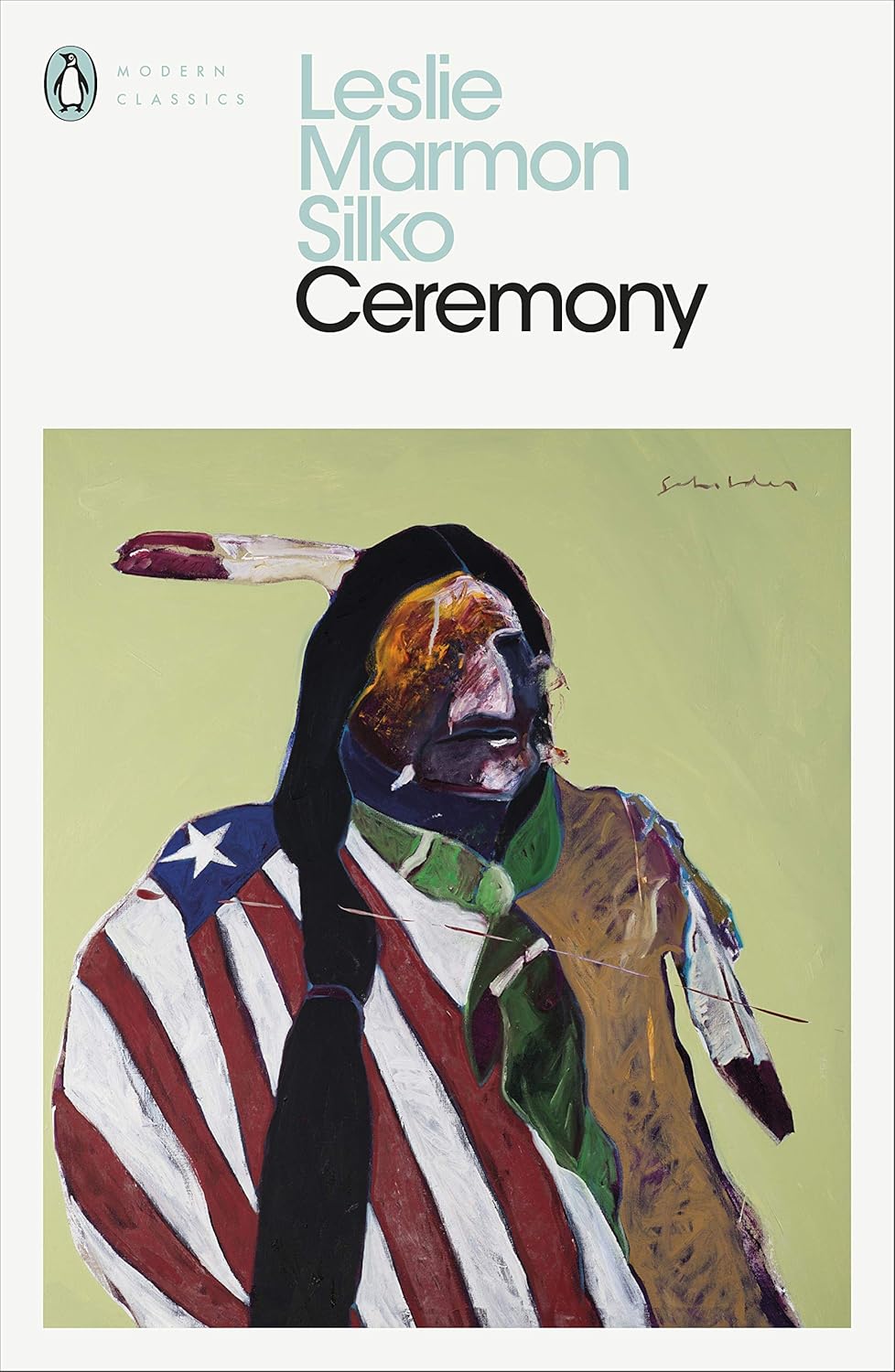
Ceremony: Leslie Marmon Silko (Penguin Modern Classics)

Description:

'An exceptional novel ... a cause for celebration' Washington Post

'The most accomplished Native American writer of her generation'
The New York Times Book Review

Tayo, a young Second World War veteran of mixed ancestry, is coming home. But, returning to the Laguna Pueblo Reservation, he finds himself scarred by his experiences as a prisoner of war, and further wounded by the rejection he finds among his own people. Only by rediscovering the traditions, stories and ceremonies of his ancestors can he start to heal, and find peace.

'
Ceremony is the greatest novel in Native American literature. It is one of the greatest novels of any time and place' Sherman Alexie


Review

Select Guide Rating

From the Back Cover

Tayo, a young Second World War veteran of mixed ancestry, is coming home. But, returning to the Laguna Pueblo Reservation, he finds himself scarred by his experiences as a prisoner of war, and further wounded by the rejection he finds among his own people. Only by rediscovering the traditions, stories and ceremonies of his ancestors can he start to heal, and find peace.

Reviews:

5.0 out of 5 stars Ceremony

C.H. · 7 August 2012

I loved this book and the central character, Tao, who is the product of a very mixed race background with his "light brown skin and hazel eyes". It lets you enter his world as he returns shattered by the experience of war. While he fights in an American Uniform he is a hero but on returning home without his army dress he is again a non-person. He suffers post-war traumatic stress but there is little or no help for him. He goes to his own native indian ancestors for help in overcoming his problems by their constant telling of native stories and remedies.The book is divided not by formal chapters but poems and wonderful prose passages which are a joy to read. I truly enjoyed this book and would recommend it to anyone.Christine Harris

5.0 out of 5 stars Amazing & thought provoking read

B. · 9 December 2013

I read this on my 2nd year uni course as part of an "Introduction to American Literature" course. I absolutely love this book as it is written in such a unique way that combines narrative with poetry and older myths. I had never read anything quite like and there is definitely something for everyone in this story.

4.0 out of 5 stars Good book about retrurning damaged veterans from World War 2 ...

c.s. · 3 June 2015

Good book about retrurning damaged veterans from World War 2 in the Pacific who were native american indians. It is about the power of native american culture and ancient traditions helping native american veterans returning form the Pacific to cope with mental illness, depression and post traumatic stress. It ia also a severe indictment of the way Native American Indians have been treated in the USA and the alchoholism and discrimination that they suffer from. It is a beautifully written book with large elements of poetry and the imaginative use of language and words. A difficult book to read with many levels and depth and considered to be one of the greatest novels written by a Native American author. Not an easy read but well worth the effort.

5.0 out of 5 stars A tale of healing

Z.B. · 14 May 2013

At its simplest this is a tale about a young native American survivor of a Japanese death march being cured of his post-traumatic stress by an extended healing ceremony, which puts him back in touch with his roots. But it is more than that: Tayo's healing is in some ways a more general healing, his ceremony part of a wider ceremony for his people.I loved this book. It is a fine example of magic realism addressing real issues in a profound way and this is something I look for in a book.

5.0 out of 5 stars Five Stars

K.K. · 4 July 2015

Arrived on time, product as described.

3.0 out of 5 stars The story is an interesting tale of Tayo's journey to ...

H. · 30 April 2016

The story is an interesting tale of Tayo's journey to reconnect with his Native American ancestry after experiencing the trauma of war, however the poem structure that runs throughout the text makes it difficult to follow. A challenging read.

5.0 out of 5 stars Five Stars

s. · 3 October 2014

as described and on time

4.0 out of 5 stars SELLER

D.S.K. · 20 October 2013

Rare book supplied quickly and at a fair price. Seller good; book not easy to read. Book seems to capture reality of life of a half native American's existence..

Top

g.t. · 18 February 2024

Top

Amazing

s. · 27 September 2019

What an extraordinary story. Poetic, inspired, wise. A work to read and feel again and again, until its lessons soak into the bones.

Superbe roman de Silko

C.d. · 19 April 2021

Lecture plaisir, très informatif, surtout émouvant.

“Circle of Death”

E.R. · 6 January 2024

They fearThey fear the world.They destroy what they fear.Tayo, having been released from a Japanese prison camp and then a hospital in the United States, is “tired of fighting off the dreams and the voices; he was tired of guarding himself against places and things which evoked the memories.” Suffering from “battle fatigue” (what would be referred to as post-traumatic stress disorder today), Tayo determines his only chance at renewal is in the return to his home, the Laguna Reservation in the New Mexico. There he hopes the people he long has known, their customs and traditions, and the familiar environment will cure his ills which also include the death of his cousin during the war and his uncle’s death while Tayo was away. But it is not to a paradise that the approximately twenty-three-year-old, half white/half Native American young man returns. Poverty reigns. The land is arid and of little use, and the abuse and the unabated exploitation of Native American people continues as it has for years. Such is the world the reader enters with Tayo in Leslie Marmo Silko’s first novel, CEREMONY [(1977; 243 pp. in the Penguin Books Anniversary edition (2006) with a New Preface by the author and an Introduction by esteemed western author Larry McMurtry)].Silko’s novel has been described as a masterpiece of Native American literature. The narrative she creates is rich and complex, demanding the reader’s attention. As her protagonist, Tayo’s story is told in a stream of consciousness style with frequent, sudden flashbacks between WWII, confinement in the prison camp, in hospital after the war, and life on the Laguna Reservation. Adding to the richness of her text are flashbacks to earlier battles Native Americans waged with sorcery and the Whites. Further intricacy is added to the chronicle as Tayo is besieged by voices of the War and from his deceased friends and family. Altogether, it makes for a fascinating portrait of a suffering individual looking for healing and regeneration.Silko’s descriptions of life on and near the reservation are vivid. She vibrantly brings to the pages of the novel the paradoxical harshness of the environment and its unique beauty. Likewise, the beauty and nobility of the Laguna people is contrasted with the severity of their lives which can lead to helplessness, emptiness, and capitulation. Never does she romanticize Native American life or culture nor does she write seeking sympathy. Hers is a very objective and honest approach to her realistic characters and their existence.Interspersed throughout the narrative of CEREMONY is beautiful verse often conveying stories or images which enhance the tale.As CEREMONY progresses, Tayo realizes “his sickness was only part of something larger, and his cure would be found only in something great and inclusive of everything.” He becomes obsessed with a mission: bringing to life his dead uncle’s determination to breed cattle which are hardier and “could survive drought and hard years” in the challenging, infertile conditions of the American Southwest. This also means finding and resecuring cattle stolen by white ranchers—a perilous undertaking. It is at this point in the chronicle in which Silko’s story-telling becomes somewhat more conventional and readers, having come to know Tayo quite fully, become even more involved with his fate and well-being.As Silko brings the worlds of the mystical, the past, and the present of the story, where the “balances and harmonies [are] always shifting,” amazingly CEREMONY speaks to our “fragile” world of today “inside the belly of the wind” and the precipice upon which it teeters between healing and destruction in so many ways.The concluding pages of CEREMONY taking place in “a restless, dry wind that felt as if it blew out of dusty years of the past; [and] …smelled of emptiness and loss” are filled with history, irony, betrayal, death, the discovery of new truths, strength, and fragile hope. Tayo’s journey is a fascinating one—one which the reader will be glad and feel enriched having traveled it with Leslie Marmo Silko.

Langsam rettet der Mythos das Leben

G. · 22 August 2022

Leslie Marmon Silko „Ceremony“ 1977„Ceremony“ ist der Erstlingsroman der Laguna Pueblo Autorin Leslie Marmon Silko. Ich habe ihn mehrmals gelesen, anfangs in der Originalsprache Englisch, dann in der deutschen Übersetzung (Titel: „Gestohlenes Land wird ihre Herzen fressen“) - sie ist hilfreich, wenn auch durch Druckfehler irritierend. Schließlich habe ich immer mal hinüber, herüber, durcheinander gelesen. Anfangs konnte ich eine Oberfläche wahrnehmen: die Handlung, so wie man als weißer Leser eben liest. Die Handlung ist einfach und scheint nicht einmal spannend: Tayo ist ein Halbblut-Indianer (unbekannter weißer Vater, indianische Mutter, die als Prostituierte zur Schande ihrer Familie wird, das vierjährige Kind zurücklässt und früh stirbt). Als mental schwer angeschlagener Veteran kommt Tayo aus dem Zweiten Weltkrieg (Japan) zurück und nach Klinikaufenthalt in Los Angeles wieder zu seiner Familie in New Mexico, auf dem Land in der Gegend zwischen Gallup, Laguna, dem Puerco River und der Route 66, einer Gegend, aus der auch die Autorin stammt. Das Buch schildert Tayos langsame Heilung mithilfe des Medizinmannes Old Betonie. Außer dieser leidlich interessanten Oberfläche habe ich anfangs nichts wirklich verstanden. Als weißer Leser bin ich einer solchen Literatur noch nie begegnet, und es ist nicht so, dass man das Buch liest, sondern das Buch liest vielmehr den Leser. Indem Tayo Heilung findet und man lernt, in den Text einzudringen, scheint einem der Text allmählich kulturelle Verkrustungen aufzubrechen und wie eine unnütze Hautschicht abzustreifen: Noch immer hat das Buch mich nicht ganz zu meinem eigenen Kern gebracht, man darf es nicht zu früh weglegen. Auch Tayo, desorientiert bis in ein tiefes somatisches Durcheinander, muss sich durch zahllose „Übergänge“ kämpfen, bis er wieder er selbst ist.Old Betonie, der Tayos Heilung voraus-, ja: zeichnet, indem er mit Gebetshölzern und einem Sandbild die Muster des Sternenhimmels, die Solstizien, die Bewegungen von Mond, Sonne und Menschen notiert, Old Betonie benutzt als Erklärung für die lange Dauer das Bild eines Jungen, der bei Bären aufwächst und von Menschen behutsam zu seiner eigenen Natur zurückgebracht wird. Die vielen lyrik-artigen Einschübe, mit denen die Autorin den Text aufbricht, empfindet man zunächst nur als fremdartig mythisch. Was ist das? Gebete? Ritualtexte? Gesänge? Beschwörende Gedichte? Mythische Berichte, in denen die Erzählhandlung auf anderer Ebene gespiegelt wird? Was der Autorin gelingt, ist ein Brückenschlag zwischen Magie und Gegenwart, indem sie weiße Mentalität definiert: „…seit mehr als zweihundert Jahren arbeiteten weiße Menschen daran, ihre innere Leere zu füllen; sie versuchten, die Hohlheit mit patriotischen Kriegen und mit überragender Technologie auszustopfen.“ Das geht bis hin zum Uranabbau in Tayos Gegend und zu nuklearen Versuchsreihen auf dem White Sands Proving Ground in New Mexico, die Tayos Großmutter in nächtlichen Schrecken versetzen. Silko definiert die von Weißen geschaffene atomare Bedrohung als „Schnittpunkt aller Lebewesen und der Erde“ – alles auf diesem Planeten und der Planet selbst sind vereint durch den Todeskreis potentieller atomarer Vernichtung. Auch dieses Muster hatte der alte Betonie in der Zeremonie gezeichnet.Silko bleibt ohne Vorwurf, sie weiß um die Resilienz indianischer Mentalität, die sich heute allmählich wieder zeigt: „Only a few people knew that the lie was destroying the white people faster than it was destroying Indian people…. The plastic and neon, the concrete and steel. Hollow and lifeless as a witchery clayfigure.“ Ja, was sind wir Weißen unter dem ganzen Überbau der Technisierung? Tayo nimmt schließlich die Kraft aus der Landschaft, seiner Verwurzelung: „The mountain remains, the love remains“, und Old Betonie weiß um Dauer wie um Veränderungen: „There are balances and harmonies always shifting, always necessary to maintain.“ Das Merkwürdigste ist, dass diese mythische Grundverhaftung nichts Schweres, Dunkles hat, sondern irritierend leicht, stellenweise fast bindungslos auftritt, als huschten einem Lichtreflexe durch den Kopf. Tayo hat zwei wortlos warme sexuelle Erfahrungen mit Frauen – die eine ist die Geliebte seines Onkels, die er später sucht und nicht mehr findet. Die andere ist mit einem indianischen Jäger verheiratet und verlässt Tayo, schmerzhaft für beide, um zu ihrer Familie zurückzukehren. Auch die Textstruktur hat dieses rätselhafte Schweben, was das Lesen nicht erleichtert. Bei aller Detailfreude von Naturerscheinungen, von Tayos physischen Zuständen – da ist so viel Duft von Pflanzen, Erde und Tieren, da klopft ihm das Herz, scheuert er sich die Knie auf, friert oder schwitzt er - bei aller Detailfreude bricht ein Handlungsstrang, ein Ort plötzlich ab und wird anders fortgesetzt. So heißt es einmal in einem einzigen Satz: „Die Veränderungen strebten in ihm in die verschiedensten Richtungen; das Maultier war blind und alt gewesen.“ Die Veränderungen beziehen sich dabei auf Tayo, nicht auf das Maultier. Ts’eh, die Frau des Jägers, steht irgendwann da wie aus dem Nichts, es heißt einfach „sie“ – erst viel später bekommt sie einen Namen.Auf die Reflexhaftigkeit ebenso wie auf die Detailgenauigkeit des Textes muss man sich einlassen lernen – auf den Tiefenzusammenhang, das Wurzelwerk des Textes ebenso. Als Leser ist man mit diesem Buch einer wiederholten Selbsterforschung und Selbstvergewisserung ausgesetzt. Mir ist in der weißen Literatur kein Buch mit diesen speziellen Qualitäten bekannt, es ist eine Erfahrung, die durch nichts zu ersetzen ist.

Ceremony: Leslie Marmon Silko (Penguin Modern Classics)

Product ID: K0241441641
Condition: New

4.3

AED7705

Price includes VAT & Import Duties
Type: Paperback
Availability: In Stock

Quantity:

|

Order today to get by 7-14 business days

Delivery fee of AED 20. Free for orders above AED 200.

Returns & Warranty policies

Imported From: United Kingdom

At BOLO, we work hard to ensure the products you receive are new, genuine, and sourced from reputable suppliers.

BOLO is not an authorized or official retailer for most brands, nor are we affiliated with manufacturers unless specifically stated on a product page. Instead, we source verified sellers, authorized distributors or directly from the manufacturer.

Each product undergoes thorough inspection and verification at our consolidation and fulfilment centers to ensure it meets our strict authenticity and quality standards before being shipped and delivered to you.

If you ever have concerns regarding the authenticity of a product purchased from us, please contact Bolo Support. We will review your inquiry promptly and, if necessary, provide documentation verifying authenticity or offer a suitable resolution.

Your trust is our top priority, and we are committed to maintaining transparency and integrity in every transaction.

All product information, images, descriptions, and reviews originate from the manufacturer or from trusted sellers overseas. BOLO is not affiliated with, endorsed by, or an authorized retailer for most brands listed on our website unless stated otherwise.

While we strive to display accurate information, variations in packaging, labeling, instructions, or formulation may occasionally occur due to regional differences or supplier updates. For detailed or manufacturer-specific information, please contact the brand directly or reach out to BOLO Support for assistance.

Unless otherwise stated, all prices displayed on the product page include applicable taxes and import duties.

BOLO operates in accordance with the laws and regulations of United Arab Emirates. Any items found to be restricted or prohibited for sale within the UAE will be cancelled prior to shipment. We take proactive measures to ensure that only products permitted for sale in United Arab Emirates are listed on our website.

All items are shipped by air, and any products classified as “Dangerous Goods (DG)” under IATA regulations will be removed from the order and cancelled.

All orders are processed manually, and we make every effort to process them promptly once confirmed. Products cancelled due to the above reasons will be permanently removed from listings across the website.

Similar suggestions by Bolo

More from this brand

Similar items from “Native American Studies”

Ceremony: Leslie Marmon Silko (Penguin Modern Classics)

Product ID: K0241441641
Condition: New

4.3

Ceremony: Leslie Marmon Silko (Penguin Modern Classics)-0
Type: Paperback

AED7705

Price includes VAT & Import Duties
Availability: In Stock

Quantity:

|

Order today to get by 7-14 business days

Delivery fee of AED 20. Free for orders above AED 200.

Returns & Warranty policies

Imported From: United Kingdom

At BOLO, we work hard to ensure the products you receive are new, genuine, and sourced from reputable suppliers.

BOLO is not an authorized or official retailer for most brands, nor are we affiliated with manufacturers unless specifically stated on a product page. Instead, we source verified sellers, authorized distributors or directly from the manufacturer.

Each product undergoes thorough inspection and verification at our consolidation and fulfilment centers to ensure it meets our strict authenticity and quality standards before being shipped and delivered to you.

If you ever have concerns regarding the authenticity of a product purchased from us, please contact Bolo Support. We will review your inquiry promptly and, if necessary, provide documentation verifying authenticity or offer a suitable resolution.

Your trust is our top priority, and we are committed to maintaining transparency and integrity in every transaction.

All product information, images, descriptions, and reviews originate from the manufacturer or from trusted sellers overseas. BOLO is not affiliated with, endorsed by, or an authorized retailer for most brands listed on our website unless stated otherwise.

While we strive to display accurate information, variations in packaging, labeling, instructions, or formulation may occasionally occur due to regional differences or supplier updates. For detailed or manufacturer-specific information, please contact the brand directly or reach out to BOLO Support for assistance.

Unless otherwise stated, all prices displayed on the product page include applicable taxes and import duties.

BOLO operates in accordance with the laws and regulations of United Arab Emirates. Any items found to be restricted or prohibited for sale within the UAE will be cancelled prior to shipment. We take proactive measures to ensure that only products permitted for sale in United Arab Emirates are listed on our website.

All items are shipped by air, and any products classified as “Dangerous Goods (DG)” under IATA regulations will be removed from the order and cancelled.

All orders are processed manually, and we make every effort to process them promptly once confirmed. Products cancelled due to the above reasons will be permanently removed from listings across the website.

Description:

'An exceptional novel ... a cause for celebration' Washington Post

'The most accomplished Native American writer of her generation'
The New York Times Book Review

Tayo, a young Second World War veteran of mixed ancestry, is coming home. But, returning to the Laguna Pueblo Reservation, he finds himself scarred by his experiences as a prisoner of war, and further wounded by the rejection he finds among his own people. Only by rediscovering the traditions, stories and ceremonies of his ancestors can he start to heal, and find peace.

'
Ceremony is the greatest novel in Native American literature. It is one of the greatest novels of any time and place' Sherman Alexie


Review

Select Guide Rating

From the Back Cover

Tayo, a young Second World War veteran of mixed ancestry, is coming home. But, returning to the Laguna Pueblo Reservation, he finds himself scarred by his experiences as a prisoner of war, and further wounded by the rejection he finds among his own people. Only by rediscovering the traditions, stories and ceremonies of his ancestors can he start to heal, and find peace.

Reviews:

5.0 out of 5 stars Ceremony

C.H. · 7 August 2012

I loved this book and the central character, Tao, who is the product of a very mixed race background with his "light brown skin and hazel eyes". It lets you enter his world as he returns shattered by the experience of war. While he fights in an American Uniform he is a hero but on returning home without his army dress he is again a non-person. He suffers post-war traumatic stress but there is little or no help for him. He goes to his own native indian ancestors for help in overcoming his problems by their constant telling of native stories and remedies.The book is divided not by formal chapters but poems and wonderful prose passages which are a joy to read. I truly enjoyed this book and would recommend it to anyone.Christine Harris

5.0 out of 5 stars Amazing & thought provoking read

B. · 9 December 2013

I read this on my 2nd year uni course as part of an "Introduction to American Literature" course. I absolutely love this book as it is written in such a unique way that combines narrative with poetry and older myths. I had never read anything quite like and there is definitely something for everyone in this story.

4.0 out of 5 stars Good book about retrurning damaged veterans from World War 2 ...

c.s. · 3 June 2015

Good book about retrurning damaged veterans from World War 2 in the Pacific who were native american indians. It is about the power of native american culture and ancient traditions helping native american veterans returning form the Pacific to cope with mental illness, depression and post traumatic stress. It ia also a severe indictment of the way Native American Indians have been treated in the USA and the alchoholism and discrimination that they suffer from. It is a beautifully written book with large elements of poetry and the imaginative use of language and words. A difficult book to read with many levels and depth and considered to be one of the greatest novels written by a Native American author. Not an easy read but well worth the effort.

5.0 out of 5 stars A tale of healing

Z.B. · 14 May 2013

At its simplest this is a tale about a young native American survivor of a Japanese death march being cured of his post-traumatic stress by an extended healing ceremony, which puts him back in touch with his roots. But it is more than that: Tayo's healing is in some ways a more general healing, his ceremony part of a wider ceremony for his people.I loved this book. It is a fine example of magic realism addressing real issues in a profound way and this is something I look for in a book.

5.0 out of 5 stars Five Stars

K.K. · 4 July 2015

Arrived on time, product as described.

3.0 out of 5 stars The story is an interesting tale of Tayo's journey to ...

H. · 30 April 2016

The story is an interesting tale of Tayo's journey to reconnect with his Native American ancestry after experiencing the trauma of war, however the poem structure that runs throughout the text makes it difficult to follow. A challenging read.

5.0 out of 5 stars Five Stars

s. · 3 October 2014

as described and on time

4.0 out of 5 stars SELLER

D.S.K. · 20 October 2013

Rare book supplied quickly and at a fair price. Seller good; book not easy to read. Book seems to capture reality of life of a half native American's existence..

Top

g.t. · 18 February 2024

Top

Amazing

s. · 27 September 2019

What an extraordinary story. Poetic, inspired, wise. A work to read and feel again and again, until its lessons soak into the bones.

Superbe roman de Silko

C.d. · 19 April 2021

Lecture plaisir, très informatif, surtout émouvant.

“Circle of Death”

E.R. · 6 January 2024

They fearThey fear the world.They destroy what they fear.Tayo, having been released from a Japanese prison camp and then a hospital in the United States, is “tired of fighting off the dreams and the voices; he was tired of guarding himself against places and things which evoked the memories.” Suffering from “battle fatigue” (what would be referred to as post-traumatic stress disorder today), Tayo determines his only chance at renewal is in the return to his home, the Laguna Reservation in the New Mexico. There he hopes the people he long has known, their customs and traditions, and the familiar environment will cure his ills which also include the death of his cousin during the war and his uncle’s death while Tayo was away. But it is not to a paradise that the approximately twenty-three-year-old, half white/half Native American young man returns. Poverty reigns. The land is arid and of little use, and the abuse and the unabated exploitation of Native American people continues as it has for years. Such is the world the reader enters with Tayo in Leslie Marmo Silko’s first novel, CEREMONY [(1977; 243 pp. in the Penguin Books Anniversary edition (2006) with a New Preface by the author and an Introduction by esteemed western author Larry McMurtry)].Silko’s novel has been described as a masterpiece of Native American literature. The narrative she creates is rich and complex, demanding the reader’s attention. As her protagonist, Tayo’s story is told in a stream of consciousness style with frequent, sudden flashbacks between WWII, confinement in the prison camp, in hospital after the war, and life on the Laguna Reservation. Adding to the richness of her text are flashbacks to earlier battles Native Americans waged with sorcery and the Whites. Further intricacy is added to the chronicle as Tayo is besieged by voices of the War and from his deceased friends and family. Altogether, it makes for a fascinating portrait of a suffering individual looking for healing and regeneration.Silko’s descriptions of life on and near the reservation are vivid. She vibrantly brings to the pages of the novel the paradoxical harshness of the environment and its unique beauty. Likewise, the beauty and nobility of the Laguna people is contrasted with the severity of their lives which can lead to helplessness, emptiness, and capitulation. Never does she romanticize Native American life or culture nor does she write seeking sympathy. Hers is a very objective and honest approach to her realistic characters and their existence.Interspersed throughout the narrative of CEREMONY is beautiful verse often conveying stories or images which enhance the tale.As CEREMONY progresses, Tayo realizes “his sickness was only part of something larger, and his cure would be found only in something great and inclusive of everything.” He becomes obsessed with a mission: bringing to life his dead uncle’s determination to breed cattle which are hardier and “could survive drought and hard years” in the challenging, infertile conditions of the American Southwest. This also means finding and resecuring cattle stolen by white ranchers—a perilous undertaking. It is at this point in the chronicle in which Silko’s story-telling becomes somewhat more conventional and readers, having come to know Tayo quite fully, become even more involved with his fate and well-being.As Silko brings the worlds of the mystical, the past, and the present of the story, where the “balances and harmonies [are] always shifting,” amazingly CEREMONY speaks to our “fragile” world of today “inside the belly of the wind” and the precipice upon which it teeters between healing and destruction in so many ways.The concluding pages of CEREMONY taking place in “a restless, dry wind that felt as if it blew out of dusty years of the past; [and] …smelled of emptiness and loss” are filled with history, irony, betrayal, death, the discovery of new truths, strength, and fragile hope. Tayo’s journey is a fascinating one—one which the reader will be glad and feel enriched having traveled it with Leslie Marmo Silko.

Langsam rettet der Mythos das Leben

G. · 22 August 2022

Leslie Marmon Silko „Ceremony“ 1977„Ceremony“ ist der Erstlingsroman der Laguna Pueblo Autorin Leslie Marmon Silko. Ich habe ihn mehrmals gelesen, anfangs in der Originalsprache Englisch, dann in der deutschen Übersetzung (Titel: „Gestohlenes Land wird ihre Herzen fressen“) - sie ist hilfreich, wenn auch durch Druckfehler irritierend. Schließlich habe ich immer mal hinüber, herüber, durcheinander gelesen. Anfangs konnte ich eine Oberfläche wahrnehmen: die Handlung, so wie man als weißer Leser eben liest. Die Handlung ist einfach und scheint nicht einmal spannend: Tayo ist ein Halbblut-Indianer (unbekannter weißer Vater, indianische Mutter, die als Prostituierte zur Schande ihrer Familie wird, das vierjährige Kind zurücklässt und früh stirbt). Als mental schwer angeschlagener Veteran kommt Tayo aus dem Zweiten Weltkrieg (Japan) zurück und nach Klinikaufenthalt in Los Angeles wieder zu seiner Familie in New Mexico, auf dem Land in der Gegend zwischen Gallup, Laguna, dem Puerco River und der Route 66, einer Gegend, aus der auch die Autorin stammt. Das Buch schildert Tayos langsame Heilung mithilfe des Medizinmannes Old Betonie. Außer dieser leidlich interessanten Oberfläche habe ich anfangs nichts wirklich verstanden. Als weißer Leser bin ich einer solchen Literatur noch nie begegnet, und es ist nicht so, dass man das Buch liest, sondern das Buch liest vielmehr den Leser. Indem Tayo Heilung findet und man lernt, in den Text einzudringen, scheint einem der Text allmählich kulturelle Verkrustungen aufzubrechen und wie eine unnütze Hautschicht abzustreifen: Noch immer hat das Buch mich nicht ganz zu meinem eigenen Kern gebracht, man darf es nicht zu früh weglegen. Auch Tayo, desorientiert bis in ein tiefes somatisches Durcheinander, muss sich durch zahllose „Übergänge“ kämpfen, bis er wieder er selbst ist.Old Betonie, der Tayos Heilung voraus-, ja: zeichnet, indem er mit Gebetshölzern und einem Sandbild die Muster des Sternenhimmels, die Solstizien, die Bewegungen von Mond, Sonne und Menschen notiert, Old Betonie benutzt als Erklärung für die lange Dauer das Bild eines Jungen, der bei Bären aufwächst und von Menschen behutsam zu seiner eigenen Natur zurückgebracht wird. Die vielen lyrik-artigen Einschübe, mit denen die Autorin den Text aufbricht, empfindet man zunächst nur als fremdartig mythisch. Was ist das? Gebete? Ritualtexte? Gesänge? Beschwörende Gedichte? Mythische Berichte, in denen die Erzählhandlung auf anderer Ebene gespiegelt wird? Was der Autorin gelingt, ist ein Brückenschlag zwischen Magie und Gegenwart, indem sie weiße Mentalität definiert: „…seit mehr als zweihundert Jahren arbeiteten weiße Menschen daran, ihre innere Leere zu füllen; sie versuchten, die Hohlheit mit patriotischen Kriegen und mit überragender Technologie auszustopfen.“ Das geht bis hin zum Uranabbau in Tayos Gegend und zu nuklearen Versuchsreihen auf dem White Sands Proving Ground in New Mexico, die Tayos Großmutter in nächtlichen Schrecken versetzen. Silko definiert die von Weißen geschaffene atomare Bedrohung als „Schnittpunkt aller Lebewesen und der Erde“ – alles auf diesem Planeten und der Planet selbst sind vereint durch den Todeskreis potentieller atomarer Vernichtung. Auch dieses Muster hatte der alte Betonie in der Zeremonie gezeichnet.Silko bleibt ohne Vorwurf, sie weiß um die Resilienz indianischer Mentalität, die sich heute allmählich wieder zeigt: „Only a few people knew that the lie was destroying the white people faster than it was destroying Indian people…. The plastic and neon, the concrete and steel. Hollow and lifeless as a witchery clayfigure.“ Ja, was sind wir Weißen unter dem ganzen Überbau der Technisierung? Tayo nimmt schließlich die Kraft aus der Landschaft, seiner Verwurzelung: „The mountain remains, the love remains“, und Old Betonie weiß um Dauer wie um Veränderungen: „There are balances and harmonies always shifting, always necessary to maintain.“ Das Merkwürdigste ist, dass diese mythische Grundverhaftung nichts Schweres, Dunkles hat, sondern irritierend leicht, stellenweise fast bindungslos auftritt, als huschten einem Lichtreflexe durch den Kopf. Tayo hat zwei wortlos warme sexuelle Erfahrungen mit Frauen – die eine ist die Geliebte seines Onkels, die er später sucht und nicht mehr findet. Die andere ist mit einem indianischen Jäger verheiratet und verlässt Tayo, schmerzhaft für beide, um zu ihrer Familie zurückzukehren. Auch die Textstruktur hat dieses rätselhafte Schweben, was das Lesen nicht erleichtert. Bei aller Detailfreude von Naturerscheinungen, von Tayos physischen Zuständen – da ist so viel Duft von Pflanzen, Erde und Tieren, da klopft ihm das Herz, scheuert er sich die Knie auf, friert oder schwitzt er - bei aller Detailfreude bricht ein Handlungsstrang, ein Ort plötzlich ab und wird anders fortgesetzt. So heißt es einmal in einem einzigen Satz: „Die Veränderungen strebten in ihm in die verschiedensten Richtungen; das Maultier war blind und alt gewesen.“ Die Veränderungen beziehen sich dabei auf Tayo, nicht auf das Maultier. Ts’eh, die Frau des Jägers, steht irgendwann da wie aus dem Nichts, es heißt einfach „sie“ – erst viel später bekommt sie einen Namen.Auf die Reflexhaftigkeit ebenso wie auf die Detailgenauigkeit des Textes muss man sich einlassen lernen – auf den Tiefenzusammenhang, das Wurzelwerk des Textes ebenso. Als Leser ist man mit diesem Buch einer wiederholten Selbsterforschung und Selbstvergewisserung ausgesetzt. Mir ist in der weißen Literatur kein Buch mit diesen speziellen Qualitäten bekannt, es ist eine Erfahrung, die durch nichts zu ersetzen ist.

Similar suggestions by Bolo

More from this brand

Similar items from “Native American Studies”