Deliver toUnited Arab Emirates
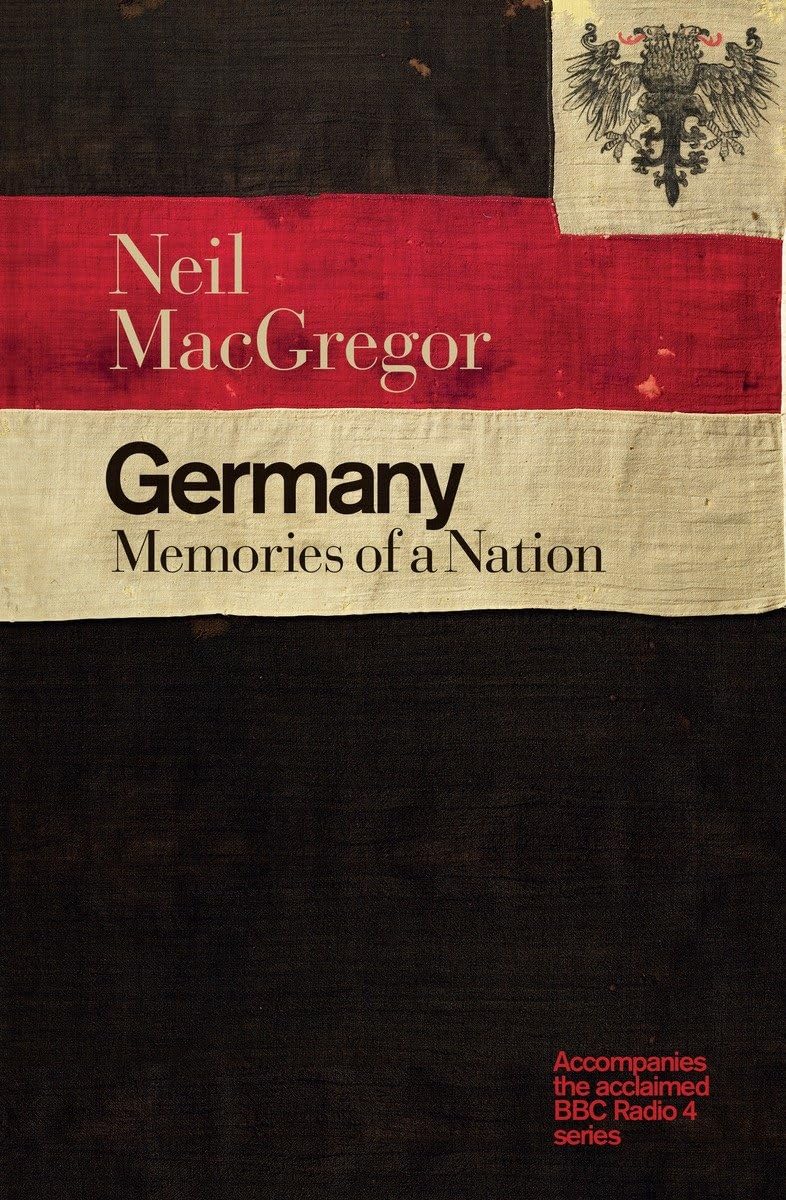
Germany: Memories Of A Nation

Description:

From Neil MacGregor, the author of A History of the World in 100 Objects, this is a view of Germany like no other

For the past 140 years, Germany has been the central power in continental Europe. Twenty-five years ago a new German state came into being. How much do we really understand this new Germany, and how do its people now understand themselves?
Neil MacGregor argues that uniquely for any European country, no coherent, over-arching narrative of Germany's history can be constructed, for in Germany both geography and history have always been unstable. Its frontiers have constantly floated. K nigsberg, home to the greatest German philosopher, Immanuel Kant, is now Kaliningrad, Russia; Strasbourg, in whose cathedral Johann Wolfgang von Goethe, Germany's greatest writer, discovered the distinctiveness of his country's art and history, now lies within the borders of France. For most of the five hundred years covered by this book Germany has been composed of many separate political units, each with a distinct history. And any comfortable national story Germans might have told themselves before 1914 was destroyed by the events of the following thirty years.
German history may be inherently fragmented, but it contains a large number of widely shared memories, awarenesses and experiences; examining some of these is the purpose of this book. Beginning with the fifteenth-century invention of modern printing by Gutenberg, MacGregor chooses objects and ideas, people and places which still resonate in the new Germany - porcelain from Dresden and rubble from its ruins, Bauhaus design and the German sausage, the crown of Charlemagne and the gates of Buchenwald - to show us something of its collective imagination. There has never been a book about Germany quite like it.
.


Review

From sausages and porcelain to the glory days of Bauhaus, MacGregor has produced a dazzling history that goes far beyond the stereotypes of Nazis, forests and leather shorts. The illustrations alone - the glittering interior of Aachen Cathedral, the engravings of Albrecht Dürer - make you want to jump on the first flight to Berlin (Dominic Sandbrook Sunday Times)

Unfailingly interesting and stimulating ... the book succeeds triumphantly (Richard J Evans
TLS)

From the Inside Flap

For the past 140 years, Germany has been the central power in continental Europe. Twenty-five years ago a new German state came into being. How much do we really understand this new Germany, and how do its people now understand themselves?

Neil MacGregor argues that uniquely for any European country, no coherent, over-arching narrative of Germany's history can be constructed, for in Germany both geography and history have always been unstable. Its frontiers have constantly floated. Königsberg, home to the greatest German philosopher, Immanuel Kant, is now Kaliningrad, Russia; Strasbourg, in whose cathedral Johann Wolfgang von Goethe, Germany's greatest writer, discovered the distinctiveness of his country's art and history, now lies within the borders of France. For most of the five hundred years covered by this book Germany has been composed of many separate political units, each with a distinct history. And any comfortable national story Germans might have told themselves before 1914 was destroyed by the events of the following thirty years.

German history may be inherently fragmented, but it contains a large number of widely shared memories, awarenesses and experiences; examining some of these is the purpose of this book. Beginning with the fifteenth-century invention of modern printing by Gutenberg, MacGregor chooses objects and ideas, people and places which still resonate in the new Germany - porcelain from Dresden and rubble from its ruins, Bauhaus design and the German sausage, the crown of Charlemagne and the gates of Buchenwald - to show us something of its collective imagination. There has never been a book about Germany quite like it.

Reviews:

5.0 out of 5 stars An easy read, believe it or not

O. · 19 July 2016

An easy read, believe it or not! A wonderfully clear and imaginative journey exploring the identity of the German people to the present day. Dr MacGregor (former head of the British Museum) threads the narrative around pivotal places,events and objects in a really memorable way. He has mastered the art of leaving stuff out that isn't necessary, so whilst informative, it isn't indigestible!Fresh and constantly questioning received wisdom, MacGregor ranges across the arts and sciences as well as geography and history. This book is a joy to read - one of those that leaves you sad when it's finished! Like an likeable and interesting friend leaving the room.The title doesn't really do the book justice. It isn't purely about Germany either, but also about the formation of modern Europe and I only wish everyone would read it in the context of the current 'Brexit' concerns. It's also published in German and it was a German friend who recommended it. As a physical book, it is also a pleasure - well typeset, edited and particularly well illustrated. Good bibliography, too.

5.0 out of 5 stars A Must Read!

J.G. · 6 July 2016

I have really enjoyed this journey through German history. I am someone who normally doesn't pay a lot of attention to history - a flaw I know! - but I needed information for some research I'm doing. The book was a delight to read. Factual, informative and written in a style that easily takes the reader along. Packed with information and pictures to illustrate, I have come away with all the information I need and a better understanding of how Europe got to where we are today. I was particularly moved by the illustration of how Germany has dealt with the legacy of 2 wars. We have much to learn from the example. The story of the south side of the Siegestor in Munich says so much. I would highly recommend the book. I read it in the run-up to the EU referendum in the UK, and would have had it as prescribed reading for all involved. I hope we don't have to relearn the lessons of history! And yes, I'm now converted to paying more attention to history...at least as told by Neil MacGregor, through memory, objects and people!

5.0 out of 5 stars Radio may have the best pictures, but these illustrations are worth a thousand words...

K.K. · 14 November 2014

This review is written about the hard back copy of 'Germany: Memories of a Nation'.Having listened to every episode of the Radio 4 series I just had to see this wonderful book. I was enthralled by the programmes, learned so much and here it is all in solid form. Very solid in fact, as big as the bricks those stoical rubble women, one of whom is immortalised in the very pieces she picked up, the Trummerfrauen, women who day after day brought order to the ruins of Dresden and other German cities razed to the ground by bombing.The history of the last 25 years is quite fascinating. I was introduced to this period reading The Aftermath recently which gave a whole new angle on post war Germany, seeing it from another viewpoint.This book opens with nine useful educative maps of the area from 1500 until the present day. Almost every page has a photograph, a map, a painting, a sculpture, art reproductions, posters, lithographs, everyday objects (a manhole cover!) that reach out in their ordinariness. They are collectively and singly haunting, evocative, grounding. These objects and images speak for themselves, the Refugee handcart, the dreadful gallows in use, a hundred million mark note, books being burned, grand monuments and buildings, fabulous porcelain. The stories are all generously given and attributed with detailed conscientiousness.In theses days of e books, kindles and podcasts, there is still a strong need for a solid hardback copy such as I have bought, to inform, expand and lay bare the bones of a country and a time that deserves the greatest scrutiny, remembrance and general understanding. Such suffering on all sides, determined renewal and sometimes deeply hidden, almost forgotten talent is worthy of a proper book such as this to keep to hand, lend, revisit and value. Thank you Neil MacGregor for putting it all together in such a transparent, straightforward, creditable fashion.

4.0 out of 5 stars Stimulating introduction to German cultural identity

M. · 7 May 2016

If you don't like squinting at small font type or you don't like pictures that disappear down the spine of the book, then the paperback edition is probably not for you, but if price is the deciding factor, then you get a lot of reading for your money. It's an interesting book, that tries to juggle German history with literature, art and architecture and is probably strongest (most interesting, most daring) on individual art pieces. It seems to be written to address a British reader who would otherwise equate Germany with Nazis and doesn't know much else about its cultural history. The book has no referencing, not even for quotations, but is probably overall the more serious end of popular-accessible. It is quite heavy on history, and its a fairly bog-standard history at that, but what will stay in your mind are some of the art and artefacts introduced. The selection of maps, monuments, objects and art is consistently interesting.

Buch des Jahres 2014. Gehört in jeden Haushalt

S. · 15 November 2014

Wer mit offenen Augen und offenem Herzen in der kleinen, feinen und doch grandiosen Londoner Ausstellung des British Museum war, kennt den Inhalt und wird dieses Buch nicht missen wollen. Der Deutsche, der nicht noch bis Januar 2015 nach London pilgern kann (hierzulande wäre eine solche Ausstellung immer noch undenkbar) kann sich die Podcasts von BBC Radio 4 holen (zu finden unter: "Germany - Memories of a Nation"). Aber auch ohne dass man die Ausstellung gesehen hat, ist dieses Buch nach meiner Ansicht das beste, originellste und verdienstvollste Überblickswerk über deutsche Geschichte und Kultur, das derzeit auf dem Markt ist, also ein ideales Weihnachtsgeschenk.Warum ist das so?Der Inhalt erschließt sich aus dem Titel: Es geht um geschichtliche Ereignisse und kulturelle Entwicklungen, die das kollektive Bewusstsein der Deutschen geprägt haben und daher die Identität dieses Landes ausmachen.Das Buch gliedert sich in sechs Teile (der Ausstellungsbesucher kennt sie bereits):Where is Germany?Imagining Germany?The Persistant Past?Made in Germany?The DescentLiving with HistoryEin ambitioniertes Vorhaben, sind Baden, Franken, Pommern, Westfalen usw., wie das Buch stets hervorhebt, doch durch Regionalgeschichte, sprachliche und landsmannschaftliche Identitäten durchaus verschieden, und ein Vorhaben, das noch dazu unbefangen, geradezu ketzerisch, angegangen wird: Das Thema wird nach dem Ansatz "Momuments and Memories" entfaltet anhand einzelner im Buch schön abgebildeter Objekte , die in der Ausstellung zu sehen waren und zentraler Gegenstand von 30, in sich abgeschlossenen Kapiteln sind, jeweils ergänzt um weitere Photographien, Bilder, Grafiken und Abbildungen.Das älteste Objekt ist eine Gutenbergbibel (16. In the beginning was a Printer), das jüngste der Berliner Reichstag (30. Germany Renewed). Es geht also um eine Spannbreite von knapp 600 Jahren. Es gibt Ungewöhnliches, nie gesehenes und vieles, was man übersehen würde (z. B. ein grandioser Bernsteinkrug) oder nie zu Gesicht bekäme, und im Mainstream Vernachlässigtes, z. B. Bedeutung der Märchen während der frz. Besetzung (7. Snow White vs. Napoleon), die Hanse (13. The Baltic Brothers), die Entwicklung und Staatskultur von Preussen (14. Iron Nation), Luthers Beitrag zur Deutschen Sprache (6. A language for all Germans), Deutsche Technik (19 Masters of Metal, 18 The White Gold of Saxony), Ästhetik (20 Cradle of the Modern) und Ämüsantes über Ess- und Trinkgewohnheiten (10 One People, many sausages).Das Buch ist für jeden Deutschen eine Entdeckungsreise in die eigene Geschichte und die kulturellen und gesellschaftlichen Leistungen unserer Vorfahren. Es thematisiert mit Unbefangenheit Sachverhalte, die hierzulande - natürlich nur zu unser aller Besten - allenfalls im Kleingedruckten erscheinen. Das beginnt schon im ersten Teil, der die "Floating frontiers" ab 1500 aufzeigt, noch dazu mit Karten und ohne die sonst stets einsetzende Preußen-gefährlich-Wagner-böse-Bismarck-böse-Willem two-dumm-darum-alles-ok-Litanei. Die Besonderheiten und Leistungen der staatsrechtlichen Struktur des Alten Reiches (-1806) und ihre prägende Wirkung bis heute werden immer wieder aufgezeigt. Einleuchtend dazu z. B. das Kapitel zu Münzen (5. Fragments of Power), im Gewöhnlichen - der Numismatiker sehe es mir nach - eher ein Randthema. Dass Prag, Königsberg und Straßburg jahrhundertelang deutsche kulturelle Zentren waren und z. B. Kafka ein deutschsprachiger Autor, wird nicht ausgespart (3 Lost Capitals, 4 Floating City), ebensowenig die im Schulkanon höchstens am Rande erwähnten Eroberungskriege von Ludwig XIV und Napoleon (11 The battle for Charlesmagne) und die Befreiungskriege, nebst der tragischen Luise (14 Iron Nation), die heute wohl nur noch den Berlinern und Brandenburgern ein Begriff ist. Die besonderen Beiträge der Deutschen zur europäischen Kultur werden v.a. im Bereich Buchdruck (16 In the Beginning was a Printer), Grafik (17. An Artist for All Germans), Skulptur (Riemenscheider, 12. Skulpting the Spririt) und anderen bereits genannten Kapiteln. Ich habe viele (Wieder-) Entdeckungen gemacht. Da physische Objekte präsentiert werden, treten Themen wie Musik und Philosophie natürlich zurück; wer sich also nur für Bach, Mendelssohn, Nietzsche, Wagner interessiert und z. B. einer schönen Bauhaus-Wiege (20 Cradle of the Modern), kurzum der Alltagskultur, nichts abgewinnen kann, kann sich jedenfalls an den Abbildungen erfreuen.Das alles wird kenntnisreich, unaufgeregt, humorvoll und für jedermann verständlich erläutert, aus der Perspektive eines Briten, also auch mit einem Blick von Außen, völlig ideologiefrei und kultiviert, voller Respekt und Sympathie für die kulturellen Errungenschaften, mit eingestreuten Interviews von weiteren Experten (z. B. Cristopher Clark). Ein solch kultivierter und unbemühter Tonfall ist in einschlägigen deutschen Publikationen nach 1945 die Ausnahme; er tut dem geplagten Leser einfach gut.Auch die bekannten Schattenperioden der deutschen Geschichte haben ihren Platz (24 Purging the Degenerate, 25 At the Buchenwald Gate, 28 The New German Jews), aber eben auch ihren richtigen Platz, d. h. sie werden nicht ersatzreligiös und hysterisch als Ziel- und Endpunkt überhöht. Die Frage, wie eine Nation, der die Welt Bach, Kant, Heine, Rilke und immerhin zwei Porzellanrhinozerosse nach einem Dürer-Holzschnitt verdankt (18 The White Gold of Saxony), wie diese Nation schamlos die industriell organisierte Vernichtung des europäischen Judentums und anderer Bevölkerungsgruppen betreiben konnte, bleibt bestehen und stellt sich nur umso schmerzlicher, wenn man die Exponate sieht. Sie bleibt nicht beantwortbar. Das Buch ist, wie erwähnt, kultiviert und ignoriert daher die strammen Deutschland- und Deutschenhasser und das-schlimme-Land-am-liebsten-in-Eurobba-und-durch-möglichst-viel-bereichernde-Zuwanderung-auflösen-Ideologen. Durch das ganze Werk zieht sich vielmehr ein großer Respekt und Sympathie für den beschrittenen, weltweit einmaligen Weg der sog. Erinnerungskultur, wofür wie eine Klammer um alles stellvertretend Gemälde von Baselitz (Introduction) und Richter (Envoi) stehen, stets getragen vom Bemühen, gerade Nichtdeutschen Verständnis auch für aktuelle Befindlichkeiten zu vermitteln, z. B. für die Sorge der Meisten um eine stabile Währung (23 Money in Crises, 30 Germany Renewed). Für Linksgrünversiffte (d.h. die Bofingers, Edathys, Käßmanns, Prantls & Konsorten) ist es wohl nicht empfehlenswert, weil es sie - wie sie sich auszudrücken belieben - "traumatisieren" wird (was in entsprechenden Rezensionen der deutschen Qualitätspresse zur Ausstellung schon - wenn auch verhalten - zum Ausdruck kam). Der linksgrünversifften Avantgarde empfehle ich für den Tannenbaum eher das neue Erbauungsbuch von Alexander Kluge, oder einen sedierenden Buschkowsky, den feministischen Brüderle von Wiezorek oder einen kuscheligen Unterhaltungsroman um eine Buchhandlung in Barcelona, alles tolle Bücher (ich verweise auf die weiteren Rezensionen).Mein Lieblingskapitel ist das über Käthe Kollwitz (22 the suffering wittness), in dem der Autor voll Kenntnis und Empathie ein lebendiges Bild dieser großen Künstlerin und ihrer Zeitumstände zeichnet. Dafür allein lohnt sich die Anschaffung. Ich erinnere noch die schäbige Polemik gegen die Skulptur "Mutter und Sohn" in der Neuen Wache. Besonders eindrucksvoll fand ich auch die Kapitel über die Walhalla (9. Hall of Heros), eine von Goebbels persönlich verfehmte Bauhaus-Vase (24 Purging the degenerate), eine Trümmerfrauen-Skulptur (27 Beginning Again), einen kleinen Leiterwagen (den gehüteten Besitz einer aus dem den deutschen Ostgebieten vertriebenen Familie, 26 The Germans expelled) und den "Schwebenden" von Barlach aus Güstrow (29 Barlachs Angel), den man am Ende der Ausstellung bewundern kann. Der Autor und sein Team haben es meisterhaft verstanden, Objekte zusammenzustellen, die komplexe Aussagen der deutschen Geschichte illustrieren und deren Bedeutungsebenen man bei oberflächlicher Betrachtung übersieht. Das Buch gibt auch den (mindestens) 14 Mio. Vertriebenen, den Trümmerfrauen und den an der innerdeutschen Grenzen Erschossenen (2 Divided Heaven) Stimme und Würde zurück, die ihnen immer noch versagt wird. Man denke nur an das widerwärtige Klauen der weißen Kreuze für die Maueropfer (die im Buch gleich zu Anfang erwähnt sind) oder das schamlose Spreizen des "elenden Rests" (Biermann) der SED im Bundestag. Speziell das Thema Vertreibung ist in Großbritannien, wie der Autor schreibt, kaum bekannt.So wie sich dereinst unsere Vorfahren die Luther-Bibel kauften, auch wenn dies ihr einziger karger Besitz war, um sich geistig aus der Bevormundung zu befreien, sollte man sich dieses wunderbare Buch unbedingt zulegen, um sich an die Wiederentdeckung der eigenen Kultur zu machen. Es ist auf Englisch, aber gut geschrieben und leicht lesbar. Danke, dem Autor Neil MacGregor, dem British Museum, den Leihgebern dieser wundervollen Ausstellung, und dem Verlag, thank you so much.

Highly Recommended

L.B. · 14 March 2018

Great book! Not just narrative, but a deep analysis of Germany's history. Very interesting with a real point of view.

Essential read to understanding Europe today.

G. · 3 August 2017

Amazing book that clearly explains what Germany has gone through over the last centuries. Fascinating and essential to understand the Europe of today and why we must always be aware of the past - both to continues its traditions but most importantly to learn from it. Highly recommended and highly readable.

Top Notch Cultural Memoir

S. · 20 January 2015

Author Neil MacGregor has also done the book "History in a 100 Objects" and this offering is done in a similar fashion. Now MacGregor notes in his introduction that this is not a history book. I agree. It's really a cultural memoir. The author notes that finding Germany on the map can be a bit of a problem. Strasburg is now part of France and Konigsberg is part of Russia. I might add that Pomerania where members of my family originated is part of Poland. According to MacGregor the key to Germany is language. Germany is where German is spoken, OK except for Switzerland.With his ties to the British Museum, MacGregor focuses on things like the Hohenzollern crown and Charlemagne's sword, sorry, make that Karl the Great's sword. It's really interesting stuff, things not normally thought of. There are also, for example,chapters on clocks and bibles, equally interesting. In fact a whole bunch of cultural stuff is covered.As for history, MacGregor is a court historian and by no means a revisionist. He holds the whole German nation responsible for World War II atrocities. He further notes that Germany may be the only nation working to make sure its future does not reflect its past. Now personally I've become a revisionist so I should dislike the book. While small parts of "Memories of a Nation" might sound Germanophobic, and this is the curious thing about the book, MacGregor has nothing but very high praise for things distinctly German. It's this cultural greatness and innovative past that is covered in most of the book. So do I dislike the book? Heck no. It touches on things generally never thought of. It is a very interesting book and a fun read.A couple final notes. Not surprisingly the book is printed on slick paper and the many illustrations are excellent. It's a big book weighing about three and a half pounds but with good sized print, important to someone like me who wears tri-focals.

What a fantastic book. Neil MacGregor is a gifted storyteller and ...

M. · 23 January 2015

What a fantastic book. Neil MacGregor is a gifted storyteller and manage to turn a history lesson into something as captivating as a fairytale would be to a kid.

Germany: Memories Of A Nation

Product ID: K014197978K
Condition: New

4.6

(1,393 ratings)

AED11132

Price includes VAT & Import Duties
Type: Paperback
Availability: In Stock

Quantity:

|

Order today to get by 7-14 business days

Delivery fee of AED 20. Free for orders above AED 200.

Returns & Warranty policies

Imported From: United Kingdom

At BOLO, we work hard to ensure the products you receive are new, genuine, and sourced from reputable suppliers.

BOLO is not an authorized or official retailer for most brands, nor are we affiliated with manufacturers unless specifically stated on a product page. Instead, we source verified sellers, authorized distributors or directly from the manufacturer.

Each product undergoes thorough inspection and verification at our consolidation and fulfilment centers to ensure it meets our strict authenticity and quality standards before being shipped and delivered to you.

If you ever have concerns regarding the authenticity of a product purchased from us, please contact Bolo Support. We will review your inquiry promptly and, if necessary, provide documentation verifying authenticity or offer a suitable resolution.

Your trust is our top priority, and we are committed to maintaining transparency and integrity in every transaction.

All product information, images, descriptions, and reviews originate from the manufacturer or from trusted sellers overseas. BOLO is not affiliated with, endorsed by, or an authorized retailer for most brands listed on our website unless stated otherwise.

While we strive to display accurate information, variations in packaging, labeling, instructions, or formulation may occasionally occur due to regional differences or supplier updates. For detailed or manufacturer-specific information, please contact the brand directly or reach out to BOLO Support for assistance.

Unless otherwise stated, all prices displayed on the product page include applicable taxes and import duties.

BOLO operates in accordance with the laws and regulations of United Arab Emirates. Any items found to be restricted or prohibited for sale within the UAE will be cancelled prior to shipment. We take proactive measures to ensure that only products permitted for sale in United Arab Emirates are listed on our website.

All items are shipped by air, and any products classified as “Dangerous Goods (DG)” under IATA regulations will be removed from the order and cancelled.

All orders are processed manually, and we make every effort to process them promptly once confirmed. Products cancelled due to the above reasons will be permanently removed from listings across the website.

More from this brand

Similar items from “History”

Germany: Memories Of A Nation

Product ID: K014197978K
Condition: New

4.6

(1,393 ratings)
Germany: Memories Of A Nation-0
Type: Paperback

AED11132

Price includes VAT & Import Duties
Availability: In Stock

Quantity:

|

Order today to get by 7-14 business days

Delivery fee of AED 20. Free for orders above AED 200.

Returns & Warranty policies

Imported From: United Kingdom

At BOLO, we work hard to ensure the products you receive are new, genuine, and sourced from reputable suppliers.

BOLO is not an authorized or official retailer for most brands, nor are we affiliated with manufacturers unless specifically stated on a product page. Instead, we source verified sellers, authorized distributors or directly from the manufacturer.

Each product undergoes thorough inspection and verification at our consolidation and fulfilment centers to ensure it meets our strict authenticity and quality standards before being shipped and delivered to you.

If you ever have concerns regarding the authenticity of a product purchased from us, please contact Bolo Support. We will review your inquiry promptly and, if necessary, provide documentation verifying authenticity or offer a suitable resolution.

Your trust is our top priority, and we are committed to maintaining transparency and integrity in every transaction.

All product information, images, descriptions, and reviews originate from the manufacturer or from trusted sellers overseas. BOLO is not affiliated with, endorsed by, or an authorized retailer for most brands listed on our website unless stated otherwise.

While we strive to display accurate information, variations in packaging, labeling, instructions, or formulation may occasionally occur due to regional differences or supplier updates. For detailed or manufacturer-specific information, please contact the brand directly or reach out to BOLO Support for assistance.

Unless otherwise stated, all prices displayed on the product page include applicable taxes and import duties.

BOLO operates in accordance with the laws and regulations of United Arab Emirates. Any items found to be restricted or prohibited for sale within the UAE will be cancelled prior to shipment. We take proactive measures to ensure that only products permitted for sale in United Arab Emirates are listed on our website.

All items are shipped by air, and any products classified as “Dangerous Goods (DG)” under IATA regulations will be removed from the order and cancelled.

All orders are processed manually, and we make every effort to process them promptly once confirmed. Products cancelled due to the above reasons will be permanently removed from listings across the website.

Description:

From Neil MacGregor, the author of A History of the World in 100 Objects, this is a view of Germany like no other

For the past 140 years, Germany has been the central power in continental Europe. Twenty-five years ago a new German state came into being. How much do we really understand this new Germany, and how do its people now understand themselves?
Neil MacGregor argues that uniquely for any European country, no coherent, over-arching narrative of Germany's history can be constructed, for in Germany both geography and history have always been unstable. Its frontiers have constantly floated. K nigsberg, home to the greatest German philosopher, Immanuel Kant, is now Kaliningrad, Russia; Strasbourg, in whose cathedral Johann Wolfgang von Goethe, Germany's greatest writer, discovered the distinctiveness of his country's art and history, now lies within the borders of France. For most of the five hundred years covered by this book Germany has been composed of many separate political units, each with a distinct history. And any comfortable national story Germans might have told themselves before 1914 was destroyed by the events of the following thirty years.
German history may be inherently fragmented, but it contains a large number of widely shared memories, awarenesses and experiences; examining some of these is the purpose of this book. Beginning with the fifteenth-century invention of modern printing by Gutenberg, MacGregor chooses objects and ideas, people and places which still resonate in the new Germany - porcelain from Dresden and rubble from its ruins, Bauhaus design and the German sausage, the crown of Charlemagne and the gates of Buchenwald - to show us something of its collective imagination. There has never been a book about Germany quite like it.
.


Review

From sausages and porcelain to the glory days of Bauhaus, MacGregor has produced a dazzling history that goes far beyond the stereotypes of Nazis, forests and leather shorts. The illustrations alone - the glittering interior of Aachen Cathedral, the engravings of Albrecht Dürer - make you want to jump on the first flight to Berlin (Dominic Sandbrook Sunday Times)

Unfailingly interesting and stimulating ... the book succeeds triumphantly (Richard J Evans
TLS)

From the Inside Flap

For the past 140 years, Germany has been the central power in continental Europe. Twenty-five years ago a new German state came into being. How much do we really understand this new Germany, and how do its people now understand themselves?

Neil MacGregor argues that uniquely for any European country, no coherent, over-arching narrative of Germany's history can be constructed, for in Germany both geography and history have always been unstable. Its frontiers have constantly floated. Königsberg, home to the greatest German philosopher, Immanuel Kant, is now Kaliningrad, Russia; Strasbourg, in whose cathedral Johann Wolfgang von Goethe, Germany's greatest writer, discovered the distinctiveness of his country's art and history, now lies within the borders of France. For most of the five hundred years covered by this book Germany has been composed of many separate political units, each with a distinct history. And any comfortable national story Germans might have told themselves before 1914 was destroyed by the events of the following thirty years.

German history may be inherently fragmented, but it contains a large number of widely shared memories, awarenesses and experiences; examining some of these is the purpose of this book. Beginning with the fifteenth-century invention of modern printing by Gutenberg, MacGregor chooses objects and ideas, people and places which still resonate in the new Germany - porcelain from Dresden and rubble from its ruins, Bauhaus design and the German sausage, the crown of Charlemagne and the gates of Buchenwald - to show us something of its collective imagination. There has never been a book about Germany quite like it.

Reviews:

5.0 out of 5 stars An easy read, believe it or not

O. · 19 July 2016

An easy read, believe it or not! A wonderfully clear and imaginative journey exploring the identity of the German people to the present day. Dr MacGregor (former head of the British Museum) threads the narrative around pivotal places,events and objects in a really memorable way. He has mastered the art of leaving stuff out that isn't necessary, so whilst informative, it isn't indigestible!Fresh and constantly questioning received wisdom, MacGregor ranges across the arts and sciences as well as geography and history. This book is a joy to read - one of those that leaves you sad when it's finished! Like an likeable and interesting friend leaving the room.The title doesn't really do the book justice. It isn't purely about Germany either, but also about the formation of modern Europe and I only wish everyone would read it in the context of the current 'Brexit' concerns. It's also published in German and it was a German friend who recommended it. As a physical book, it is also a pleasure - well typeset, edited and particularly well illustrated. Good bibliography, too.

5.0 out of 5 stars A Must Read!

J.G. · 6 July 2016

I have really enjoyed this journey through German history. I am someone who normally doesn't pay a lot of attention to history - a flaw I know! - but I needed information for some research I'm doing. The book was a delight to read. Factual, informative and written in a style that easily takes the reader along. Packed with information and pictures to illustrate, I have come away with all the information I need and a better understanding of how Europe got to where we are today. I was particularly moved by the illustration of how Germany has dealt with the legacy of 2 wars. We have much to learn from the example. The story of the south side of the Siegestor in Munich says so much. I would highly recommend the book. I read it in the run-up to the EU referendum in the UK, and would have had it as prescribed reading for all involved. I hope we don't have to relearn the lessons of history! And yes, I'm now converted to paying more attention to history...at least as told by Neil MacGregor, through memory, objects and people!

5.0 out of 5 stars Radio may have the best pictures, but these illustrations are worth a thousand words...

K.K. · 14 November 2014

This review is written about the hard back copy of 'Germany: Memories of a Nation'.Having listened to every episode of the Radio 4 series I just had to see this wonderful book. I was enthralled by the programmes, learned so much and here it is all in solid form. Very solid in fact, as big as the bricks those stoical rubble women, one of whom is immortalised in the very pieces she picked up, the Trummerfrauen, women who day after day brought order to the ruins of Dresden and other German cities razed to the ground by bombing.The history of the last 25 years is quite fascinating. I was introduced to this period reading The Aftermath recently which gave a whole new angle on post war Germany, seeing it from another viewpoint.This book opens with nine useful educative maps of the area from 1500 until the present day. Almost every page has a photograph, a map, a painting, a sculpture, art reproductions, posters, lithographs, everyday objects (a manhole cover!) that reach out in their ordinariness. They are collectively and singly haunting, evocative, grounding. These objects and images speak for themselves, the Refugee handcart, the dreadful gallows in use, a hundred million mark note, books being burned, grand monuments and buildings, fabulous porcelain. The stories are all generously given and attributed with detailed conscientiousness.In theses days of e books, kindles and podcasts, there is still a strong need for a solid hardback copy such as I have bought, to inform, expand and lay bare the bones of a country and a time that deserves the greatest scrutiny, remembrance and general understanding. Such suffering on all sides, determined renewal and sometimes deeply hidden, almost forgotten talent is worthy of a proper book such as this to keep to hand, lend, revisit and value. Thank you Neil MacGregor for putting it all together in such a transparent, straightforward, creditable fashion.

4.0 out of 5 stars Stimulating introduction to German cultural identity

M. · 7 May 2016

If you don't like squinting at small font type or you don't like pictures that disappear down the spine of the book, then the paperback edition is probably not for you, but if price is the deciding factor, then you get a lot of reading for your money. It's an interesting book, that tries to juggle German history with literature, art and architecture and is probably strongest (most interesting, most daring) on individual art pieces. It seems to be written to address a British reader who would otherwise equate Germany with Nazis and doesn't know much else about its cultural history. The book has no referencing, not even for quotations, but is probably overall the more serious end of popular-accessible. It is quite heavy on history, and its a fairly bog-standard history at that, but what will stay in your mind are some of the art and artefacts introduced. The selection of maps, monuments, objects and art is consistently interesting.

Buch des Jahres 2014. Gehört in jeden Haushalt

S. · 15 November 2014

Wer mit offenen Augen und offenem Herzen in der kleinen, feinen und doch grandiosen Londoner Ausstellung des British Museum war, kennt den Inhalt und wird dieses Buch nicht missen wollen. Der Deutsche, der nicht noch bis Januar 2015 nach London pilgern kann (hierzulande wäre eine solche Ausstellung immer noch undenkbar) kann sich die Podcasts von BBC Radio 4 holen (zu finden unter: "Germany - Memories of a Nation"). Aber auch ohne dass man die Ausstellung gesehen hat, ist dieses Buch nach meiner Ansicht das beste, originellste und verdienstvollste Überblickswerk über deutsche Geschichte und Kultur, das derzeit auf dem Markt ist, also ein ideales Weihnachtsgeschenk.Warum ist das so?Der Inhalt erschließt sich aus dem Titel: Es geht um geschichtliche Ereignisse und kulturelle Entwicklungen, die das kollektive Bewusstsein der Deutschen geprägt haben und daher die Identität dieses Landes ausmachen.Das Buch gliedert sich in sechs Teile (der Ausstellungsbesucher kennt sie bereits):Where is Germany?Imagining Germany?The Persistant Past?Made in Germany?The DescentLiving with HistoryEin ambitioniertes Vorhaben, sind Baden, Franken, Pommern, Westfalen usw., wie das Buch stets hervorhebt, doch durch Regionalgeschichte, sprachliche und landsmannschaftliche Identitäten durchaus verschieden, und ein Vorhaben, das noch dazu unbefangen, geradezu ketzerisch, angegangen wird: Das Thema wird nach dem Ansatz "Momuments and Memories" entfaltet anhand einzelner im Buch schön abgebildeter Objekte , die in der Ausstellung zu sehen waren und zentraler Gegenstand von 30, in sich abgeschlossenen Kapiteln sind, jeweils ergänzt um weitere Photographien, Bilder, Grafiken und Abbildungen.Das älteste Objekt ist eine Gutenbergbibel (16. In the beginning was a Printer), das jüngste der Berliner Reichstag (30. Germany Renewed). Es geht also um eine Spannbreite von knapp 600 Jahren. Es gibt Ungewöhnliches, nie gesehenes und vieles, was man übersehen würde (z. B. ein grandioser Bernsteinkrug) oder nie zu Gesicht bekäme, und im Mainstream Vernachlässigtes, z. B. Bedeutung der Märchen während der frz. Besetzung (7. Snow White vs. Napoleon), die Hanse (13. The Baltic Brothers), die Entwicklung und Staatskultur von Preussen (14. Iron Nation), Luthers Beitrag zur Deutschen Sprache (6. A language for all Germans), Deutsche Technik (19 Masters of Metal, 18 The White Gold of Saxony), Ästhetik (20 Cradle of the Modern) und Ämüsantes über Ess- und Trinkgewohnheiten (10 One People, many sausages).Das Buch ist für jeden Deutschen eine Entdeckungsreise in die eigene Geschichte und die kulturellen und gesellschaftlichen Leistungen unserer Vorfahren. Es thematisiert mit Unbefangenheit Sachverhalte, die hierzulande - natürlich nur zu unser aller Besten - allenfalls im Kleingedruckten erscheinen. Das beginnt schon im ersten Teil, der die "Floating frontiers" ab 1500 aufzeigt, noch dazu mit Karten und ohne die sonst stets einsetzende Preußen-gefährlich-Wagner-böse-Bismarck-böse-Willem two-dumm-darum-alles-ok-Litanei. Die Besonderheiten und Leistungen der staatsrechtlichen Struktur des Alten Reiches (-1806) und ihre prägende Wirkung bis heute werden immer wieder aufgezeigt. Einleuchtend dazu z. B. das Kapitel zu Münzen (5. Fragments of Power), im Gewöhnlichen - der Numismatiker sehe es mir nach - eher ein Randthema. Dass Prag, Königsberg und Straßburg jahrhundertelang deutsche kulturelle Zentren waren und z. B. Kafka ein deutschsprachiger Autor, wird nicht ausgespart (3 Lost Capitals, 4 Floating City), ebensowenig die im Schulkanon höchstens am Rande erwähnten Eroberungskriege von Ludwig XIV und Napoleon (11 The battle for Charlesmagne) und die Befreiungskriege, nebst der tragischen Luise (14 Iron Nation), die heute wohl nur noch den Berlinern und Brandenburgern ein Begriff ist. Die besonderen Beiträge der Deutschen zur europäischen Kultur werden v.a. im Bereich Buchdruck (16 In the Beginning was a Printer), Grafik (17. An Artist for All Germans), Skulptur (Riemenscheider, 12. Skulpting the Spririt) und anderen bereits genannten Kapiteln. Ich habe viele (Wieder-) Entdeckungen gemacht. Da physische Objekte präsentiert werden, treten Themen wie Musik und Philosophie natürlich zurück; wer sich also nur für Bach, Mendelssohn, Nietzsche, Wagner interessiert und z. B. einer schönen Bauhaus-Wiege (20 Cradle of the Modern), kurzum der Alltagskultur, nichts abgewinnen kann, kann sich jedenfalls an den Abbildungen erfreuen.Das alles wird kenntnisreich, unaufgeregt, humorvoll und für jedermann verständlich erläutert, aus der Perspektive eines Briten, also auch mit einem Blick von Außen, völlig ideologiefrei und kultiviert, voller Respekt und Sympathie für die kulturellen Errungenschaften, mit eingestreuten Interviews von weiteren Experten (z. B. Cristopher Clark). Ein solch kultivierter und unbemühter Tonfall ist in einschlägigen deutschen Publikationen nach 1945 die Ausnahme; er tut dem geplagten Leser einfach gut.Auch die bekannten Schattenperioden der deutschen Geschichte haben ihren Platz (24 Purging the Degenerate, 25 At the Buchenwald Gate, 28 The New German Jews), aber eben auch ihren richtigen Platz, d. h. sie werden nicht ersatzreligiös und hysterisch als Ziel- und Endpunkt überhöht. Die Frage, wie eine Nation, der die Welt Bach, Kant, Heine, Rilke und immerhin zwei Porzellanrhinozerosse nach einem Dürer-Holzschnitt verdankt (18 The White Gold of Saxony), wie diese Nation schamlos die industriell organisierte Vernichtung des europäischen Judentums und anderer Bevölkerungsgruppen betreiben konnte, bleibt bestehen und stellt sich nur umso schmerzlicher, wenn man die Exponate sieht. Sie bleibt nicht beantwortbar. Das Buch ist, wie erwähnt, kultiviert und ignoriert daher die strammen Deutschland- und Deutschenhasser und das-schlimme-Land-am-liebsten-in-Eurobba-und-durch-möglichst-viel-bereichernde-Zuwanderung-auflösen-Ideologen. Durch das ganze Werk zieht sich vielmehr ein großer Respekt und Sympathie für den beschrittenen, weltweit einmaligen Weg der sog. Erinnerungskultur, wofür wie eine Klammer um alles stellvertretend Gemälde von Baselitz (Introduction) und Richter (Envoi) stehen, stets getragen vom Bemühen, gerade Nichtdeutschen Verständnis auch für aktuelle Befindlichkeiten zu vermitteln, z. B. für die Sorge der Meisten um eine stabile Währung (23 Money in Crises, 30 Germany Renewed). Für Linksgrünversiffte (d.h. die Bofingers, Edathys, Käßmanns, Prantls & Konsorten) ist es wohl nicht empfehlenswert, weil es sie - wie sie sich auszudrücken belieben - "traumatisieren" wird (was in entsprechenden Rezensionen der deutschen Qualitätspresse zur Ausstellung schon - wenn auch verhalten - zum Ausdruck kam). Der linksgrünversifften Avantgarde empfehle ich für den Tannenbaum eher das neue Erbauungsbuch von Alexander Kluge, oder einen sedierenden Buschkowsky, den feministischen Brüderle von Wiezorek oder einen kuscheligen Unterhaltungsroman um eine Buchhandlung in Barcelona, alles tolle Bücher (ich verweise auf die weiteren Rezensionen).Mein Lieblingskapitel ist das über Käthe Kollwitz (22 the suffering wittness), in dem der Autor voll Kenntnis und Empathie ein lebendiges Bild dieser großen Künstlerin und ihrer Zeitumstände zeichnet. Dafür allein lohnt sich die Anschaffung. Ich erinnere noch die schäbige Polemik gegen die Skulptur "Mutter und Sohn" in der Neuen Wache. Besonders eindrucksvoll fand ich auch die Kapitel über die Walhalla (9. Hall of Heros), eine von Goebbels persönlich verfehmte Bauhaus-Vase (24 Purging the degenerate), eine Trümmerfrauen-Skulptur (27 Beginning Again), einen kleinen Leiterwagen (den gehüteten Besitz einer aus dem den deutschen Ostgebieten vertriebenen Familie, 26 The Germans expelled) und den "Schwebenden" von Barlach aus Güstrow (29 Barlachs Angel), den man am Ende der Ausstellung bewundern kann. Der Autor und sein Team haben es meisterhaft verstanden, Objekte zusammenzustellen, die komplexe Aussagen der deutschen Geschichte illustrieren und deren Bedeutungsebenen man bei oberflächlicher Betrachtung übersieht. Das Buch gibt auch den (mindestens) 14 Mio. Vertriebenen, den Trümmerfrauen und den an der innerdeutschen Grenzen Erschossenen (2 Divided Heaven) Stimme und Würde zurück, die ihnen immer noch versagt wird. Man denke nur an das widerwärtige Klauen der weißen Kreuze für die Maueropfer (die im Buch gleich zu Anfang erwähnt sind) oder das schamlose Spreizen des "elenden Rests" (Biermann) der SED im Bundestag. Speziell das Thema Vertreibung ist in Großbritannien, wie der Autor schreibt, kaum bekannt.So wie sich dereinst unsere Vorfahren die Luther-Bibel kauften, auch wenn dies ihr einziger karger Besitz war, um sich geistig aus der Bevormundung zu befreien, sollte man sich dieses wunderbare Buch unbedingt zulegen, um sich an die Wiederentdeckung der eigenen Kultur zu machen. Es ist auf Englisch, aber gut geschrieben und leicht lesbar. Danke, dem Autor Neil MacGregor, dem British Museum, den Leihgebern dieser wundervollen Ausstellung, und dem Verlag, thank you so much.

Highly Recommended

L.B. · 14 March 2018

Great book! Not just narrative, but a deep analysis of Germany's history. Very interesting with a real point of view.

Essential read to understanding Europe today.

G. · 3 August 2017

Amazing book that clearly explains what Germany has gone through over the last centuries. Fascinating and essential to understand the Europe of today and why we must always be aware of the past - both to continues its traditions but most importantly to learn from it. Highly recommended and highly readable.

Top Notch Cultural Memoir

S. · 20 January 2015

Author Neil MacGregor has also done the book "History in a 100 Objects" and this offering is done in a similar fashion. Now MacGregor notes in his introduction that this is not a history book. I agree. It's really a cultural memoir. The author notes that finding Germany on the map can be a bit of a problem. Strasburg is now part of France and Konigsberg is part of Russia. I might add that Pomerania where members of my family originated is part of Poland. According to MacGregor the key to Germany is language. Germany is where German is spoken, OK except for Switzerland.With his ties to the British Museum, MacGregor focuses on things like the Hohenzollern crown and Charlemagne's sword, sorry, make that Karl the Great's sword. It's really interesting stuff, things not normally thought of. There are also, for example,chapters on clocks and bibles, equally interesting. In fact a whole bunch of cultural stuff is covered.As for history, MacGregor is a court historian and by no means a revisionist. He holds the whole German nation responsible for World War II atrocities. He further notes that Germany may be the only nation working to make sure its future does not reflect its past. Now personally I've become a revisionist so I should dislike the book. While small parts of "Memories of a Nation" might sound Germanophobic, and this is the curious thing about the book, MacGregor has nothing but very high praise for things distinctly German. It's this cultural greatness and innovative past that is covered in most of the book. So do I dislike the book? Heck no. It touches on things generally never thought of. It is a very interesting book and a fun read.A couple final notes. Not surprisingly the book is printed on slick paper and the many illustrations are excellent. It's a big book weighing about three and a half pounds but with good sized print, important to someone like me who wears tri-focals.

What a fantastic book. Neil MacGregor is a gifted storyteller and ...

M. · 23 January 2015

What a fantastic book. Neil MacGregor is a gifted storyteller and manage to turn a history lesson into something as captivating as a fairytale would be to a kid.

More from this brand

Similar items from “History”