Description:
About the Author
The author of The Death of King Arthur is unknown, though it is generally thought he was a Frenchman, probably from Champagne writing around 1230-35.
James Cable was educated at Exeter and Nancy Universities and holds a Ph.D. in Old French. He was subsequently a lecturer in French at London University.
Reviews:
5.0 out of 5 stars The end of chivalry
By contrast to `Lancelot of the Lake' and `The Quest of the Holy Grail,' this concluding part of the great 13th century Lancelot-Grail cycle is a simple and direct tale. The supernatural elements have all but been stripped away, and it proceeds quite logically to describe the decline and fall, not just of King Arthur himself, but of the whole world that he had attempted to build. The worm in the flower is of course Lancelot and Guinevere's love affair; it is the harvest of a tragedy sown many years before.Some years ago, a man called Jean Frappier came up with the idea that, whilst the Lancelot-Grail cycle could clearly not have been written by one man, it did however have an architect; someone who planned the whole thing out, before allowing different people to complete the various sections. It's an attractive idea. There are many threads that run throughout the work, and yet the differences of style are startling. The `Quest' was clearly written by a deeply religious author (someone with a Cistercian background has been suggested, though other people finger the Knights Templar) and has a strongly devotional feel, and yet the `Death' abounds in references to God that border on the flippant. It also has more conversation, and more psychological insight than the previous sections; the melancholy tone of the closing chapters particularly give it an astonishingly modern feel. At the very end, Sir Bors - one of the only survivors of the calamitous final battle - invites the people left behind to CHOOSE whomever they would like as king; the days of chivalry are over for good.
5.0 out of 5 stars The Death of Lancelot
I'm quite surprised that I've become interested in Arthurian literature. I started off with Malory of course and thought that my interest would end there. I have however read a couple more since.Before I read this book I read 'The Quest of the Holy Grail' which was interesting and would've gained about three stars I guess. 'The Death of King Arthur' follows on from 'The Quest' and is purportedly written by the same author, Walter Map. However the style of 'Arthur' is markedly different from 'Quest' as it is crisp, clear and feels very modern. This may be due to the translator of course but it reads very much like a modern novel, although with a medieval feel. Indeed, James Cable, the translator states in the introduction, 'It is difficult to see how the story could be better structured and motivated.'So the story is pretty much about the tensions that develop between Lancelot's and Arthur's camp and all ending in a battle between them. Well, not quite, Arthur lays siege to Lancelot in Gaul, Lancelot & Gawain joust and fight all day. After the conclusion (I won't reveal too much of the plot) of the bout they go off to fight some more battles.As mentioned in the introduction of the book, it should probably be called 'The Death of Lancelot' as he is the main character and ends with his death rather than Arthur's. And with the death of Arthur and Lancelot comes the end of the Arthurian era.A thoroughly recommended book.
5.0 out of 5 stars The force of love which reason cannot resist
This tragic medieval saga is a tale of love, adultery, jealousy, treachery, revenge and death.The adulterous love between chivalry's most valiant knight, Lancelot del Lac, and King Arthur's wife, Queen Guinevere, provokes a series of suicidal wars between chivalry's finest, noblest, most courteous, most honorable knights and their factions: `no man ever became deeply involved in love who did not die as a result.'It is an anti-war tale: `battle, how many orphans and widows you have made in this country and others!' `Where will the poor people ever find pity now?'And what is the use of all this pride? `But such is earthly pride that no one is seated so high that he can avoid having to fall from power in the world.'At the end, `we can see all our friends dead before us.' `It was to lead to the destruction of the kingdom of Logres ... lands remained devastated and waste.'Of course, the anonymous author is sometimes too sentimental, too Christian. His battle descriptions are now and then stereotypic. Nevertheless, his story written in a direct, simple, unadulterated and positive style is one of the highlights of medieval literature.Not to be missed.
Pretty good
Not the easiest read, but fantastic when you sit down and put some effort into figuring out exactly what's going on. There's a lot of depth that you don't see at first glance.
Great
This is a fantastic and although at first glance rather simplistic novel, the plot continues to thicken and weave around the growing and eventually provoking character development.Penguin Classics FTW.
Visit the Penguin Classics Store
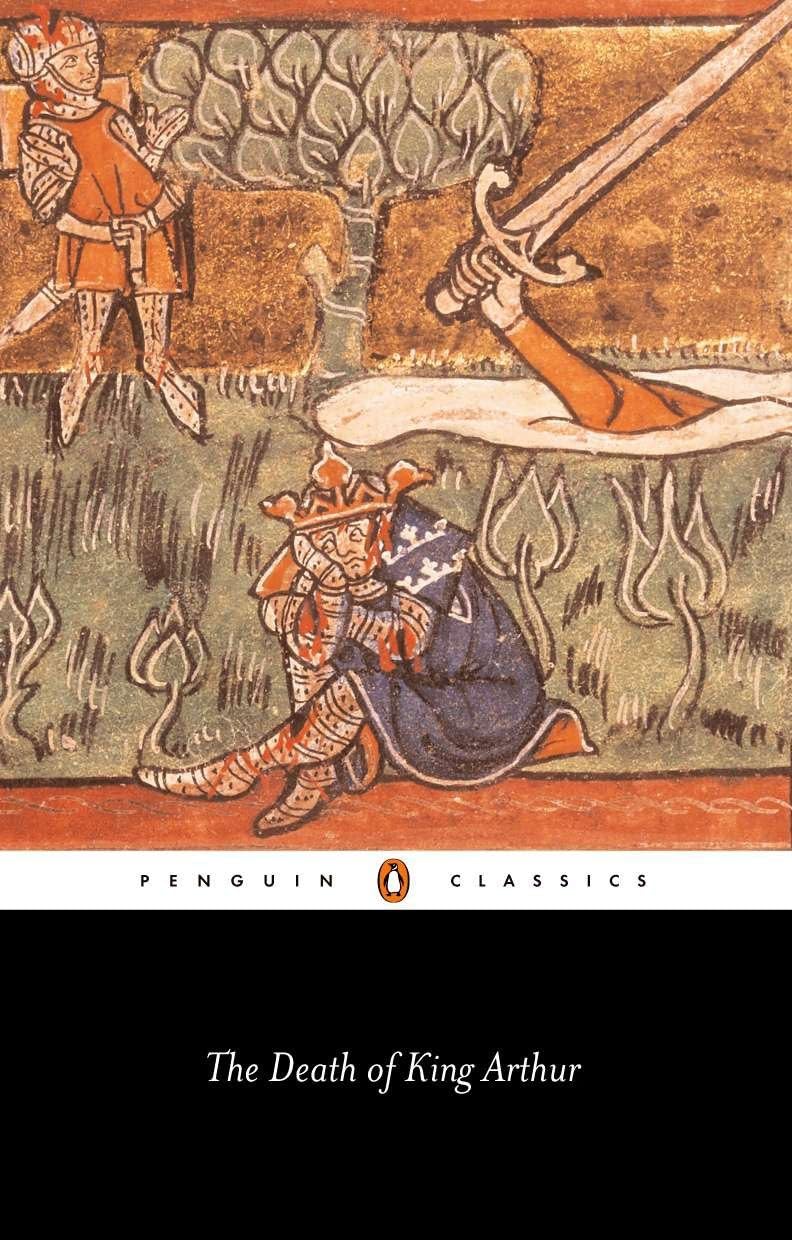
The Death of King Arthur (Penguin Classics)
AED7844
Quantity:
Order today to get by 7-14 business days
Delivery fee of AED 20. Free for orders above AED 200.
Imported From: United Kingdom
At BOLO, we work hard to ensure the products you receive are new, genuine, and sourced from reputable suppliers.
BOLO is not an authorized or official retailer for most brands, nor are we affiliated with manufacturers unless specifically stated on a product page. Instead, we source verified sellers, authorized distributors or directly from the manufacturer.
Each product undergoes thorough inspection and verification at our consolidation and fulfilment centers to ensure it meets our strict authenticity and quality standards before being shipped and delivered to you.
If you ever have concerns regarding the authenticity of a product purchased from us, please contact Bolo Support. We will review your inquiry promptly and, if necessary, provide documentation verifying authenticity or offer a suitable resolution.
Your trust is our top priority, and we are committed to maintaining transparency and integrity in every transaction.
All product information, images, descriptions, and reviews originate from the manufacturer or from trusted sellers overseas. BOLO is not affiliated with, endorsed by, or an authorized retailer for most brands listed on our website unless stated otherwise.
While we strive to display accurate information, variations in packaging, labeling, instructions, or formulation may occasionally occur due to regional differences or supplier updates. For detailed or manufacturer-specific information, please contact the brand directly or reach out to BOLO Support for assistance.
Unless otherwise stated, all prices displayed on the product page include applicable taxes and import duties.
BOLO operates in accordance with the laws and regulations of United Arab Emirates. Any items found to be restricted or prohibited for sale within the UAE will be cancelled prior to shipment. We take proactive measures to ensure that only products permitted for sale in United Arab Emirates are listed on our website.
All items are shipped by air, and any products classified as “Dangerous Goods (DG)” under IATA regulations will be removed from the order and cancelled.
All orders are processed manually, and we make every effort to process them promptly once confirmed. Products cancelled due to the above reasons will be permanently removed from listings across the website.
Similar suggestions by Bolo
More from this brand
Similar items from “Folklore”
Share with
Or share with link
https://www.bolo.ae/products/K0140442553
Visit the Penguin Classics Store
The Death of King Arthur (Penguin Classics)

AED7844
Quantity:
Order today to get by 7-14 business days
Delivery fee of AED 20. Free for orders above AED 200.
Imported From: United Kingdom
At BOLO, we work hard to ensure the products you receive are new, genuine, and sourced from reputable suppliers.
BOLO is not an authorized or official retailer for most brands, nor are we affiliated with manufacturers unless specifically stated on a product page. Instead, we source verified sellers, authorized distributors or directly from the manufacturer.
Each product undergoes thorough inspection and verification at our consolidation and fulfilment centers to ensure it meets our strict authenticity and quality standards before being shipped and delivered to you.
If you ever have concerns regarding the authenticity of a product purchased from us, please contact Bolo Support. We will review your inquiry promptly and, if necessary, provide documentation verifying authenticity or offer a suitable resolution.
Your trust is our top priority, and we are committed to maintaining transparency and integrity in every transaction.
All product information, images, descriptions, and reviews originate from the manufacturer or from trusted sellers overseas. BOLO is not affiliated with, endorsed by, or an authorized retailer for most brands listed on our website unless stated otherwise.
While we strive to display accurate information, variations in packaging, labeling, instructions, or formulation may occasionally occur due to regional differences or supplier updates. For detailed or manufacturer-specific information, please contact the brand directly or reach out to BOLO Support for assistance.
Unless otherwise stated, all prices displayed on the product page include applicable taxes and import duties.
BOLO operates in accordance with the laws and regulations of United Arab Emirates. Any items found to be restricted or prohibited for sale within the UAE will be cancelled prior to shipment. We take proactive measures to ensure that only products permitted for sale in United Arab Emirates are listed on our website.
All items are shipped by air, and any products classified as “Dangerous Goods (DG)” under IATA regulations will be removed from the order and cancelled.
All orders are processed manually, and we make every effort to process them promptly once confirmed. Products cancelled due to the above reasons will be permanently removed from listings across the website.
Description:
About the Author
The author of The Death of King Arthur is unknown, though it is generally thought he was a Frenchman, probably from Champagne writing around 1230-35.
James Cable was educated at Exeter and Nancy Universities and holds a Ph.D. in Old French. He was subsequently a lecturer in French at London University.
Reviews:
5.0 out of 5 stars The end of chivalry
By contrast to `Lancelot of the Lake' and `The Quest of the Holy Grail,' this concluding part of the great 13th century Lancelot-Grail cycle is a simple and direct tale. The supernatural elements have all but been stripped away, and it proceeds quite logically to describe the decline and fall, not just of King Arthur himself, but of the whole world that he had attempted to build. The worm in the flower is of course Lancelot and Guinevere's love affair; it is the harvest of a tragedy sown many years before.Some years ago, a man called Jean Frappier came up with the idea that, whilst the Lancelot-Grail cycle could clearly not have been written by one man, it did however have an architect; someone who planned the whole thing out, before allowing different people to complete the various sections. It's an attractive idea. There are many threads that run throughout the work, and yet the differences of style are startling. The `Quest' was clearly written by a deeply religious author (someone with a Cistercian background has been suggested, though other people finger the Knights Templar) and has a strongly devotional feel, and yet the `Death' abounds in references to God that border on the flippant. It also has more conversation, and more psychological insight than the previous sections; the melancholy tone of the closing chapters particularly give it an astonishingly modern feel. At the very end, Sir Bors - one of the only survivors of the calamitous final battle - invites the people left behind to CHOOSE whomever they would like as king; the days of chivalry are over for good.
5.0 out of 5 stars The Death of Lancelot
I'm quite surprised that I've become interested in Arthurian literature. I started off with Malory of course and thought that my interest would end there. I have however read a couple more since.Before I read this book I read 'The Quest of the Holy Grail' which was interesting and would've gained about three stars I guess. 'The Death of King Arthur' follows on from 'The Quest' and is purportedly written by the same author, Walter Map. However the style of 'Arthur' is markedly different from 'Quest' as it is crisp, clear and feels very modern. This may be due to the translator of course but it reads very much like a modern novel, although with a medieval feel. Indeed, James Cable, the translator states in the introduction, 'It is difficult to see how the story could be better structured and motivated.'So the story is pretty much about the tensions that develop between Lancelot's and Arthur's camp and all ending in a battle between them. Well, not quite, Arthur lays siege to Lancelot in Gaul, Lancelot & Gawain joust and fight all day. After the conclusion (I won't reveal too much of the plot) of the bout they go off to fight some more battles.As mentioned in the introduction of the book, it should probably be called 'The Death of Lancelot' as he is the main character and ends with his death rather than Arthur's. And with the death of Arthur and Lancelot comes the end of the Arthurian era.A thoroughly recommended book.
5.0 out of 5 stars The force of love which reason cannot resist
This tragic medieval saga is a tale of love, adultery, jealousy, treachery, revenge and death.The adulterous love between chivalry's most valiant knight, Lancelot del Lac, and King Arthur's wife, Queen Guinevere, provokes a series of suicidal wars between chivalry's finest, noblest, most courteous, most honorable knights and their factions: `no man ever became deeply involved in love who did not die as a result.'It is an anti-war tale: `battle, how many orphans and widows you have made in this country and others!' `Where will the poor people ever find pity now?'And what is the use of all this pride? `But such is earthly pride that no one is seated so high that he can avoid having to fall from power in the world.'At the end, `we can see all our friends dead before us.' `It was to lead to the destruction of the kingdom of Logres ... lands remained devastated and waste.'Of course, the anonymous author is sometimes too sentimental, too Christian. His battle descriptions are now and then stereotypic. Nevertheless, his story written in a direct, simple, unadulterated and positive style is one of the highlights of medieval literature.Not to be missed.
Pretty good
Not the easiest read, but fantastic when you sit down and put some effort into figuring out exactly what's going on. There's a lot of depth that you don't see at first glance.
Great
This is a fantastic and although at first glance rather simplistic novel, the plot continues to thicken and weave around the growing and eventually provoking character development.Penguin Classics FTW.
Similar suggestions by Bolo
More from this brand
Similar items from “Folklore”
Share with
Or share with link
https://www.bolo.ae/products/K0140442553